Tam Lyn: Viola Sheet Music Preview

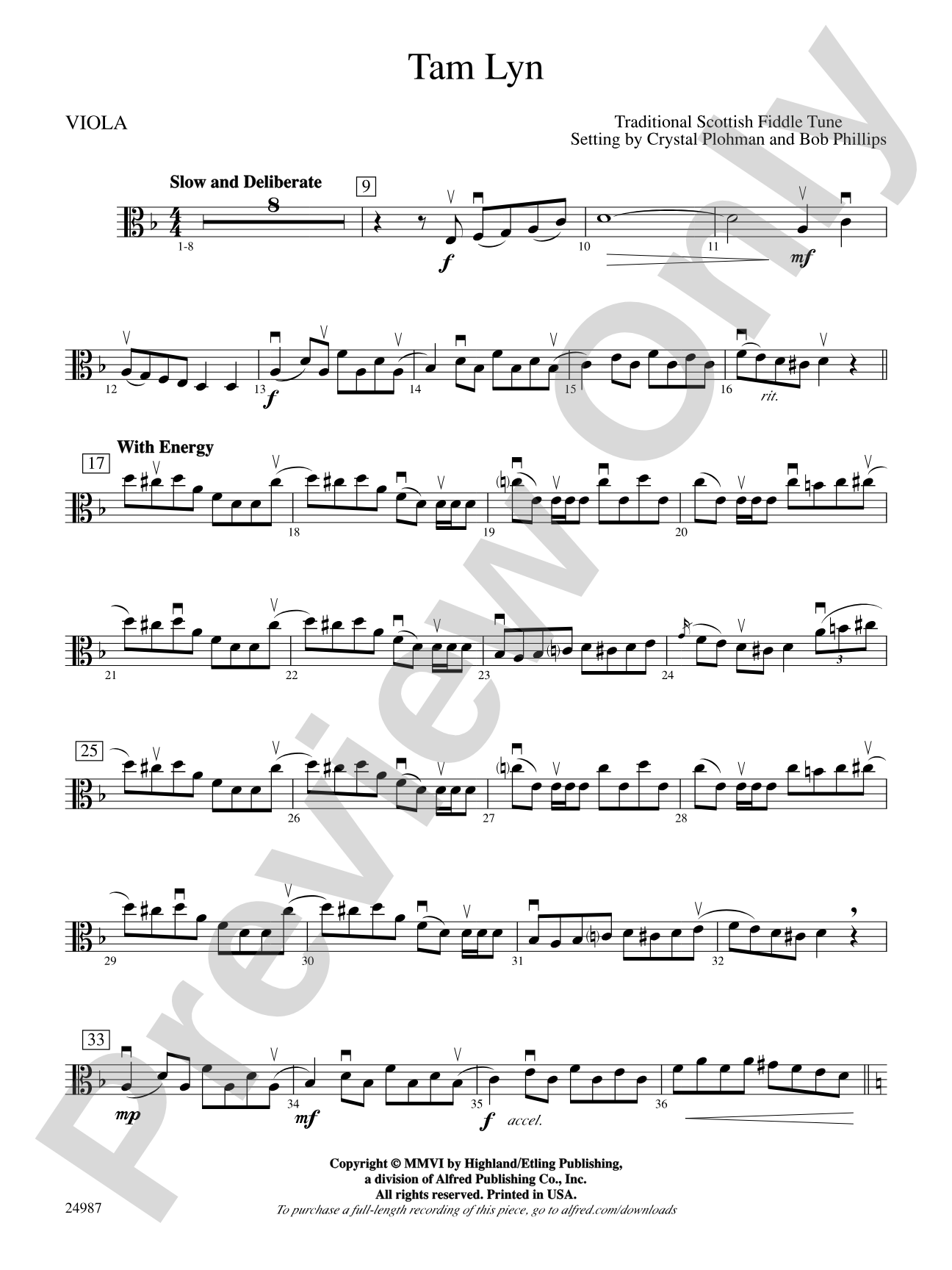
Tam Lyn: Viola

Traditional / arr. Crystal Plohman and Bob Phillips

Grade: 3

Item: 00-PC-0000969_VA1

Digital Download
$5.99
Description
The melody of this classic fiddle tune weaves through each section, modulating from D Minor to A Minor, wrapping up in a true fiddle style. Claimed by the Irish and the Scottish, "Tam Lyn" is one of the many fiddle tunes whose origins are hidden in the mists of time. The legend is that Tam Lyn was a bit of a ladies' man and the lyrics give fair warning to the lasses.

Don't just read it, hear it, play along with it, and watch your students grow with it. In MakeMusic Cloud, Tam Lyn: Viola comes alive with professional accompaniment, adjustable tempo, and built-in practice tools that turn solo practice into real progress.

Sample Audio
0:00
0:00
Sample Video
Additional Details
Series: Highland/Etling String Alternatives
Publisher: Alfred Music
Page Count: 124
SKU: 00-PC-0000969_VA1

More about this title

About the Arranger: Crystal Plohman

Crystal Plohman has built a reputation for bringing traditional folk music to school orchestras with arrangements that respect the idiom while serving young players. Her work in the Highland/Etling String Alternatives series demonstrates a deep understanding of how fiddle tunes translate to the string orchestra setting, maintaining their character without sacrificing accessibility.

Why we love this

This arrangement lets string players claim a tune that's traditionally lived in the fiddle world, and Plohman's writing respects the tune's character while making it genuinely playable for younger orchestras. The modulation from D Minor to A Minor gives the piece momentum and shape, and at Grade 3, players can focus on style and ensemble balance rather than wrestling with technical hurdles.

What to expect

Spirited and storytelling, with the restless energy of a fiddle tune that's been played in countless settings across centuries. The melody moves through the orchestra like it's being passed from player to player, each voice getting a moment to carry the line before handing it off, and the key changes feel natural rather than jarring, as if the tune is simply finding new ground to explore.

Who it's for

String orchestra directors looking to build cultural and stylistic range in their repertoire, especially those serving Grade 2-4 ensembles. This works beautifully for players who thrive on melody-driven music and benefit from seeing how a single tune can take on new life in an orchestral context.

How to get the most out of it

  • Bring out the modal quality of the tune by letting D Minor and A Minor each establish their own color; the shift between them is part of the piece's architecture, not something to rush through.
  • Listen for the fiddle idiom in the phrasing: these melodies thrive on slight rhythmic flexibility and a lean, singing tone rather than a heavy vibrato.
  • Balance the melody line across sections as it passes through the orchestra; mark phrase endings in rehearsal so everyone knows when to shape a cadence rather than pushing through it.
  • Subdivide during the transitions between keys to keep the ensemble secure without sacrificing the folk-tune feel.

How to use it

Program this alongside other folk-based repertoire to create a thematic concert block, or use it as a palate-cleanser between heavier 19th-century pieces. It also makes a strong opener for a concert focused on traditional music across cultures, especially if you're pairing it with pieces from other Celtic or British Isles traditions.

Skills your students will build

  • Phrasing and style in modal contexts (D Minor and A Minor)
  • Negotiating key modulations within a single melodic line
  • Balancing and transferring a melody across different sections
  • Understanding folk idioms and ornamentation in a string setting

You May Also Like