
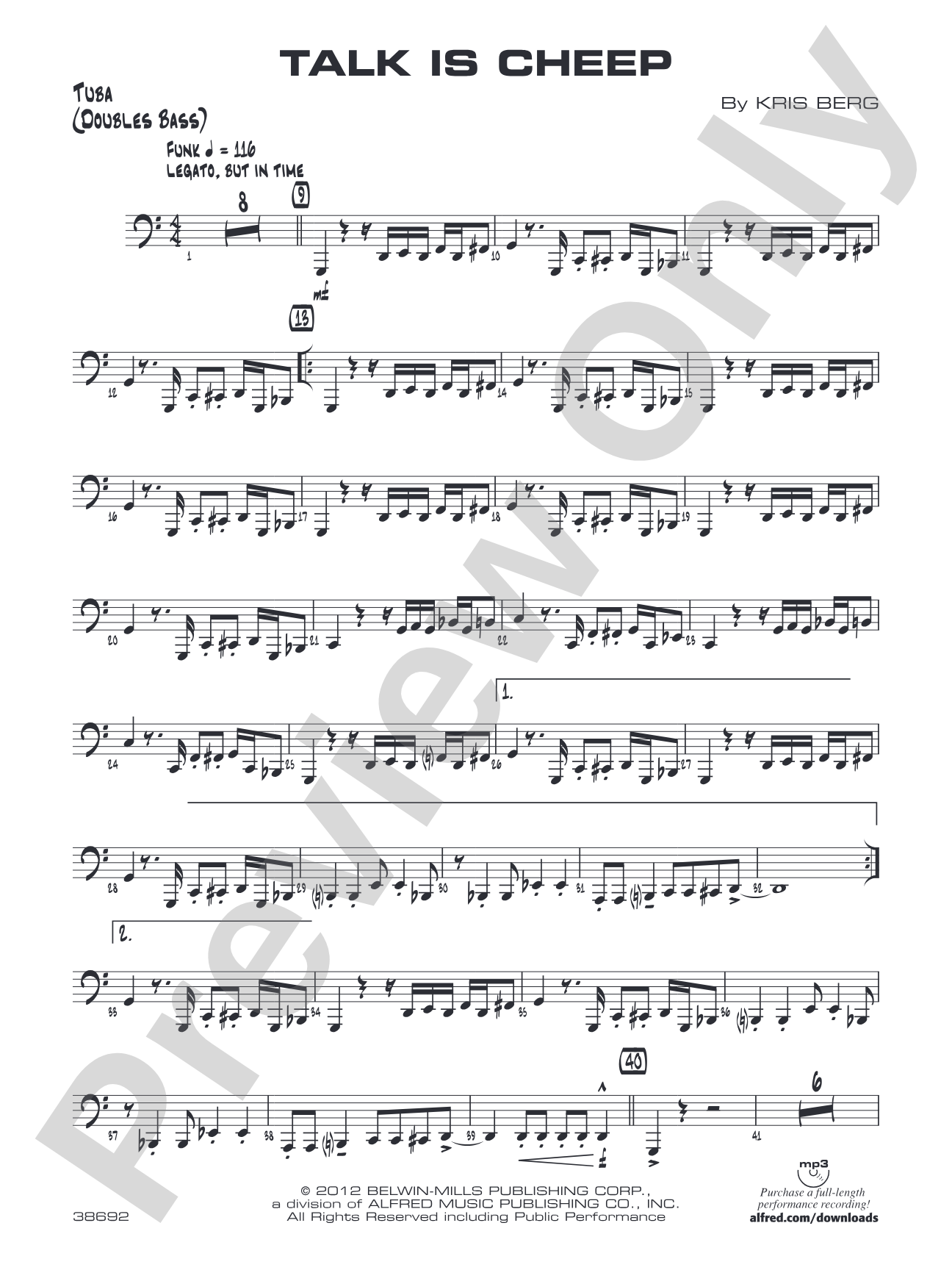

Talk Is Cheep: Tuba
By Kris Berg
Grade: 3.5 (Medium)
Item: 00-PC-0017227_TB1
$3.00
Pickup currently not available
Description
The chicken saga continues and it is FUNKY! This big band funk chart grooves at a tempo around 116 BPM. The energetic groove begins after the chorale intro. The saxes state the melody, joined by brass, then solos (written-out or ad lib) for tenor and trumpet 2, building up to a huge shout chorus. Lead trumpet range is to written A above the staff. This title is available in MakeMusic Cloud.


Don't just read it, hear it, play along with it, and watch your students grow with it. In MakeMusic Cloud, Talk Is Cheep: Tuba comes alive with professional accompaniment, adjustable tempo, and built-in practice tools that turn solo practice into real progress.
Open in the Player
Jump straight in and assign it today.
Start Your Free Trial
Open this title and explore the full library in minutes.
Sample Audio
1
Audio File
--:--
0:00
0:00
Sample Video
No sample videos found.
Additional Details
Series:
Jazz Band Series
Publisher:
Alfred Music
Page Count:
118
SKU:
00-PC-0017227_TB1
More about this title
About the Composer: Kris Berg
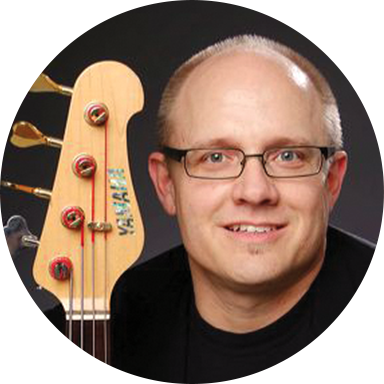
Kris Berg directs the jazz studies program at Collin County Community College in Texas, where he earned both his bachelor's and master's degrees in jazz studies from the University of North Texas. His big band arrangements and compositions have circulated internationally and are published through Belwin Jazz; he also authored the widely-used Bass Lines in Minutes. Beyond the college classroom, Berg founded and directs the Collin Jazz Fest and the Texas All-Star Jazz Camp, and his ensembles have received multiple invitations to perform at the Montreux Jazz Festival.
As a clinician and performer, Berg has worked alongside major jazz voices including Kurt Elling, Randy Brecker, Peter Erskine, Bob Mintzer, and Clark Terry. He maintains active endorsements with Yamaha Corporation of America and Walter Woods Amplifiers, and continues to appear at jazz festivals and educational camps across the country.
Why we love this
Berg's writing here delivers exactly what a Grade 3.5 ensemble needs: a chart that sounds big and confident without overwhelming the section. The funky groove sits naturally for young soloists, the written-out solos give students a model to follow, and the shout chorus payoff is substantial enough to feel like a real achievement. Directors will appreciate how the chorale intro sets serious tone before the energy kicks in, creating contrast that reads well in a concert setting.
What to expect
A tongue-in-cheek funk groover with real swagger. The opening chorale gives space and sophistication, then the energy snaps into a clean, driving groove that feels contemporary and fun. The tenor and trumpet solos invite personality and flair, while the shout chorus builds to a moment of collective power that leaves the ensemble and audience energized.
Who it's for
This chart works for high school jazz ensembles, college jazz bands at the developing level, and community ensembles building confidence in the funk/groove idiom. Students should have secure fundamentals in their section and basic jazz feel vocabulary; this level doesn't require extensive improvisation experience if you use the written solos.
How to get the most out of it
- Establish the groove pocket during the funky section (around 116 BPM) with your rhythm section locked in before the full ensemble enters; a slight deliberate approach to the backbeat helps younger players nail the feel.
- Feature the tenor and trumpet 2 soloists with confidence. If you're using the written solos, mark phrase shapes and dynamics in rehearsal so the solos land with intention rather than floating.
- Balance the sax melody line carefully when the brass joins; saxes should remain the primary voice with brass providing color and harmonic support.
- Build the shout chorus dynamically. Map out dynamics from section to section across the ensemble so the final payoff feels like a true crescendo, not just volume.
How to use it
Program this on a jazz festival setlist or informal concert to showcase your ensemble's funk chops and solo culture. The substantial page count and contest/festival designation make it a solid choice for jazz competition entries. It also pairs well on a concert with more lyrical or standards-based tunes, offering the stylistic and energy contrast that keeps audience engagement high.
Skills your students will build
- Funk and groove feel (backbeat pocket, swing eighth notes in a contemporary groove context)
- Jazz soloing within a structured form (reading changes, trading phrases)
- Section balance and blend in a contemporary idiom
- Reading and executing lead trumpet range extending to written A above the staff
- Ensemble dynamics and shaping in a large-form arrangement