
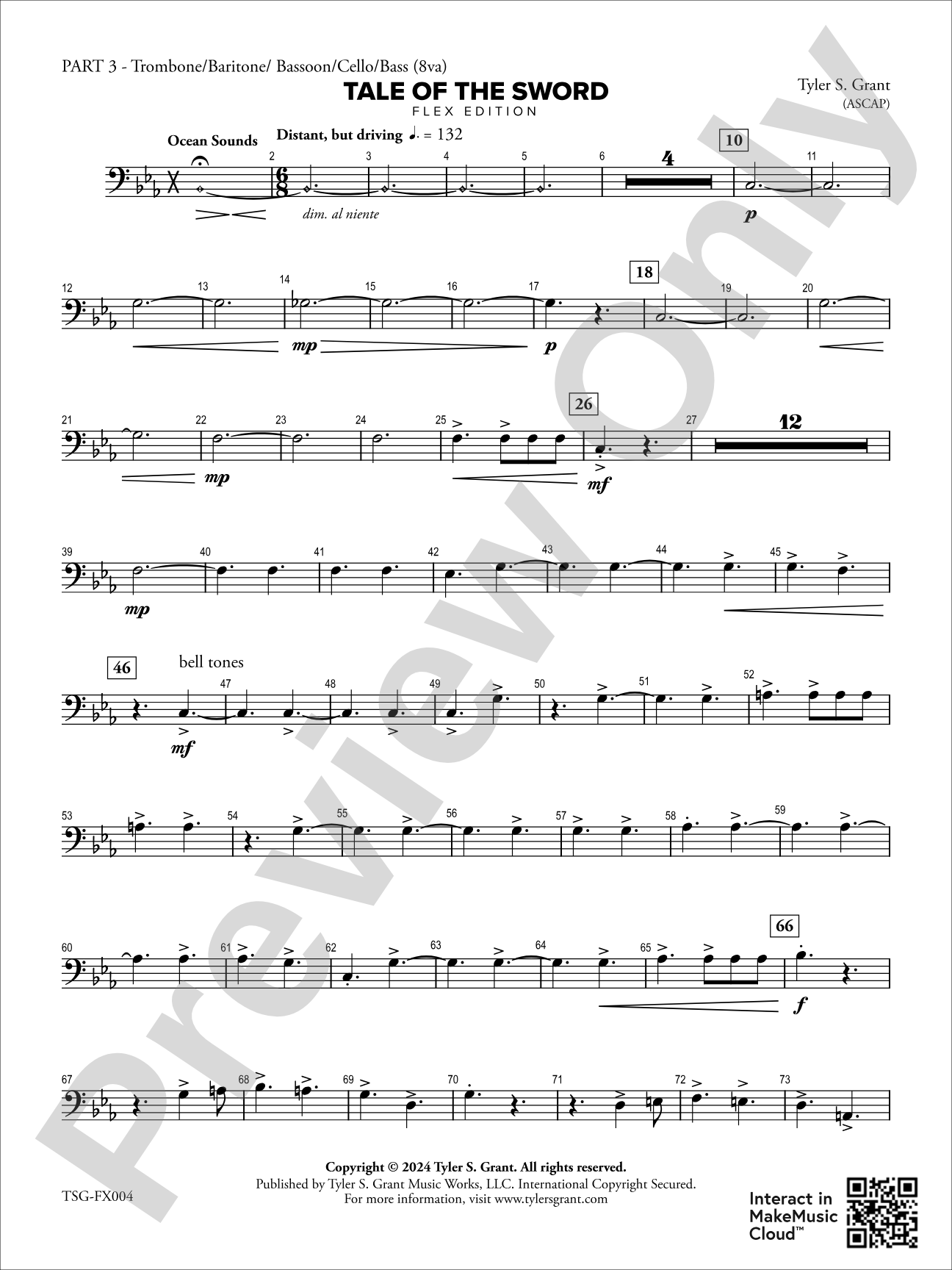

Tale of the Sword: Part 3 - C Instruments (B.C.)
By Tyler S. Grant
Grade: 2
Item: 98-PC-TGFX004_PART3_CBC
$4.50
Pickup currently not available
Description
Introduce or reinforce 6/8 time while portraying the Viking conquests with Tyler S. Grant's Tale of the Sword! Using minimal rhythmic motivic material, this work creates an epic and cinematic soundscape. Students get to create the sounds of ocean waves as driving ostinatos propel listeners to dramatic musical scenes. Supplemental Rhythm & Melody Sheets are included to make the most of your students' journey into 6/8. Intense and extremely engaging! Arranged for flexible instrumentation.
Original Item#: TSG-FX004


Original Item#: TSG-FX004
Tale of the Sword: Part 3 - C Instruments (B.C.) isn't in MakeMusic Cloud just yet...but it could be. Let us know you'd like to see it, and you'll help shape what comes next. In the meantime, start a free trial and dive into thousands of interactive titles your students can play along with today.
Request This Title
Tell us you want it.
Start Your Free Trial
Explore everything that's ready to play right now.
Sample Audio
1
Audio File
--:--
0:00
0:00
Sample Video
Additional Details
Series:
FLEX Editions
Publisher:
Tyler S. Grant Music Works, LLC.
SKU:
98-PC-TGFX004_PART3_CBC
More about this title
About the Composer: Tyler S. Grant

Tyler S. Grant has built a reputation composing and arranging for ensembles at all levels, with his music regularly appearing on state and regional honor band programs and garnering spots on international Editor's and Publisher's Choice lists annually. His competition-winning work Panoramic Fanfare earned recognition through the Dallas Wind Symphony's 2014 Call for Fanfares, leading to performances by collegiate and professional ensembles across North America and appearances at venues including Carnegie Hall, The Midwest Clinic, and the Macy's Thanksgiving Day Parade.
Beyond the page, Grant actively conducts clinics across the United States and has worked with over 100 school programs in more than 15 states. He served as contributing author for Alfred Music's Sound Innovations: Ensemble Development series and continues to commission new works yearly. A University of Alabama graduate in instrumental music education, Grant credits mentor Brian Balmages as central to his development as a composer.
Why we love this
Grade 2 ensembles rarely find programmatic work this engaging and musically coherent. Grant uses economical motivic material to create genuine drama and atmosphere, making students feel invested in a larger musical narrative without overwhelming them technically. The 6/8 focus with supplemental rhythm sheets transforms a potentially tricky meter into something students actually understand and perform with confidence.
What to expect
Cinematic and propulsive, with driving ostinatos evoking crashing waves and the forward momentum of Viking seafaring. The minimal melodic material creates space for orchestral color and drama to dominate, building an intense, engrossing soundscape that feels far more sophisticated than the Grade 2 technical level suggests.
Who it's for
Grade 2 flexible ensembles seeking programmatic repertoire that builds 6/8 fluency without sacrificing musical interest. Directors working with mixed instrumentation will appreciate the arrangement options, and students new to odd meters benefit from the structured accompaniment worksheets included in the package.
How to get the most out of it
- Lock the ostinato patterns in the lower voices first; once those wave-like figures sit solidly, the upper melodies will land with much clearer articulation and ensemble blend.
- Shape the dynamic arc across each section deliberately. Let the ocean sounds breathe and ebb rather than maintaining constant forte; this creates the cinematic tension Grant builds into the score.
- Experiment with articulation choices in the rhythmic motifs. Detached figures cut through and drive the action forward; experiment in rehearsal to find what your ensemble's balance demands.
- Use the supplemental rhythm and melody sheets in sectionals before full ensemble rehearsal. Students who internalize the 6/8 feel independently will pick up their parts faster and with far fewer measure repeats.
How to use it
Program this alongside other themed concert selections to create a full story arc, or use it as a standalone concert centerpiece that showcases your ensemble's growth in both rhythmic confidence and musical maturity. The contest and festival appeal makes it ideal for early-season festival entries where you want to build student confidence before tackling more demanding literature.
Skills your students will build
- Reading and performing 6/8 meter with secure pulse and subdivision
- Layering ostinatic patterns to create harmonic and rhythmic cohesion
- Sustaining long dynamic arcs and phrasing across extended sections
- Balancing multiple rhythmic motifs in an ensemble setting
- Connecting music to narrative and programmatic intent