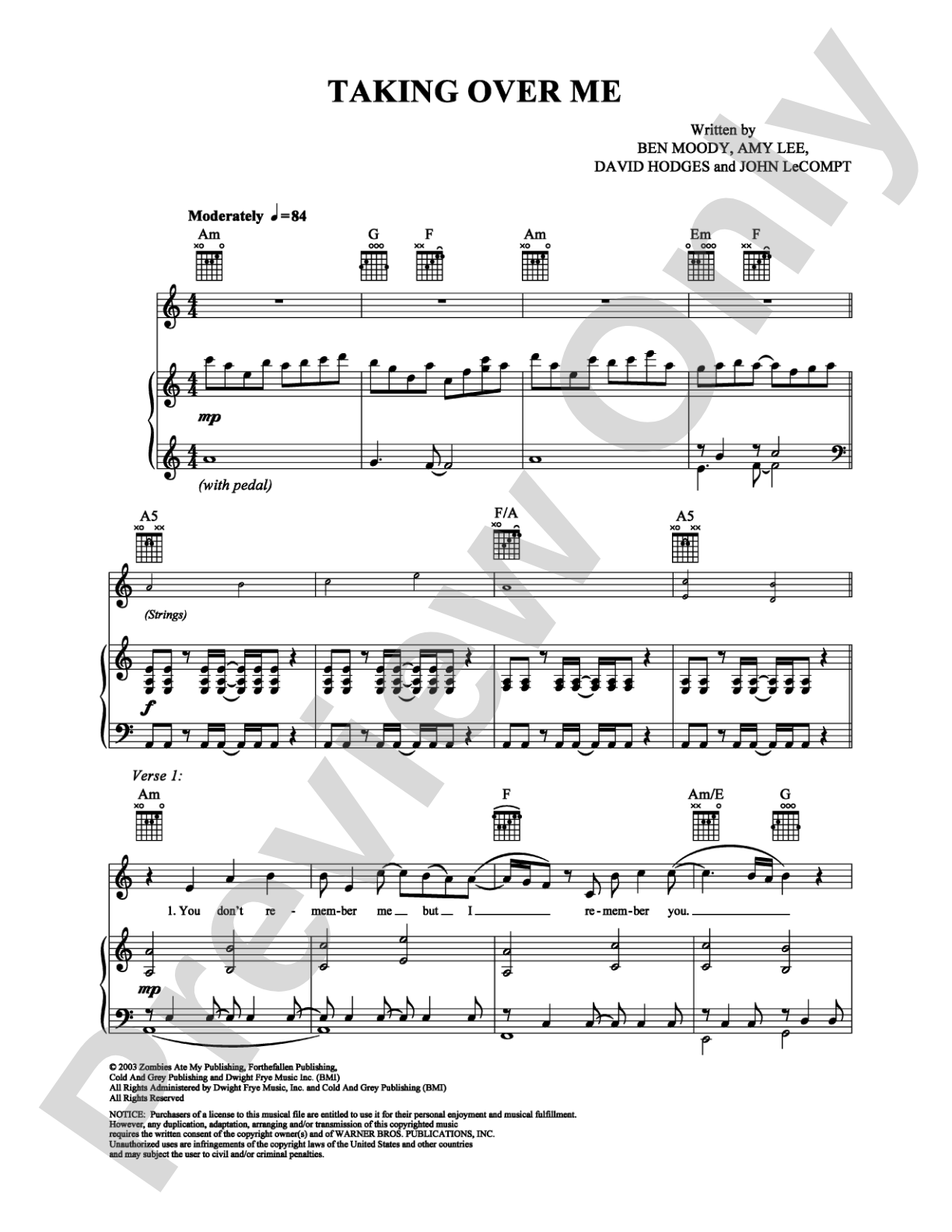
Taking Over Me: Piano/Vocal/Chords Digital Sheet Music

Taking Over Me: Piano/Vocal/Chords Digital Sheet Music

David Hodges, Evanescence, Ben Moody, Amy Lee, John LeCompt

Item: 00-PS-0006458

Digital Download
$3.99
Description

Taking Over Me: Piano/Vocal/Chords Digital Sheet Music isn't in MakeMusic Cloud just yet...but it could be. Let us know you'd like to see it, and you'll help shape what comes next. In the meantime, start a free trial and dive into thousands of interactive titles your students can play along with today.

Sample Audio
No sample audio found.
Sample Video
Additional Details
SKU: 00-PS-0006458

More about this title

About the Artist: Evanescence

Evanescence emerged in the early 2000s as a defining voice in rock music, blending gothic sensibilities with accessible pop-rock songwriting. Led by Amy Lee's distinctive vocal presence, the band created anthems that resonated across mainstream and alternative audiences, earning Grammy Awards and multi-platinum album sales.

For music educators, Evanescence's catalog offers contemporary material that engages students who might otherwise resist classical or traditional repertoire. Their songs reward careful vocal interpretation and dynamic piano playing, making them valuable for developing musicianship in accessible, student-centered contexts.

Why we love this

Amy Lee's vocal writing sits comfortably across different ranges and doesn't demand extremes, making this accessible for intermediate singers while remaining dramatically engaging. The piano part carries genuine harmonic interest without overwhelming accompanists, and the song's emotional arc gives performers real interpretive choices around dynamics and phrasing.

What to expect

Introspective and building. The song carries a moody, reflective quality in its opening before expanding into moments of intensity and release. There's vulnerability in the vocal writing paired with enough harmonic sophistication to keep both performer and listener engaged.

Who it's for

Intermediate and advanced singers comfortable with contemporary material, and pianists looking for accompaniment work that demands musicality beyond strict time-keeping. Soloists preparing recitals in non-classical contexts will find a vehicle that showcases vocal control and emotional expression.

How to get the most out of it

  • Map out the dynamic trajectory before rehearsal. This song builds tension from verses to chorus, and knowing where climaxes land helps both vocalist and pianist commit to the arc rather than playing it safe throughout.
  • Balance the piano's supporting role carefully. The accompaniment should enhance rather than bury the vocal line, so experiment with voicing and volume to let the singer's tone remain the focal point.
  • Pay attention to the emotional intent in transitions between sections. Small pauses, tempo flexibility, or changes in articulation can amplify the song's dramatic quality without derailing the rhythmic pocket.
  • Use the chord chart to explore reharmonization options if the standard arrangement feels thin in your rehearsal space. Contemporary pop-rock often benefits from fuller textures than the published notation suggests.

How to use it

Consider this for recitals or concerts that feature contemporary vocal music or cross-genre programming. It works well alongside other 2000s rock standards or as a bridge between classical and musical theatre repertoire, giving audiences a recognizable anchor while still elevating their concert experience.

Skills your students will build

  • Dynamic control across different vowels and phrase lengths
  • Accompanying singers with sensitive, responsive piano playing
  • Interpreting harmonic color in contemporary pop-rock progressions
  • Building vocal stamina through longer phrases and sustained notes
  • Phrasing and breath management in non-operatic song contexts

You May Also Like