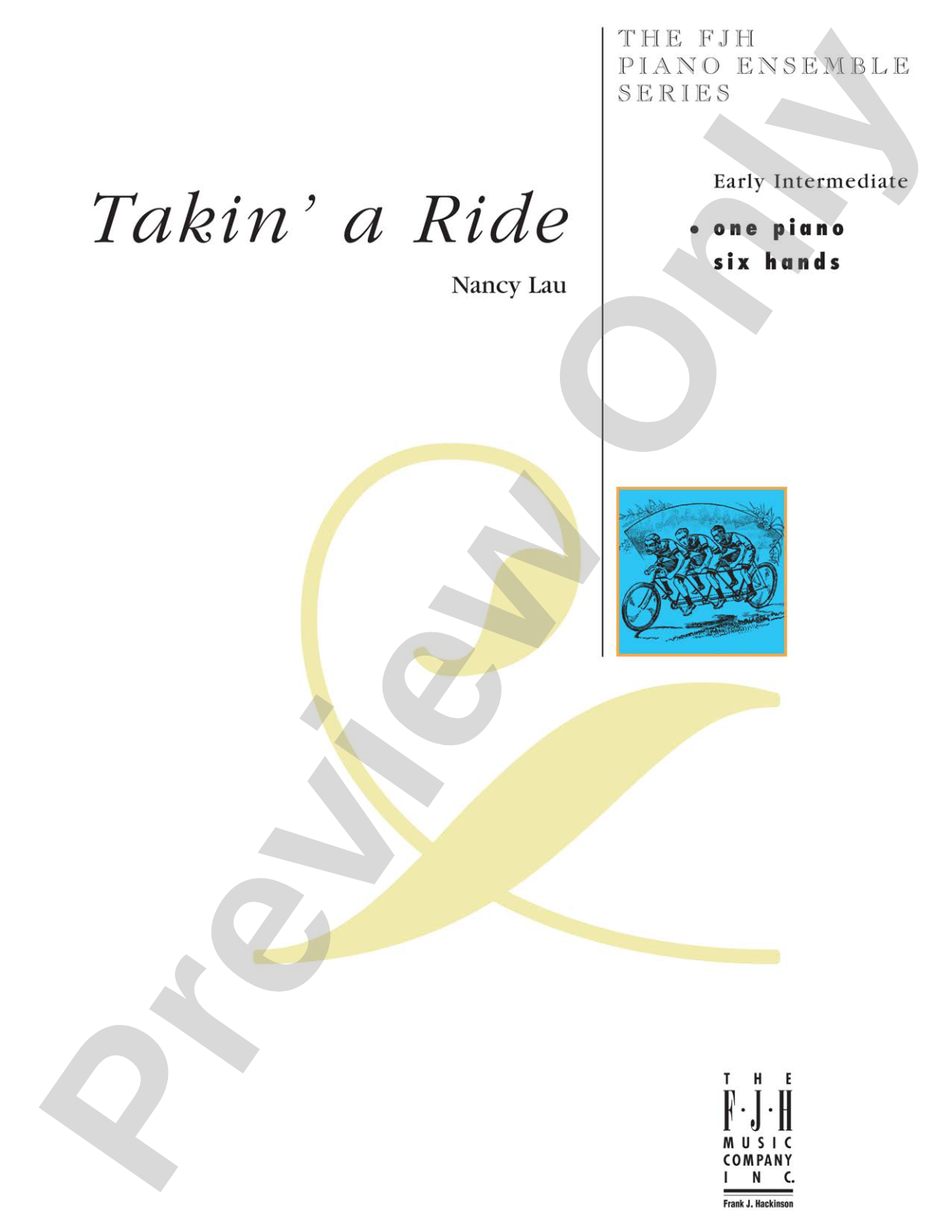
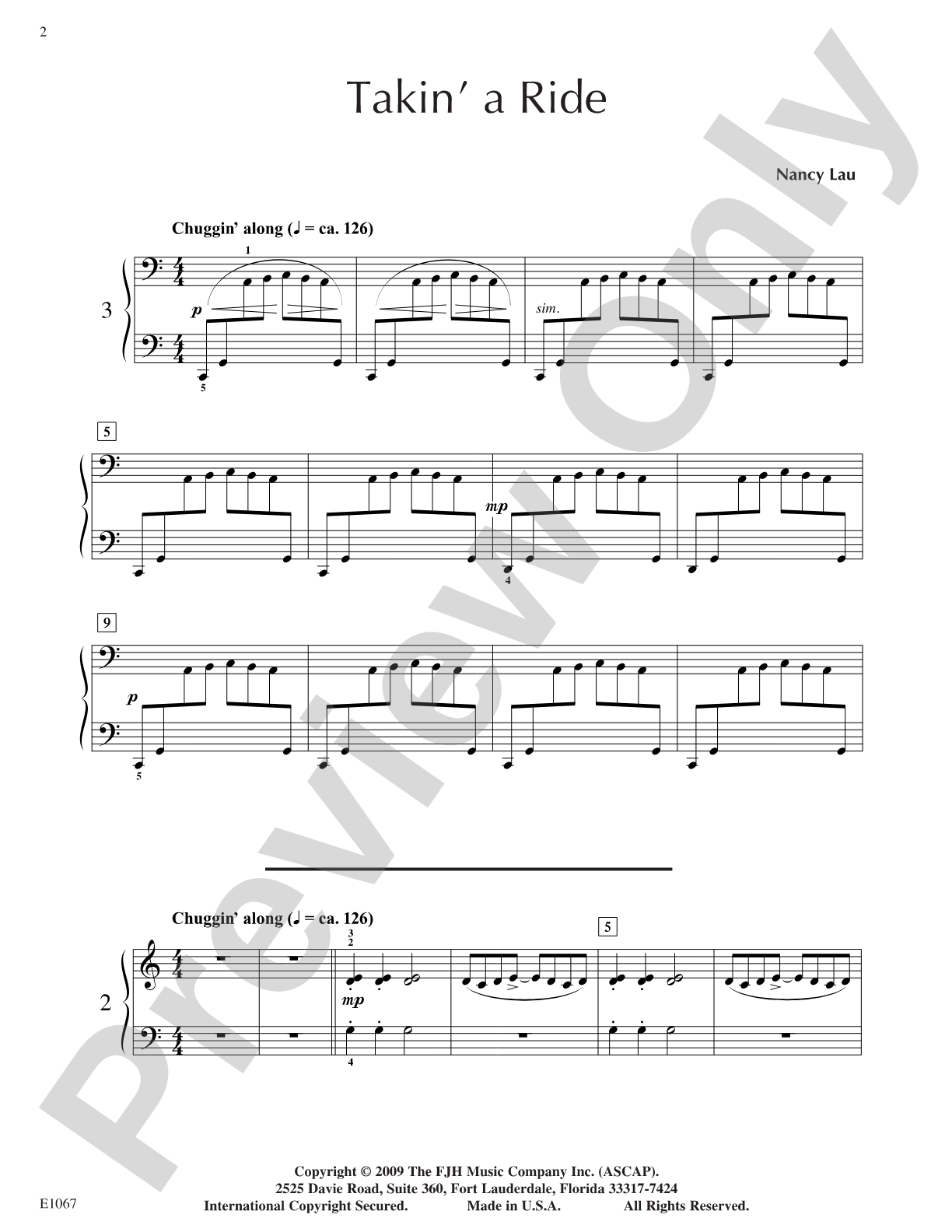
This early intermediate level trio for one piano will definitely keep pianists and their audiences chugging along. An extremely fun piece to perform without being difficult to learn, this piece gives each player a chance to feel like a soloist with its cleverly composed parts! Great as a recital piece.
Discover MakeMusic Cloud: thousands of interactive titles your students can play along with today.
Nancy Lau writes parts that genuinely feel like solos for each player, which means all three pianists stay engaged and invested from start to finish. The piece captures that sweet spot where the technical demands are reasonable but the musical payoff is substantial, making it a rare recital selection that audiences enjoy as much as the performers do.
What to expect
Energetic and playful, like the title suggests. Each pianist gets moments in the spotlight where they carry the melody while the other parts provide rhythmic or harmonic support, creating a sense of motion and forward momentum that's genuinely fun to execute.
Who it's for
Early intermediate pianists who are ready for ensemble playing but benefit from parts that stay within a comfortable technical range. This trio works well for students who thrive when they get a chance to shine as individuals within a group setting.
How to get the most out of it
Balance the parts carefully during ensemble passages so that the melodic line stays clear even when all three players have simultaneous material.
Work out entrances together as a group before adding tempo; rhythmic precision here prevents the piece from feeling scattered.
Let each pianist own their solo sections. Rehearse them separately first so when you come together, each person knows their part confidently.
The energy should feel propulsive throughout. Find a tempo that lets the rhythm drive forward without rushing the actual note values.
How to use it
Slot this into a studio recital or ensemble concert where you want a lighter moment that still showcases solid musicianship. It pairs well alongside more serious repertoire because its character is distinct enough to stand on its own.
Skills your students will build
Listening for and balancing multiple independent lines at the same time
Coordinating ensemble entrances and maintaining rhythmic unity without a conductor
Managing the transition between solo and accompanying roles
Reading and executing parts that interact contrapuntally rather than moving in lockstep
You May Also Like
Scan to Complete Your Purchase
Use your phone's camera to scan the code below
You'll log in on your phone and the order will be added to your account