
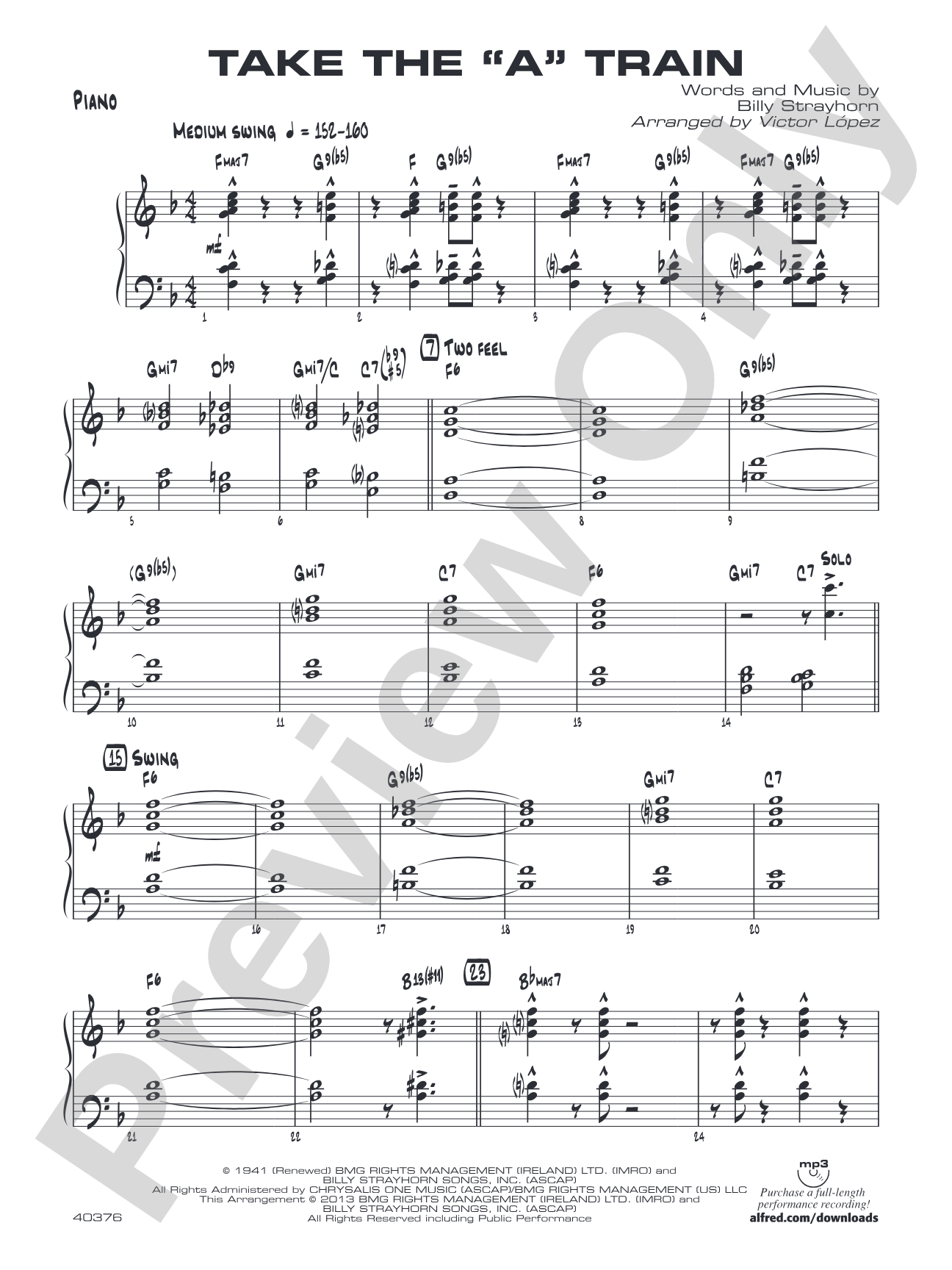

Take the "A" Train: Piano Accompaniment
Words and music by Billy Strayhorn / arr. Victor López
Grade: 2.5 (Medium Easy)
Item: 00-PC-0016700_K
$3.00
Pickup currently not available
Description
Perhaps one of the most well-known jazz standards, check out this vocal with big band chart. At a swinging 152 BPM, the key is F and the vocal range is A below middle C to 3rd space C, treble clef. No instrumental solos, lead trumpet range is to G on top of the staff. Plus, there are optional solos instrumental parts for B-flat, E-flat and bass clef instruments in lieu of the vocal. A great tune, and great chart, it will be a hit for sure. This title is available in MakeMusic Cloud.


Don't just read it, hear it, play along with it, and watch your students grow with it. In MakeMusic Cloud, Take the "A" Train: Piano Accompaniment comes alive with professional accompaniment, adjustable tempo, and built-in practice tools that turn solo practice into real progress.
Open in the Player
Jump straight in and assign it today.
Start Your Free Trial
Open this title and explore the full library in minutes.
Sample Audio
1
Audio File
--:--
0:00
0:00
Sample Video
No sample videos found.
Additional Details
Series:
Jazz Vocal Series
Publisher:
Alfred Music
Page Count:
86
SKU:
00-PC-0016700_K
More about this title
About the Composer: Billy Strayhorn
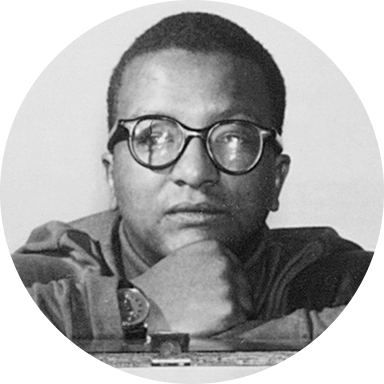
Billy Strayhorn (1915-1967) emerged from Dayton, Ohio to become one of jazz's most prolific and influential composers. Though he began his partnership with Duke Ellington in 1939, Strayhorn spent decades in the shadows, crafting some of the 20th century's most enduring standards while remaining largely unknown to the public. His openness as a Black gay artist during an era of profound social restriction may have contributed to this anonymity, yet his music was everywhere: recorded by Ella Fitzgerald, Sarah Vaughan, Oscar Peterson, John Coltrane, and countless others who recognized his harmonic sophistication and melodic genius.
"Take the 'A' Train" stands as his most iconic work, capturing the Harlem Renaissance era and becoming the Duke Ellington Orchestra's signature theme from the 1940s onward. Beyond this anthem, Strayhorn wrote "Lush Life" at age sixteen, a ballad of such harmonic complexity that it became the measure against which all jazz standards are judged. Music historians now recognize him as one of America's most significant yet underappreciated composers, his catalogue a masterclass in compositional craft that continues to challenge and inspire musicians worldwide.
Why we love this
Victor López's chart strips nothing from Strayhorn's genius while keeping the piece accessible for ensembles still building their jazz vocabulary. At Grade 2.5, your singers and players will spend their energy on swing feel and ensemble cohesion rather than wrestling with dense harmonies, making this an ideal entry point for learning what makes jazz jazz. The optional instrumental solos for B-flat, E-flat, and bass instruments mean you can feature different players or reshape the arrangement to fit your specific ensemble each time you program it.
What to expect
Urbane and breezy, the way New York City felt in the 1940s when this tune became an instant anthem. There's sophistication in the harmony beneath the vocal line, yet the surface shimmers with accessibility and groove. Strayhorn's melody sits naturally in the voice, letting singers focus on phrasing and swing inflection rather than technical strain.
Who it's for
Jazz ensemble directors who want their singers and players to engage with one of the most essential American standards without getting bogged down in difficult arrangements. This is ideal for programs building their jazz concert repertoire, ensembles with capable singers who can carry a tune with style, and musicians eager to experience the swing era through music that actually swings.
How to get the most out of it
- Establish the swing feel early in rehearsal through the rhythm section. The 152 BPM swinging tempo should sit comfortably; if players are rushing, focus first on the hi-hat or ride cymbal subdivision rather than pushing everyone faster.
- Balance the vocal against the ensemble in the opening statement. A vocal that sits too far back disappears into the harmony; too far forward and the big band feels like accompaniment rather than conversation.
- Shape the opening melodic phrases with the same sophistication you'd expect from a ballad. This tune's elegance lives in the way notes connect, not in aggressive attacks or careless articulation.
- Consider assigning optional solos strategically based on your personnel. You might rotate different front-line players across performances to give multiple musicians ownership of the feature sections.
How to use it
Program this as the centerpiece of a jazz concert or a themed evening celebrating American standards. Its familiarity makes it an audience favorite that gives your ensemble credibility, while the Grade 2.5 difficulty means you'll have rehearsal time left over to develop other material. It works equally well as a showcase for a particular vocalist or as a full ensemble feature when you use the optional instrumental solos to expand the arrangement.
Skills your students will build
- Singing with swing feel and articulation
- Balancing solo voice with ensemble accompaniment
- Reading and executing jazz rhythms and articulations
- Coordinating with rhythm section players on tempo and groove
- Listening to and supporting featured soloists (instrumental versions)