
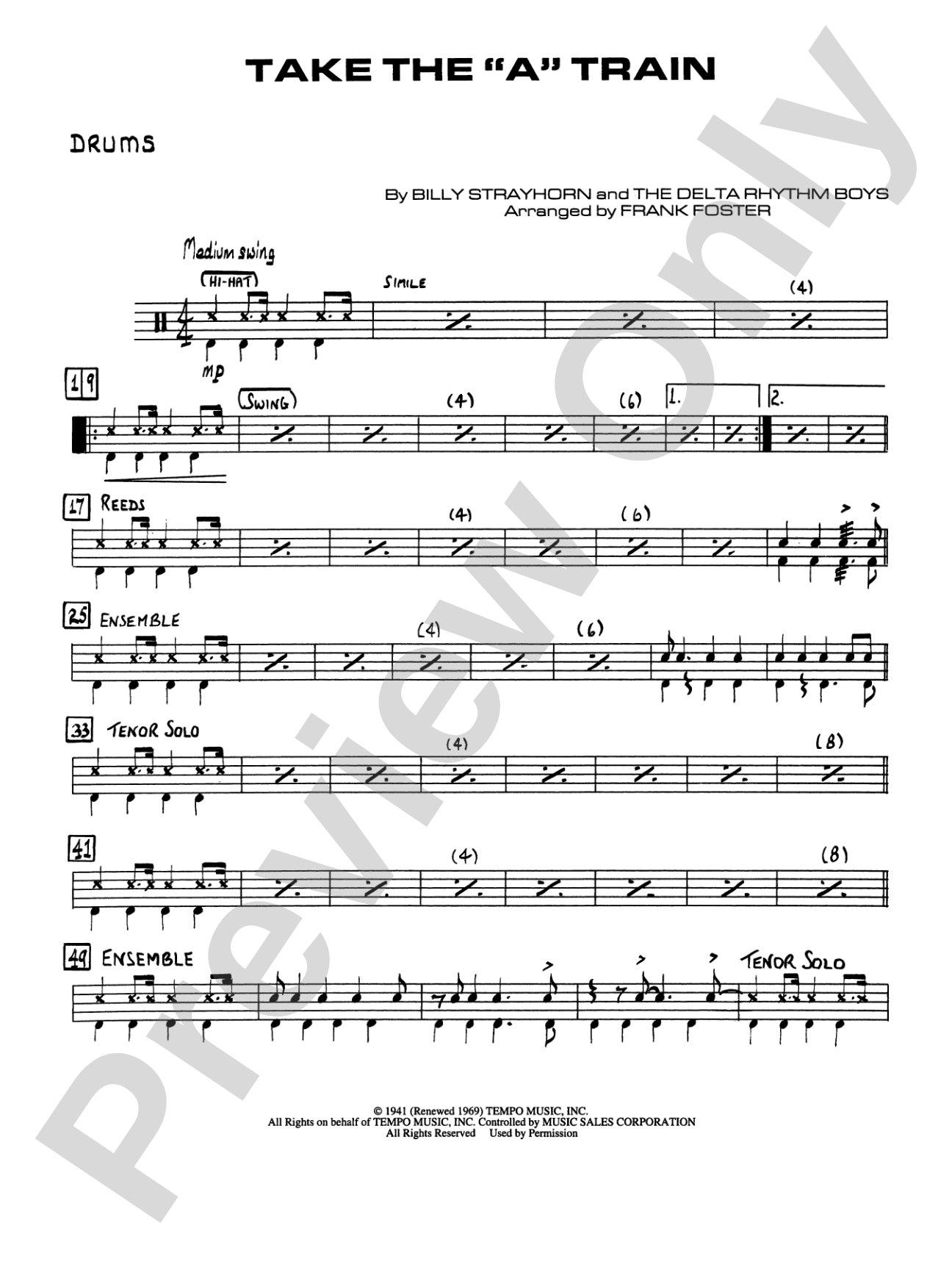

Take the "A" Train: Drums
By Billy Strayhorn and The Delta Rhythm Boys / arr. Frank Foster
Grade: 5 (Advanced / Difficult)
Item: 00-PC-0002387_D
$3.00
Pickup currently not available
Description
Frank Foster, leader and arranger for the Count Basie band, penned this version of the classic big band tune. Recreate that great Basie sound with your own ensemble, using the same chart they use. Wonderful sounds and great teaching material, too. (4:21)


Take the "A" Train: Drums isn't in MakeMusic Cloud just yet...but it could be. Let us know you'd like to see it, and you'll help shape what comes next. In the meantime, start a free trial and dive into thousands of interactive titles your students can play along with today.
Request This Title
Tell us you want it.
Start Your Free Trial
Explore everything that's ready to play right now.
Sample Audio
No sample audio found.
Sample Video
No sample videos found.
Additional Details
Series:
Premier Jazz Series
Publisher:
Alfred Music
Page Count:
110
SKU:
00-PC-0002387_D
More about this title
About the Composer: Billy Strayhorn
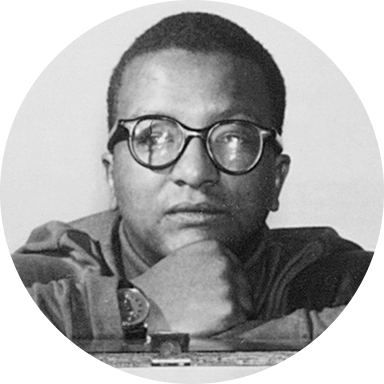
Billy Strayhorn emerged from Dayton, Ohio in 1915 to become one of jazz's most prolific and consequential composers, though his contributions remained largely uncredited during his lifetime. His 1939 partnership with Duke Ellington launched a creative collaboration that would define the sound of American jazz for decades. Strayhorn's gift for melody and harmonic sophistication produced standards that jazz musicians continue to interpret and reinterpret; "Lush Life," written when he was just 16, stands as a benchmark for harmonic complexity that only vocalists with serious chops attempt.
Despite composing many of the 20th century's most recognizable jazz standards, Strayhorn lived in relative obscurity while his music traveled the world through recordings by Ella Fitzgerald, John Coltrane, Oscar Peterson, and countless others. "Take the 'A' Train" became the signature theme of the Duke Ellington Orchestra and an anthem of the World War II era, yet Strayhorn's name rarely appeared in the credits. His decision to live openly as a gay Black man during an era of profound social restriction may have contributed to this historical erasure, but his musical legacy stands as a testament to artistry that transcends the recognition it deserves.
Why we love this
Frank Foster's arrangement preserves the energy and sophistication of the Basie band's take on this standard while remaining accessible to advanced high school and college ensembles. The chart demands genuine jazz chops from your players without becoming esoteric; brass sections get to wail, the rhythm section locks into groove-based playing, and the arrangement models how to voice for big band clarity. It's the real deal, the same kind of music your students would encounter in a professional jazz library.
What to expect
This arrangement swings with the confidence of a seasoned band, rooted in that Count Basie groove that makes big band sound effortless and irresistible. The melody sits comfortably in the ensemble's wheelhouse, but the harmonic sophistication underneath reminds you that this is Strayhorn's composition, elegant, never obvious, always purposeful.
Who it's for
Advanced high school jazz ensembles and college big bands looking to program a standard that teaches real big band writing while honoring its place in jazz history. Directors who want their students performing actual professional library arrangements will find this Foster chart both authentic and pedagogically rich.
How to get the most out of it
- Lock the rhythm section first. The groove needs to breathe and sit back rather than push; once your bass, drums, and piano establish the pocket, the horns will fall into place naturally.
- Balance the saxophone section to cut through without overshadowing the trumpet figures. This chart gives each section distinct roles, and clarity depends on listening across the ensemble, not just playing louder.
- Shape the head with swagger but not sloppiness. The melody should feel confident and conversational; think about how the Basie band delivered this tune, direct and swinging, not precious.
- Use the ensemble accents to build momentum in the shout choruses. Those punched attacks need precision and alignment across sections to land the intended impact.
How to use it
Open a jazz concert or spring program with this. It's immediately recognizable to audiences, gives your ensemble room to shine, and transitions well into deeper explorations of big band repertoire. The length and energy also work well as a pre-intermission closer if you're building a mixed program of classical and jazz selections.
Skills your students will build
- Big band section balance and blend
- Jazz articulation and phrasing in a written chart context
- Reading and executing swing rhythms with precision
- Listening and responding to rhythm section cues
- Interpreting dynamic and harmonic nuance in arranged music
- Ensemble cohesion in fast-moving, syncopated figures