
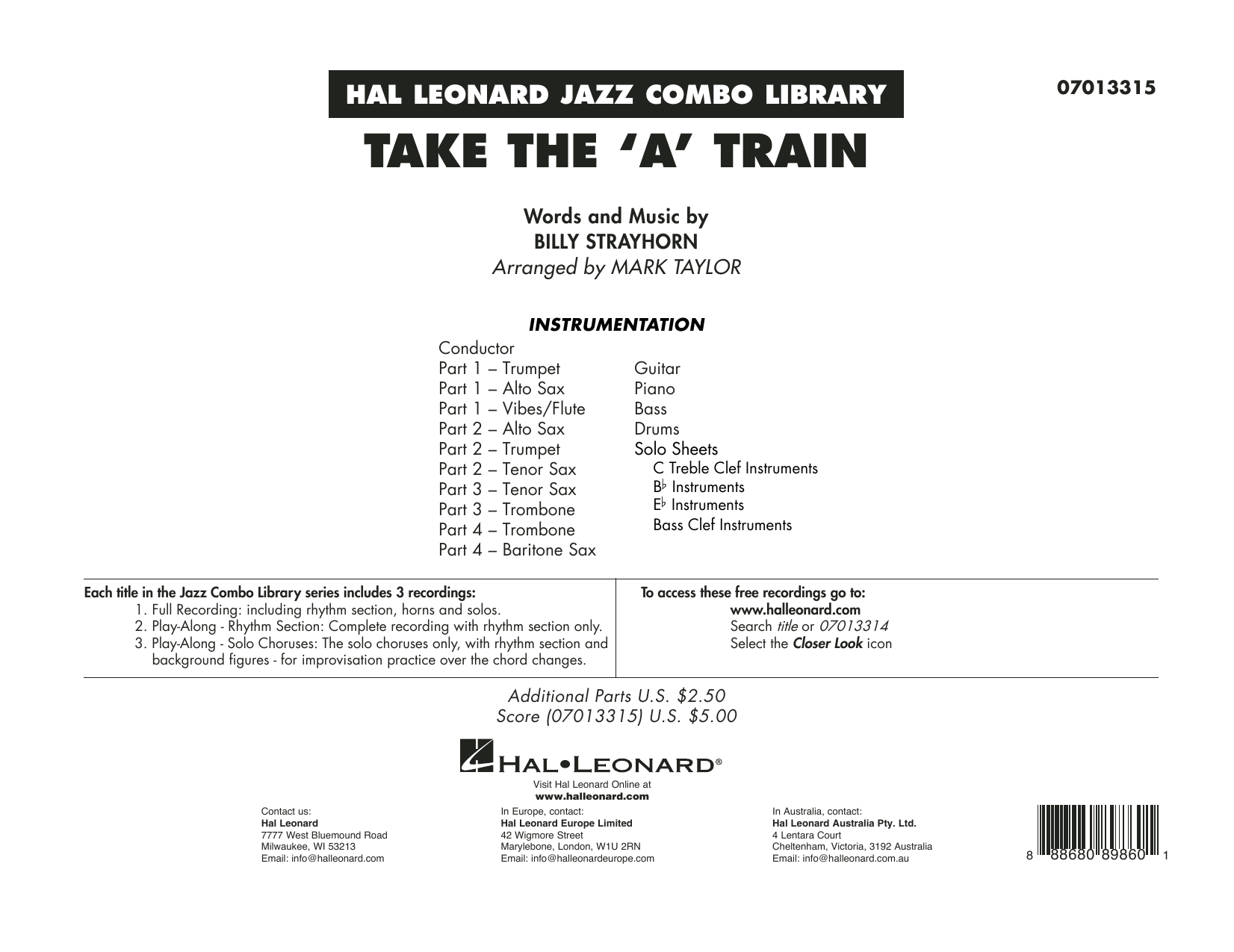

Take The 'A' Train (arr. Mark Taylor): Jazz Ensemble Conductor Score & Parts
By Billy Strayhorn / As performed by Duke Ellington / Arranged by Mark Taylor
Grade: 4
Item: 35-PK00448464
$40.00
Pickup currently not available
Buy Extra Parts (Digital PDF Download)
Parts Added to Cart!
Description
Classic jazz standard from the Duke Ellington orchestra.


Take The 'A' Train (arr. Mark Taylor): Jazz Ensemble Conductor Score & Parts isn't in MakeMusic Cloud just yet...but it could be. Let us know you'd like to see it, and you'll help shape what comes next. In the meantime, start a free trial and dive into thousands of interactive titles your students can play along with today.
Request This Title
Tell us you want it.
Start Your Free Trial
Explore everything that's ready to play right now.
Sample Audio
No sample audio found.
Sample Video
No sample videos found.
Additional Details
Publisher:
Hal Leonard
SKU:
35-PK00448464
More about this title
About the Composer: Billy Strayhorn
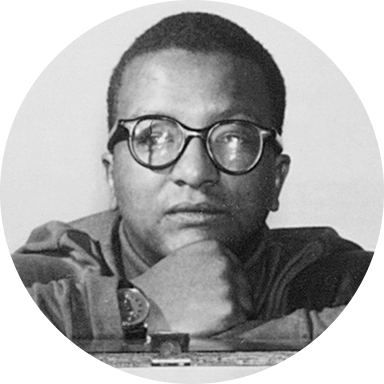
Billy Strayhorn emerged from Dayton, Ohio in 1915 to become one of the most prolific jazz composers of the twentieth century, though his name remained largely absent from the public consciousness for decades. His partnership with Duke Ellington, beginning in 1939, produced some of jazz's most enduring standards. Despite his monumental influence on the art form, Strayhorn's contributions were often overshadowed, a reality compounded by his decision to live openly as a gay Black man during an era of profound social constraint. Yet his music speaks louder than his anonymity: virtually every major jazz artist from Nat King Cole to John Coltrane to Ella Fitzgerald has recorded his compositions.
"Take the 'A' Train" stands as his signature achievement. Written as the theme for the Duke Ellington Orchestra since the 1940s, it has become an iconic artifact of American cultural memory, crystallizing the glamour and social vitality of the Harlem Renaissance for generations of listeners. Even his ballads, like "Lush Life" (composed when he was just sixteen), set the standard for harmonic and melodic sophistication that jazz singers still aspire to interpret today.
Why we love this
Mark Taylor's arrangement captures the infectious swing and chromatic sophistication that made this tune an instant classic, while keeping the voicings accessible for advancing ensembles. The Grade 4 difficulty strikes an ideal balance: your section leaders stay engaged with meaningful material, while younger players build genuine jazz vocabulary without drowning in complexity. Programming this standard connects your students to a living jazz canon and guarantees an audience that will sing along before the first chorus ends.
What to expect
Urbane and propulsive, with the casual confidence of a New York minute made musical. The harmonies shimmer with chromatic movement beneath a deceptively simple melody, creating that perfect balance between immediate accessibility and sophisticated jazz vocabulary that only Strayhorn could achieve.
Who it's for
Jazz ensembles with three to four years of high school experience, or college groups looking to program a historically significant standard that never sounds tired. Directors who want their students to understand why this composition has remained the Duke Ellington Orchestra's signature piece for over eighty years.
How to get the most out of it
- Balance the melody line against the walking bass; the tune only sings when both are clearly articulated. Have the bass section mark their entrances and lock in with the drums well before rehearsal.
- Shape the A section with gentle forward motion rather than aggressive swing. Strayhorn's melody has an elegant stride to it; let that character emerge through relaxed articulation.
- Listen for the chromatic voice leading in the harmony parts. These inner lines carry harmonic interest and should never disappear into blend; they deserve individual voice independence.
- Mark cutoffs and releases precisely. Jazz ensemble sound depends on collective attention to endings, and this tune's straightforward structure means those moments land cleanly and professionally.
How to use it
Open a concert with this as a statement piece; the audience recognition gives you immediate energy and establishes your ensemble's jazz credibility from measure one. Alternatively, place it mid-program as a palette cleanser between more challenging contemporary works, or use it to anchor a Duke Ellington tribute featuring other Taylor arrangements.
Skills your students will build
- Reading lead sheets and jazz notation conventions
- Swing rhythms and feel in ensemble context
- Walking bass line execution and rhythmic lock with drums
- Voicing blend and balance in a four or five-part jazz harmony
- Phrase shaping and dynamics within a groove-based structure
- Listening for and executing ensemble cutoffs in real time