Take The "A" Train Sheet Music Preview

Take The "A" Train: E-Z Play Today

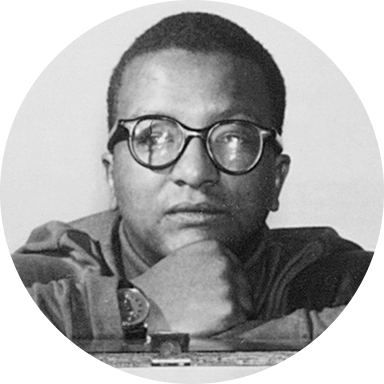
As performed by Billy Strayhorn

Item: 35-DS00448659

Digital Download
$4.99
Description

Take The "A" Train: E-Z Play Today isn't in MakeMusic Cloud just yet...but it could be. Let us know you'd like to see it, and you'll help shape what comes next. In the meantime, start a free trial and dive into thousands of interactive titles your students can play along with today.

Sample Audio
No sample audio found.
Sample Video
Additional Details
Publisher: Hal Leonard
Page Count: 3
SKU: 35-DS00448659

More about this title

About the Artist: Billy Strayhorn

Billy Strayhorn

Billy Strayhorn emerged from Dayton, Ohio in 1915 to become one of the twentieth century's most prolific jazz composers, though his contributions remained largely uncredited for decades. Beginning in 1939, he forged a creative partnership with Duke Ellington that would define both their legacies. Strayhorn's harmonic sophistication and melodic gift produced some of jazz's most enduring standards; "Lush Life," composed when he was just sixteen, challenged generations of singers with its harmonic complexity and emotional depth. Icons from Nat King Cole to John Coltrane to Ella Fitzgerald recorded his work, yet Strayhorn himself remained publicly invisible for much of his career, a consequence of his courageous decision to live openly as a gay Black man in an era hostile to such authenticity.

Historians recognize Strayhorn as fundamentally underappreciated in American music history, despite the fact that his compositions have been recorded more frequently than those of nearly any other jazz writer. His music continues to define jazz repertoire and remains a touchstone for musicians seeking harmonic depth and structural elegance.

Why we love this

This E-Z Play arrangement makes one of jazz's most iconic melodies accessible to pianists still developing their jazz vocabulary. The streamlined voicings preserve the tune's sophisticated character without overwhelming students with complex chord substitutions or dense comping patterns. Generations of musicians have cut their teeth on this piece; having it in a simplified form means your students can focus on feel, swing articulation, and the cultural history embedded in every phrase rather than wrestling with notation.

What to expect

The A Train moves with the confidence and momentum of a traveler stepping onto a subway headed somewhere important. There's sophistication underneath the approachable melody; the harmony suggests movement without restlessness, grounded optimism rather than flashy showmanship. The overall effect is urbane yet intimate, evoking the energy of Harlem in the 1940s without needing to announce itself.

Who it's for

Pianists transitioning from classical repertoire into jazz who want to engage with a standard that has real historical weight. Students preparing for jazz combos, informal performances, or recordings will find this stripped-down version gives them the foundation to build their own interpretations later.

How to get the most out of it

  • Shape the opening statement with subtle rubato in the first phrase; Strayhorn's melody breathes with the ease of conversation, not metronomic precision
  • Keep the left hand light and conversational. The goal is to support the melody without crowding it, especially on standard changes where students might overplay
  • Swing the eighth notes consistently throughout. The genre label may say "jazz," but the specific inflection of this tune demands a walking, unrushed swing feel
  • Let the bridge tell a story. It shifts harmonic territory just enough to create a moment of arrival; shape it with slightly more intentionality than the head

How to use it

Feature this as a bridge between classical and jazz studies, or include it in a standards-focused recital where multiple students tackle different interpretations of the same tune. It also serves as an effective teaching tool early in a jazz history unit, allowing students to hear and play the melody that became the Duke Ellington Orchestra's signature while you contextualize its cultural significance.

Skills your students will build

  • Swing articulation and feel
  • Jazz chord voicing and comping
  • Jazz melody phrasing and rubato
  • Walking bass patterns
  • Blues and jazz harmonic progressions

You May Also Like