
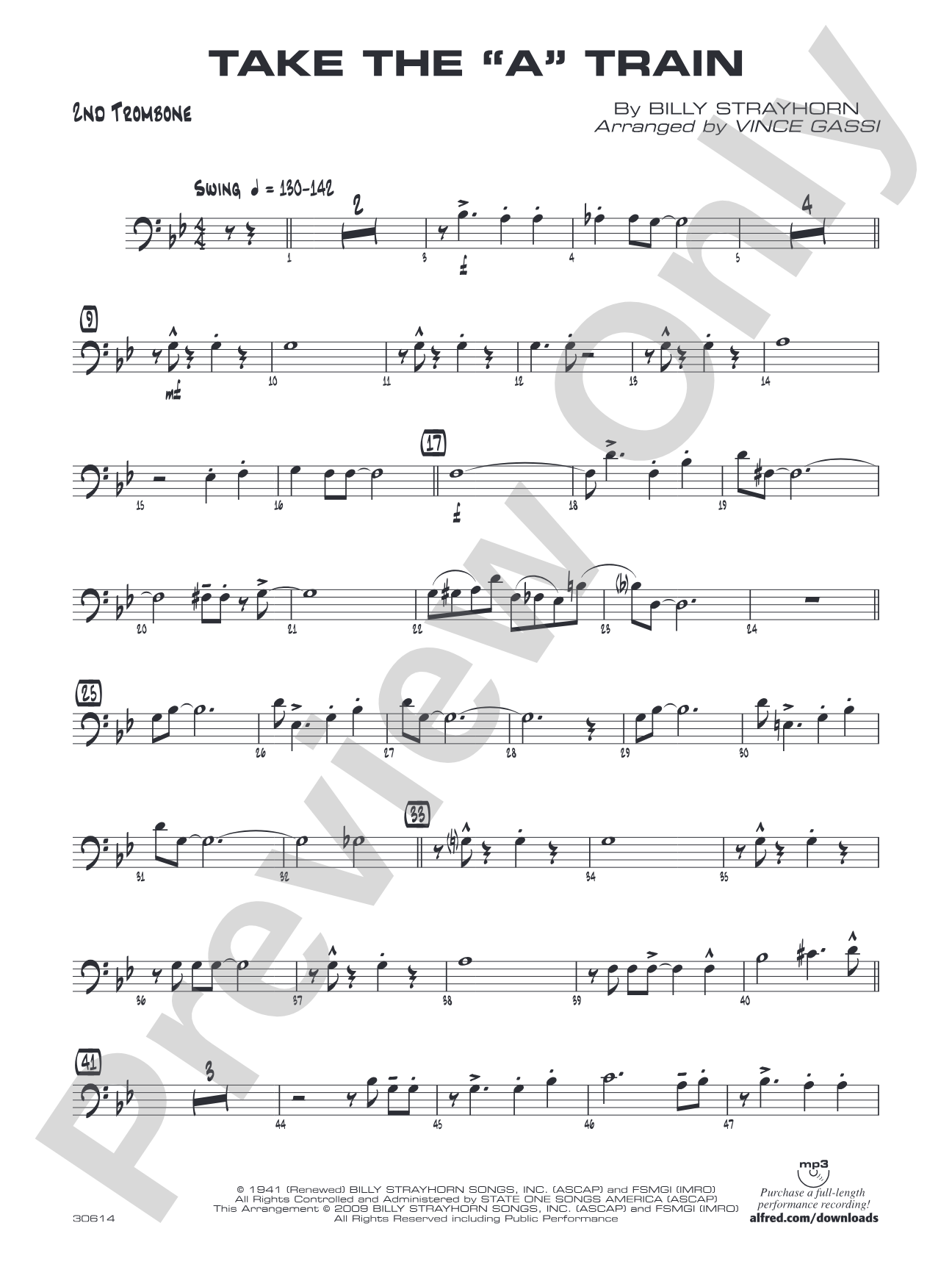

Take the "A" Train: 2nd Trombone
By Billy Strayhorn / arr. Vince Gassi
Grade: 1 (Easy)
Item: 00-PC-0017144_TN2
$3.00
Pickup currently not available
Description
This chart swings all the way and is very playable by a young band. Arranger Vince Gassi captures the essence of this well-known Strayhorn composition made famous by Ellington, and scored it exactly right---not too difficult but with fun-to-play parts. It includes brief written solos for 1st alto sax and 1st trumpet and easy ranges with plenty of dynamics to teach. A superb chart you will play for years to come! (3:05) This title is available in MakeMusic Cloud.


Don't just read it, hear it, play along with it, and watch your students grow with it. In MakeMusic Cloud, Take the "A" Train: 2nd Trombone comes alive with professional accompaniment, adjustable tempo, and built-in practice tools that turn solo practice into real progress.
Open in the Player
Jump straight in and assign it today.
Start Your Free Trial
Open this title and explore the full library in minutes.
Sample Audio
1
Audio File
--:--
0:00
0:00
Sample Video
Additional Details
Series:
First Year Charts for Jazz Ensemble
Publisher:
Alfred Music
Page Count:
78
SKU:
00-PC-0017144_TN2
More about this title
About the Composer: Billy Strayhorn
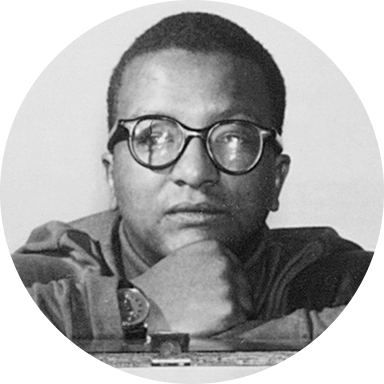
Billy Strayhorn (1915-1967) emerged as one of the most prolific composers in American jazz, though his towering influence often remained overshadowed by his collaborations. Beginning in 1939, his partnership with Duke Ellington produced some of the 20th century's most enduring standards. Strayhorn's harmonic sophistication and gift for melody transformed the sound of the Ellington orchestra and left an indelible mark on jazz composition itself.
"Take the 'A' Train" stands as his most recognized work, becoming the Ellington orchestra's signature theme and an anthem for a generation. Written with deceptive simplicity, the piece captures the energy and aspiration of Harlem's golden age. Beyond this single masterpiece, Strayhorn composed "Lush Life," a ballad of such harmonic and melodic complexity that it remains a benchmark for jazz vocalists and instrumentalists alike. His legacy as a composer, arranger, and orchestrator continues to define jazz standards that musicians return to decade after decade.
Why we love this
Vince Gassi's arrangement captures everything that makes this jazz standard irresistible while keeping it entirely accessible for young ensembles. The balance between authenticity and playability is remarkable: the parts swing naturally, the ranges sit comfortably, and the written solos for first alto sax and first trumpet give your section leaders moments to shine without overwhelming them. You'll program this year after year because it genuinely works—students enjoy playing it, audiences recognize it immediately, and it teaches real jazz fundamentals without compromise.
What to expect
Pure New York swagger and energy. The chart captures that gleaming, forward-moving momentum of a city at its peak, with bright horn lines that dance over a steady, confident groove. There's sophistication woven into every phrase, but it never feels distant or academic—just like the original, it swings with genuine joy and infectious style.
Who it's for
Young jazz ensembles ready to tackle their first true jazz standard. This Grade 1 arrangement welcomes players new to jazz phrasing and interpretation while respecting the musical integrity of Strayhorn's composition. Conductors will appreciate having a piece that teaches jazz fundamentals without requiring advanced technique from every section.
How to get the most out of it
- Establish a relaxed swing feel from the opening: the groove should feel effortless, not mechanical. Spend rehearsal time letting the rhythm section lock in before layering the horns.
- Balance the written solos carefully during the alto and trumpet passages. These parts are designed to showcase individual players, so give them space to be heard while keeping the ensemble support underneath.
- Use the dynamics marked throughout the score to create shape and forward motion. This chart builds energy through subtle dynamic layers, not just volume increases.
- Lock the feel between your drummer and bass player first. Once that partnership is solid, the entire ensemble settles into the swing naturally.
How to use it
This is a festival and contest staple that belongs on every jazz ensemble's annual calendar. Program it early in the season to establish jazz fundamentals and build ensemble confidence, or hold it for a spring concert where audiences expect to hear the classics. Pair it with other Strayhorn compositions or Duke Ellington arrangements to deepen students' understanding of this crucial era in jazz history.
Skills your students will build
- Swing articulation and phrasing
- Reading and executing jazz rhythms and syncopation
- Solo improvisation (alto sax and trumpet parts)
- Listening for balance and blend in a jazz texture
- Responding to dynamic shaping and ensemble control
- Understanding the role of each instrument in a jazz ensemble (melody, harmony, rhythm section)