
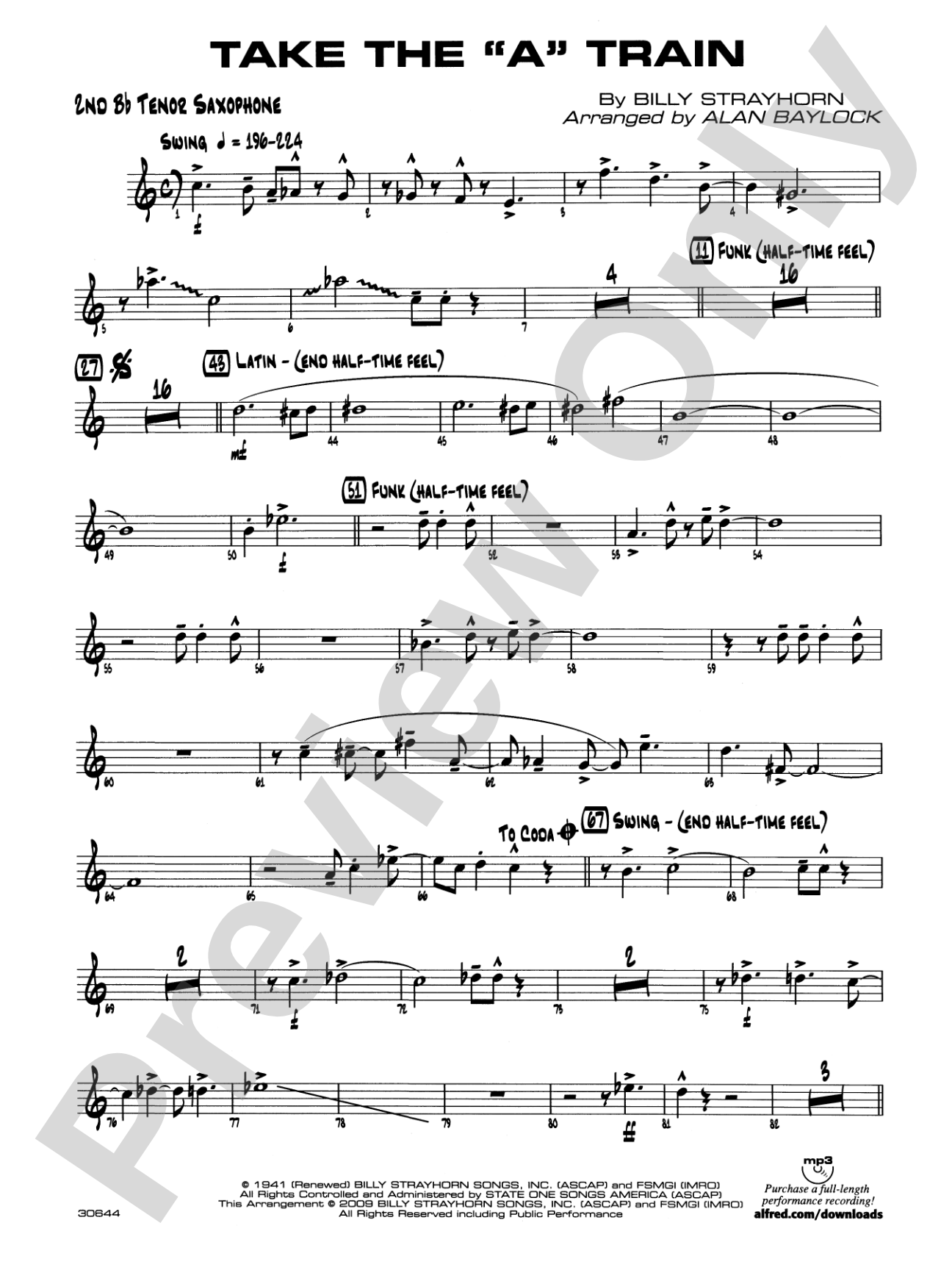

Take the "A" Train: 2nd B-flat Tenor Saxophone
By Billy Strayhorn / arr. Alan Baylock
Grade: 4 (Medium Advanced / Difficult)
Item: 00-PC-0015720_TX2
$3.00
Pickup currently not available
Description
Think of Take the "A" Train with a contemporary flair and you have the idea behind this inventive chart by Alan Baylock. Opening up in a swing groove, then alternating with a funk feel, bari sax, bass 'bone, guitar and bass have the initial melodic statement in this terrific chart. Solo space is available for alto sax 1, trombone 1, bari sax and trumpet 2, and the lead trumpet range is to written D, above the staff. A modern yet superb chart of a tune everyone knows. Festival material! (5:15) This title is available in MakeMusic Cloud.


Don't just read it, hear it, play along with it, and watch your students grow with it. In MakeMusic Cloud, Take the "A" Train: 2nd B-flat Tenor Saxophone comes alive with professional accompaniment, adjustable tempo, and built-in practice tools that turn solo practice into real progress.
Open in the Player
Jump straight in and assign it today.
Start Your Free Trial
Open this title and explore the full library in minutes.
Sample Audio
1
Audio File
--:--
0:00
0:00
Sample Video
No sample videos found.
Additional Details
Series:
Premier Jazz Series
Publisher:
Alfred Music
Page Count:
74
SKU:
00-PC-0015720_TX2
More about this title
About the Composer: Billy Strayhorn
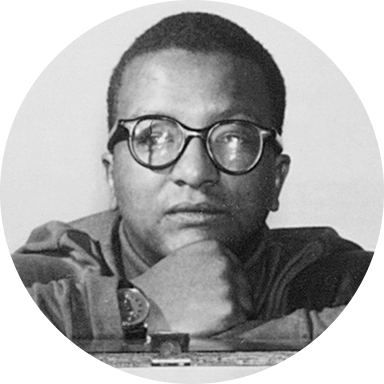
Billy Strayhorn (1915-1967) stands among the most prolific yet historically understated voices in American jazz. Born in Dayton, Ohio, Strayhorn began his partnership with Duke Ellington in 1939, a collaboration that would span decades and produce some of the 20th century's most enduring standards. His compositional output remains among the most recorded in jazz history, yet Strayhorn himself remained largely anonymous during his lifetime, a gap between the fame of his music and the recognition of his name that historians continue to examine.
Strayhorn's "Take the 'A' Train" became the signature theme of the Duke Ellington Orchestra and an anthem for an entire generation, earning consistent placement among the greatest songs of the century. His ballad "Lush Life," composed at age 16, set the harmonic and melodic standard that jazz singers still pursue today. Artists from Ella Fitzgerald and Sarah Vaughan to John Coltrane and Oscar Peterson recorded his works. Strayhorn's legacy extends far beyond individual hits; his influence reshaped how jazz composers approached harmonic sophistication and melodic storytelling.
Why we love this
Alan Baylock's chart reimagines a jazz standard that every ensemble should own, giving it the contemporary energy that keeps festival judges and audiences engaged. The arrangement respects the melody while completely refreshing the feel, swinging into funk grooves that feel organic rather than forced. With solo space distributed across multiple voices and a trumpet lead that sits comfortably in a playable range, this is sophisticated writing that your students will want to perform.
What to expect
Strayhorn's melody arrives with immediate groove and swagger, split between multiple voices before the arrangement pivots into a funk pocket that feels current and energized. The piece swings with clarity and purpose, then flexes into a contemporary feel that makes a standard feel alive. At just over five minutes, it maintains momentum and excitement from the opening statement through its multiple solo sections.
Who it's for
Jazz ensembles at the Grade 4 level with strong section leadership and the flexibility to move between swing and funk grooves. Soloists in your trumpet, trombone, saxophone, and bari sax sections need enough confidence to carry melodic and improvisational passages while the ensemble listens and responds.
How to get the most out of it
- Balance the initial melodic statement between bari sax, bass trombone, guitar, and bass so that each voice cuts through without one instrument overpowering the ensemble. Lock the rhythm section early in rehearsal to establish the pocket before soloists enter.
- Mark the groove transitions clearly in parts. The shift from swing to funk feel requires rhythmic precision from drums and bass; rehearse these sections separately first to ensure the stylistic change lands cleanly.
- Give solo space sufficient rehearsal time. Alto sax 1, trombone 1, bari sax, and trumpet 2 each need to develop their voice and phrasing, and the ensemble needs to listen and respond as accompanists rather than passengers.
- Pay attention to the lead trumpet writing up to written D. This range is playable for advanced students but requires clear voicing and accurate intonation in the upper register, especially during the high-energy funk sections.
How to use it
This is festival and contest material that earns recognition without sacrificing musicality. Program it alongside more traditional jazz standards to show your ensemble's range and contemporary sensibility, or use it as an opener to establish immediate energy and showcase what your jazz program brings to a concert.
Skills your students will build
- Interpreting groove-based articulation and phrasing across swing and funk feels
- Comping and accompanying skills while maintaining rhythmic cohesion as rhythm section
- Solo construction and improvisation over extended melodic space with ensemble interplay
- Reading and executing contemporary jazz arranging techniques while honoring the original melody
- Balancing section voice in collective melodic statements where multiple instruments share thematic material