
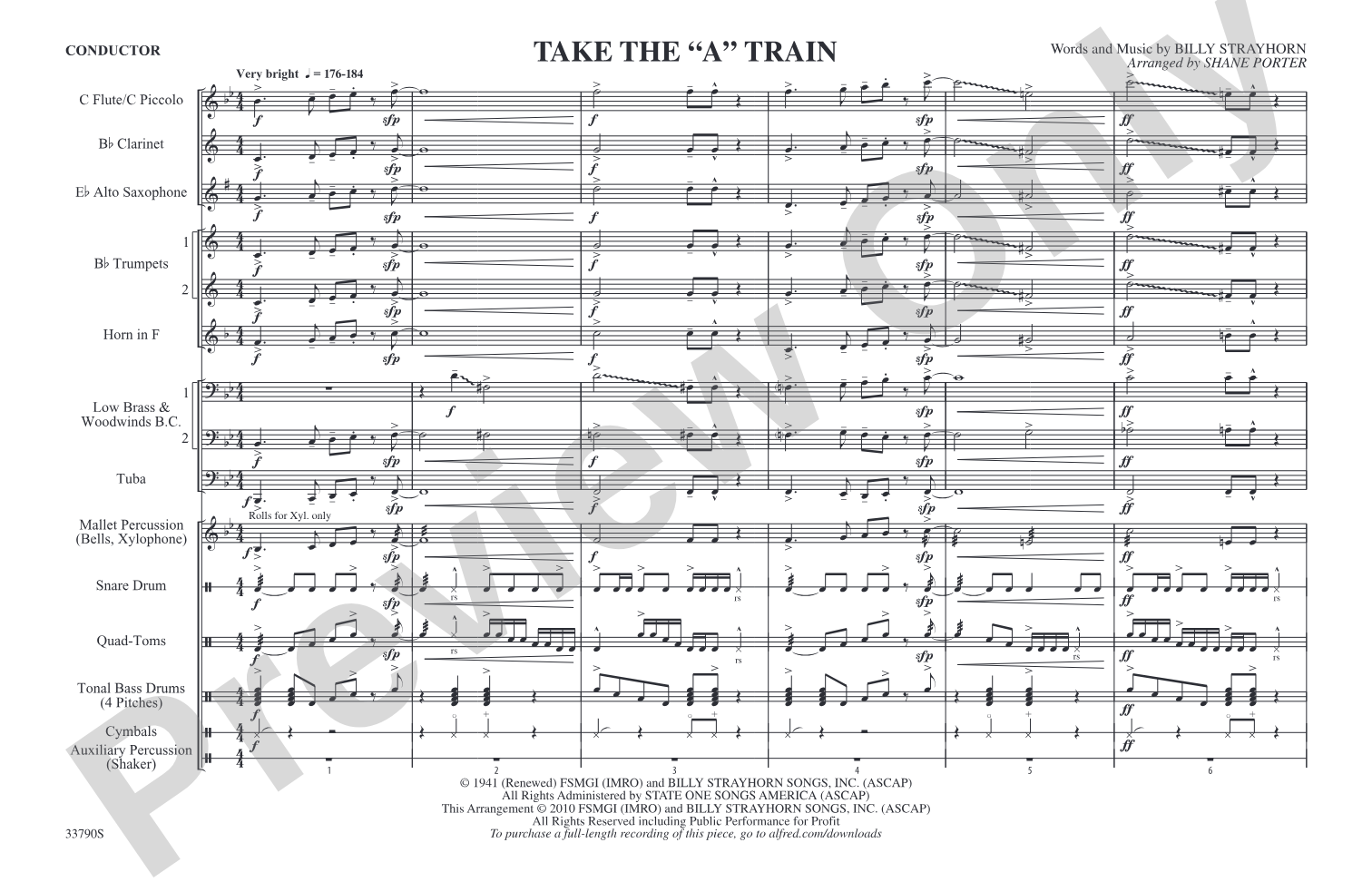
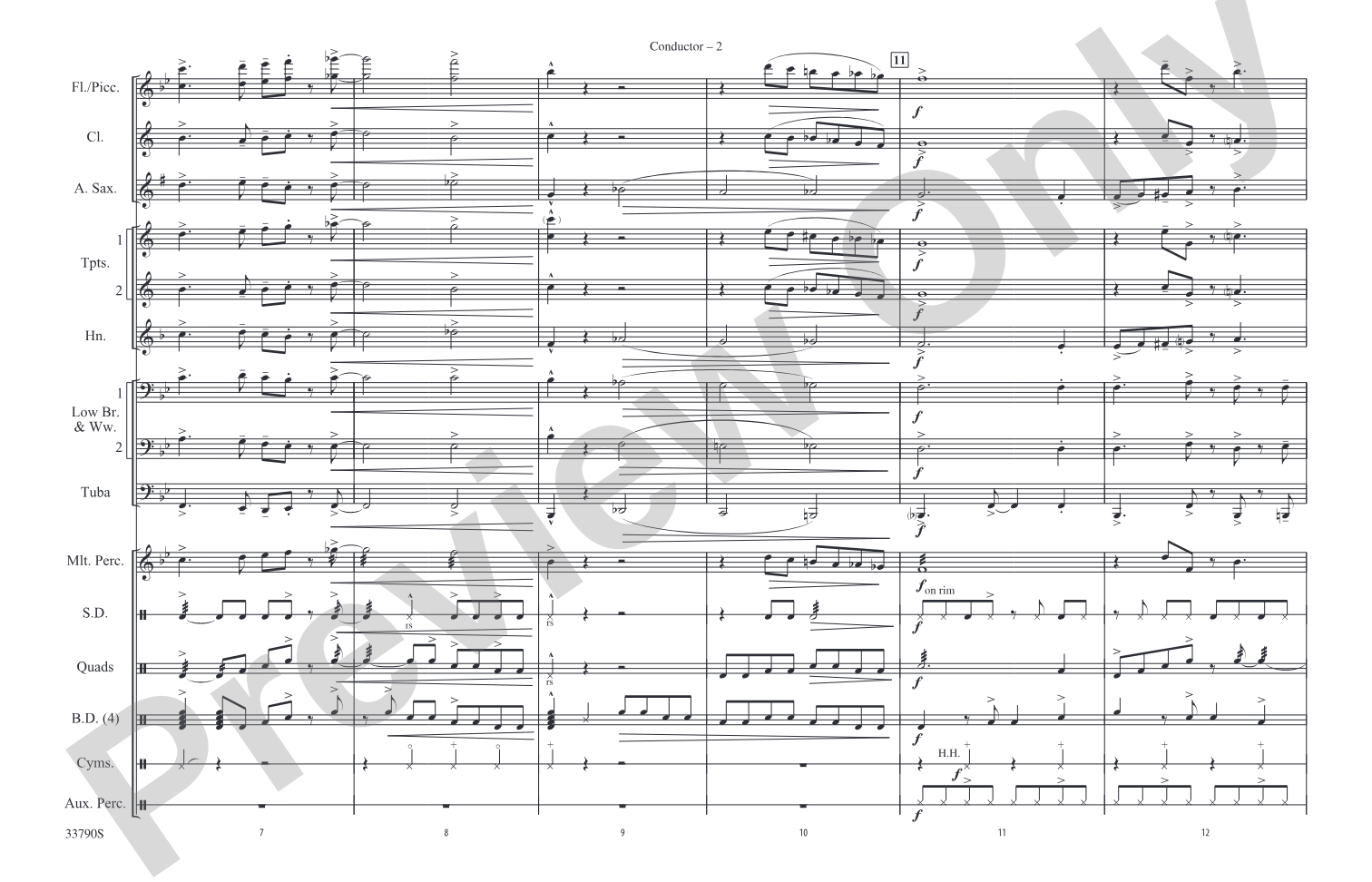
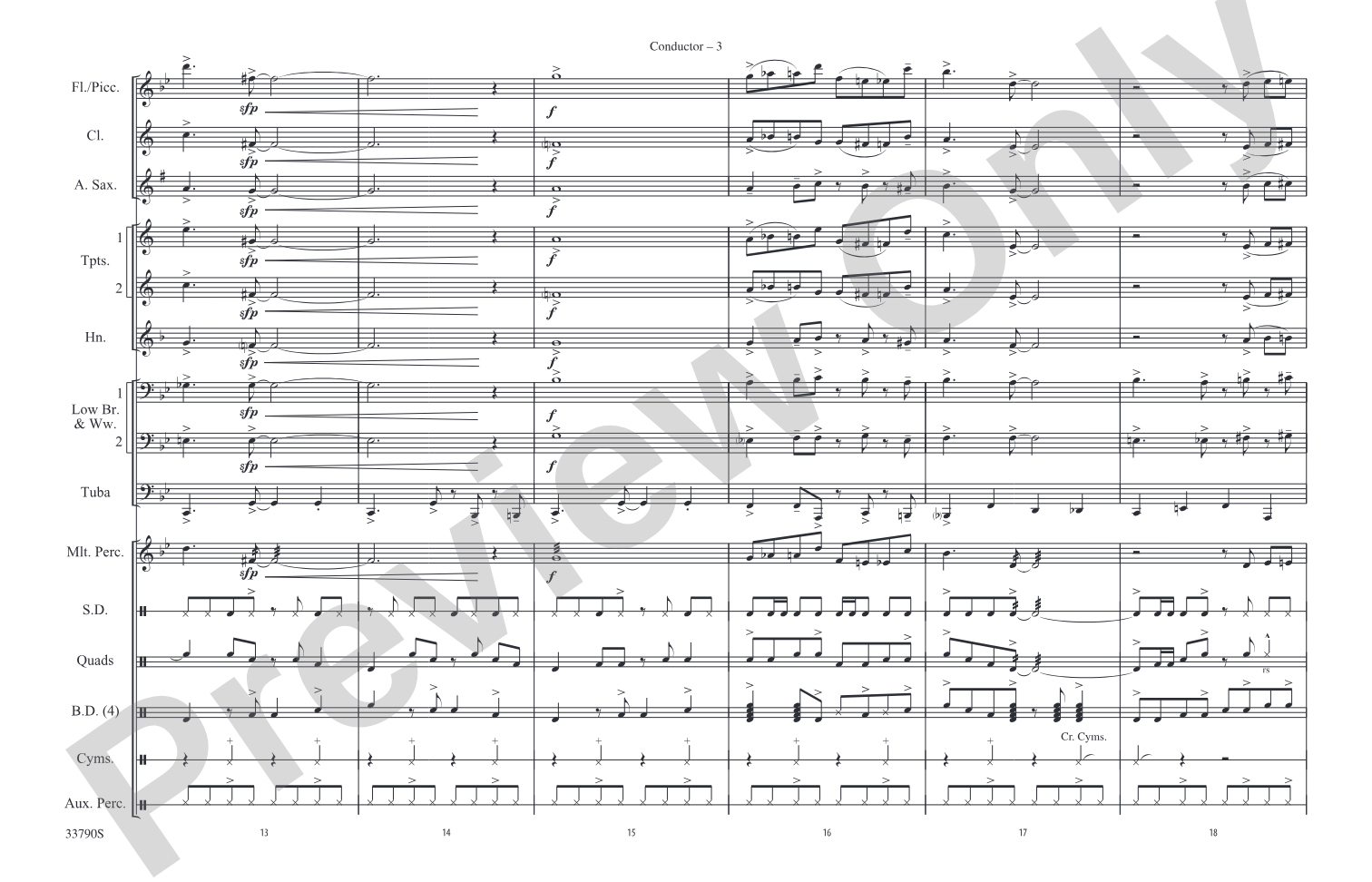
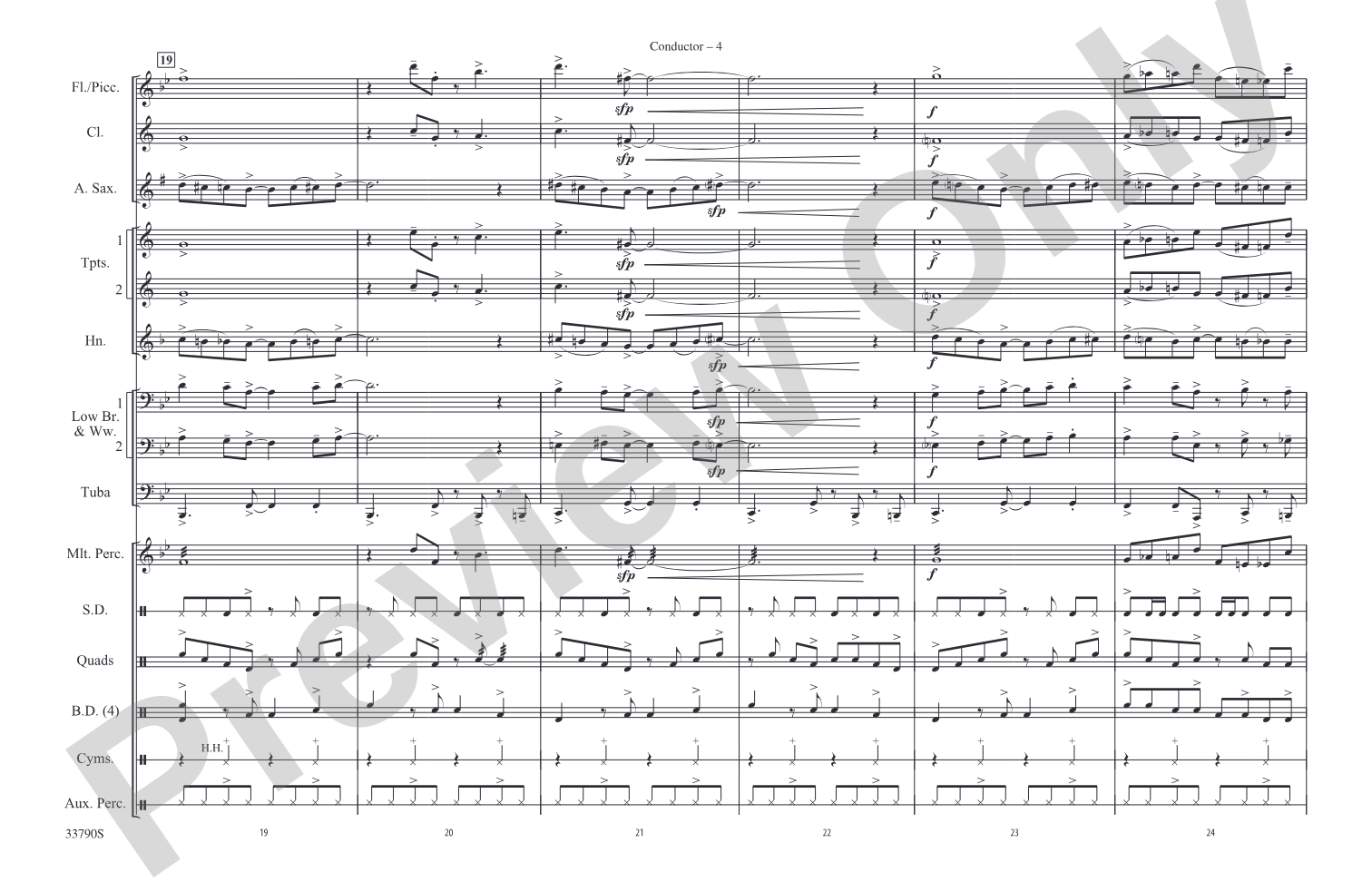
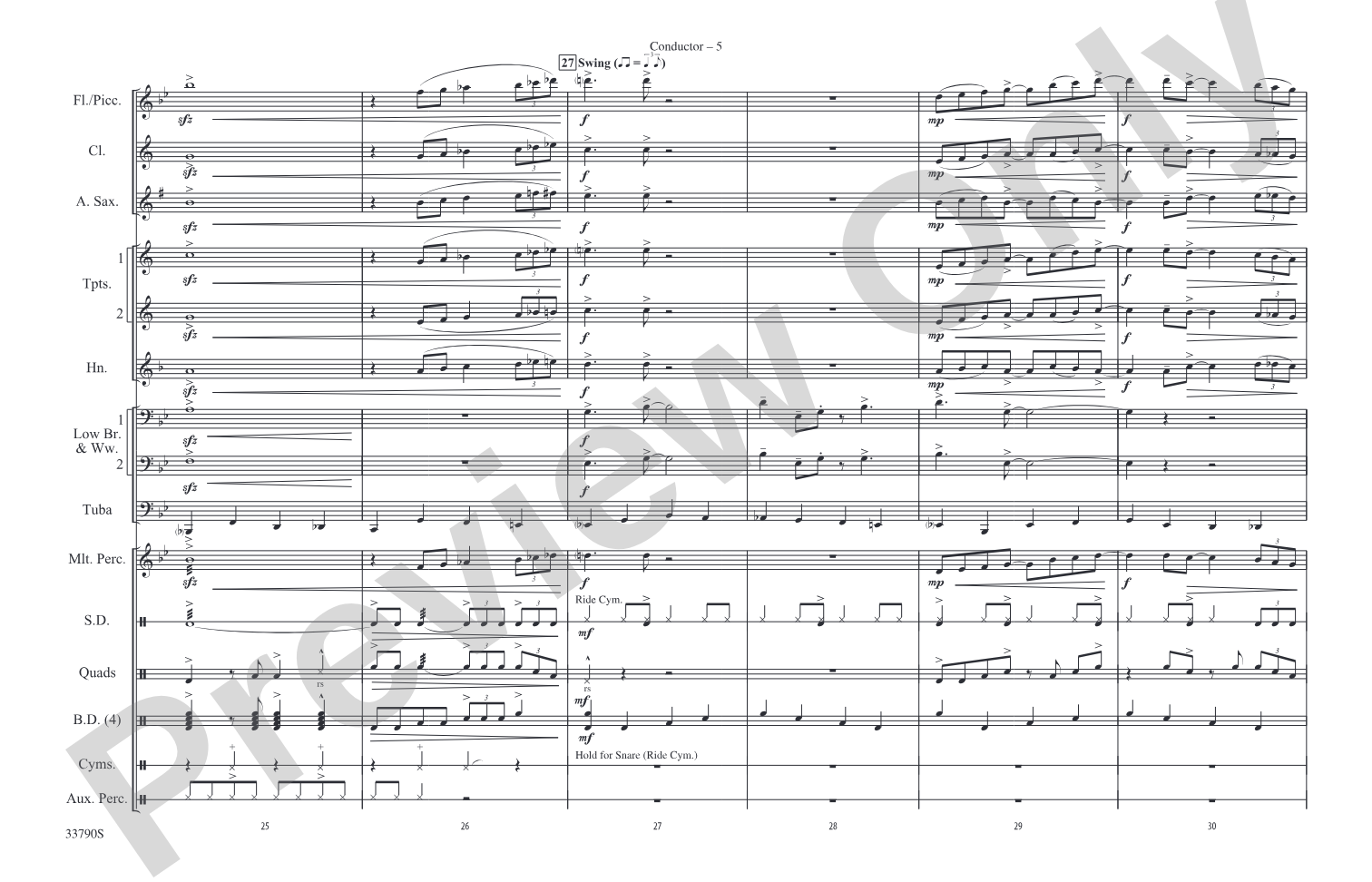
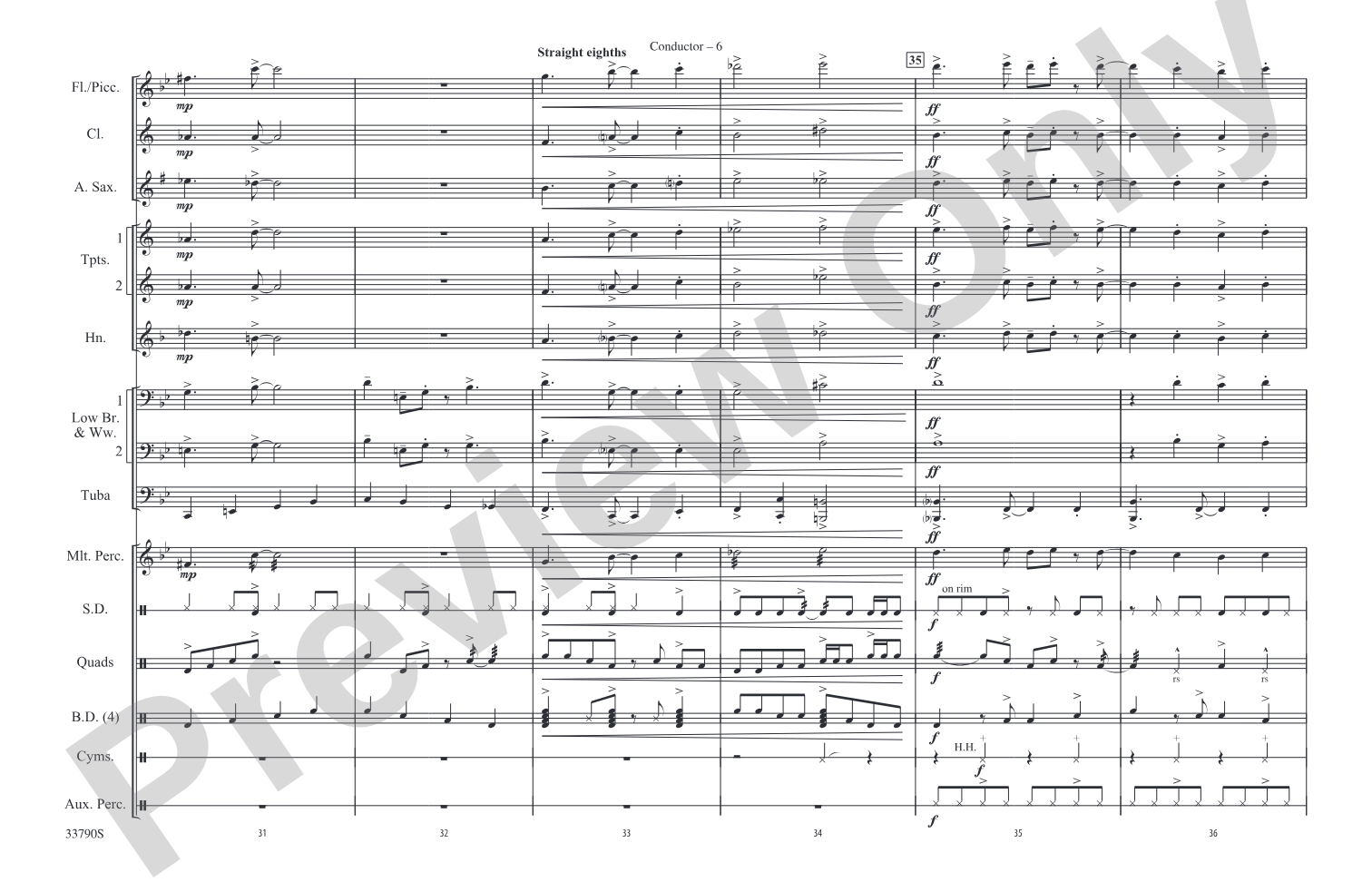
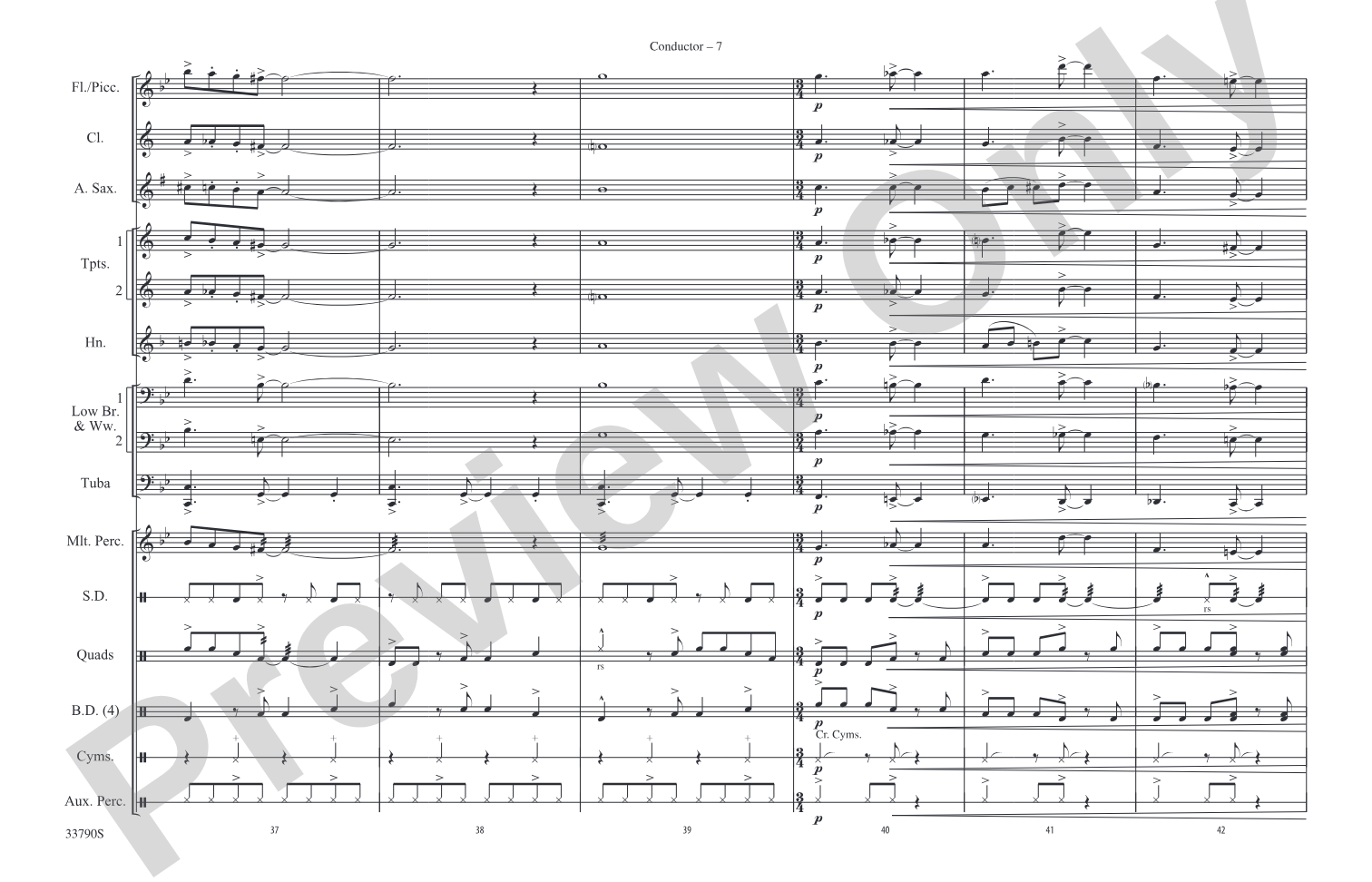
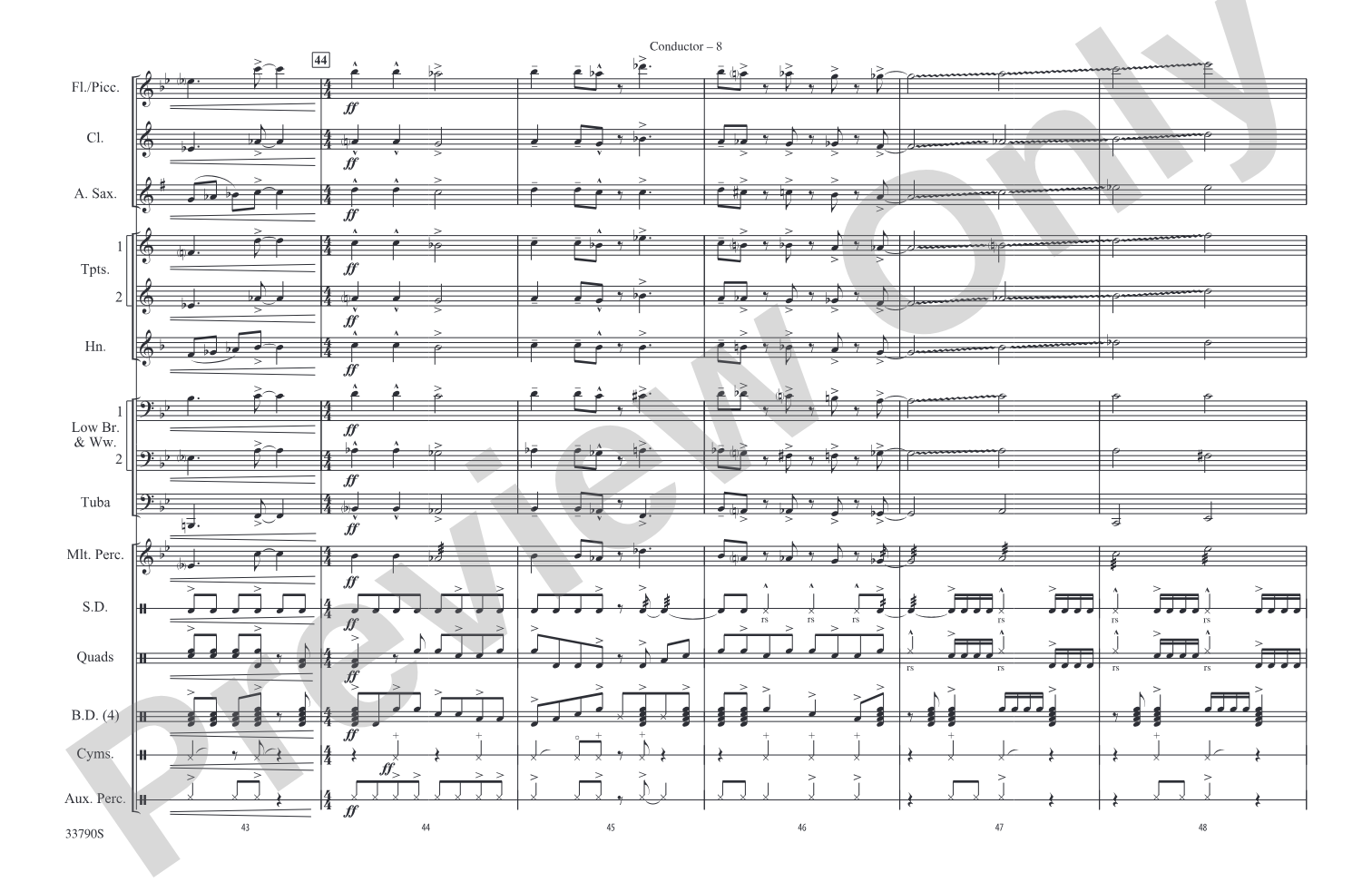
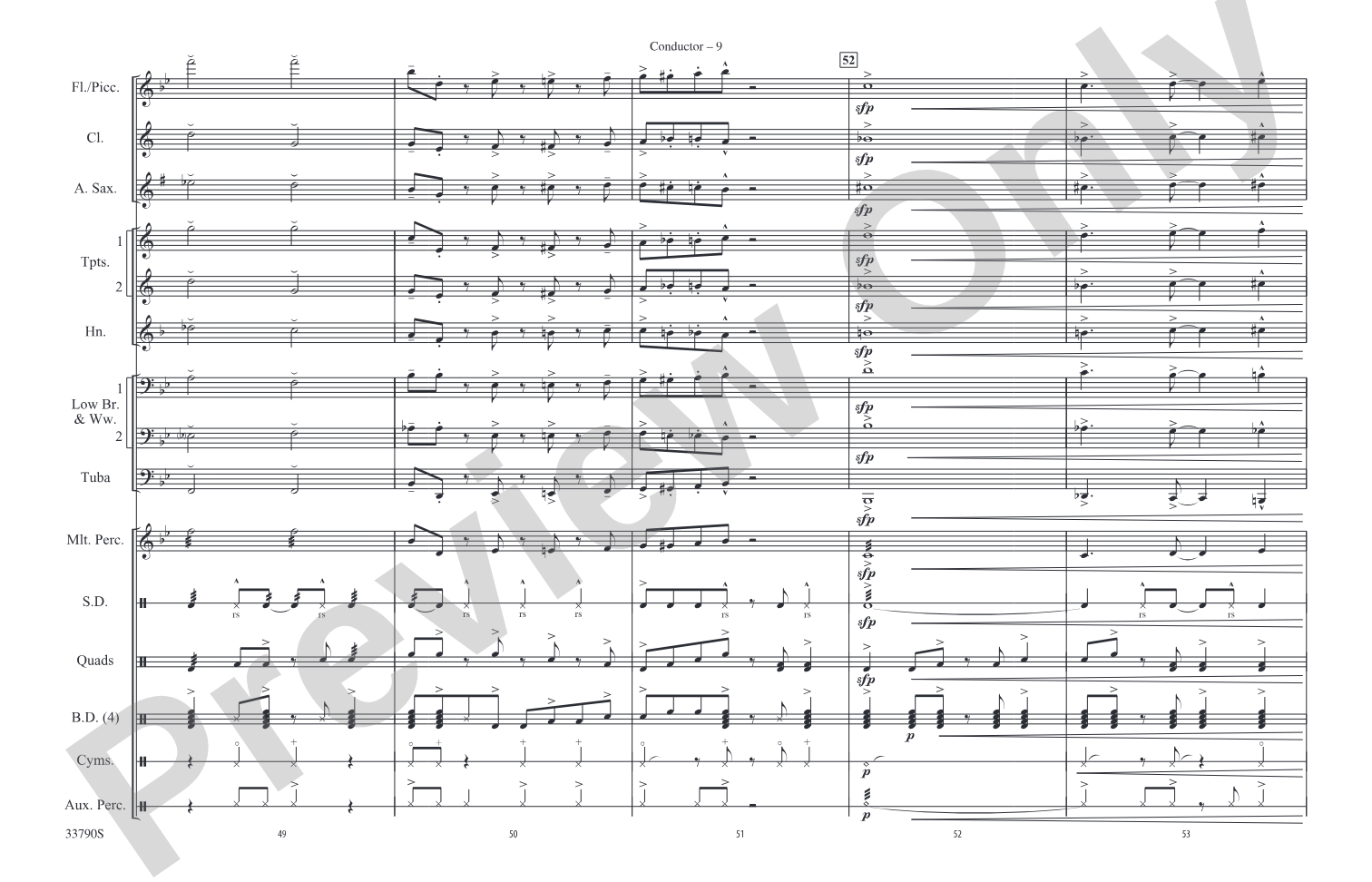
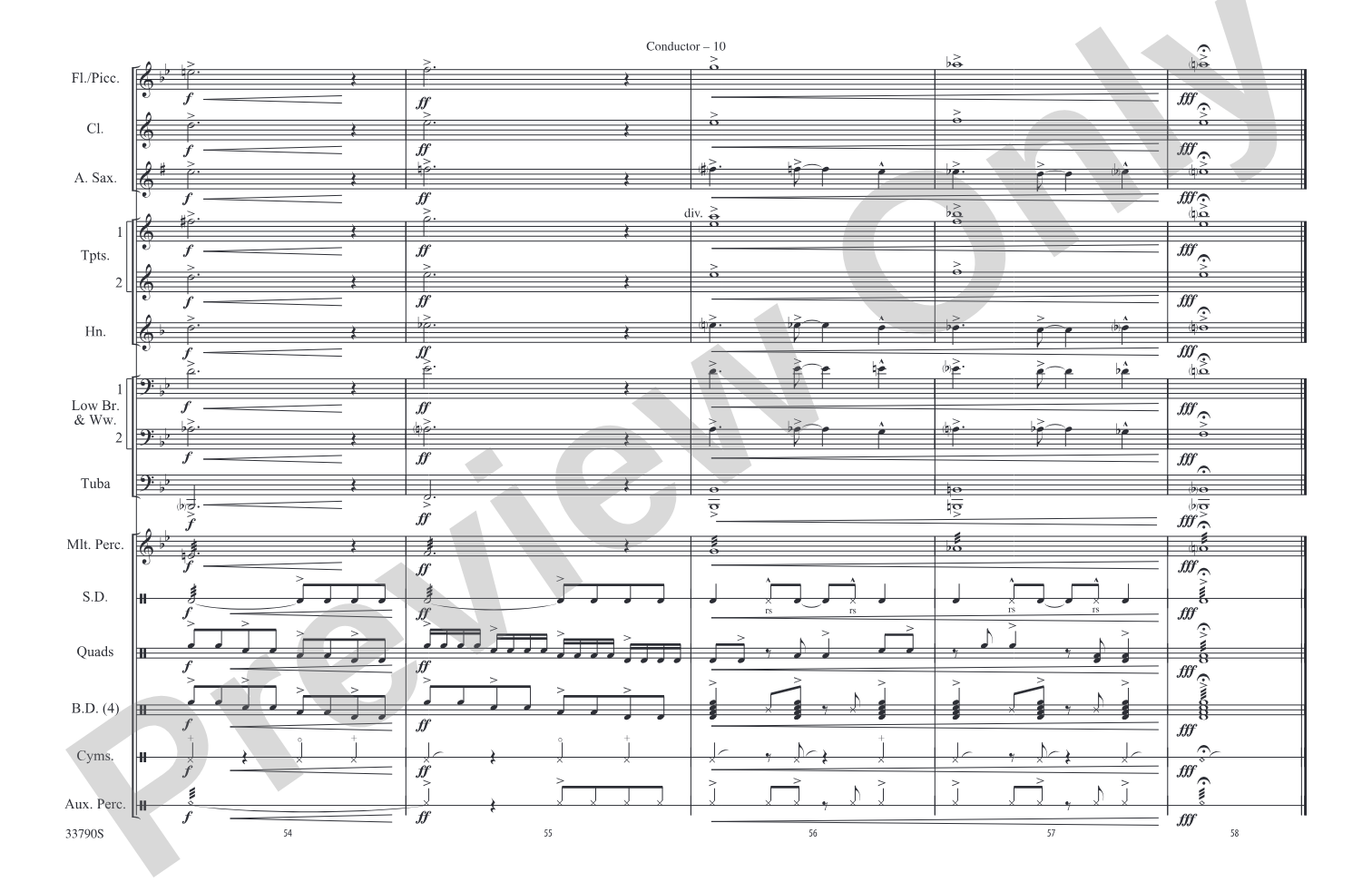

Take the "A" Train: Marching Band Conductor Score & Parts
Words and music by Billy Strayhorn [Duke Ellington] / arr. Shane Porter
Grade: 3 (Medium)
Item: 00-PK-0007928

$50.00
One moment…
Description
Duke Ellington never imagined his most famous tune quite like this! Shane Porter pulls out all of the stops with this terrific new arrangement. Contrasting styles, colorful scoring, and a huge ending set this tasty chart apart from the rest. Outstanding!


Don't just read it, hear it, play along with it, and watch your students grow with it. In MakeMusic Cloud, Take the "A" Train: Marching Band Conductor Score & Parts comes alive with professional accompaniment, adjustable tempo, and built-in practice tools that turn solo practice into real progress.
Open in the Player
Jump straight in and assign it today.
Start Your Free Trial
Open this title and explore the full library in minutes.
Sample Audio
1
Audio File
--:--
0:00
0:00
Sample Video
No sample videos found.
Additional Details
Series:
Mega Sounds for Marching Band
Publisher:
Alfred Music
Page Count:
110
SKU:
00-PK-0007928
More about this title
About the Composer: Billy Strayhorn
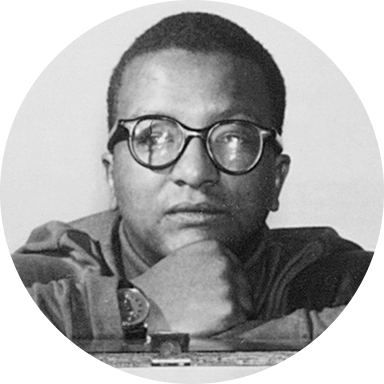
Billy Strayhorn (1915-1967) stands among the most prolific and harmonically inventive jazz composers in American music history, though his contributions remained underrecognized during his lifetime. Born in Dayton, Ohio, Strayhorn began his partnership with Duke Ellington in 1939, a collaboration that would define both men's careers. Beyond "Take the 'A' Train," which became the Ellington Orchestra's signature piece and a wartime anthem, Strayhorn composed standards like "Lush Life" (written at age 16) that continue to challenge and inspire musicians across genres. His openness as a Black gay man in mid-20th-century America came at considerable personal cost, yet his music endured, recorded by everyone from Ella Fitzgerald and Sarah Vaughan to John Coltrane and Oscar Peterson.
Strayhorn's legacy rests not on fame but on influence. Jazz historians and musicians recognize him as one of the century's most significant composers, whose harmonic sophistication and melodic gift shaped the sound of American jazz. Despite decades of public obscurity, his fingerprints appear throughout the jazz canon, a testament to music that speaks louder than any byline ever could.
Why we love this
Shane Porter's arrangement captures the swing and sophistication of Strayhorn's classic while giving marching band something genuinely fresh. The mix of contrasting styles and colorful instrumentation keeps the energy high without sacrificing the tune's elegance, and a Grade 3 scoring makes it accessible to most programs without dumbing down the arranging or the arrangement's musicality.
What to expect
Polished and swinging, with the urbane cool of wartime Harlem transported to the field. The piece balances elegance with accessibility, delivering the sophisticated harmonic movement of the Ellington era filtered through modern arranging that keeps marching students engaged and proud to play.
Who it's for
Marching bands at the Grade 3 level looking to program a recognizable jazz standard with contemporary arranging that challenges students without overwhelming them. This works equally well for fall season programs or indoor percussion ensembles looking to add swing vocabulary to their percussion and brass sound.
How to get the most out of it
- Balance the melody across the brass section as it passes between trumpets and trombones; let the inherent swing of the tune breathe rather than forcing it.
- Pay attention to the score's stylistic shifts. Use dynamic and articulation changes to clarify each new section rather than maintaining one groove throughout.
- Anchor the rhythm section tight. The drums, bass, and chords need precision so the horns can swing freely on top of a locked foundation.
- Shape the huge ending Porter mentions with controlled energy. Build through the section but resist the urge to just play louder; use voice leading and spacing to create the climax.
How to use it
Feature this as a centerpiece number that bridges classical marching band repertoire and contemporary jazz standards. It pairs well alongside other swing-era charts in a fall or spring concert and gives percussion and brass alike memorable solo moments that showcase their musicianship.
Skills your students will build
- Swing articulation and phrasing specific to jazz idiom
- Balance and blend when melody passes between sections
- Reading and executing stylistic contrasts within a single arrangement
- Rhythmic precision in locked rhythm section (drums, bass, chords)
- Responding to dynamic and harmonic sophistication at Grade 3 level