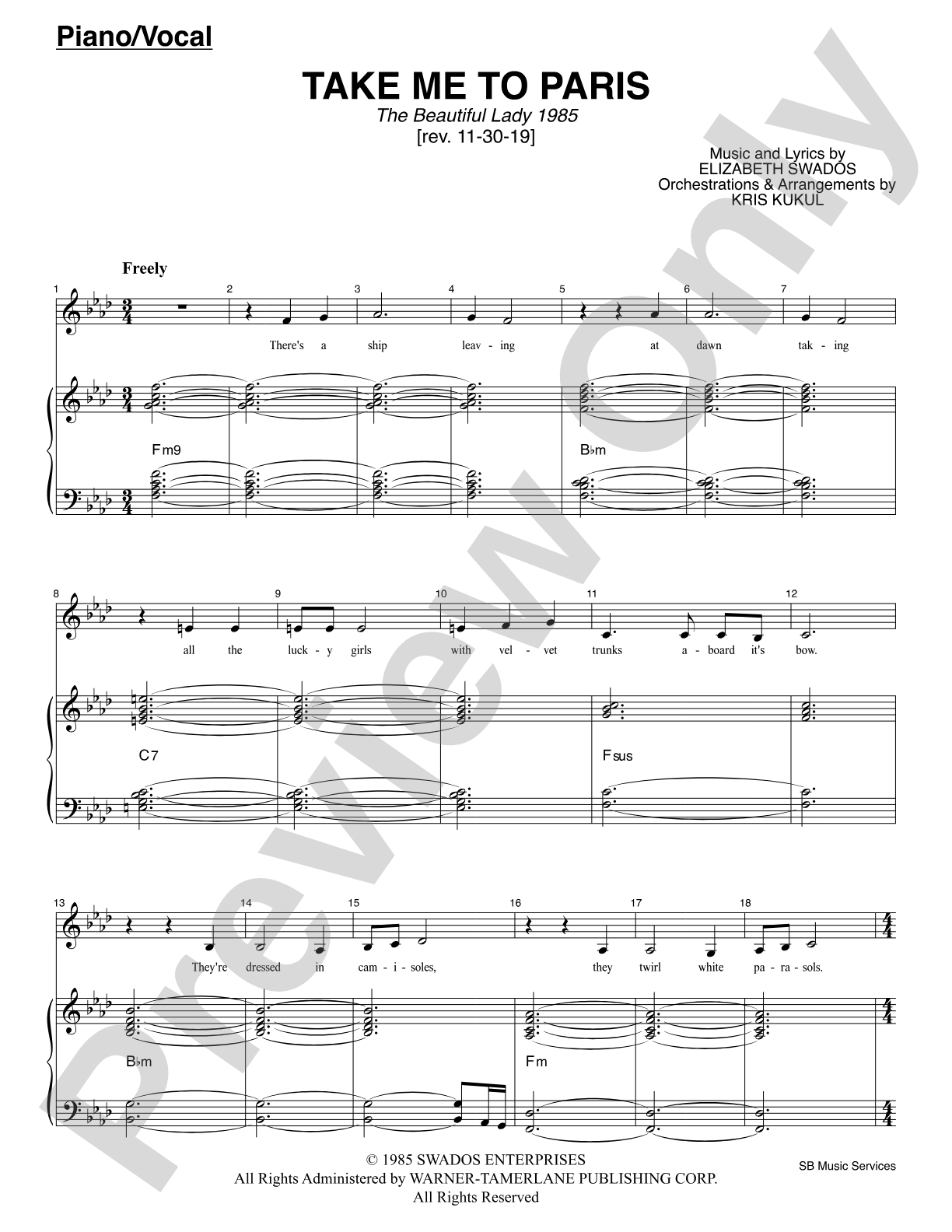
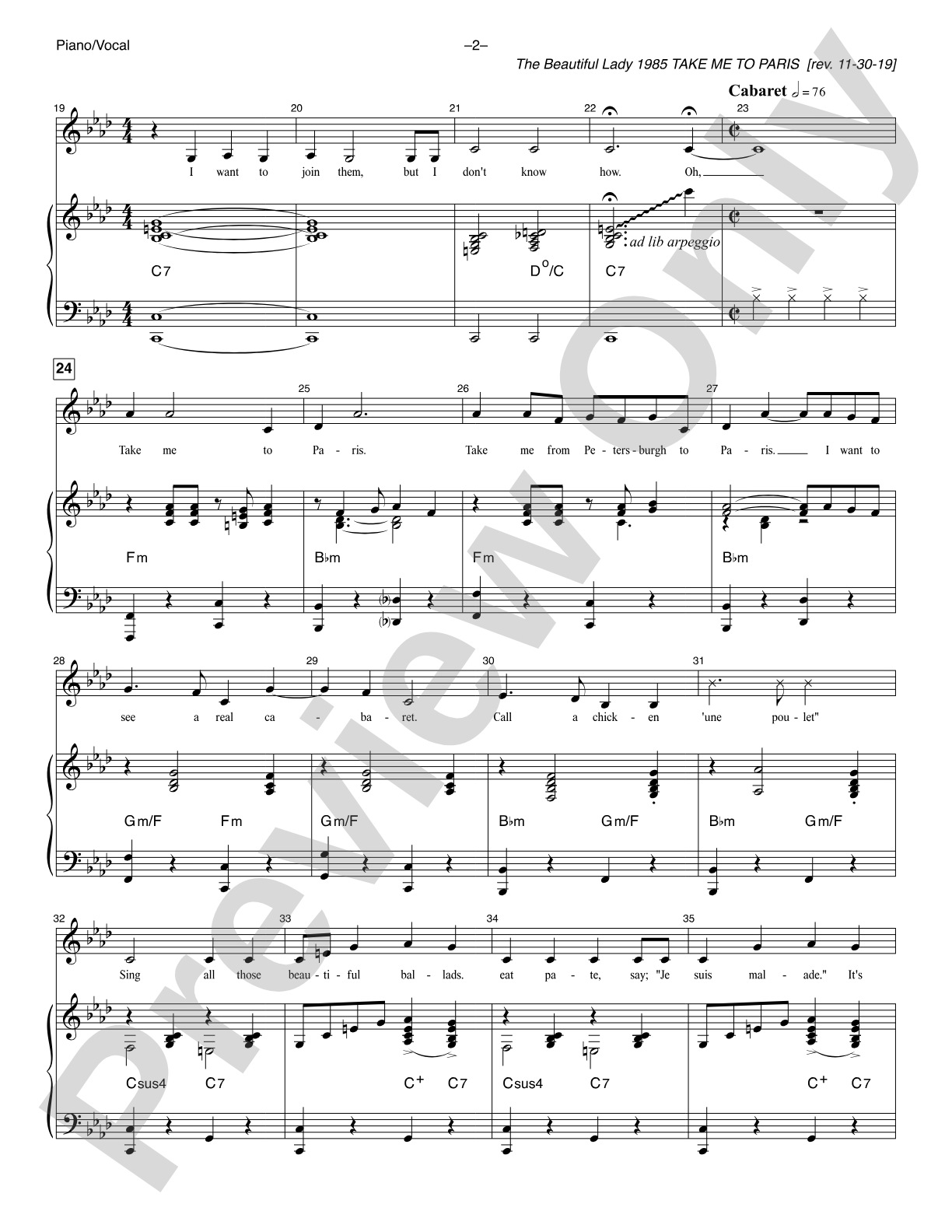
Elizabeth Swados (1951-2023) was a Tony-nominated theater director, composer, and songwriter whose work blended musical storytelling with social consciousness. She created innovative musicals and revues that often centered on underrepresented voices, bringing urgent human narratives to the stage with both lyrical beauty and theatrical boldness. Her compositions combined accessible melodies with sophisticated emotional depth, making her work compelling for both professional and educational performers.
Why we love this
This song captures the romantic escapism that defines great musical theater writing. Swados paired a melody that feels both contemporary and timeless with the kind of character-driven storytelling that makes audiences lean in, and Kukul's arrangement gives singers room to inhabit the song's yearning without overshadowing the emotional core.
What to expect
Wistful and yearning, with the kind of dreamy quality that suggests both memory and desire. The piano work creates a sense of romantic reverie around the vocal line, inviting the listener into a private moment of longing. There's sophistication in the restraint here; nothing overshoots the mark, and everything serves the emotional truth of the character.
Who it's for
Singers preparing cabaret material, recital repertoire, or theater audition songs will find this arrangement accessible and performable in intimate settings. Piano accompanists looking for contemporary musical theater material that doesn't demand extensive transposition or reharmonization will appreciate its straightforward design. Teachers introducing students to the craft of musical theater composition through a song that balances melodic simplicity with emotional sophistication.
How to get the most out of it
Shape the vocal line by following the natural peaks and valleys of the lyric rather than forcing uniformity; this song rewards expressive phrasing that honors where the character's mind travels.
Coordinate the piano part's harmonic movement with the voice to ensure the accompaniment supports rather than competes for attention during emotional moments.
Establish a consistent tempo early in rehearsal so the performer can focus energy on delivering the emotional arc rather than fighting rhythmic uncertainty.
Explore the lyrics for subtext before locking in vocal choices; understanding what Paris represents to this character will inform dynamics, breath placement, and overall interpretation.
How to use it
This works beautifully as an encore or as part of a cabaret showcasing contemporary musical theater composition. Pair it with other songs that explore travel, escapism, or romantic yearning for a thematic recital program. Solo vocalists and pianist partners performing in smaller venues or studio settings will find it ideal for demonstrating interpretive maturity without demanding grand theatrical production.
Skills your students will build
Balancing vocal expression with text clarity in a legit musical theater style
Coordinating vocal phrasing with piano accompaniment to create unified interpretation
Identifying and communicating character motivation to inform performance choices
Managing a melody that sits comfortably in a moderate range across various vowel sounds
You May Also Like
Scan to Complete Your Purchase
Use your phone's camera to scan the code below
You'll log in on your phone and the order will be added to your account