Take Me To Church (arr. Carol Canning) Sheet Music Preview

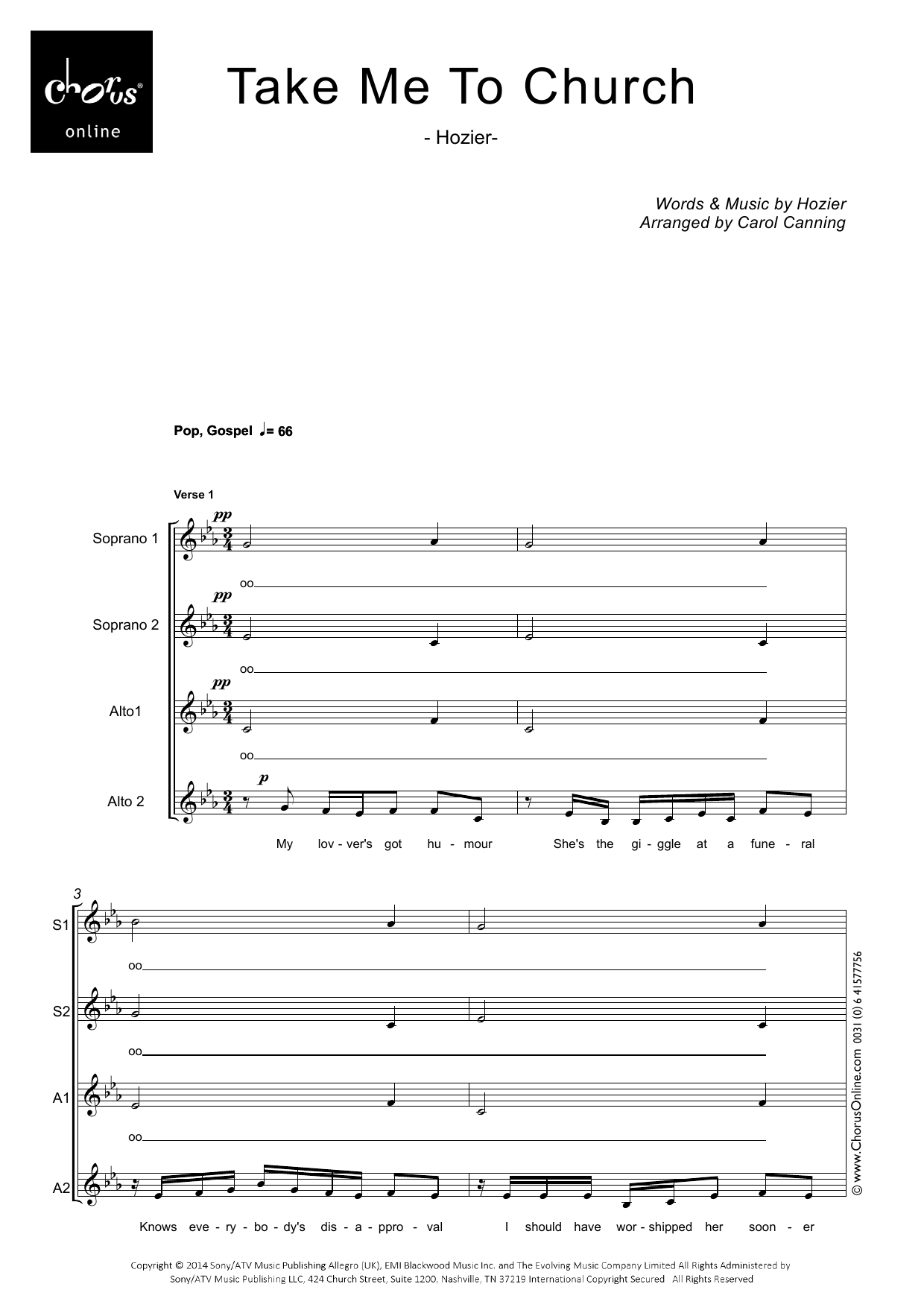
Take Me To Church (arr. Carol Canning): SSAA Choral Octavo

As performed by Hozier / Arranged by Carol Canning

Item: 35-DS00497432

Digital Download
$2.99
Description

Take Me To Church (arr. Carol Canning): SSAA Choral Octavo isn't in MakeMusic Cloud just yet...but it could be. Let us know you'd like to see it, and you'll help shape what comes next. In the meantime, start a free trial and dive into thousands of interactive titles your students can play along with today.

Sample Audio
No sample audio found.
Sample Video
Additional Details
Publisher: Hal Leonard
Page Count: 12
SKU: 35-DS00497432

More about this title

About the Artist: Hozier

Andrew Hozier-Byrne emerged from Wicklow, Ireland, in the early 2010s with a sound rooted in folk traditions and contemporary soul. His 2014 debut album introduced "Take Me to Church," a song that became a cultural touchstone for its unflinching examination of institutional hypocrisy and human connection. Hozier's work draws from blues, gospel, and literary influences; his voice carries a distinctly warm, weathered quality that rewards close listening.

In the classroom, Hozier's catalog offers rich material for discussing songwriting craft, lyrical specificity, and how contemporary artists engage with serious themes. His arrangements and production choices demonstrate how restraint and texture create emotional impact.

Why we love this

Carol Canning's SSAA voicing captures the song's spiritual intensity without flattening its protest edge. The arrangement respects the original's slow burn and creates genuine moments for choir voices to harmonize in ways that feel earned rather than imposed. Directors seeking repertoire that connects with students' actual listening while meeting legitimate artistic standards will find this especially valuable.

What to expect

Austere and searching, with moments of unexpected warmth. The arrangement breathes like a prayer spoken in doubt, building emotional weight through harmonic layering and careful phrasing rather than velocity. There's a quiet defiance to it, the feeling of standing still while speaking uncomfortable truth.

Who it's for

Choirs with solid part-singing ability and singers mature enough to engage with the song's social commentary. This works for upper-level high school ensembles, college choirs, and community groups seeking contemporary repertoire with substance. The 12-page length and SSAA flexibility allow it to fit programs of various sizes.

How to get the most out of it

  • Build the dynamic arc deliberately through rehearsals. The song's power comes from restraint in early sections and gradual intensity, not from starting loud.
  • Attend closely to the lyrics and their meaning. Students who understand the text's criticism of institutional judgment will sing with appropriate conviction and clarity.
  • Consider what the accompaniment (if using one) contributes. An a cappella performance emphasizes vocal blend and precision; any instrumental backing should enhance rather than compete with the voices.
  • Balance individual voice parts during blend passages. SSAA voicing can blur if sopranos dominate; ensure altos and second sopranos anchor the harmonic foundation.

How to use it

Pair this with other contemporary pieces that tackle identity and belonging, or program it as a standalone moment in a concert focused on songs with narrative depth. It works particularly well when audiences need to sit in discomfort and reflection. The song's themes and Canning's arrangement support deeper ensemble conversations about what choral music can say.

Skills your students will build

  • Sustaining emotional expression over longer phrases without losing vocal control
  • Singing text with conviction and clarity in contemporary language and idiom
  • Balancing harmonic blend in close-voiced SSAA writing
  • Interpreting lyrical meaning and translating it into musical choices
  • Managing the relationship between individual voice parts and collective sound

You May Also Like