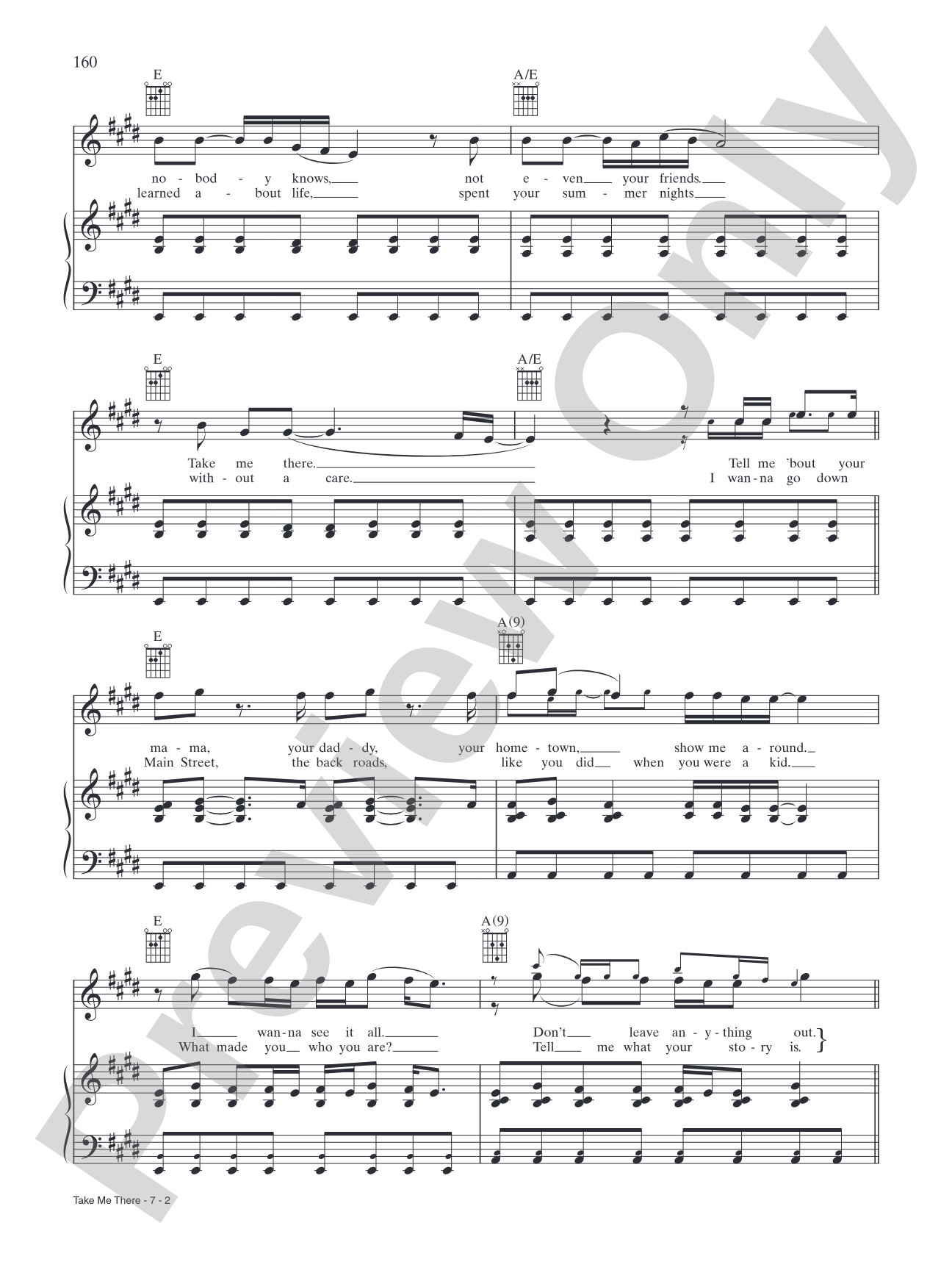
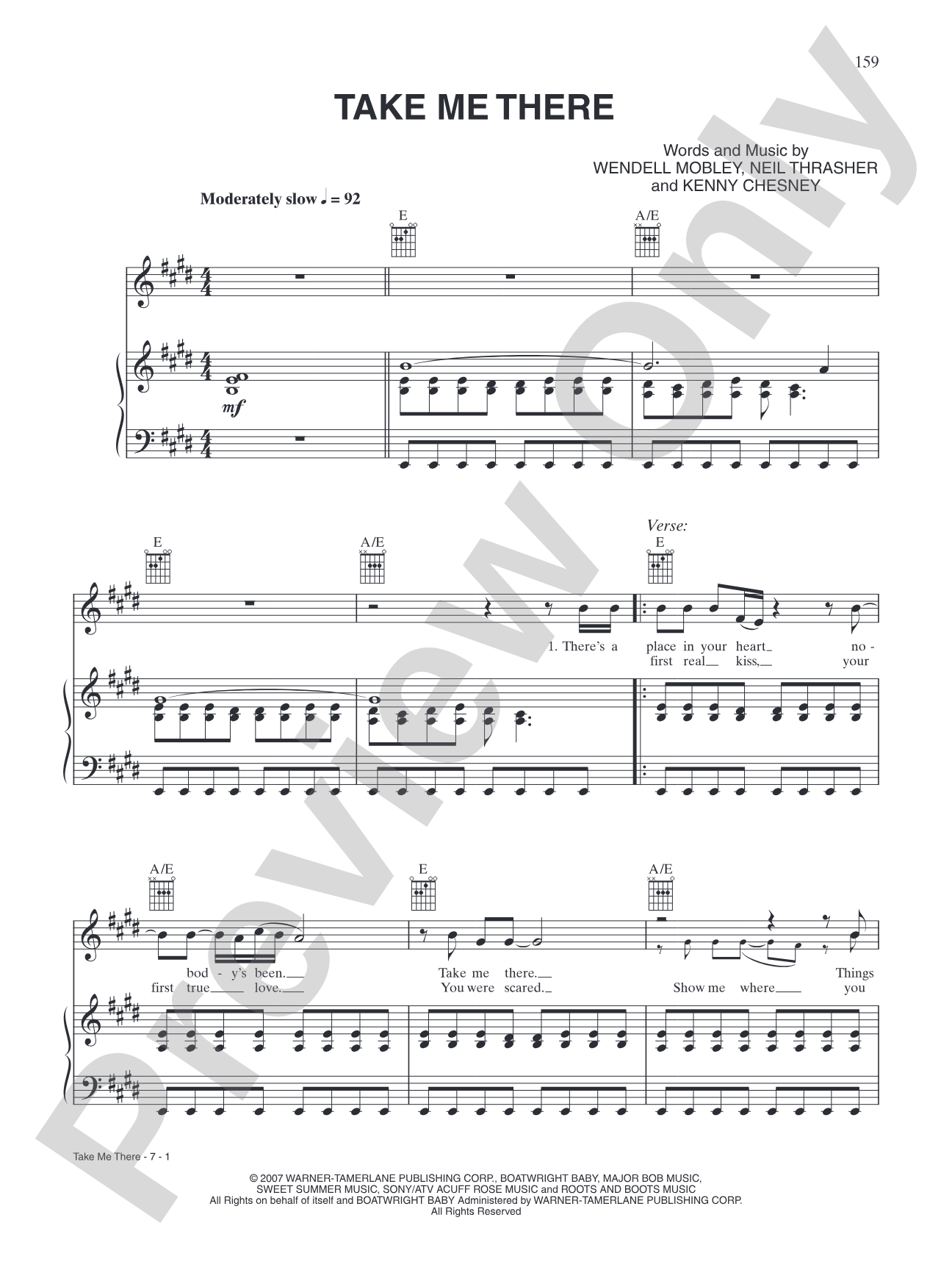
Take Me There Sheet Music Preview

Take Me There: Piano/Vocal/Chords

Recorded by Rascal Flatts

Item: 00-PSP-000498

Digital Download
$3.99
Description
From their latest hit album, Still Feels Good, the four-time CMA vocal group award winners have not ceased releasing top singles since their debut in 2000. Still Feels Good is the group's sixth album, while "Take Me There," is already the second single released, a follow-up to the number one single, "Stand." With their rich sound, modern country image, and devoted fan base, Rascal Flatts continues to gain popularity in the country and pop arenas.

Alfred presents the sheet music to this hit single, "Take Me There." The music includes song lyrics, melody line, and chord changes with professionally arranged piano accompaniment.

Take Me There: Piano/Vocal/Chords isn't in MakeMusic Cloud just yet...but it could be. Let us know you'd like to see it, and you'll help shape what comes next. In the meantime, start a free trial and dive into thousands of interactive titles your students can play along with today.

Sample Audio
No sample audio found.
Sample Video
Additional Details
Series: Original Sheet Music Edition
Publisher: Alfred Music
Page Count: 8
SKU: 00-PSP-000498

More about this title

About the Artist: Rascal Flatts

Rascal Flatts emerged from Nashville in 2000 with a distinctive blend of country harmony and pop accessibility that would define their career across two decades. The group's three-part vocal blend became their signature, earning them four CMA Vocal Group of the Year awards and a devoted following that spans both country radio and mainstream pop audiences. Still Feels Good, their sixth studio album, reflects their continued evolution as songwriters and performers who understand how to craft emotionally resonant material that connects with listeners across multiple genres.

Why we love this

This arrangement captures what made Rascal Flatts compelling to singers and pianists alike: a melody that sits naturally in the voice, harmonic changes that feel sophisticated without being overly complex, and a piano part that supports rather than overshadows the vocal line. The professionally arranged accompaniment gives students a realistic model for how contemporary country-pop songs are structured, while the chord notation opens the door to improvisation and reharmonization.

What to expect

Warm and inviting, with the kind of conversational melody that makes the lyrics feel personal rather than performed. The piano accompaniment has enough character to stand on its own during instrumental passages but knows when to step back and let the voice carry the emotional weight.

Who it's for

Vocalists preparing contemporary country-pop material for recitals, auditions, or performance contexts will find this arrangement accessible and musically satisfying. Pianists accompanying singers in lessons or recitals can use this professionally arranged part as a model for playing with singers in the contemporary idiom.

How to get the most out of it

  • Balance the vocal melody against the piano part so the words remain clear; the accompaniment fills spaces between phrases rather than competing for attention.
  • Use the chord chart to explore subtle reharmonization options in the second verse or bridge, testing how small harmonic variations can shift emotional weight.
  • Shape dynamic contours through the song's arc rather than maintaining a steady volume; country-pop songs often build intensity through dynamics as much as orchestration.
  • Practice the piano part separately first to anchor the harmonic progression, then layer the vocal line gradually so intonation stays secure across the chord changes.

How to use it

Include this on a recital that explores contemporary country-pop songwriting, pairing it with other modern hits to show vocalists how to navigate this genre with musical integrity. It also works as a teaching piece for pianists developing fluency with the chord-melody-accompaniment texture that dominates modern singer-songwriter material.

Skills your students will build

  • Reading melody, lyrics, and chord symbols simultaneously
  • Interpreting country-pop phrasing and emotional inflection
  • Coordinating vocal line with piano accompaniment across dynamic shifts
  • Understanding contemporary harmonic progressions and their functional roles
  • Balancing ensemble texture between voice and piano

You May Also Like