
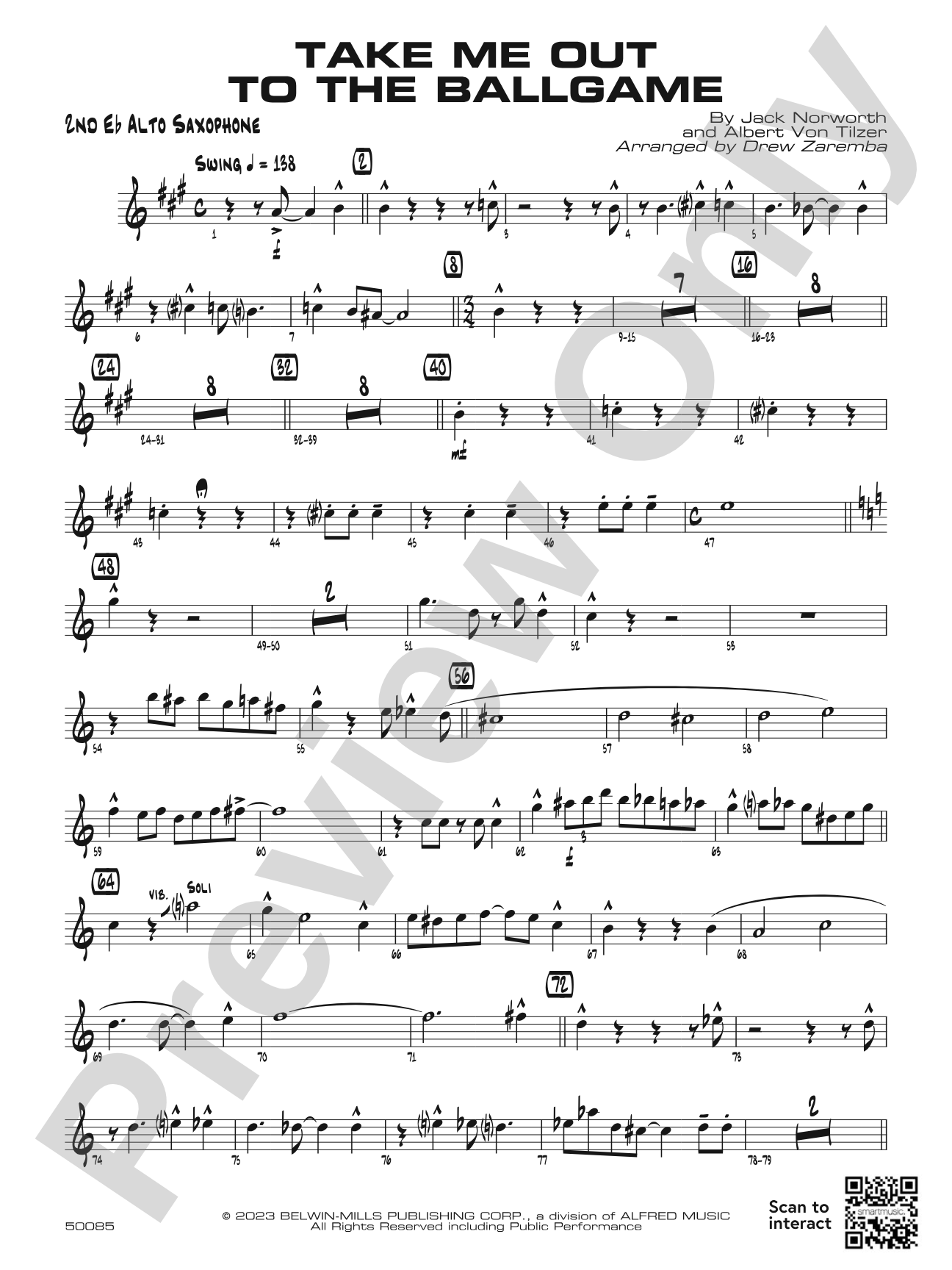

Take Me Out to the Ballgame: 2nd E-flat Alto Saxophone
By Jack Norworth and Albert Von Tilzer / arr. Drew Zaremba
Grade: 2.5
Item: 00-PC-0019047_AX2
$3.00
Pickup currently not available
Description
This superb chart covers all the bases! Played around 148 BPM with a suggested written tenor solo, and lead trumpet range to written G on top of the staff. A swinging intro gives way to a circus-like "oom-pah" feel, then back into a slow-building swing with a big shout section. A captivating chart you and the band will relish! (5:25)


Don't just read it, hear it, play along with it, and watch your students grow with it. In MakeMusic Cloud, Take Me Out to the Ballgame: 2nd E-flat Alto Saxophone comes alive with professional accompaniment, adjustable tempo, and built-in practice tools that turn solo practice into real progress.
Open in the Player
Jump straight in and assign it today.
Start Your Free Trial
Open this title and explore the full library in minutes.
Sample Audio
1
Audio File
--:--
0:00
0:00
Sample Video
Additional Details
Series:
Young Jazz Ensemble
Publisher:
Alfred Music
SKU:
00-PC-0019047_AX2
More about this title
About the Composer: Jack Norworth
Jack Norworth (1879-1959) wrote the lyrics to "Take Me Out to the Ballgame" in 1908, creating one of America's most enduring popular songs. Though Norworth never attended a baseball game himself at the time of composition, his lyrics captured the spirit of early 20th-century leisure culture and became a permanent fixture of the sport. His work bridges vaudeville tradition and American vernacular songwriting, making his melodies natural vehicles for jazz reinterpretation.
Albert Von Tilzer (1878-1956) composed the melody that paired with Norworth's lyrics, contributing to what would become baseball's unofficial anthem. Von Tilzer was a prolific Tin Pan Alley composer whose gift for memorable, singable melodies made his songs accessible to performers across generations and styles.
Why we love this
Zaremba's arrangement transforms a beloved standard into a vehicle for ensemble cohesion and stylistic contrast without overwhelming developing players. The progression from swinging intro through "oom-pah" interlude to a driving shout section teaches young jazz musicians how to navigate tonal colors and dynamic building within a single chart. Programming this familiar tune guarantees immediate audience connection while your band gains real experience managing tempo, sectional balance, and interpretive swing.
What to expect
The chart swings with infectious energy, moving between intimate soloist moments and exuberant full-ensemble shouts. Its tonal shifts from smooth jazz phrasing to playful carnival textures mirror the joy of a ballpark crowd, creating an arrangement that feels both nostalgic and immediately fun to perform.
Who it's for
Jazz ensembles at the middle school through early high school level benefit from this arrangement's manageable instrumentation and clear sectional writing. The Grade 2.5 level makes it accessible for developing players while the stylistic variety keeps stronger ensembles engaged.
How to get the most out of it
- Establish the 148 BPM groove early in rehearsals through the rhythm section; lock the walking bass line and comping figures before layering the brass melody.
- Balance the written tenor solo against the ensemble background so the soloist sits forward without drowning the harmonic foundation.
- Shape the "oom-pah" section as a distinct textural moment; clarify the instrumentation shift so the audience hears it as a deliberate arrangement choice rather than a stumble.
- Build the final shout section gradually across several rehearsals, adding dynamic intensity and ensemble tightness in layers to avoid a sudden, unfocused spike.
How to use it
Ideal as a spring concert opener or lighter program moment that connects with non-musician audience members immediately. Pair it with other Great American Songbook standards or contrast it with contemporary jazz selections to showcase your ensemble's stylistic range across a single concert.
Skills your students will build
- Swing phrasing and feel at a moderate tempo
- Solo accompaniment and ensemble background balancing
- Stylistic contrast within a single arrangement (swing, circus-like textures, shout chorus)
- Sectional independence and rhythmic precision
- Dynamic shaping and collective crescendos