Take Me Back To My Boots And Saddle Sheet Music Preview

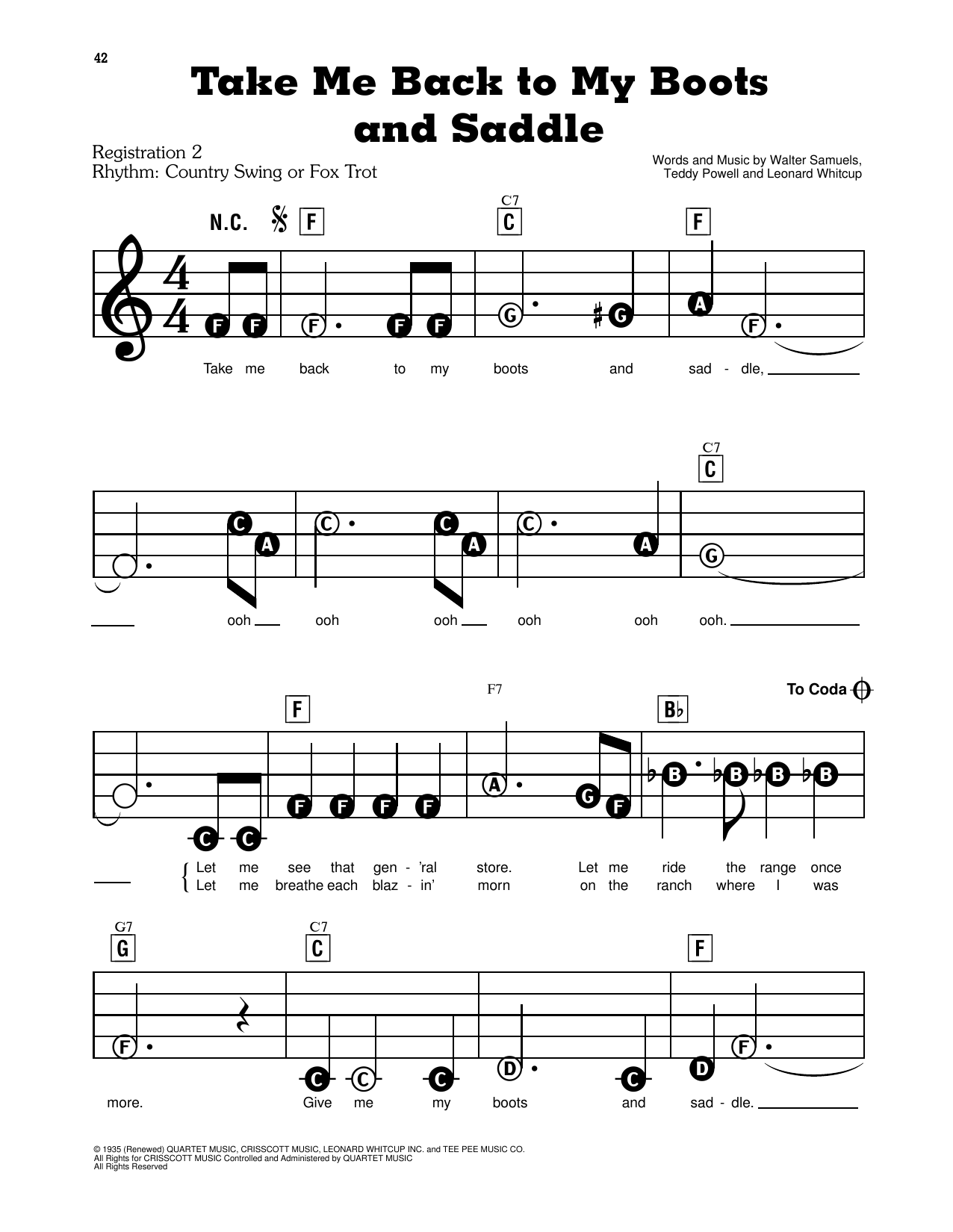
Take Me Back To My Boots And Saddle: E-Z Play Today

As performed by Gene Autry / As performed by Bing Crosby

Item: 35-DS01048572

Digital Download
$4.99
Description

Take Me Back To My Boots And Saddle: E-Z Play Today isn't in MakeMusic Cloud just yet...but it could be. Let us know you'd like to see it, and you'll help shape what comes next. In the meantime, start a free trial and dive into thousands of interactive titles your students can play along with today.

Sample Audio
No sample audio found.
Sample Video
Additional Details
Publisher: Hal Leonard
Page Count: 2
SKU: 35-DS01048572

More about this title

About the Artist: Gene Autry

Gene Autry became one of the first major crossover stars in American music, building a career that spanned radio, recording, film, and television. Known as the "Singing Cowboy," Autry brought authenticity to Western music through his clear baritone and genuine connection to cowboy culture, influencing generations of country and popular music performers.

Why we love this

This E-Z Play arrangement makes a beloved Western standard accessible to pianists still building technique, while the straightforward melody preserves the song's nostalgic charm. It's a genuinely fun piece to teach because students immediately connect with the cowboy imagery and the tune sticks with them long after the lesson ends.

What to expect

Wistful and grounded, like sitting on a porch at sunset thinking about where you belong. The melody has a gently rocking quality that evokes the rhythm of travel and the comfort of memory, wrapped in the warmth of acoustic Americana.

Who it's for

Pianists working through early-intermediate repertoire who benefit from straightforward, note-friendly arrangements without sacrificing musicality. This is also valuable for students building confidence with lead sheet reading or learning to accompany singers in folk and country styles.

How to get the most out of it

  • Shape the melody with gentle rubato in the verse sections to capture the reflective quality of missing home.
  • Keep the accompaniment light and rhythmically steady so the piano doesn't overpower the lyrical, storytelling character of the tune.
  • Breathe naturally at phrase endings, treating the melody like a vocalist would to bring out the song's conversational warmth.

How to use it

Pair this with other Western or Americana standards in a concert exploring American roots music, or use it as a solo interlude in a program built around storytelling through song. It also works well as a fun, low-pressure performance piece for early-intermediate students making their first public appearances.

Skills your students will build

  • Reading simple melodic lines with stepwise motion and small intervallic leaps
  • Accompanying a vocal melody with supporting harmonic figures
  • Maintaining steady rhythm and pulse in a rubato-friendly context
  • Phrasing a sung melody idiomatically on the piano

You May Also Like