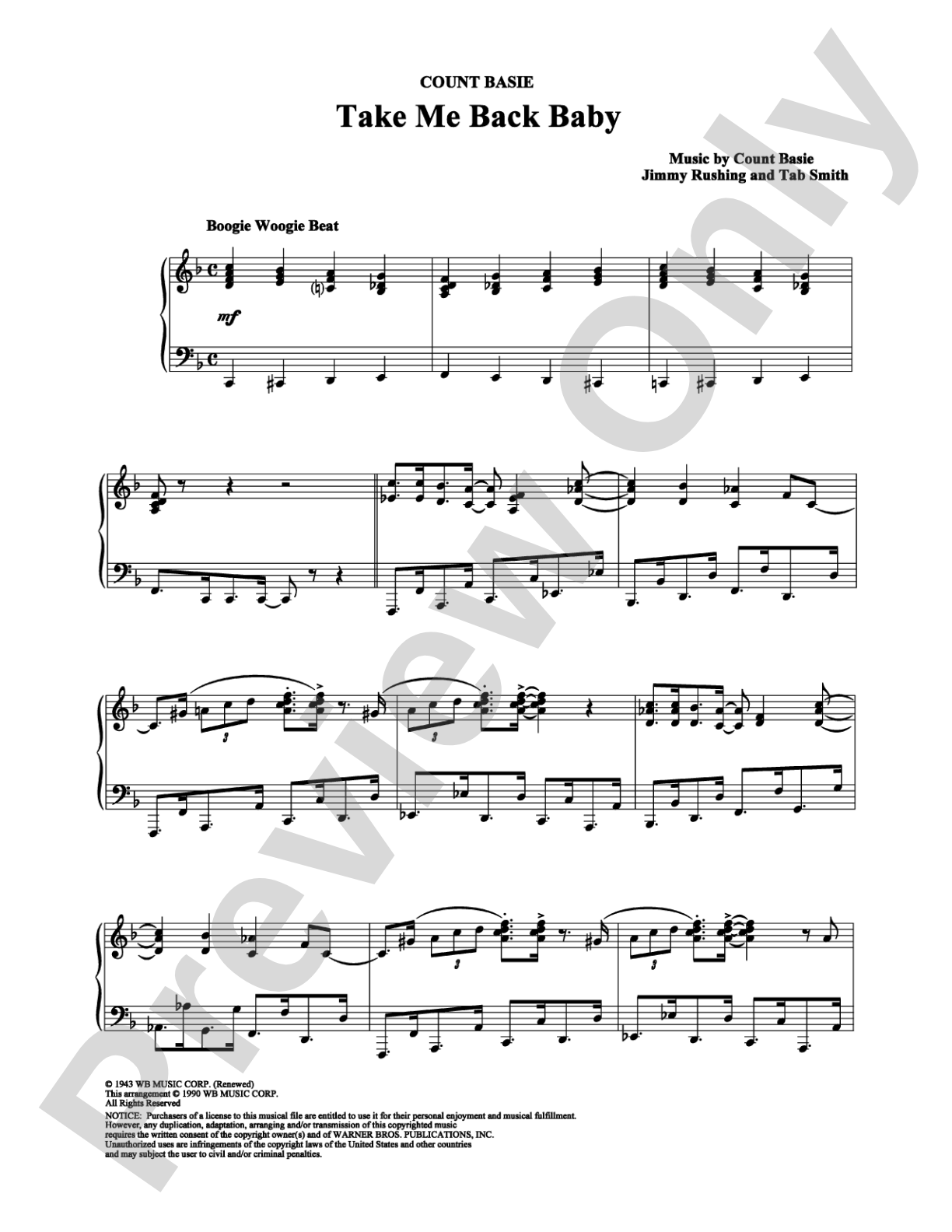
Take Me Back Baby: Piano Digital Sheet Music

Take Me Back Baby: Piano Digital Sheet Music

Count Basie, Jimmy Rushing, Tab Smith

Item: 00-PS-0000453

Digital Download
$3.99
Description

Take Me Back Baby: Piano Digital Sheet Music isn't in MakeMusic Cloud just yet...but it could be. Let us know you'd like to see it, and you'll help shape what comes next. In the meantime, start a free trial and dive into thousands of interactive titles your students can play along with today.

Sample Audio
No sample audio found.
Sample Video
Additional Details
SKU: 00-PS-0000453

More about this title

About the Artist: Count Basie

Count Basie led one of the most disciplined and swinging big bands in jazz history, built on a foundation of blues, stride piano, and impeccable time. His economic approach to the keyboard, playing exactly what the arrangement needed and nothing more, became a model for generations of jazz pianists and bandleaders.

Why we love this

Basie's blues-based sensibility and uncanny sense of swing make this tune a rewarding study in authentic jazz piano voicings and comping patterns. Players get to experience how genuine jazz vocabulary sounds on the page, not filtered through pedagogy or simplification. The piece offers a direct line to how the master himself voiced and rhythmically positioned chords.

What to expect

Laid-back and grounded, with the kind of bluesy ease that only comes from decades of experience. The tune swings naturally without effort, carrying you into the heart of Kansas City jazz. You'll find yourself wanting to move, to feel the weight of each chord and the space between them.

Who it's for

Jazz pianists working to deepen their understanding of blues harmony and swing comping. Advanced high school and college students who want to study an actual Basie arrangement without the full big band setup. Musicians preparing for jazz jams or recitals who need material that sounds authentic and demands serious musicianship.

How to get the most out of it

  • Let the rhythm breathe. Basie's strength lay in his ability to sit behind the beat slightly; avoid rushing or playing too straight ahead.
  • Listen to the original recording before you practice. Your ears need the reference point of where the swing lives in this tune.
  • Pay attention to left-hand voicings and their relationship to the overall band sound. Even as a solo piano piece, you're shadowing Basie's role within an ensemble context.
  • Explore the space between notes as much as the notes themselves. Silence and placement matter as much as activity.

How to use it

Feature this in a jazz solo recital or as part of a blues and standards unit in a jazz history or piano class. It pairs well with other Basie-era repertoire to give students context for how piano functioned in the big band era. Use it as a performance piece for advanced jazz students, or as a reference recording and analysis study for those learning to comp.

Skills your students will build

  • Swing comping and appropriate chord voicings for jazz standards
  • Blues harmony and how to navigate 12-bar blues form
  • Rhythmic placement and the feel of playing behind or on top of the beat
  • Listening to and interpreting jazz recordings as a performance guide
  • How to voice chords for ensemble context, even when playing solo

You May Also Like