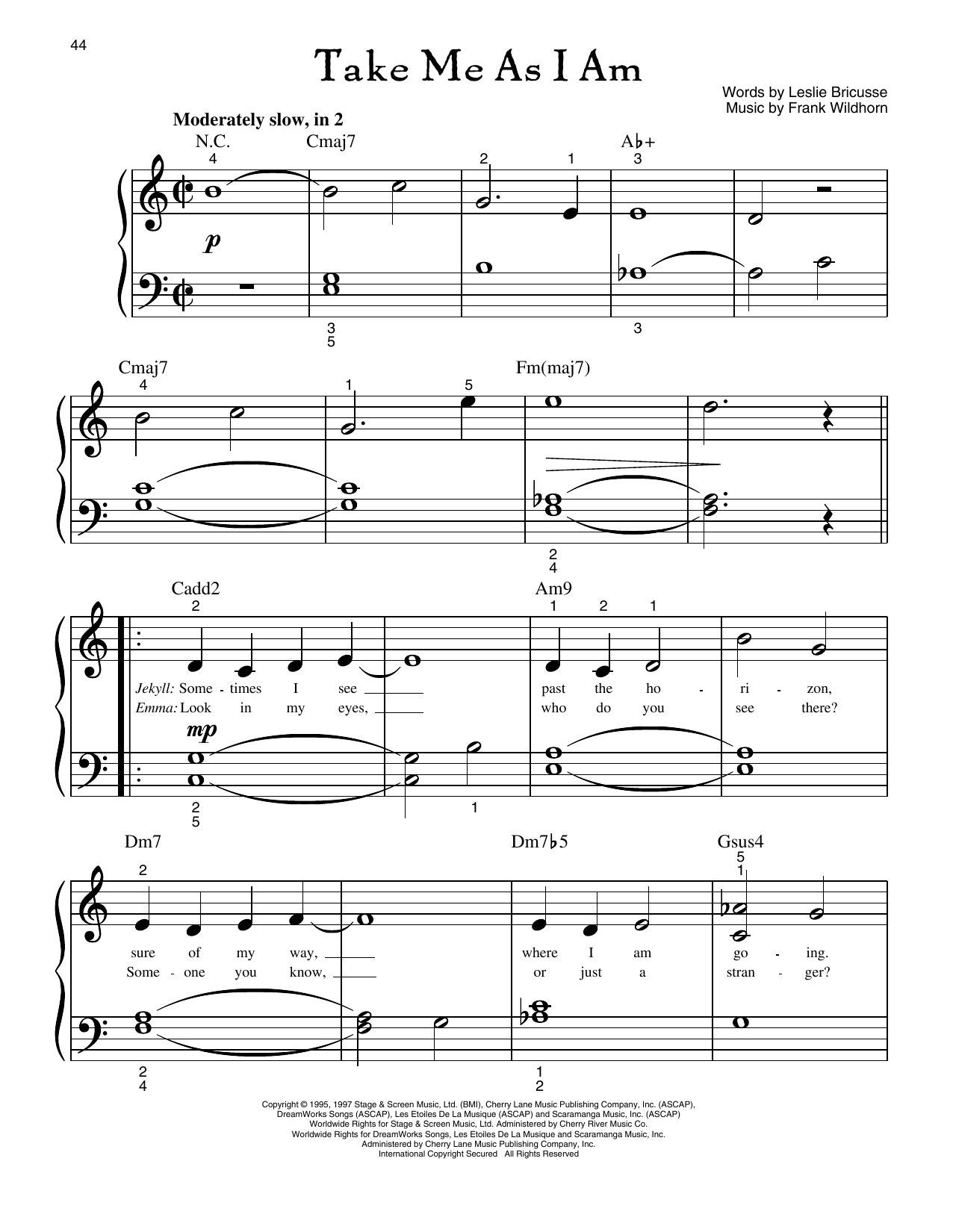
Frank Wildhorn is a composer with deep roots in musical theater, having created scores for major Broadway productions including Jekyll and Hyde, The Scarlet Pimpernel, and Civil War. His gift for melody and dramatic storytelling has made his work a staple in both professional theater and music education settings. Wildhorn's compositions for piano students balance accessibility with genuine musical substance, allowing younger players to engage with Broadway material that doesn't patronize their musical intelligence.
Why we love this
This arrangement respects both the emotional depth of the original song and the realities of intermediate pianists. The big note format makes the iconic melody immediately playable without stripping away the song's theatrical character, giving students a genuine connection to Broadway repertoire they might otherwise encounter only as listeners.
What to expect
Tender and introspective, with the kind of melodic generosity that makes singers fall in love with musical theater. The harmony carries the weight of vulnerability and acceptance, inviting the performer to find genuine expressiveness even at a simpler technical level.
Who it's for
Pianists working through intermediate big note collections who want repertoire with real theatrical stakes. This works equally well for students performing in school productions and those building a general piano library with recognizable melodies.
How to get the most out of it
Shape the melody with clear phrasing; this is a character's vulnerable moment, not a showcase for technique. Think about the text even though you're playing an instrumental version.
Balance accompaniment and melody carefully so the big notes sing without drowning out harmonic support. The chords matter to the song's emotional arc.
Allow rubato in the upper register where the melody wants to breathe, particularly if the arrangement includes sustained passages or moments of hesitation in the harmonic rhythm.
Explore the dynamic range available to you. Big note doesn't mean playing without nuance; test how softly you can play the lowest dynamics and how expressively you can shape crescendos.
How to use it
Include this in recitals or concerts alongside other Broadway selections to show students the breadth of theatrical music. It also pairs naturally with other Wildhorn selections if your school is exploring a particular composer or if you're building a unit on contemporary musical theater for younger players.
Skills your students will build
legato phrasing across multiple measures
dynamic control and expressive shaping in a narrower technical range
interpreting theatrical text through instrumental performance
balancing melody and accompaniment on one instrument
sustaining musical line over harmonic changes
You May Also Like
Scan to Complete Your Purchase
Use your phone's camera to scan the code below
You'll log in on your phone and the order will be added to your account