Take Five: Piano Digital Sheet Music

Take Five: Piano Digital Sheet Music

Paul Desmond, Dave Brubeck

Item: 00-PS-0000761

Digital Download
$3.99
Description

Take Five: Piano Digital Sheet Music isn't in MakeMusic Cloud just yet...but it could be. Let us know you'd like to see it, and you'll help shape what comes next. In the meantime, start a free trial and dive into thousands of interactive titles your students can play along with today.

Sample Audio
No sample audio found.
Sample Video
Additional Details
SKU: 00-PS-0000761

More about this title

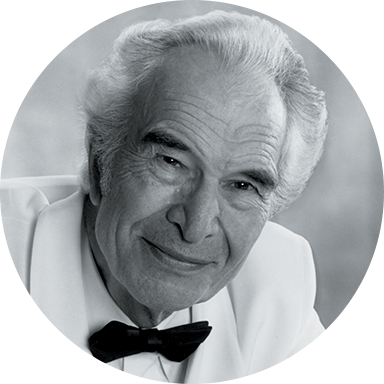
About the Artist: Dave Brubeck

Dave Brubeck

Dave Brubeck was a pianist and composer who shaped modern jazz through both improvisation and meticulous compositional craft. His work spanned jazz standards, classical commissions, choral works, and large-scale orchestral pieces, all informed by his studies with Darius Milhaud at Mills College. Beyond music, Brubeck was a crucial figure in dismantling racial barriers in American music during the mid-twentieth century.

His 1959 album "Time Out" became the first jazz recording to exceed one million copies sold, introducing audiences worldwide to complex time signatures and sophisticated harmonic language. Brubeck's legacy extends across genres: his sacred works like "To Hope!" and "Pange Lingua Variations" have been recorded by major orchestras; his instrumental compositions inspired ballet productions; and his Grammy Lifetime Achievement Award and induction into the American Classical Music Hall of Fame reflect a career of sustained artistic innovation.

Why we love this

Take Five endures because it succeeds on multiple levels simultaneously: it's accessible enough for pianists building jazz vocabulary, yet harmonically rich enough to reward deeper exploration. The piece asks pianists to think beyond straight rhythm, finding the space and swing that make the melody breathe. Programming it signals a willingness to honor jazz as serious repertoire rather than sideline entertainment.

What to expect

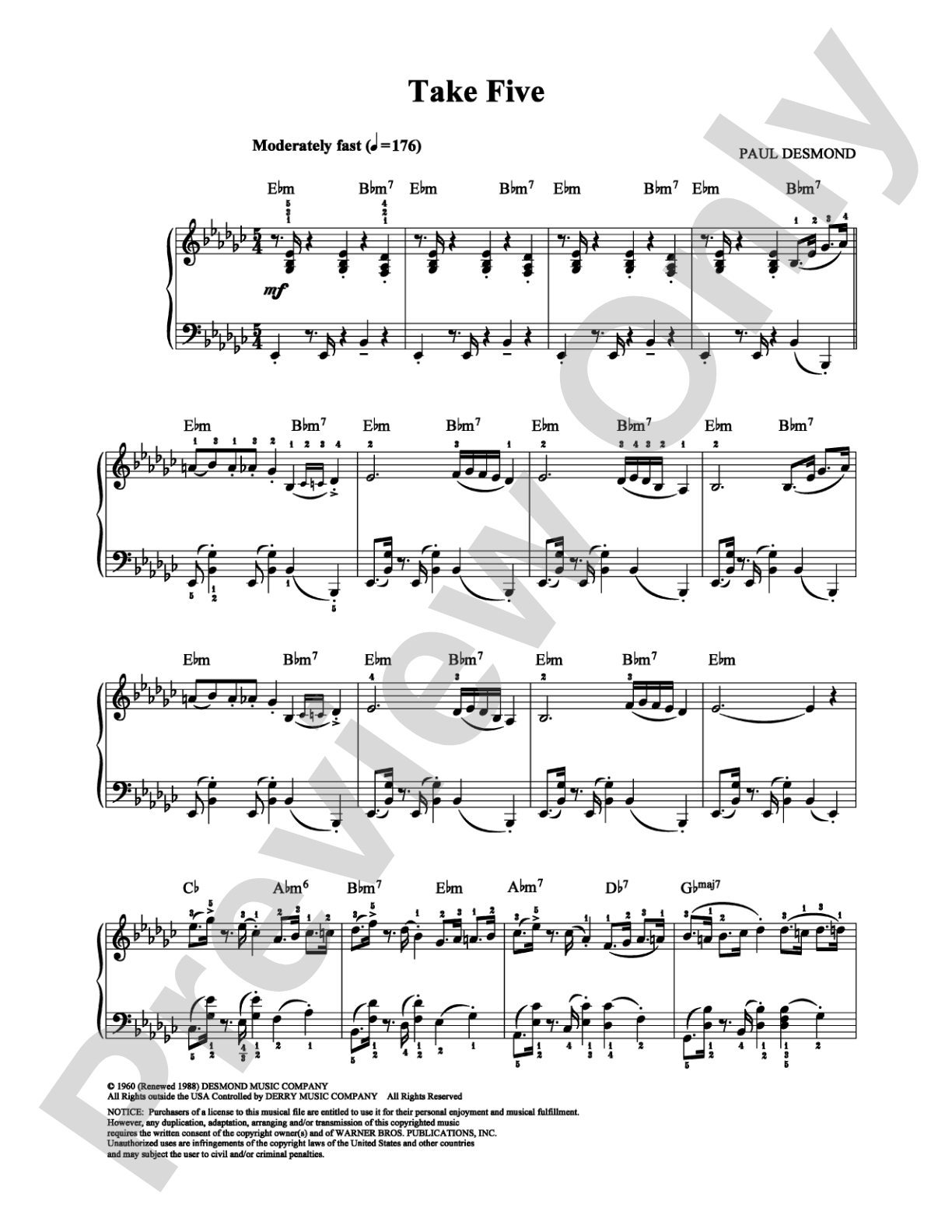
Take Five has an unhurried sophistication. The 5/4 time signature creates an unsettled, questing quality that keeps listeners off-balance, while the cool, bluesy melody and sparse voicings in the head allow room for reflection. Once you settle into the groove, there's genuine comfort in the harmonic landscape, blues-based but refined, familiar but unexpected.

Who it's for

Pianists exploring jazz repertoire beyond swing standards will find an accessible entry point to Brubeck's harmonic language and rhythmic sophistication. Intermediate to advanced players can use this piece to develop jazz comping skills and comfortable navigation of asymmetrical meters. Solo recitalists seeking to diversify concert programming benefit from its immediate appeal and musical substance.

How to get the most out of it

  • Internalize the 5/4 meter before worrying about tempo. Let the rhythm settle into your body so the melody can float naturally rather than fighting the meter.
  • Listen to Brubeck's original recording to hear how the ensemble finds space and breath within the time signature. The piano plays a supporting role in conversation with other voices.
  • Approach the left hand with a light touch; it establishes harmonic foundation and rhythmic pocket without overwhelming the line.
  • Resist rushing through eighth-note passages. Jazz phrasing lives in slight delays and anticipations that reshape written time.

How to use it

Pair this with other twentieth-century pieces that bridge classical and popular idioms to create a program about musical innovation and genre-crossing. It works equally well as a concert opener that immediately signals adventurous taste, or as a solo recital closer that leaves audiences with something memorable and swinging.

Skills your students will build

  • Reading and performing in 5/4 meter with natural phrasing
  • Left-hand comping patterns and jazz harmonic vocabulary
  • Swing eighth-note feel and jazz articulation
  • Balancing modal melody with functional harmony

You May Also Like