
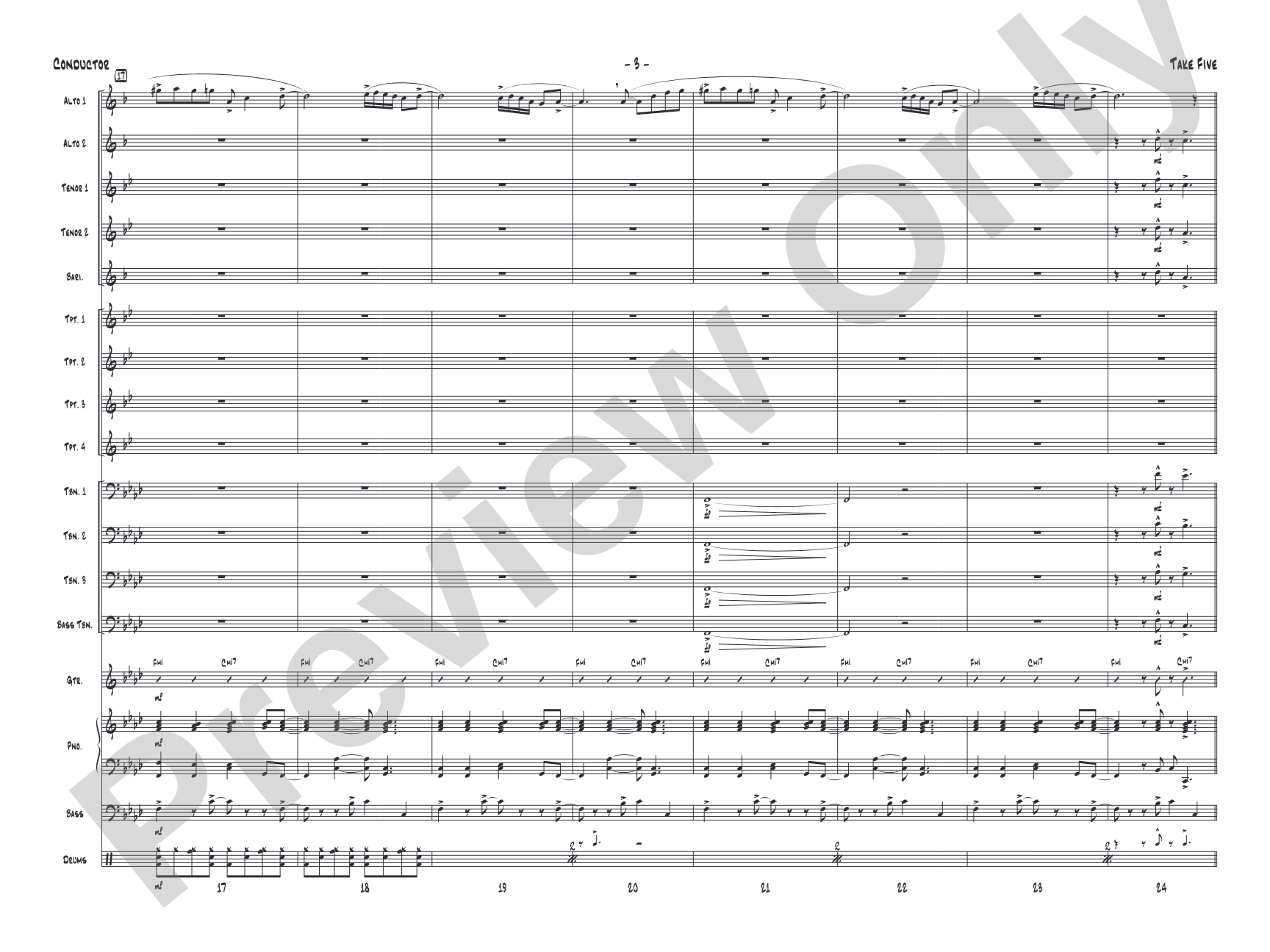
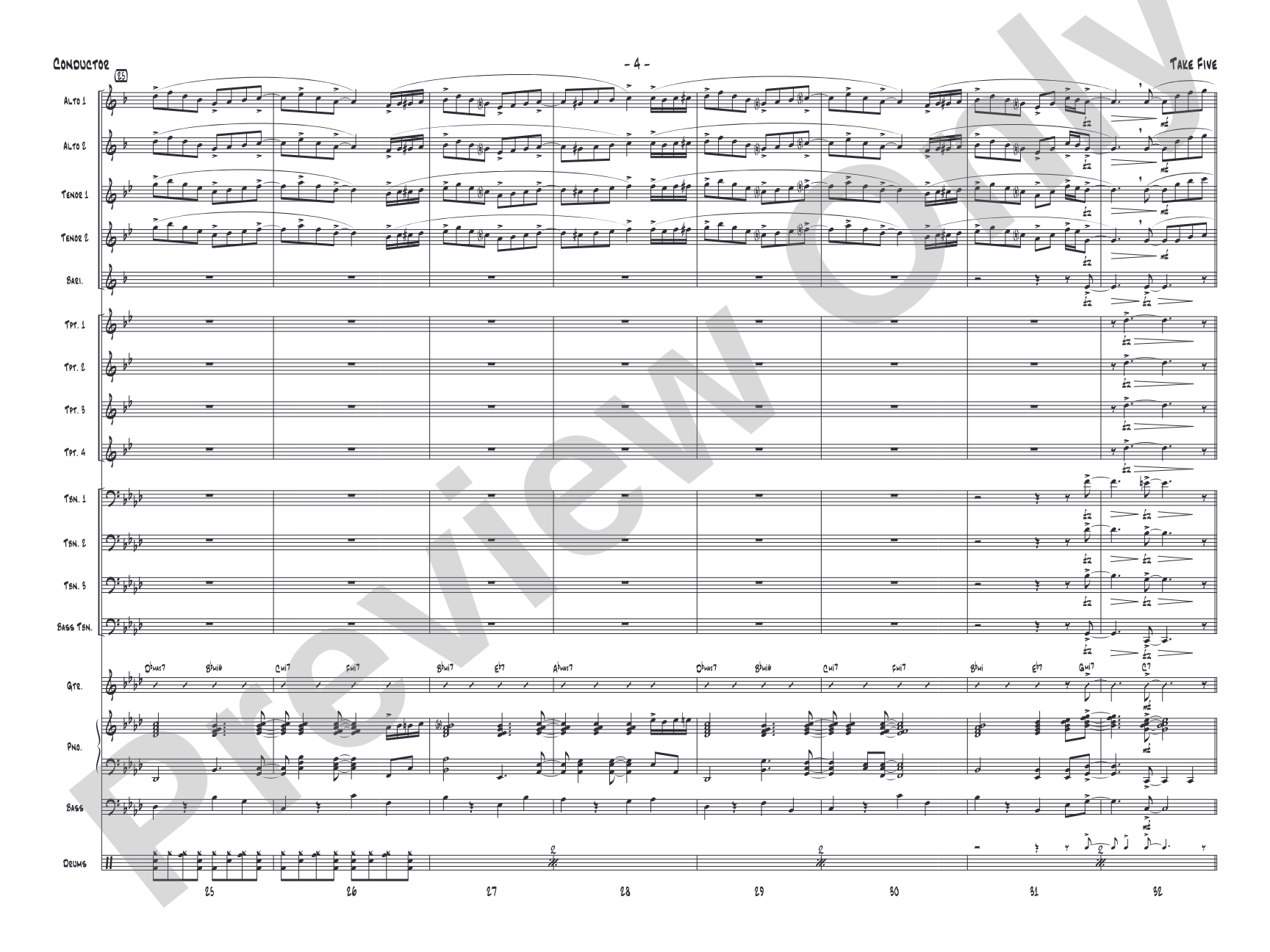
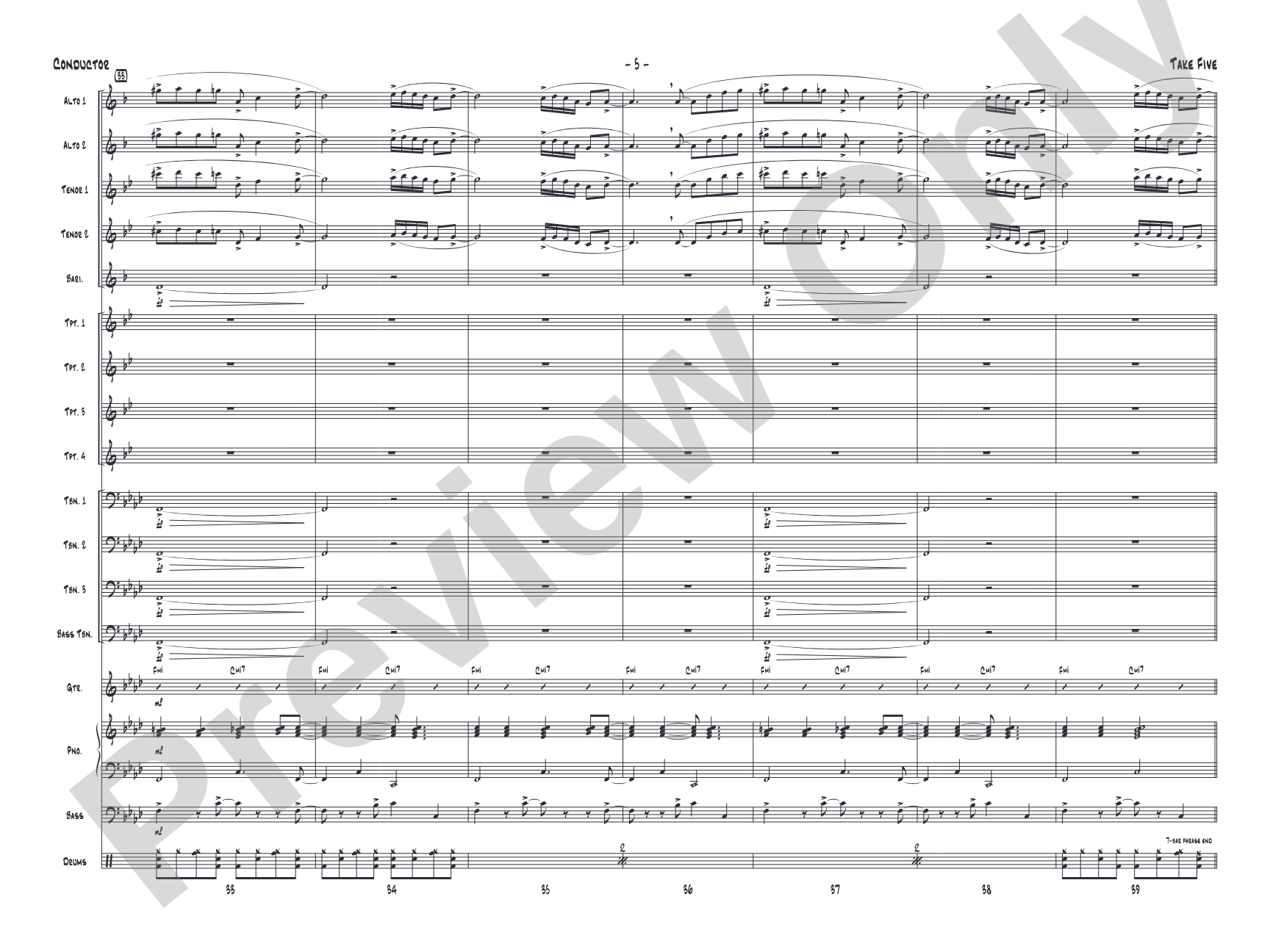
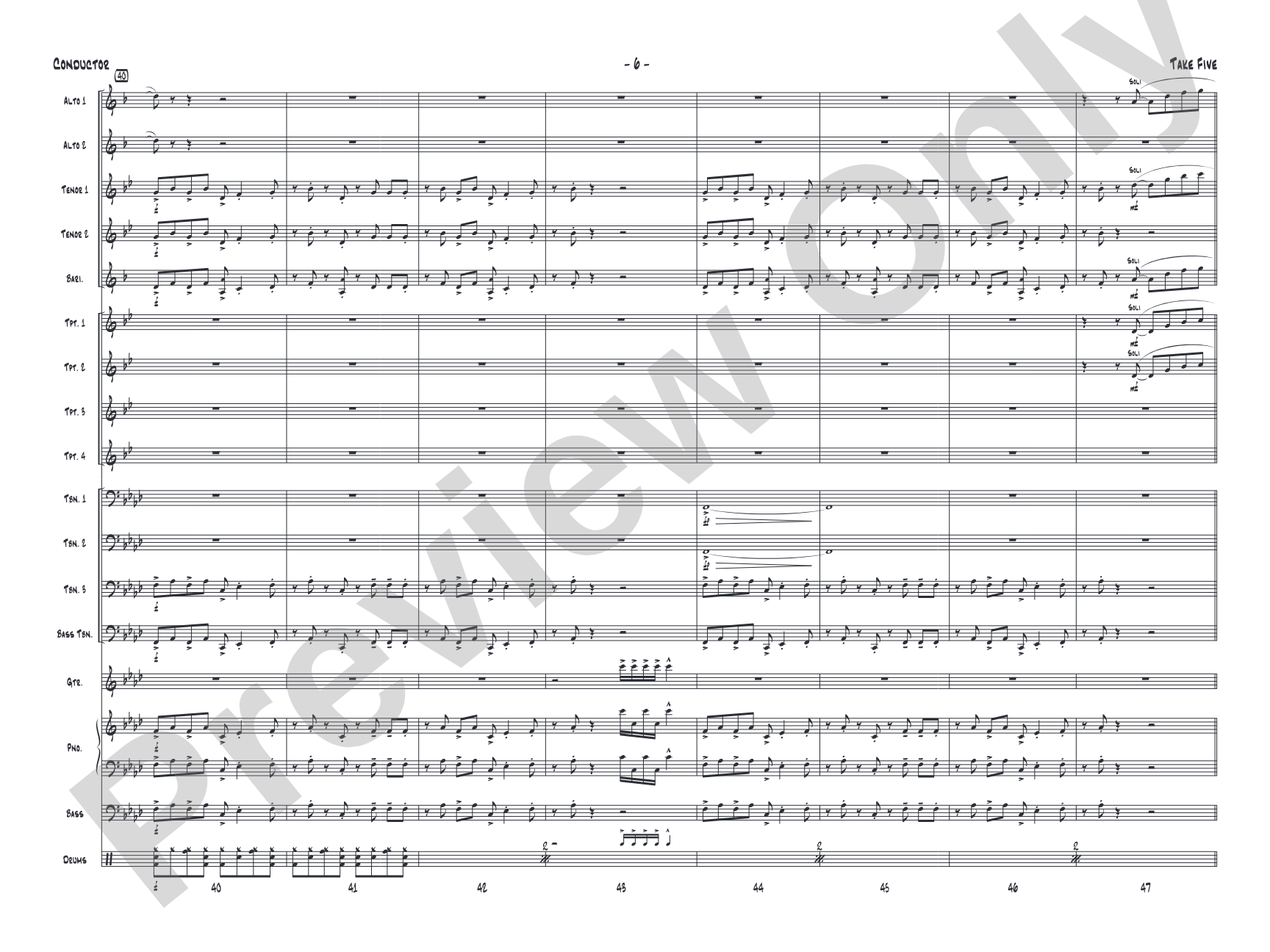
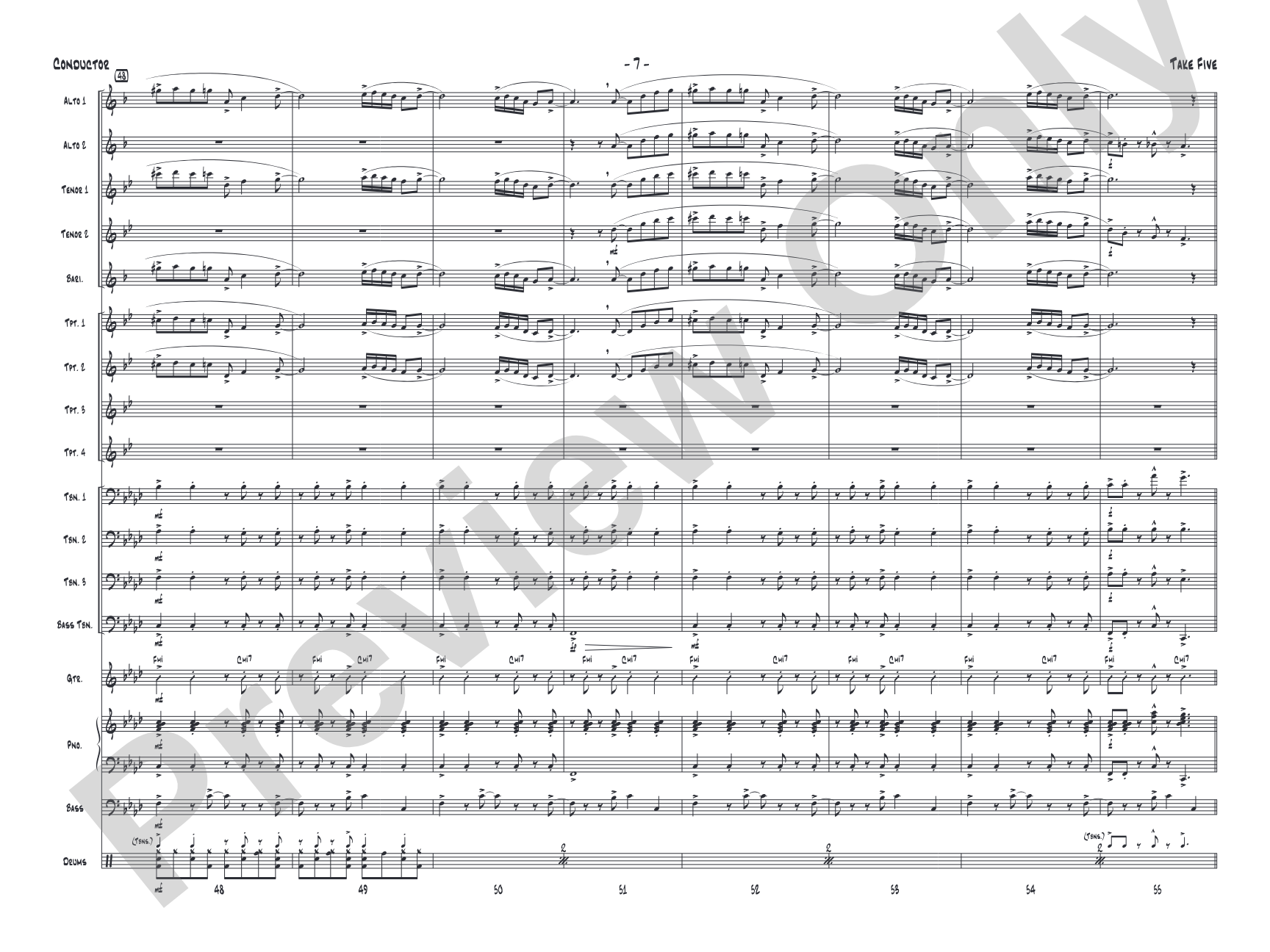
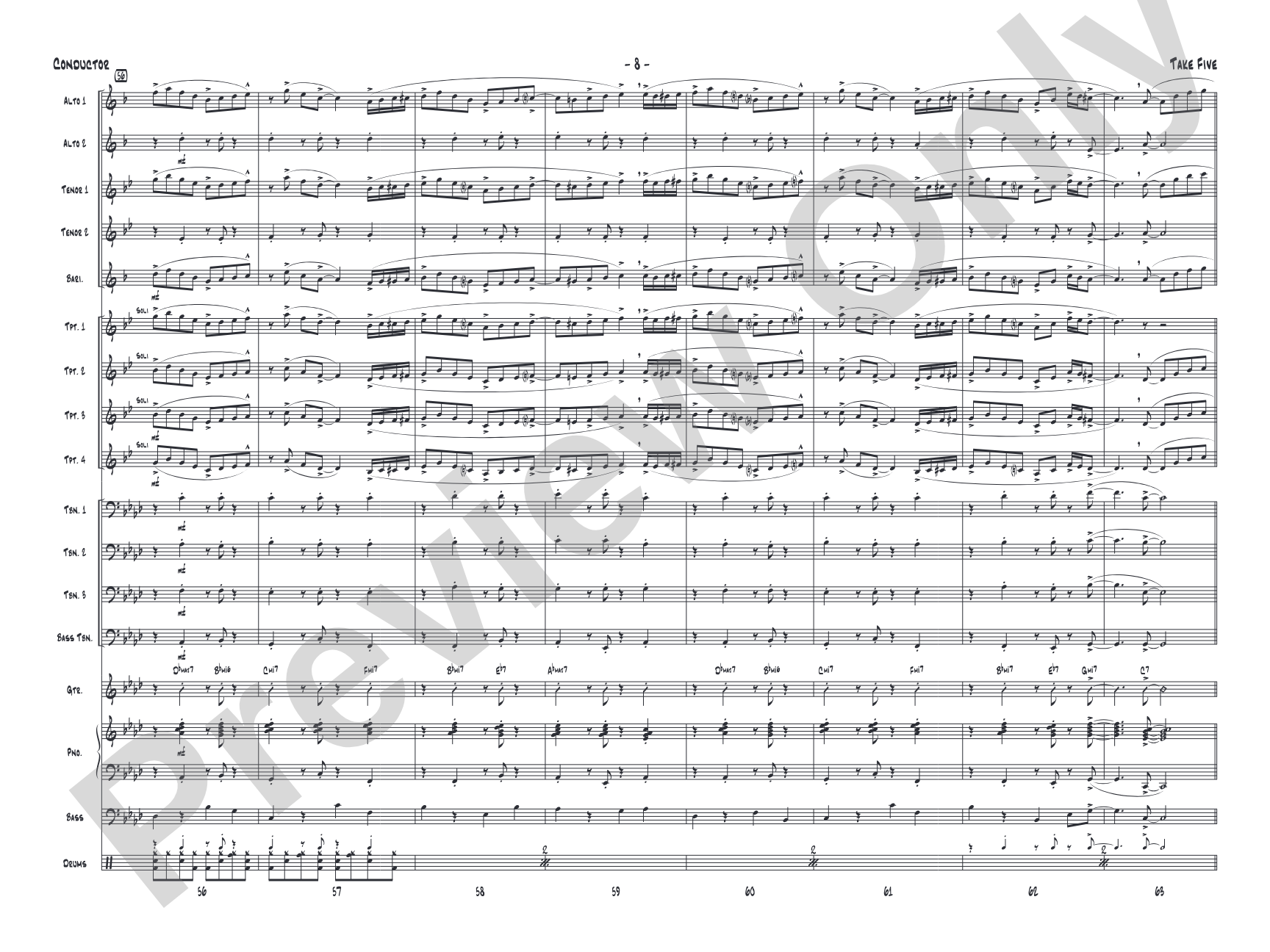
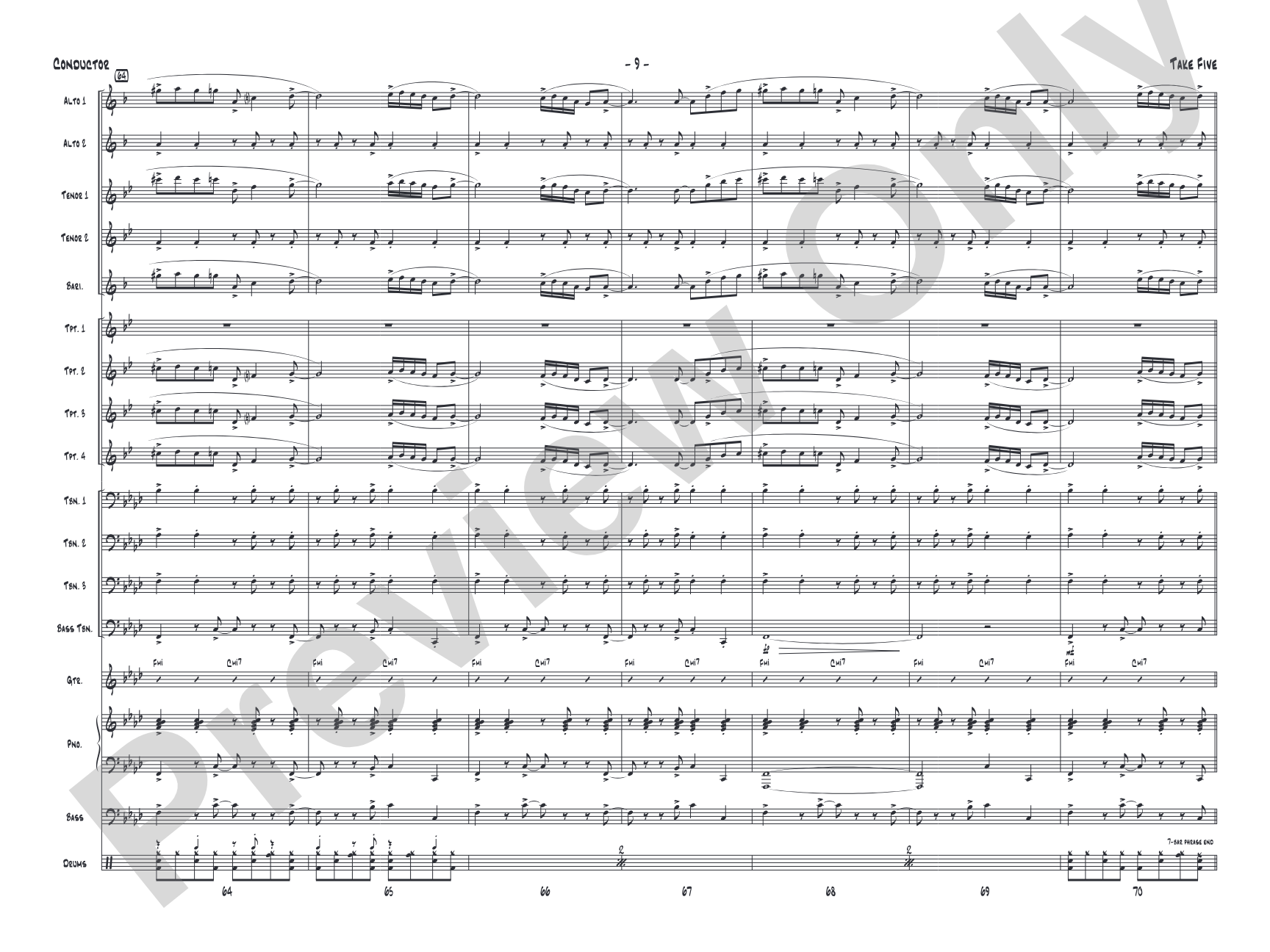
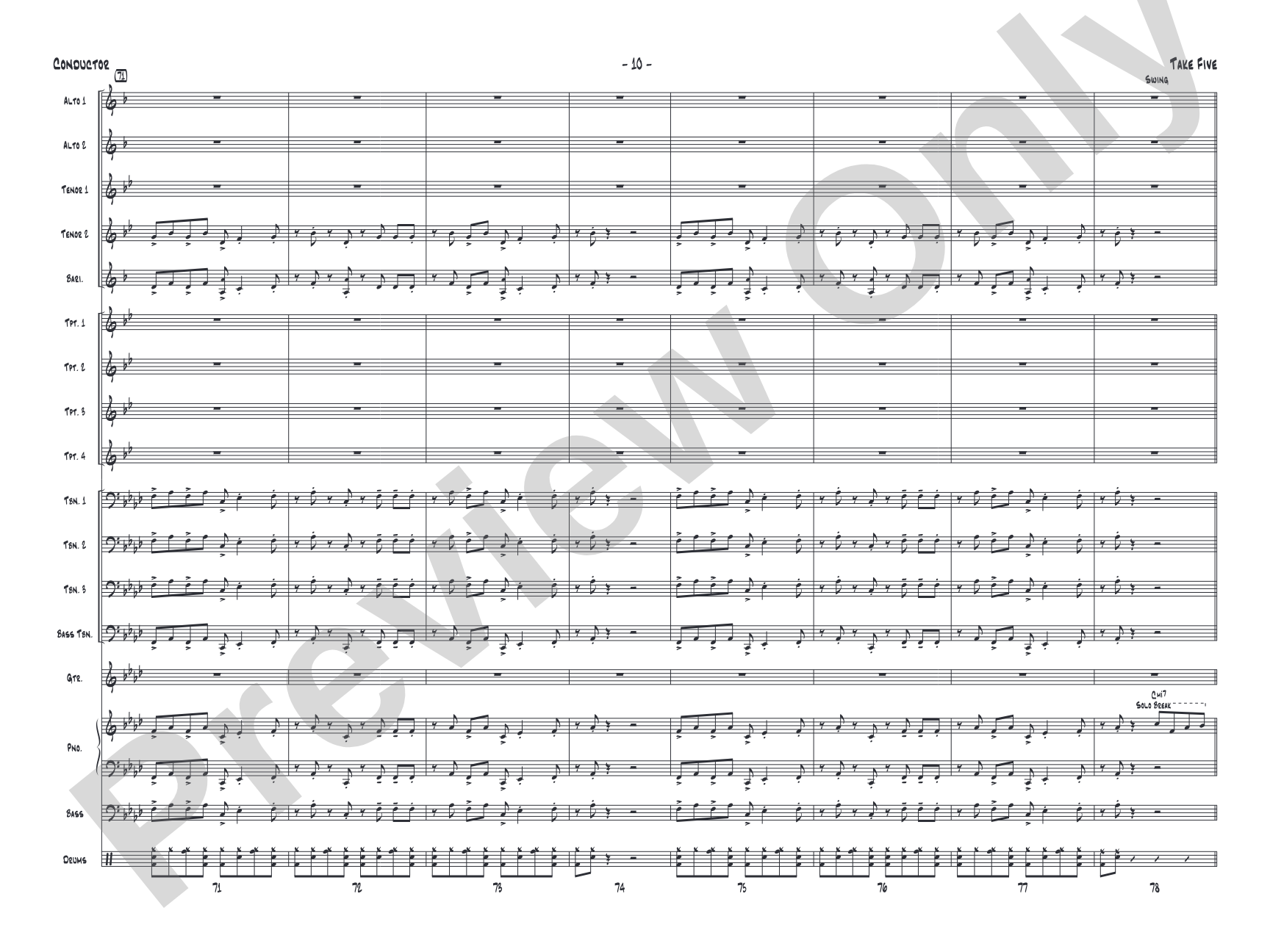
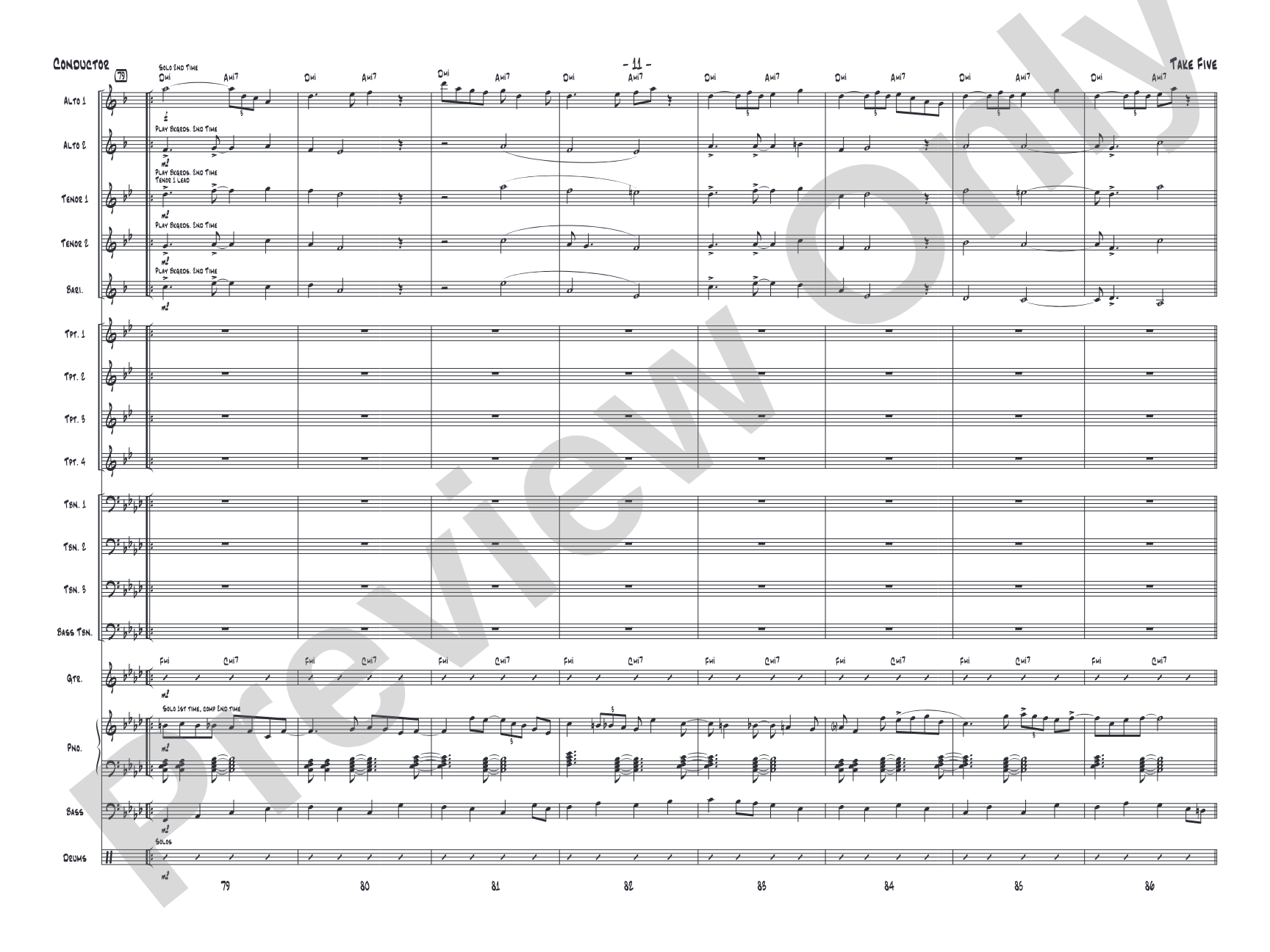
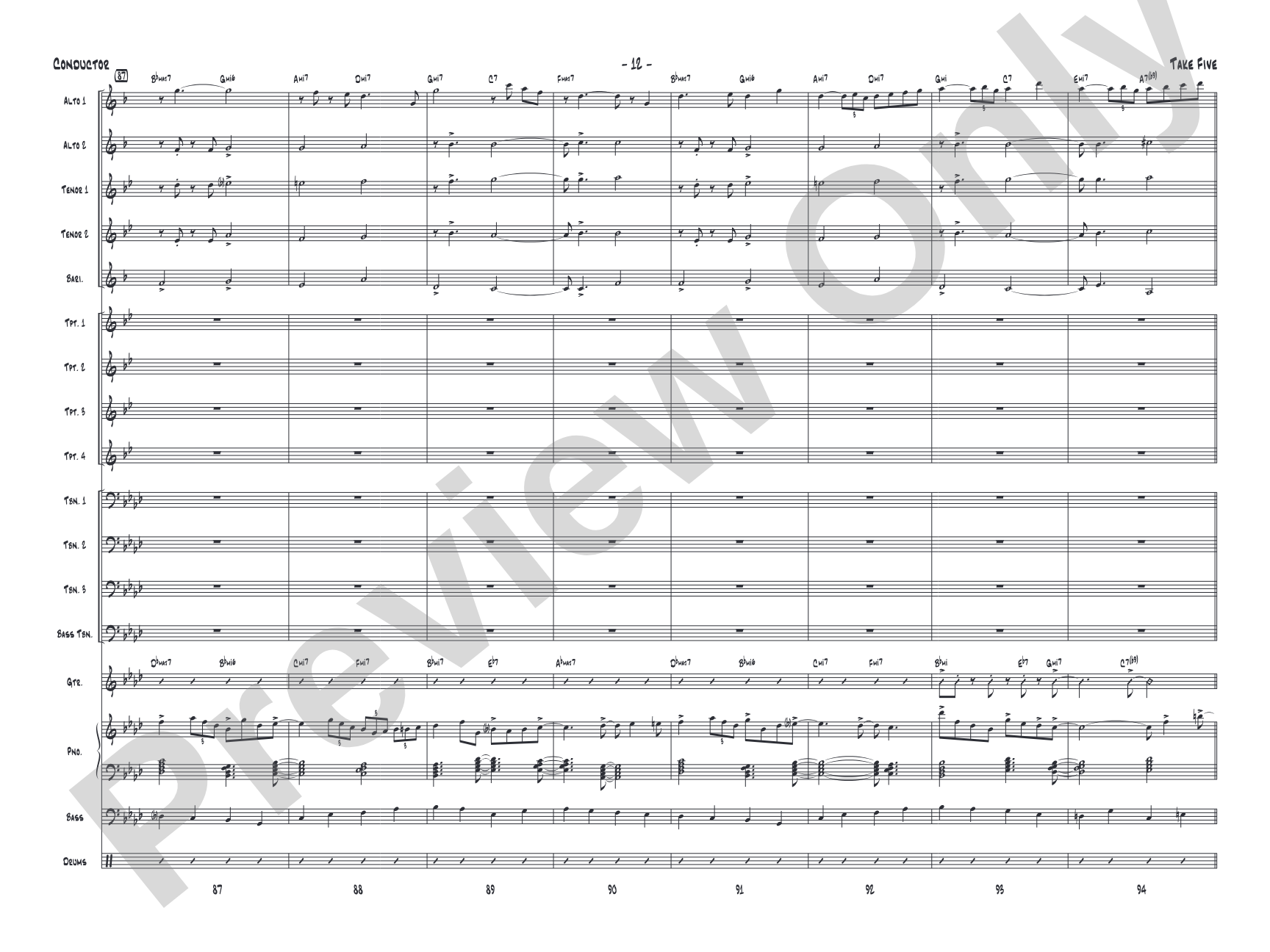
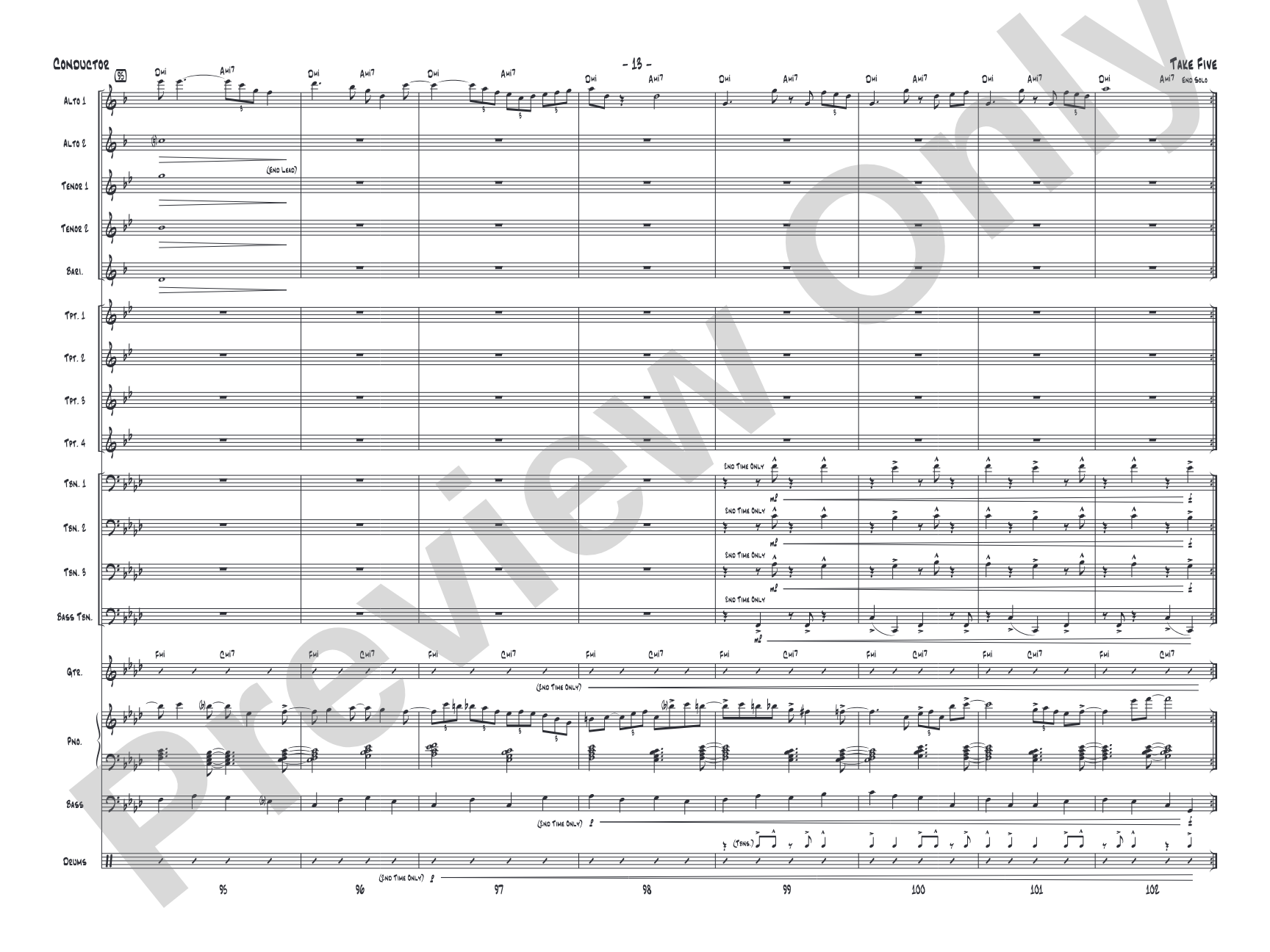
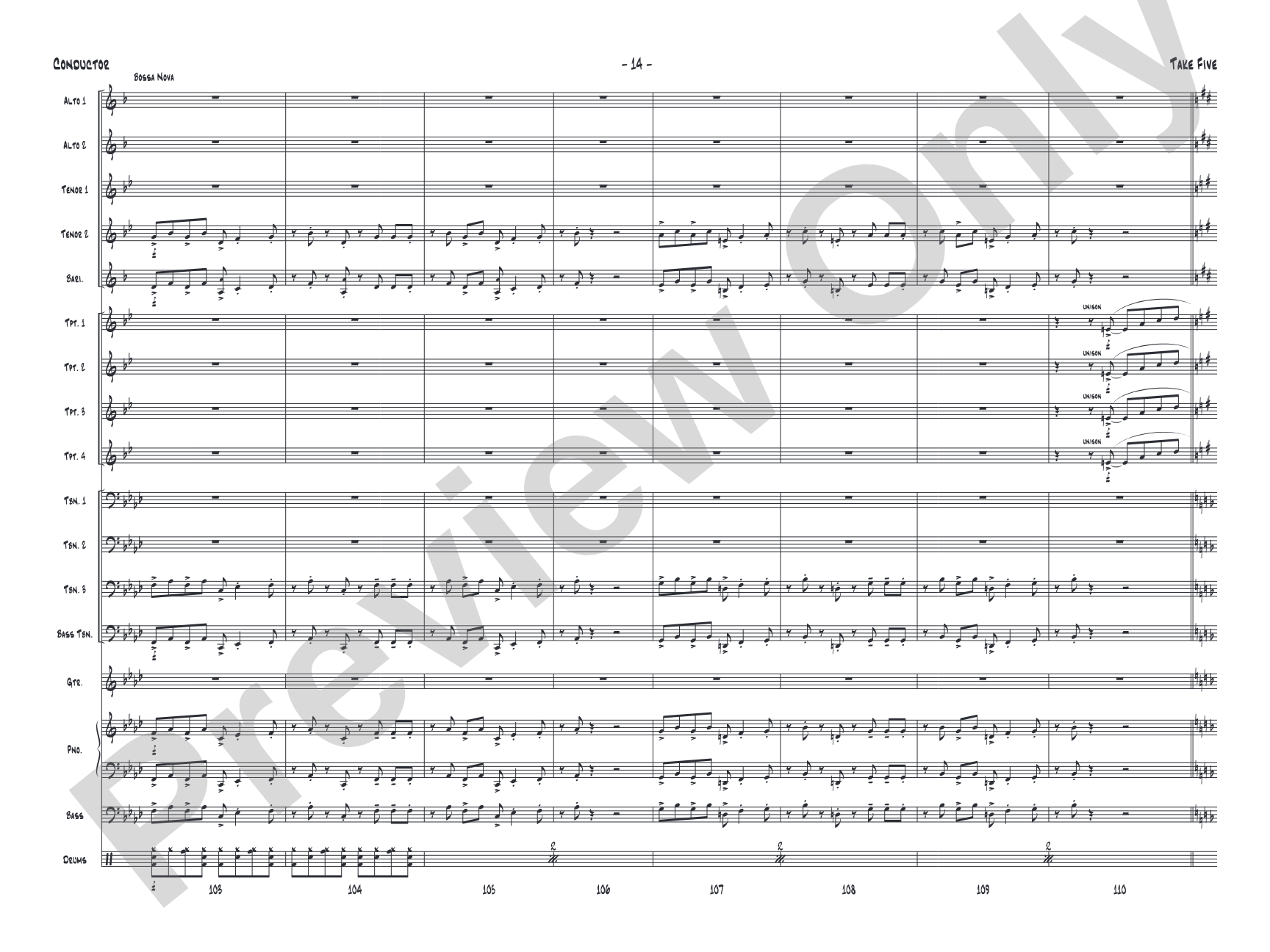
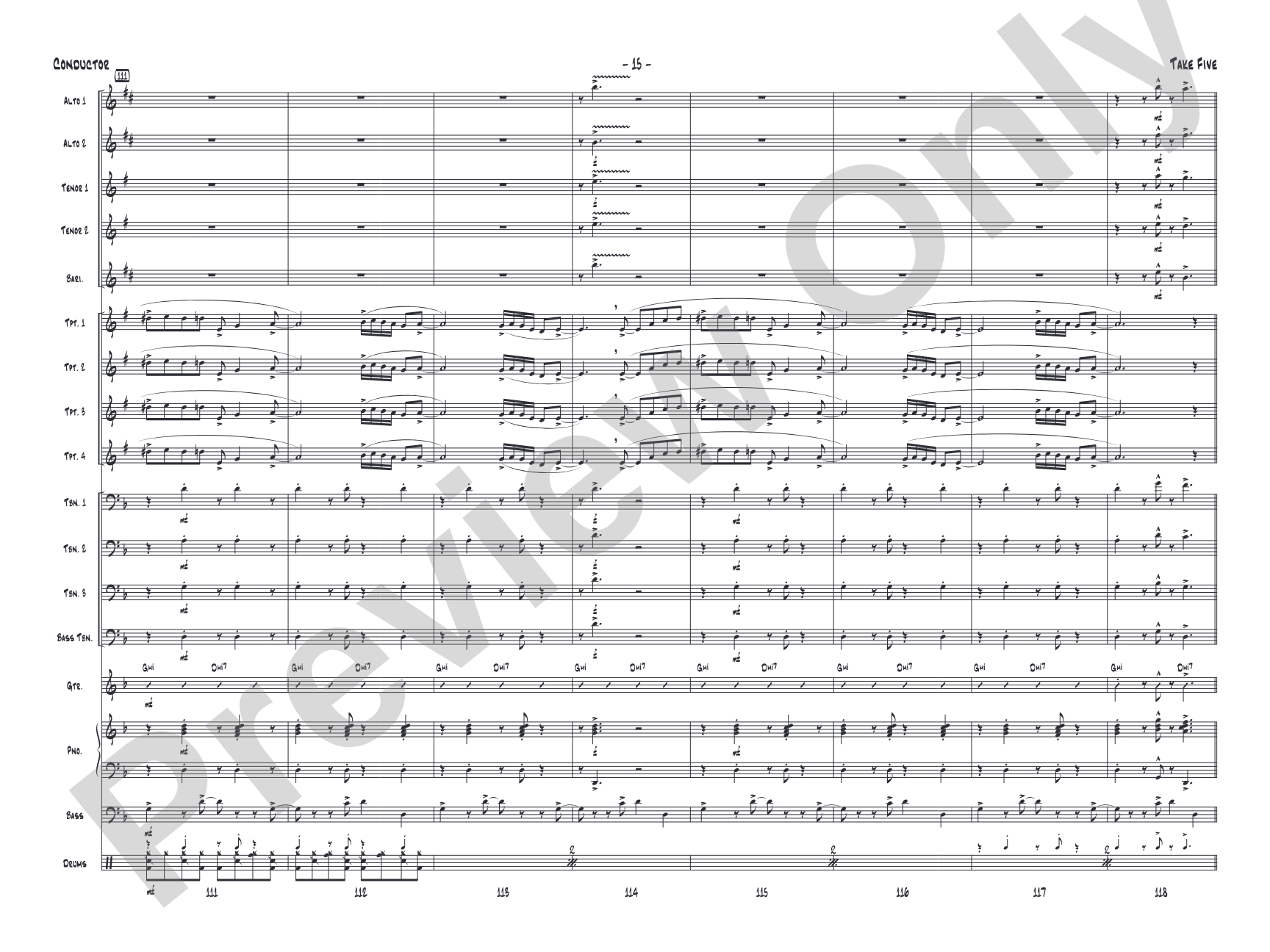
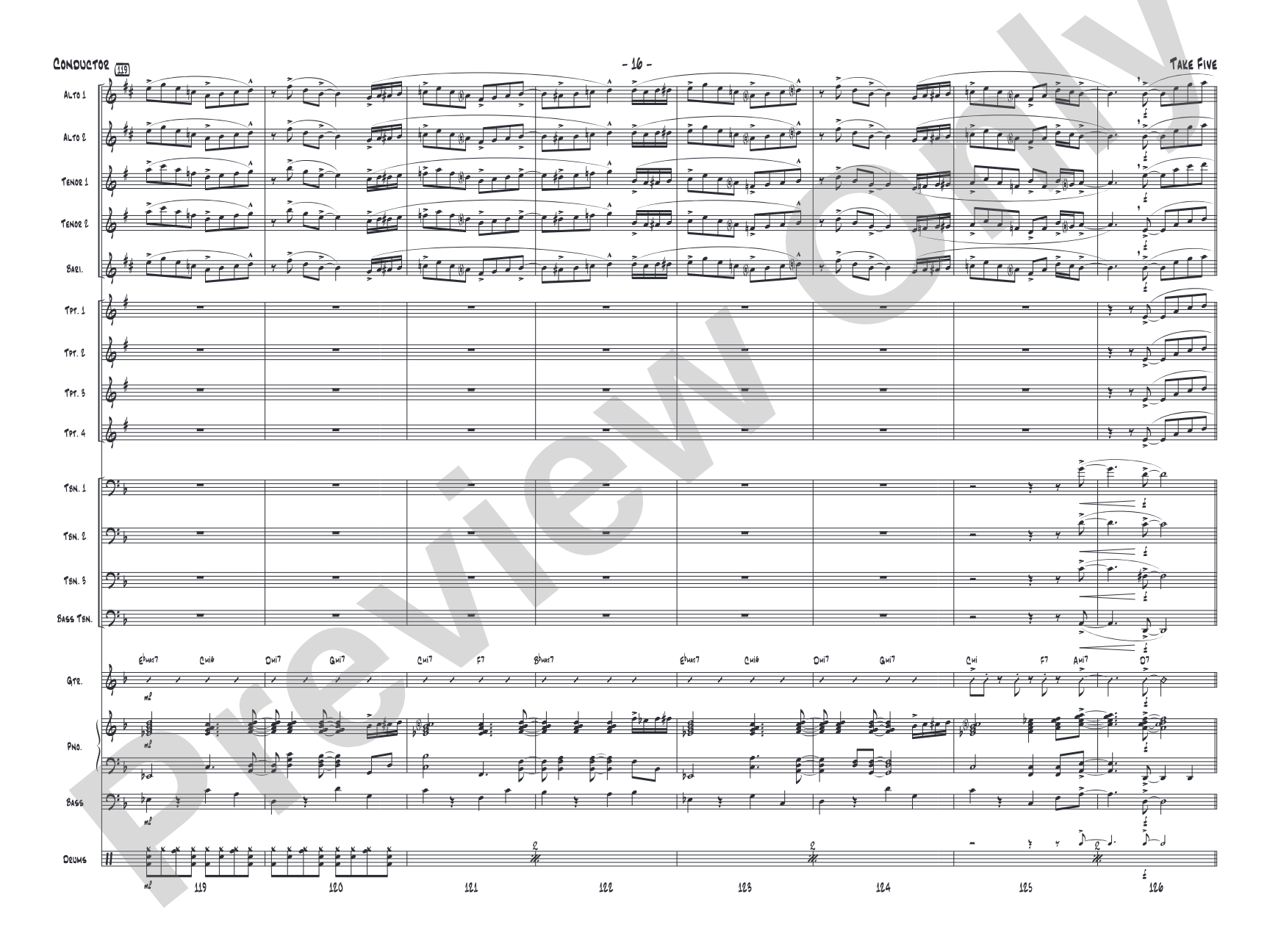
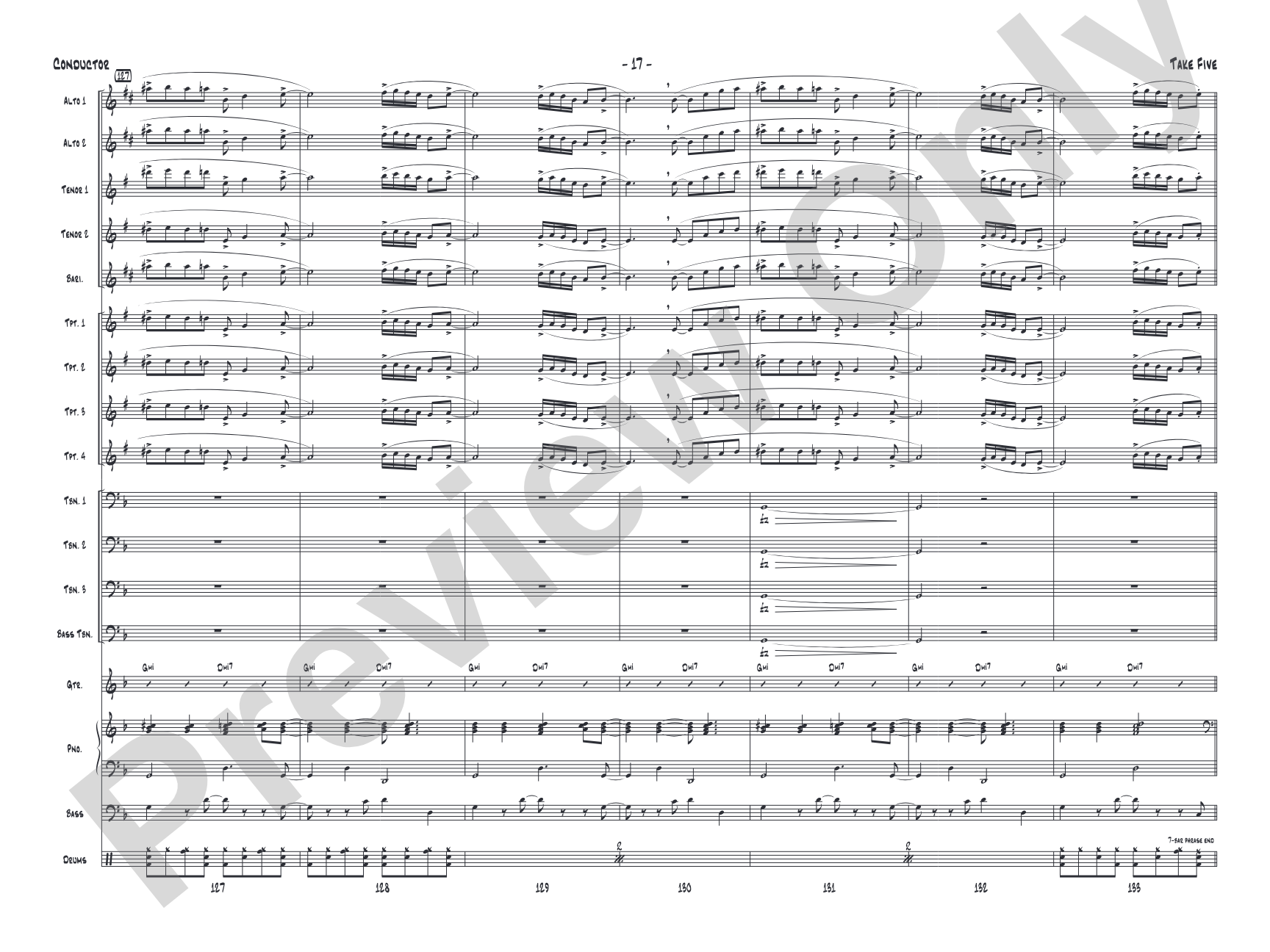
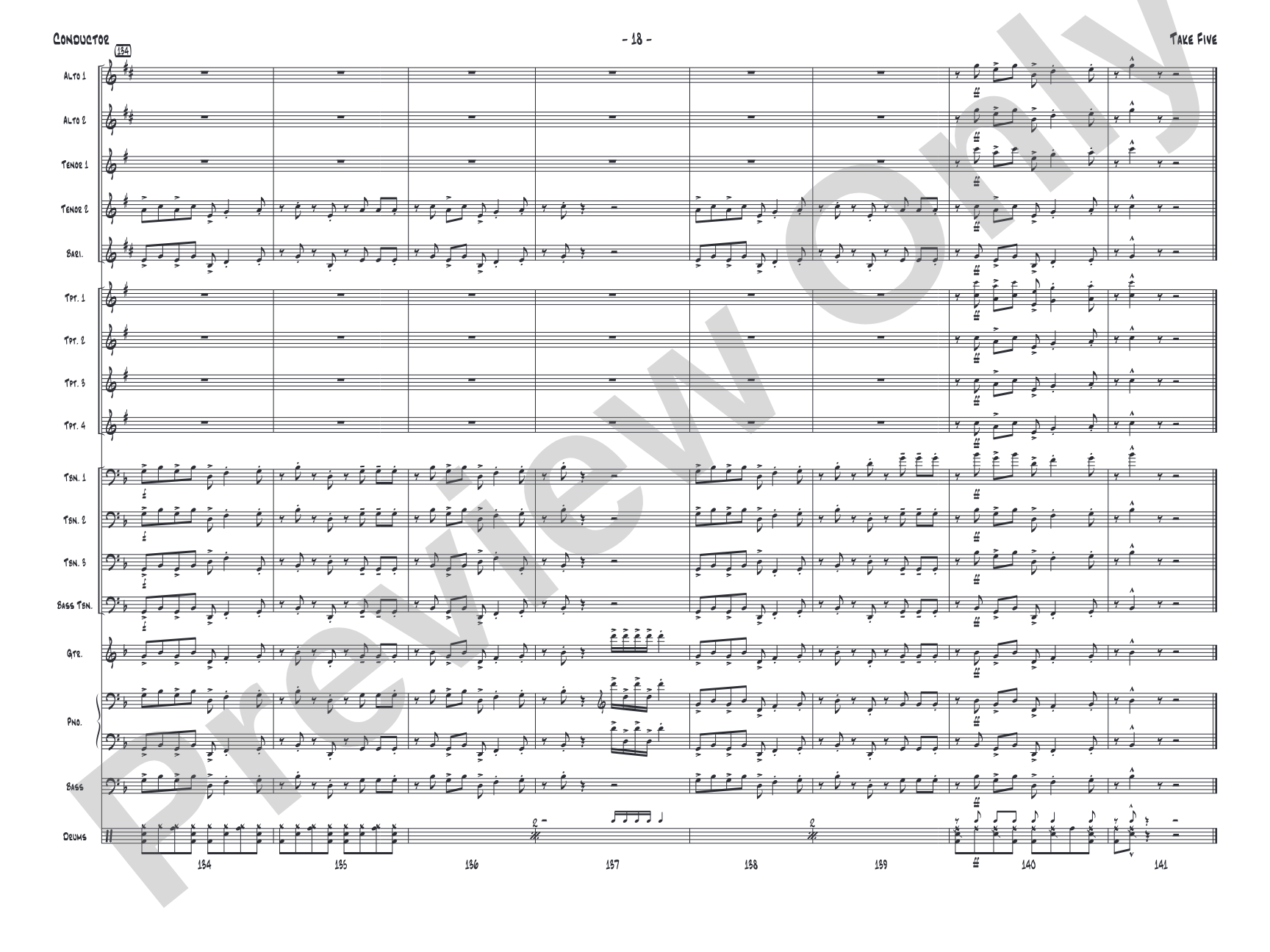

Take Five: Jazz Ensemble Conductor Score & Parts
By Paul Desmond / arr. John Zontek
Grade: 3 (Medium)
Item: 00-PK-0007463

$52.00
One moment…
Description
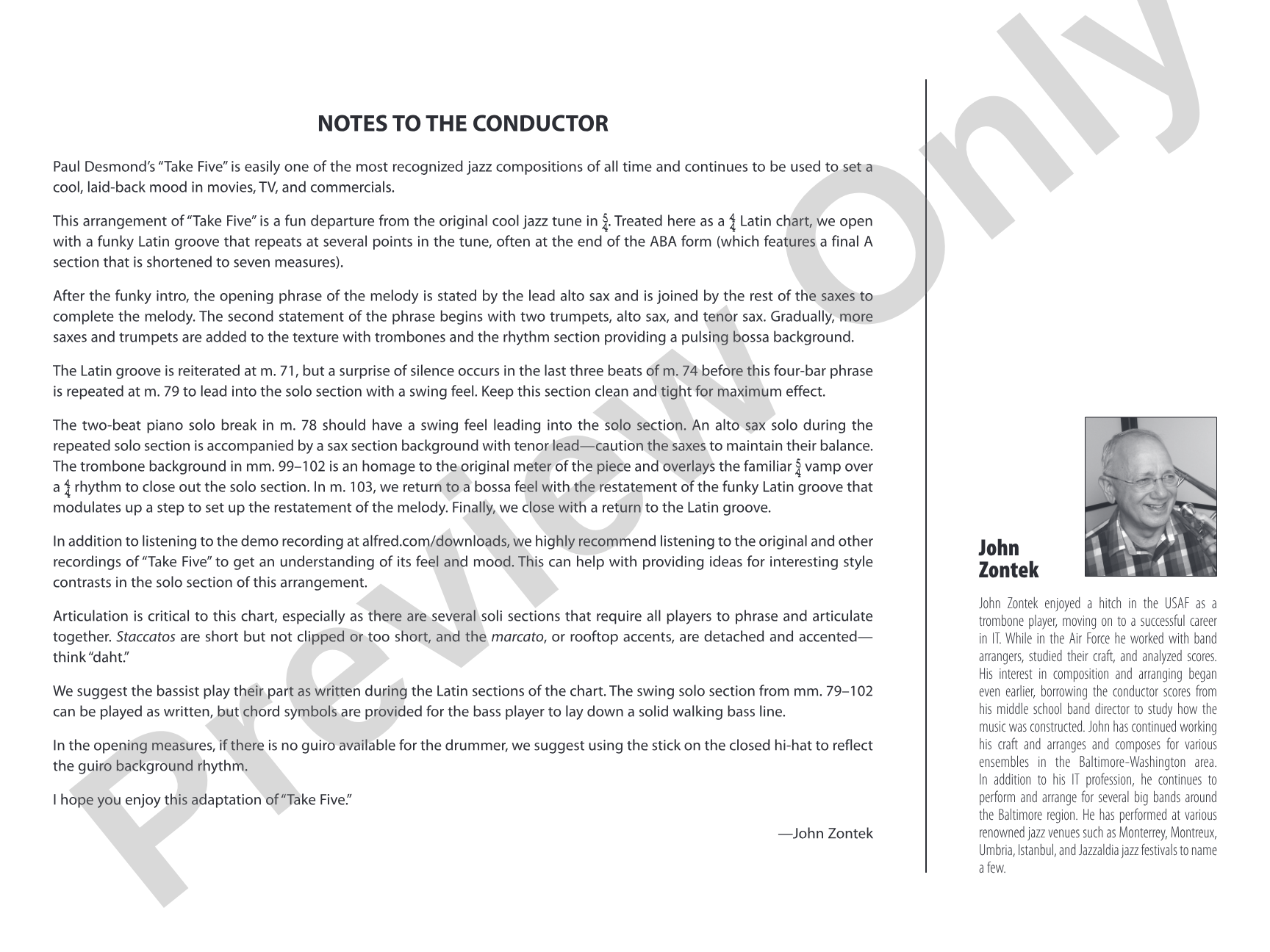
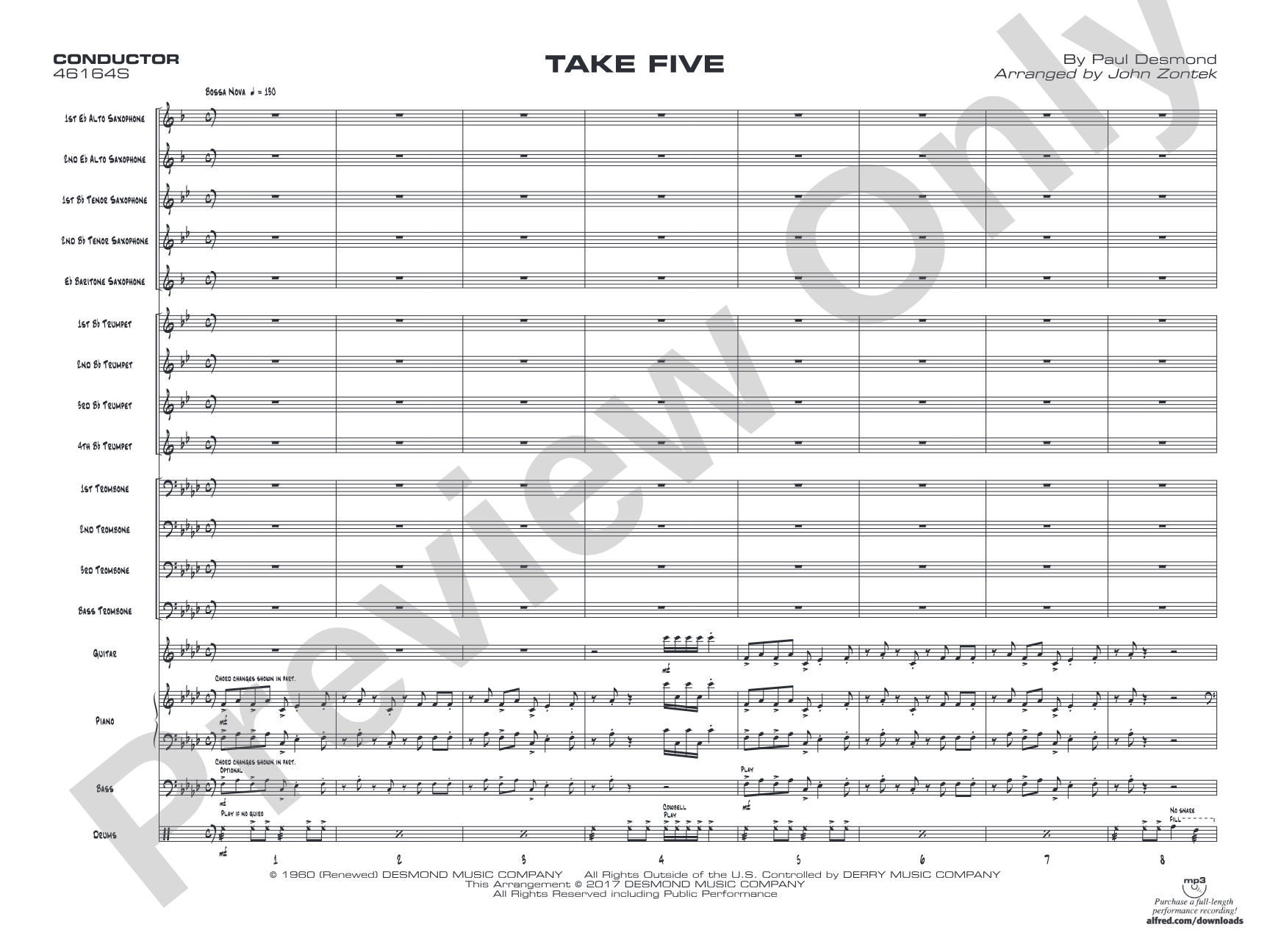
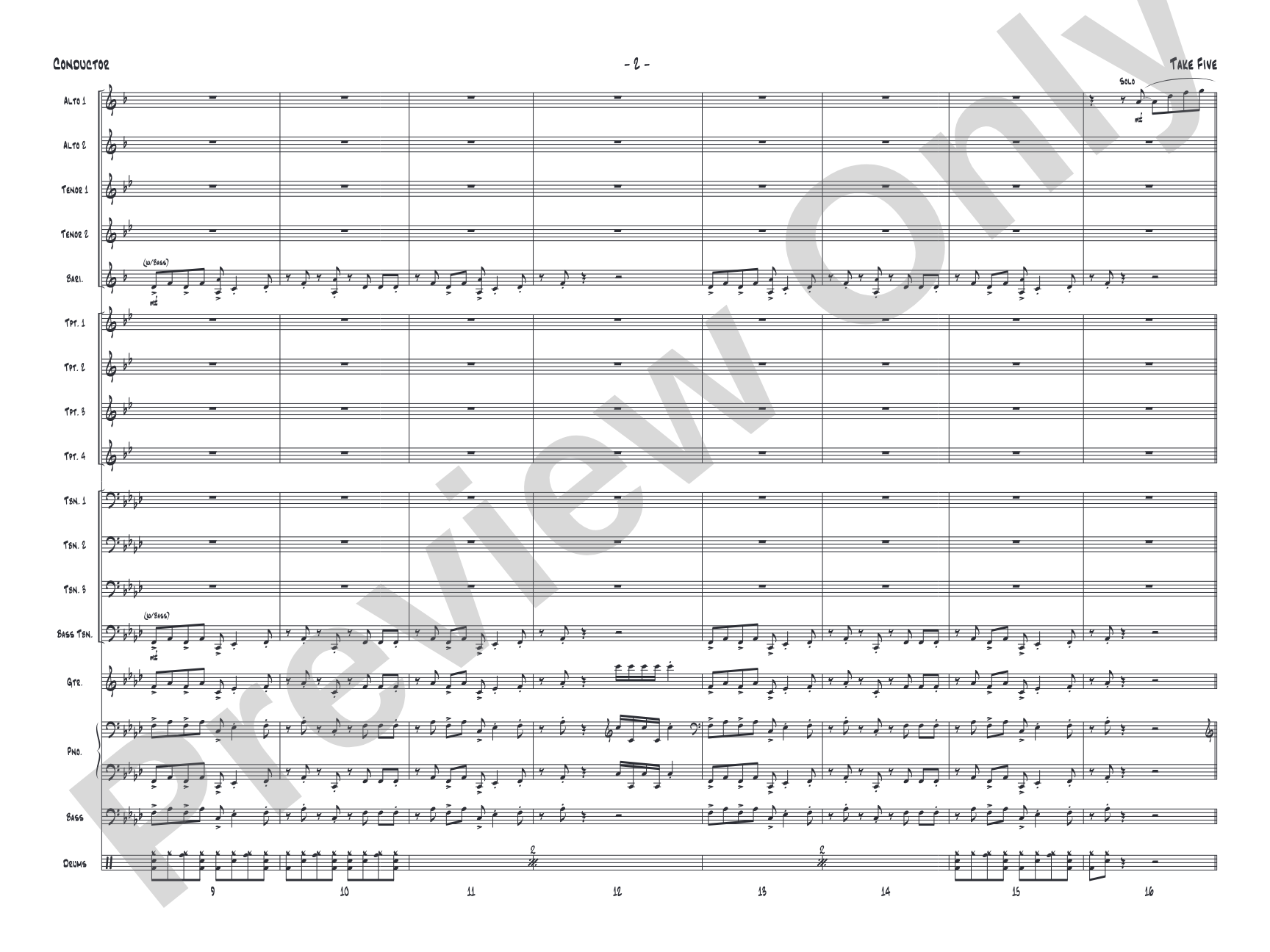
Yep, it's in 4/4 not 5/4. A clever chart on a super classic that everyone will recognize, young or old. The bossa nova tempo is around 130 BPM and there are written suggested solos for piano and alto sax. Lead trumpet range is to written B-flat above the staff, and an interlude reoccurs to offer contrast. It all works great! "Take Five" has been skillfully arranged by John Zontek. (4:50)


Don't just read it, hear it, play along with it, and watch your students grow with it. In MakeMusic Cloud, Take Five: Jazz Ensemble Conductor Score & Parts comes alive with professional accompaniment, adjustable tempo, and built-in practice tools that turn solo practice into real progress.
Open in the Player
Jump straight in and assign it today.
Start Your Free Trial
Open this title and explore the full library in minutes.
Sample Audio
1
Audio File
--:--
0:00
0:00
Sample Video
Additional Details
Series:
Jazz Band Series
Publisher:
Alfred Music
Page Count:
102
SKU:
00-PK-0007463
More about this title
About the Composer: Paul Desmond
Paul Desmond (1924-1977) was an alto saxophonist and composer best known as a founding member of the Dave Brubeck Quartet. His lyrical, introspective approach to jazz melody set him apart from his contemporaries, and his compositions remain central to the jazz repertoire. "Take Five," recorded in 1959, became one of the most recognizable jazz standards in the world, introducing millions of listeners to the possibilities of unusual time signatures in popular music.
Desmond's gift lay in writing memorable, singable melodies that spoke across musical boundaries. His solos were marked by a cool, restrained elegance, and his writing carried that same quality into the compositions he created for ensemble performance. Teachers and students continue to return to his work because it balances sophistication with accessibility, offering genuine artistic depth without sacrificing clarity or joy.
Why we love this
This arrangement captures the essence of one of jazz's most iconic melodies while making it approachable for Grade 3 ensembles. John Zontek's clever reframing in 4/4 time removes a common performance barrier without sacrificing the piece's character, and the written solos for piano and alto sax give your students something concrete to work toward rather than requiring them to improvise from scratch on a tune they're still learning.
What to expect
Cool and unhurried, with a laid-back bossa nova pocket that feels sophisticated without demanding virtuosity. The melody is warm and accessible, carrying the same contemplative quality Desmond brought to his original recording, while the harmonic backdrop gives the ensemble something substantive to support.
Who it's for
Jazz ensemble directors working with Grade 3 ensembles who want to program a genuine standard that audiences instantly recognize and enjoy. This arrangement is ideal for student musicians learning to navigate jazz phrasing, articulation, and ensemble balance while playing a tune that feels rewarding and legitimate from day one.
How to get the most out of it
- Keep the bossa nova swing relaxed at 130 BPM. Young ensembles often rush this tempo out of excitement; anchor the ensemble with a steady, conversational feel rather than pushing forward.
- Balance the written solo sections carefully. Piano and alto sax solos need to sit forward enough to be heard clearly, but not so dominant that the ensemble backing becomes invisible.
- Use the interlude passages to reset energy and focus. These recurring moments offer natural rehearsal points and give the ensemble a chance to refresh before the next section.
- Attend to blend in the background figures, especially when the melody rests. These rhythmic accompaniment patterns define the groove, so clarity and cohesion matter as much as in the tune itself.
How to use it
Slot this into a jazz-focused concert or spring pops program as a crowd-pleaser that bridges generations. The recognizability makes it an excellent choice for community concerts or school events where non-musicians will be in the audience, and its contest-appropriate length and difficulty level make it suitable for festival performance as well.
Skills your students will build
- Reading and performing bossa nova rhythmic figures and swing articulation
- Jazz phrasing and dynamic shaping in a melody-driven context
- Listening and responding to solo sections as an ensemble accompanist
- Maintaining steady time and groove feel in a relaxed jazz context
- Reading jazz ensemble voicings and chord-related textures