
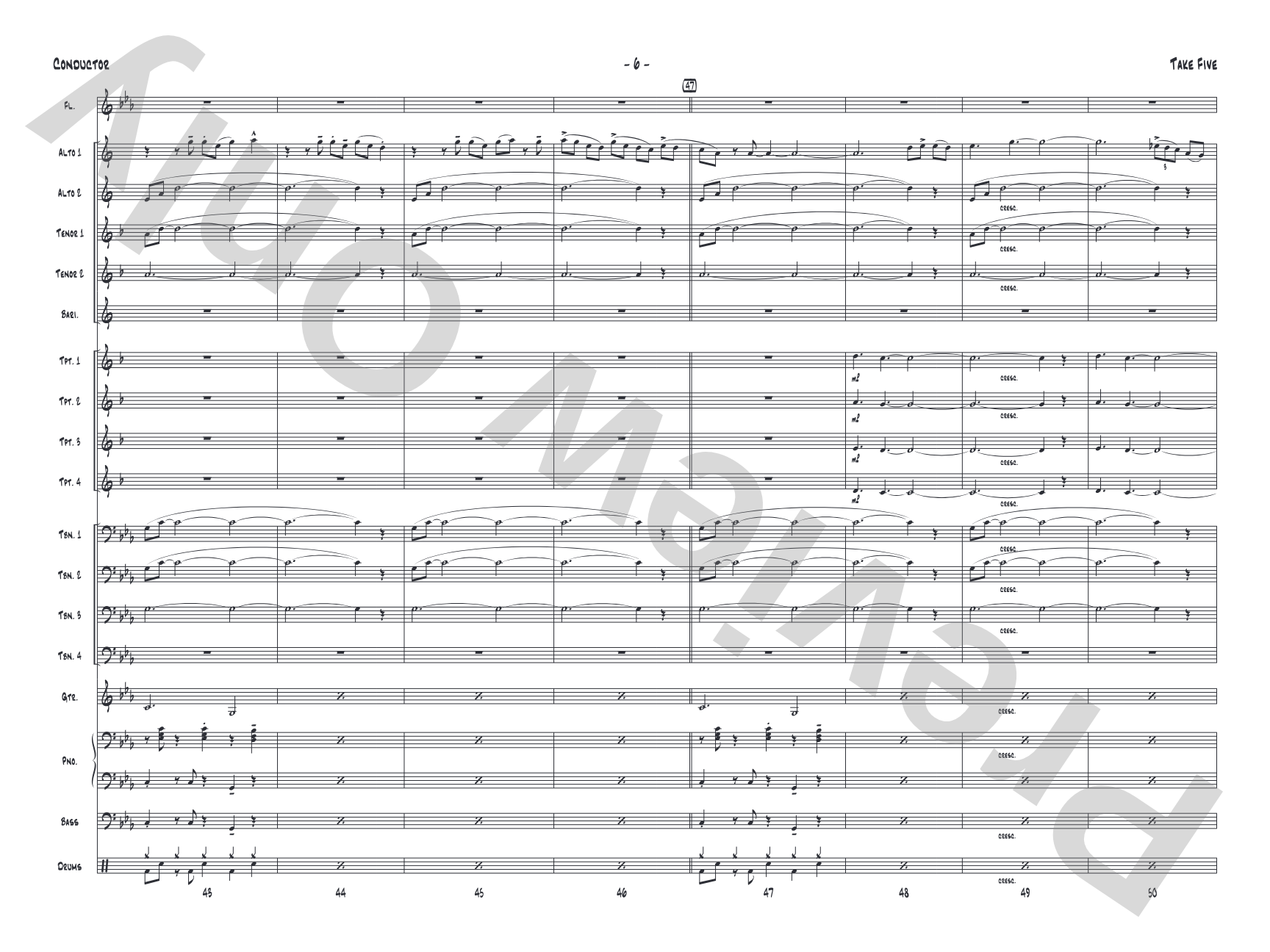
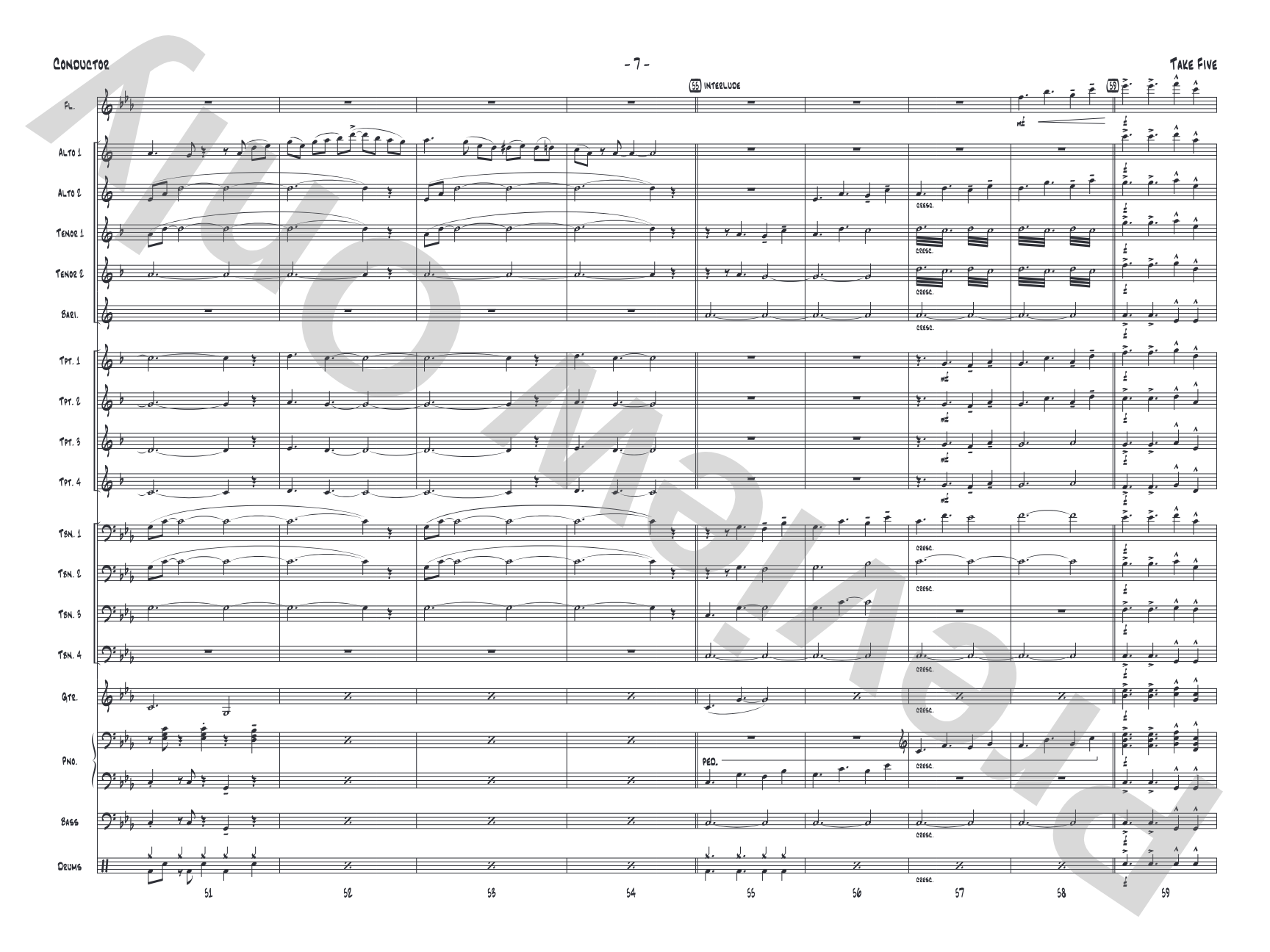
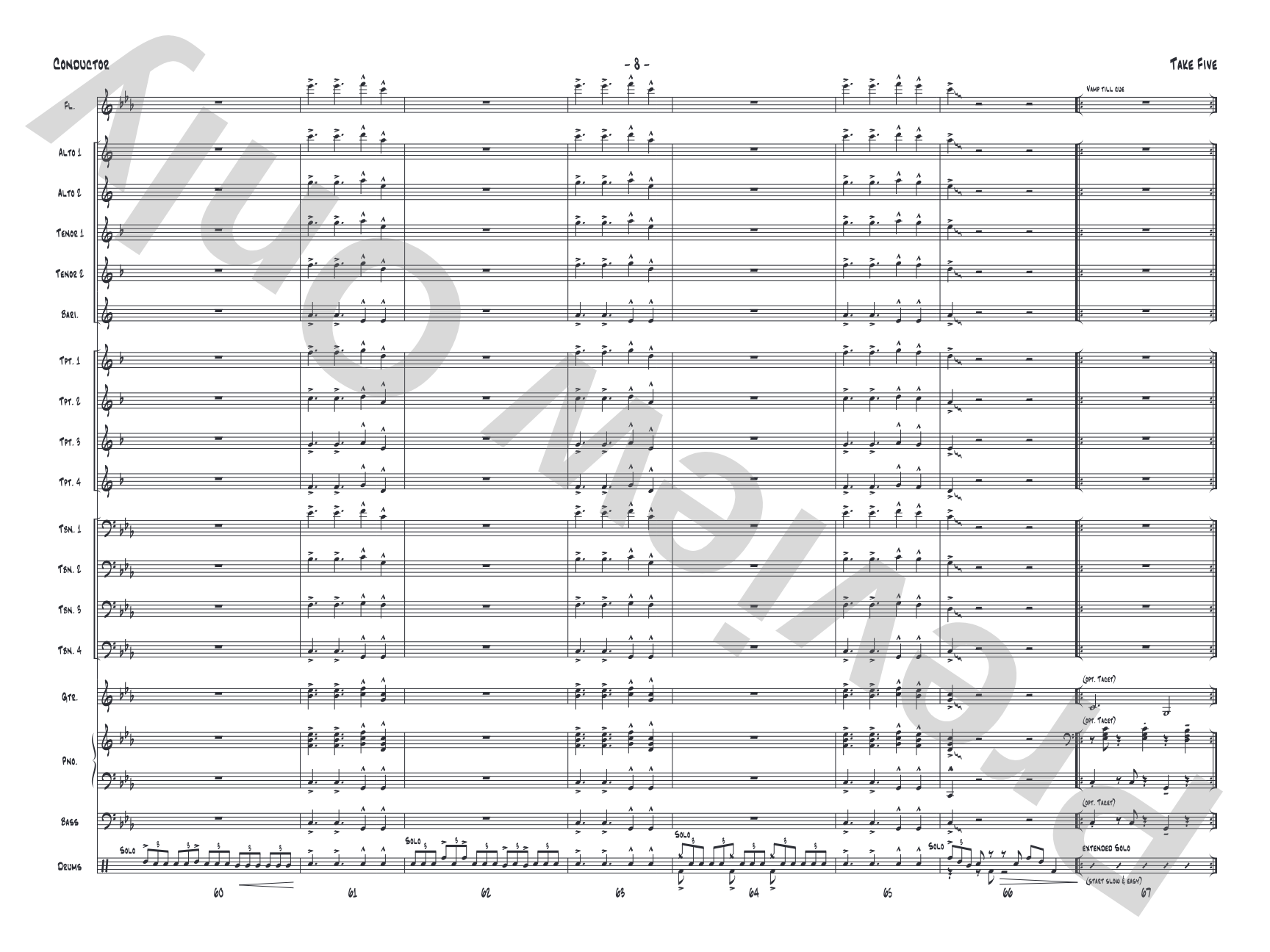
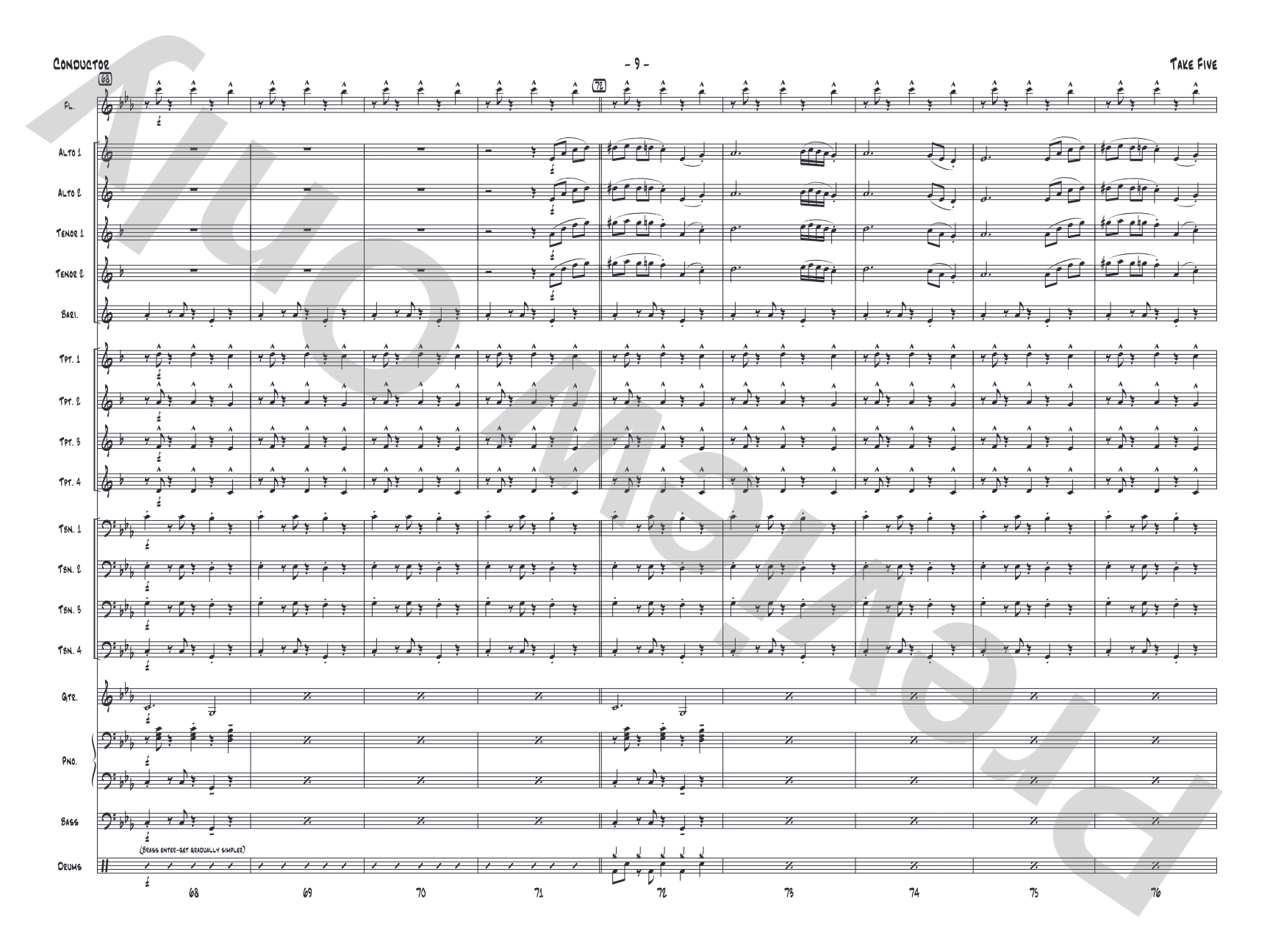
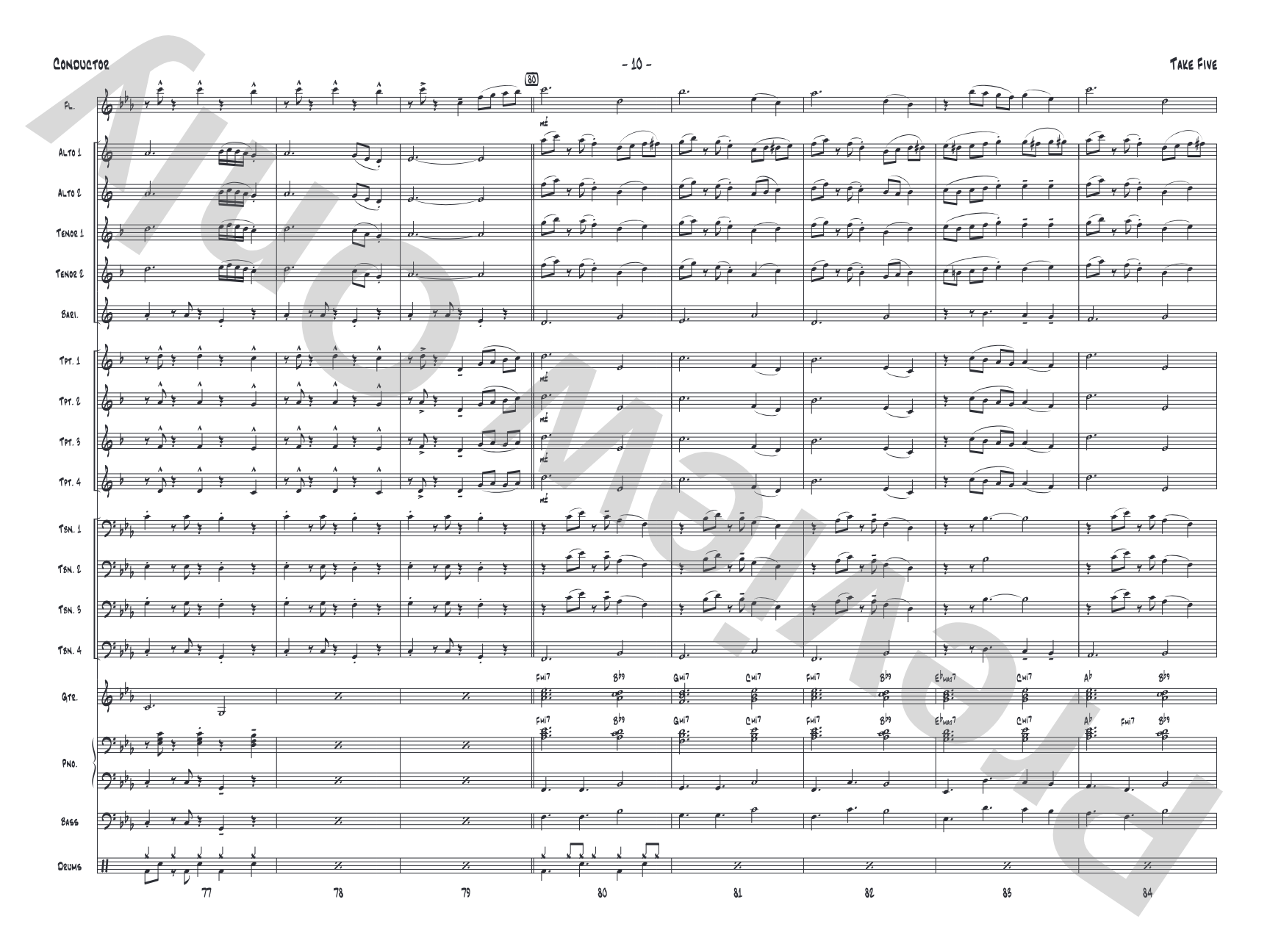
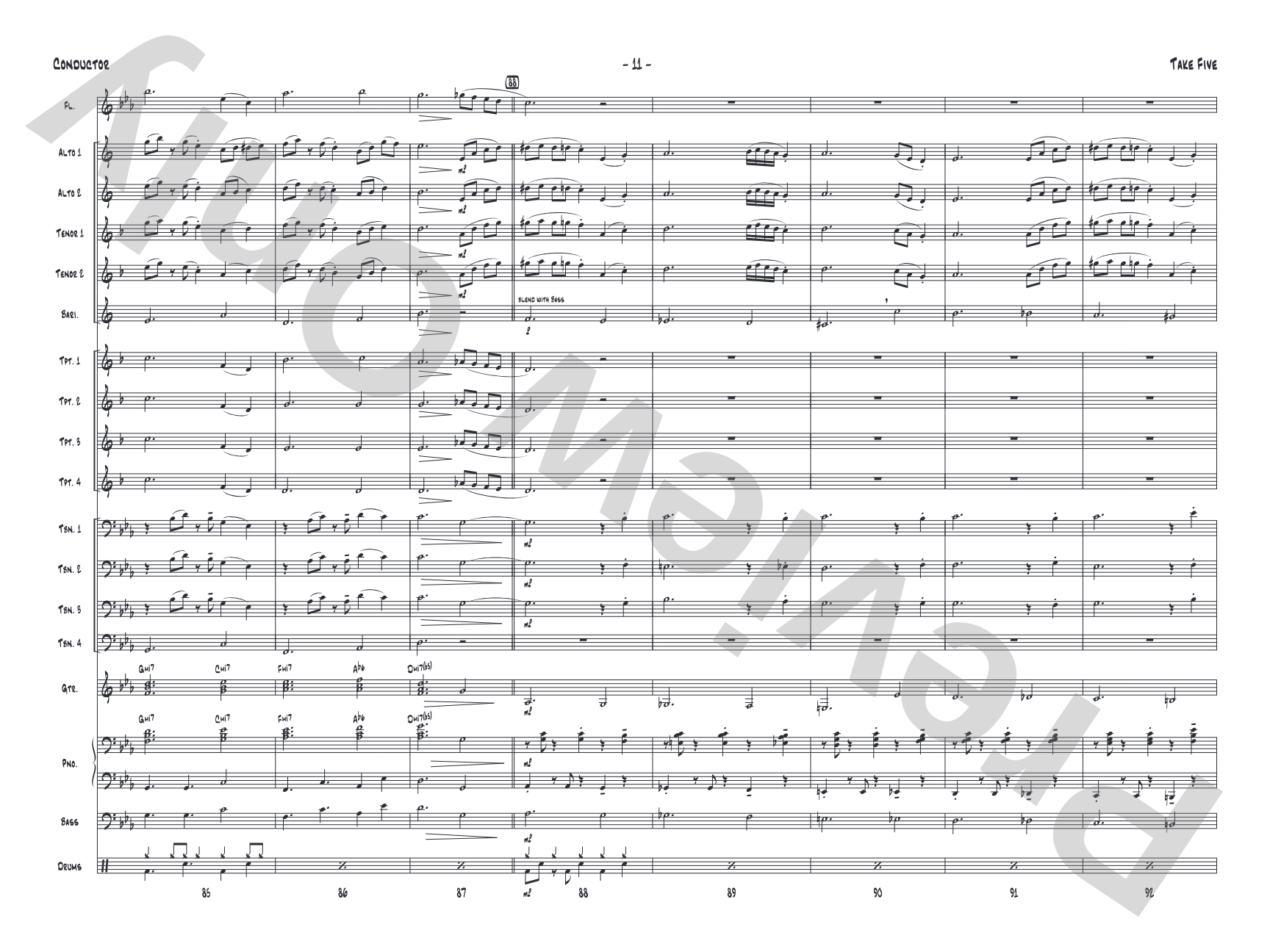
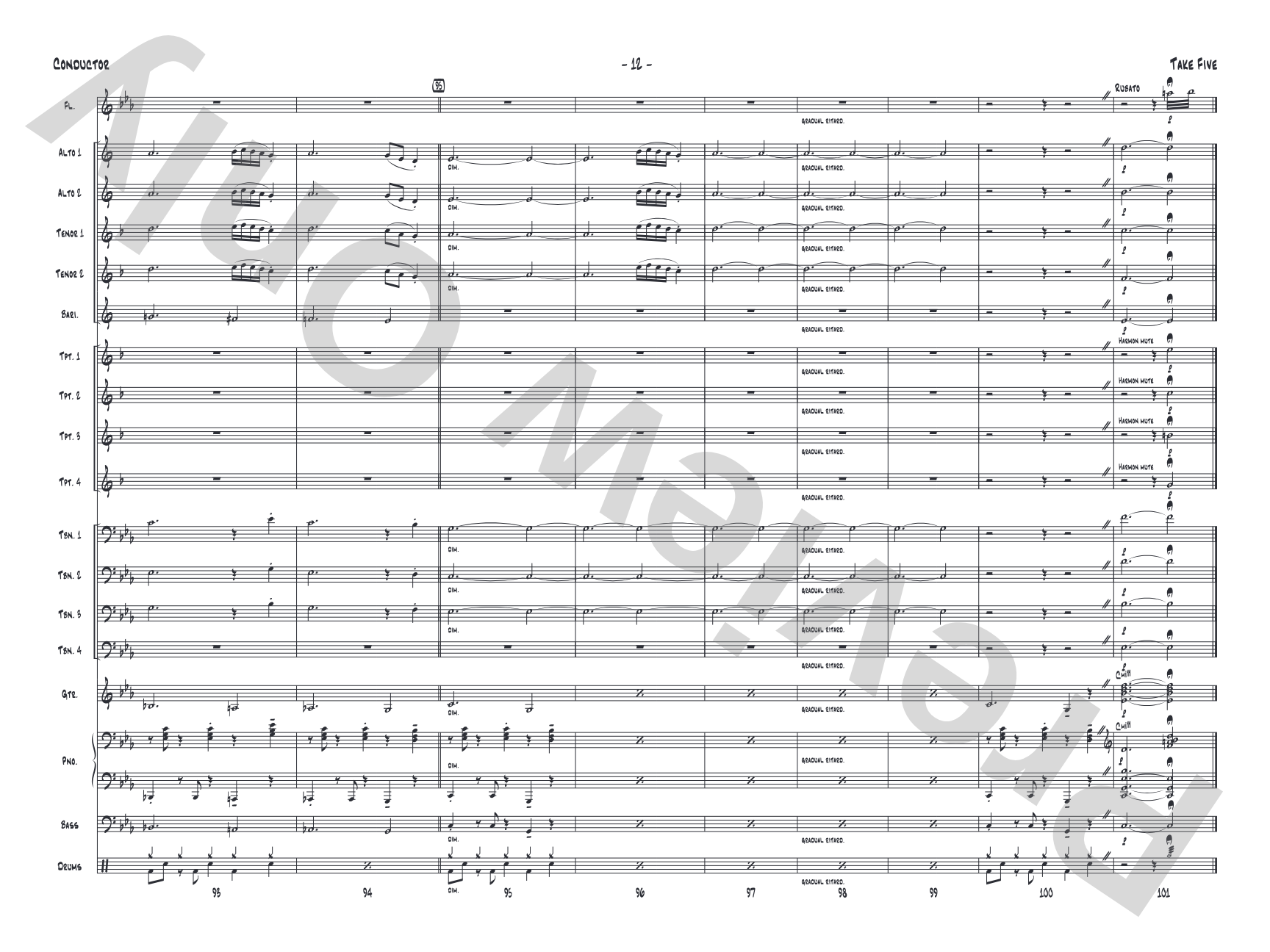

Take Five: Jazz Ensemble Conductor Score & Parts
By Paul Desmond / arr. Rich DeRosa
Grade: 2 (Medium Easy)
Item: 00-PK-0005925

$52.00
One moment…
Description
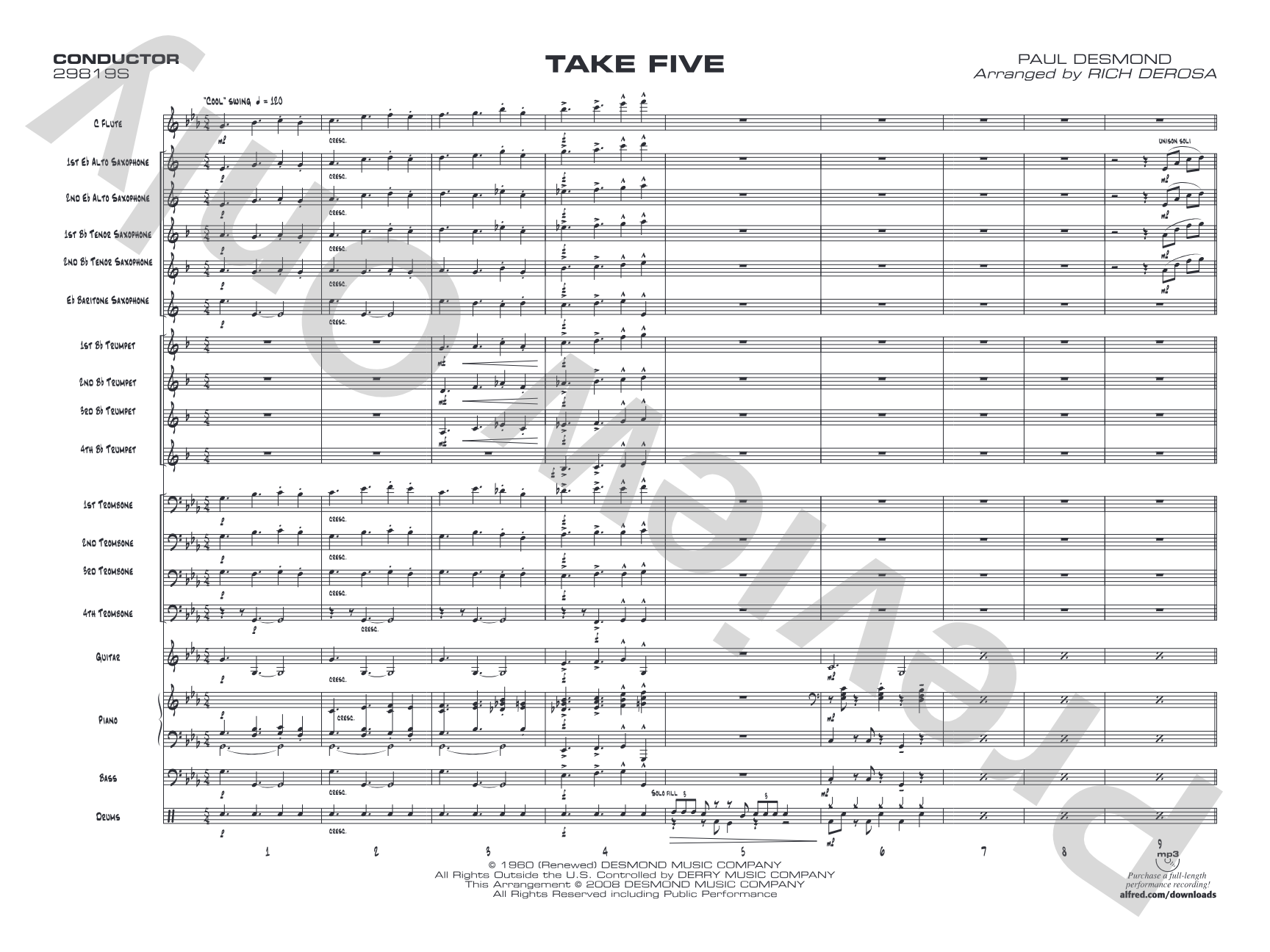
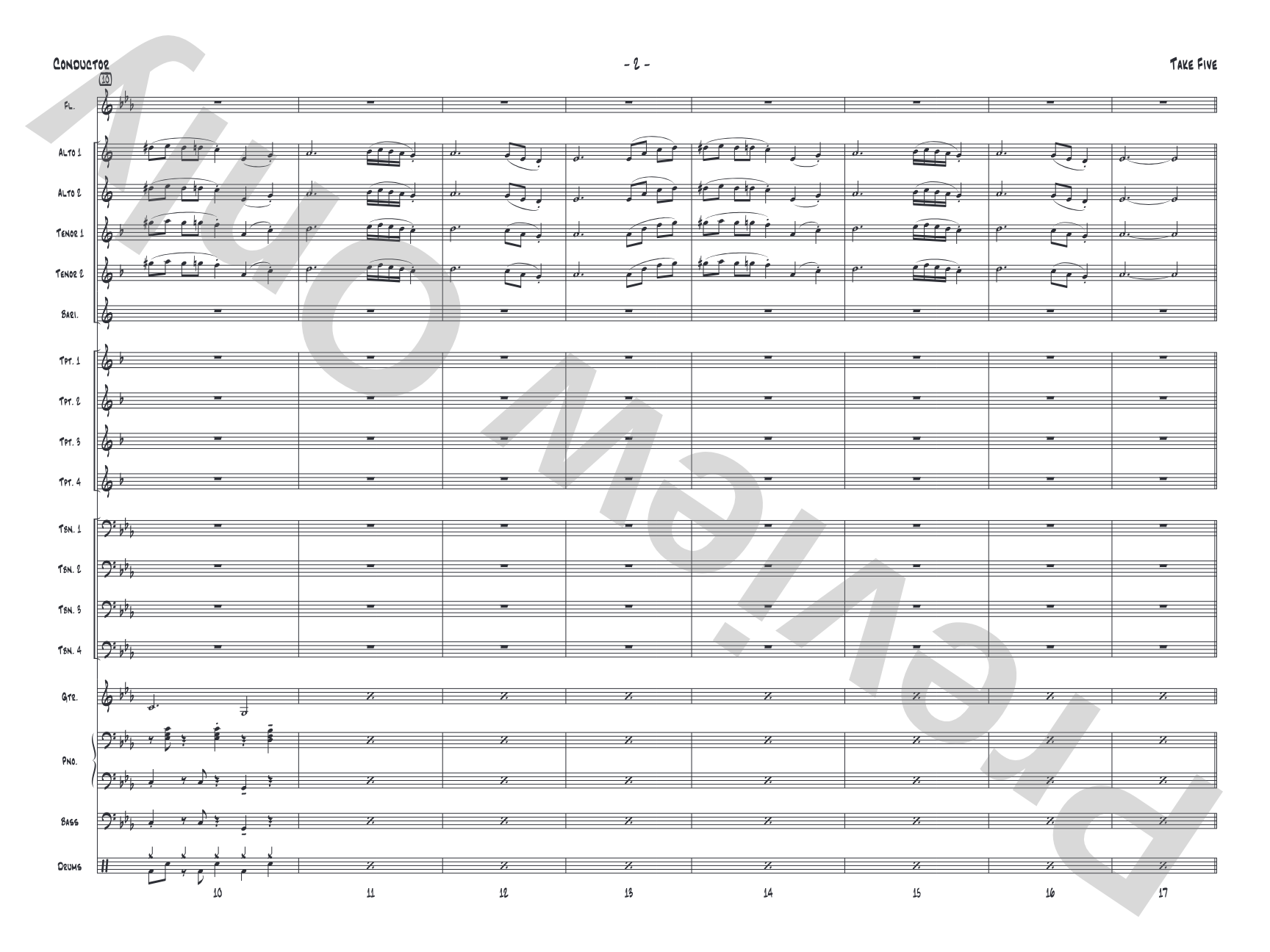
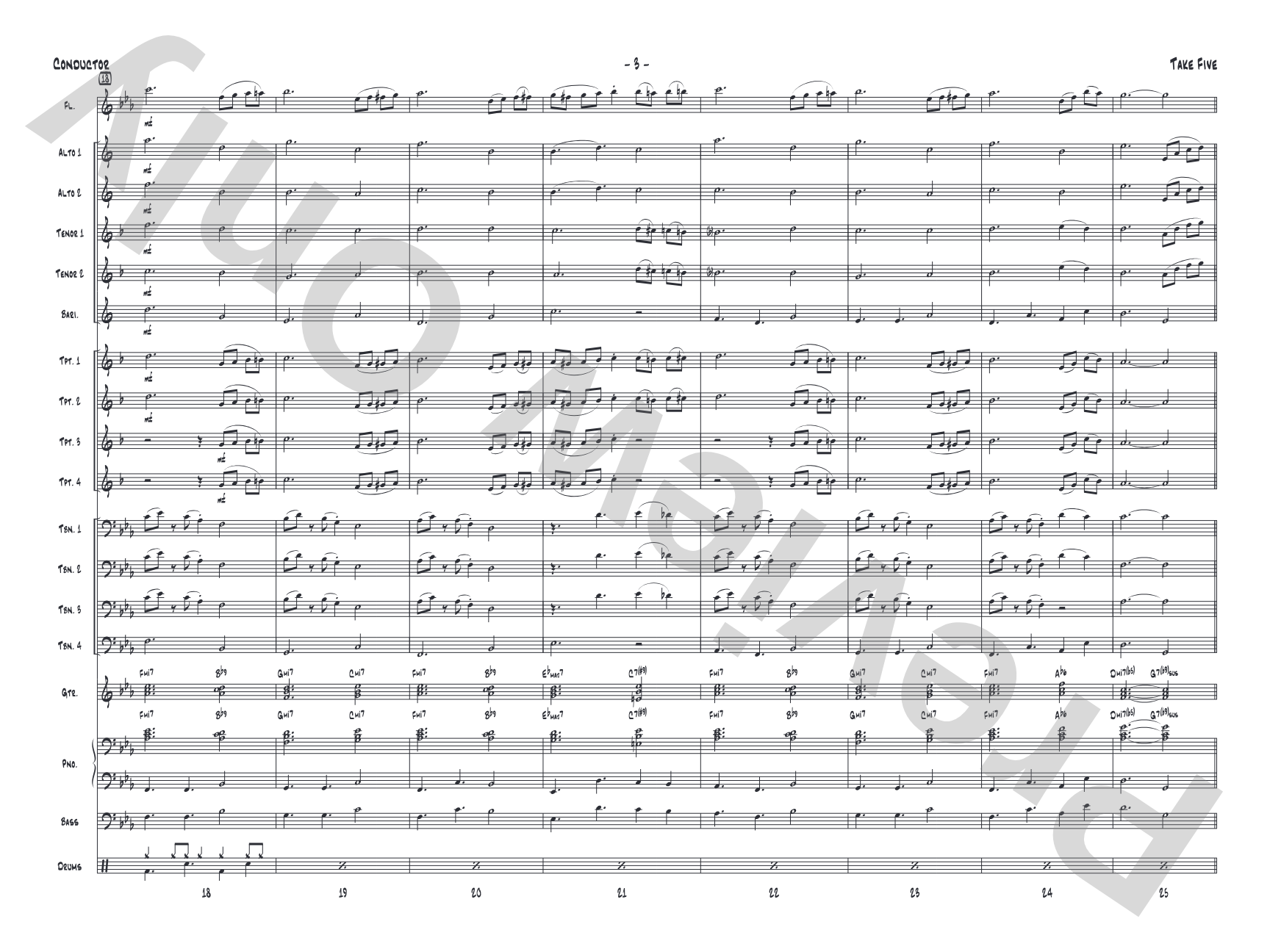
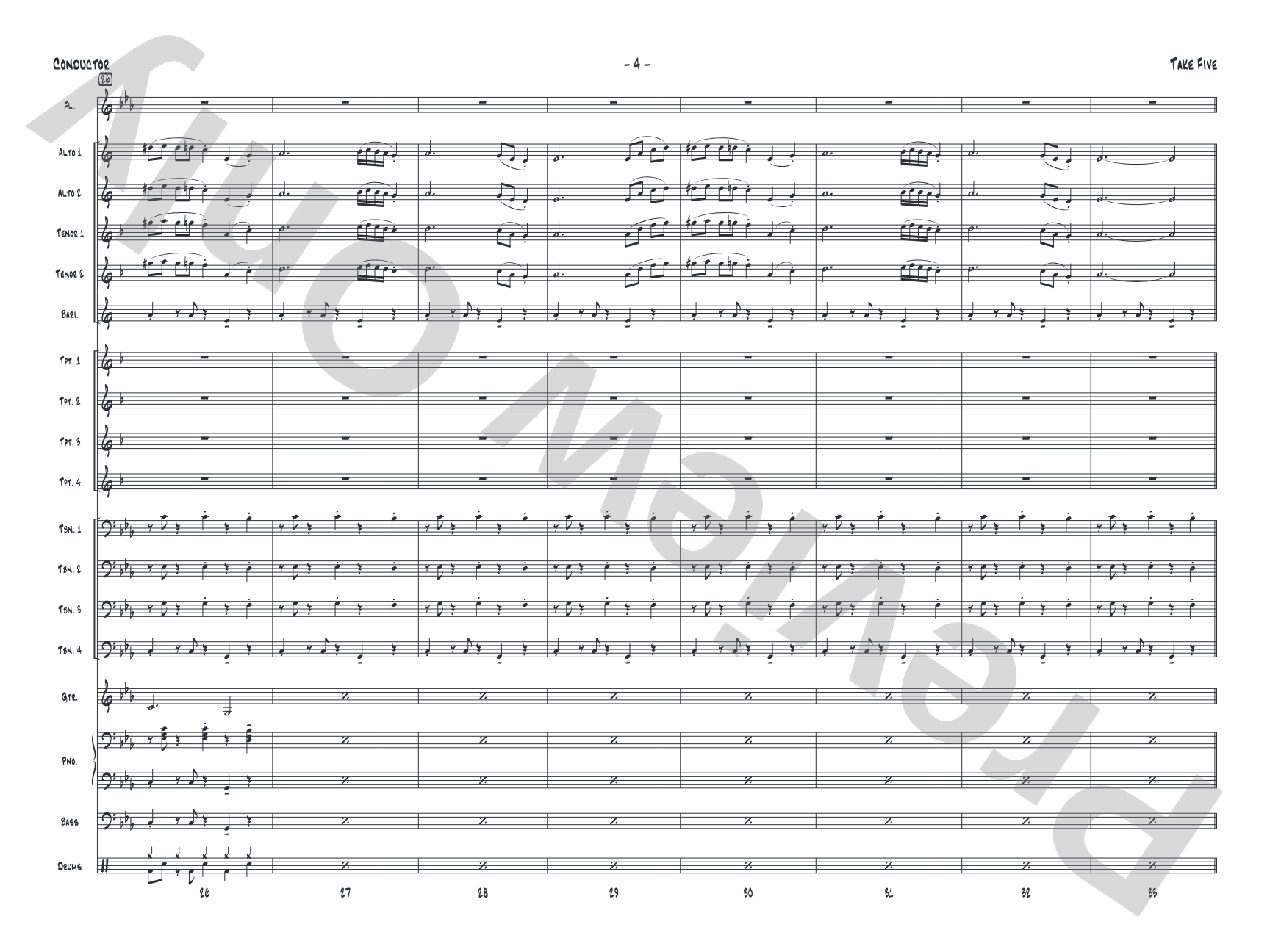
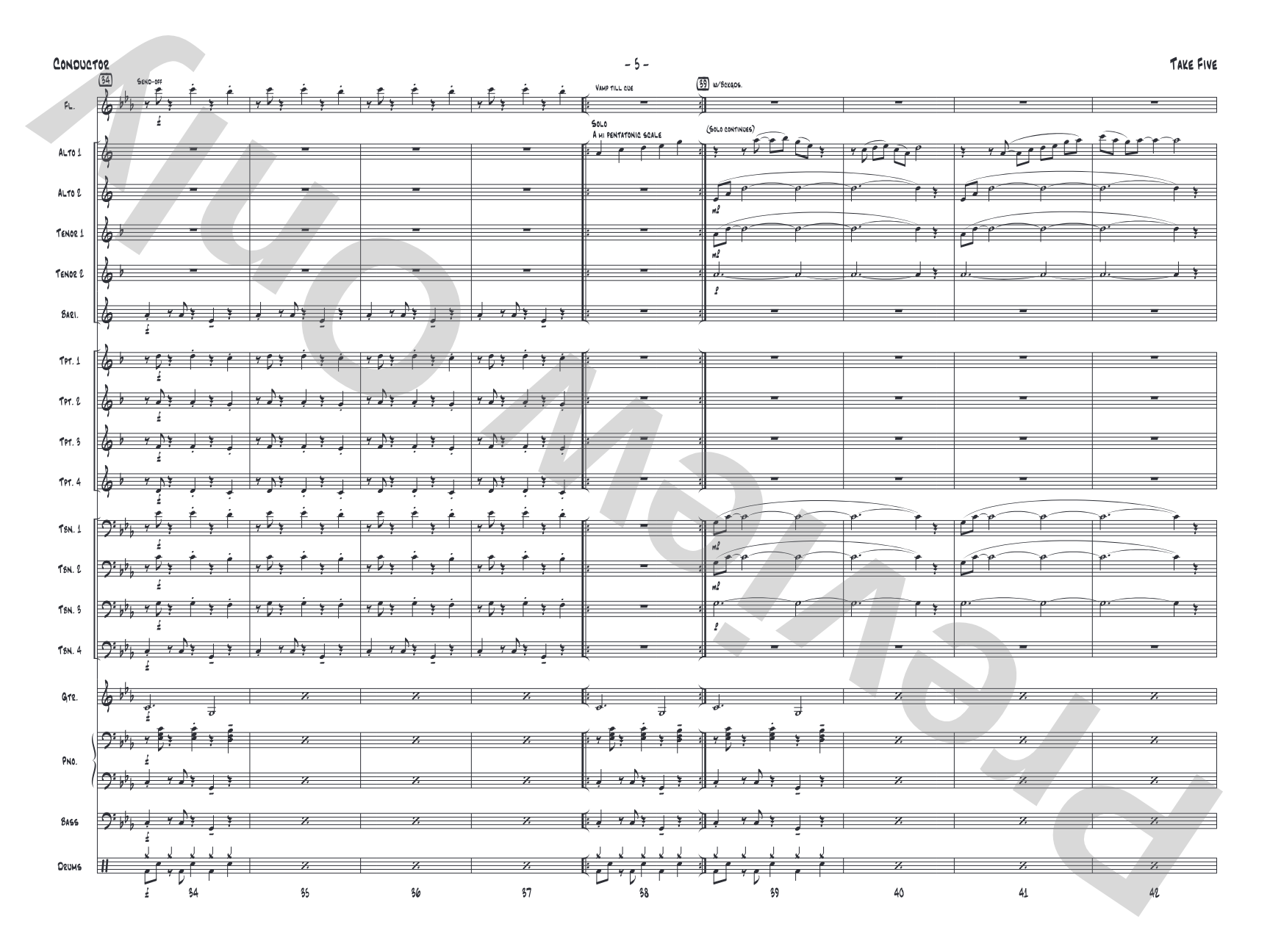
Perhaps the most famous time chart of all time, Take Five is in 5/4 but the rhythmic pattern is clear and consistent throughout. You'll find this arrangement very accessible with easy alto sax and drum solos, and modest brass ranges. Recommended for every concert! (4:21)


Don't just read it, hear it, play along with it, and watch your students grow with it. In MakeMusic Cloud, Take Five: Jazz Ensemble Conductor Score & Parts comes alive with professional accompaniment, adjustable tempo, and built-in practice tools that turn solo practice into real progress.
Open in the Player
Jump straight in and assign it today.
Start Your Free Trial
Open this title and explore the full library in minutes.
Sample Audio
1
Audio File
--:--
0:00
0:00
Sample Video
No sample videos found.
Additional Details
Series:
Jazz for Young People Series
Publisher:
Alfred Music
Page Count:
90
SKU:
00-PK-0005925
More about this title
About the Composer: Paul Desmond
Paul Desmond (1924-1977) was an alto saxophonist and composer best known for his work with the Dave Brubeck Quartet, where his cool, lyrical tone became a defining voice in West Coast jazz. Desmond composed "Take Five" in 1959, creating one of the few jazz standards written in an unusual meter that achieved massive commercial and critical success. His gift for memorable melody and his ability to make complex rhythmic ideas feel natural made him one of the most influential saxophonists in modern jazz history.
Why we love this
This arrangement captures the magic of the original while opening the door for young ensembles to play a genuine jazz classic. Rich Derosa has crafted parts that let soloists shine without requiring advanced chops, and the rhythm section foundation is straightforward enough that students focus on locking into that iconic 5/4 groove rather than wrestling with complex notation. Every young jazz band needs this in their book.
What to expect
Cool, sophisticated, and irresistibly groovy. Take Five has a laid-back elegance that makes the 5/4 meter feel natural rather than fractured, with the bright alto sax melody floating effortlessly over a steady, snappy rhythm section. It's the kind of piece that makes an ensemble sound like they know what they're doing, even when they're still learning.
Who it's for
Grade 2 jazz ensembles ready to tackle a real standard that builds rhythmic independence and swing vocabulary. This works for school jazz bands, community ensembles, and rehearsal groups where students have basic jazz fundamentals in place and want to play music that matters. It's equally rewarding for directors looking to program something the audience will recognize and appreciate.
How to get the most out of it
- Establish the 5/4 pulse as a clear pattern (one grouping of three, one grouping of two) before adding melody. Once the ensemble feels it, the time signature stops being an obstacle and becomes the piece's identity.
- Balance the alto sax solo so it sits comfortably above the rhythm section without overpowering it. The melody should breathe naturally over the walking bass line.
- Keep the drum solo crisp and defined. This is a chance for your drummer to showcase feel and precision at the quarter-note level within the 5/4 structure.
- Maintain the relaxed, cool swing feel throughout. Avoid rushing or tightening up during ensemble passages; the confidence comes from steady rhythm section time, not tempo pushing.
How to use it
Program this as a centerpiece of a jazz-focused concert or as a crowd-pleaser that bridges classical and popular music audiences. It pairs well with other accessible jazz standards at the Grade 2 level, or slot it into a mixed program to demonstrate your ensemble's range and comfort with contemporary styles. This is also an excellent vehicle for a student solo spotlight performance, whether as a full-band feature or in a recital setting.
Skills your students will build
- Reading and maintaining 5/4 time signature
- Playing swing rhythms and phrasing with appropriate feel
- Solo improvisation in a structured 12-bar blues context
- Walking bass line construction and execution
- Listening and responding to other ensemble members in real-time
- Balancing ensemble and solo textures