
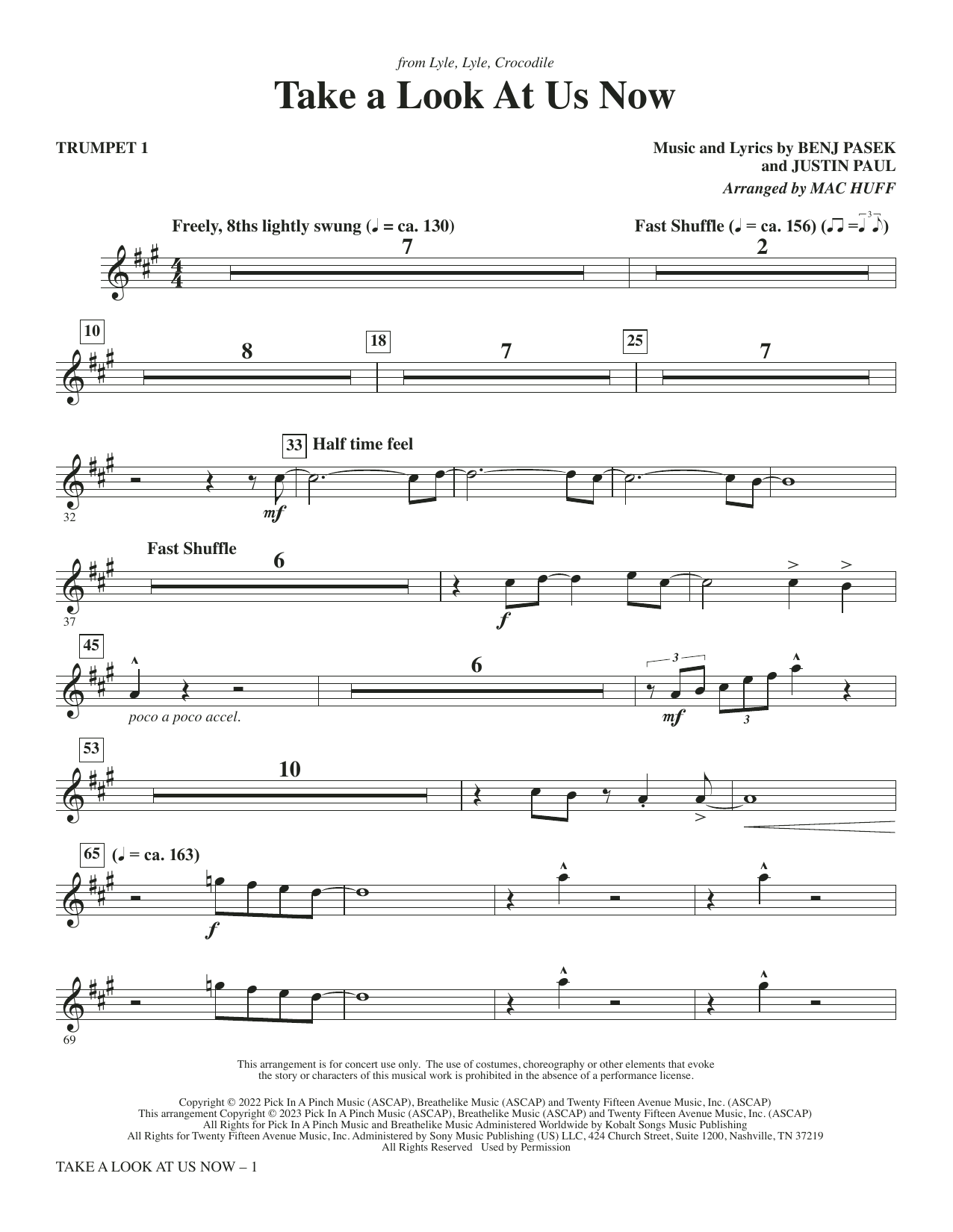

Take A Look At Us Now (from Lyle, Lyle, Crocodile) (arr. Mac Huff): Choral Instrumental Pak
By Pasek Paul / Arranged by Mac Huff
Item: 35-PK01269312
$49.00
Pickup currently not available
Buy Extra Parts (Digital PDF Download)
Parts Added to Cart!
Description
Based on the best-selling children's book series, "Lyle, Lyle, Crocodile" was released to positive reviews and even better word-of-mouth. Composers Pasek and Paul infuse every square inch of this song with energy and spirit!


Take A Look At Us Now (from Lyle, Lyle, Crocodile) (arr. Mac Huff): Choral Instrumental Pak isn't in MakeMusic Cloud just yet...but it could be. Let us know you'd like to see it, and you'll help shape what comes next. In the meantime, start a free trial and dive into thousands of interactive titles your students can play along with today.
Request This Title
Tell us you want it.
Start Your Free Trial
Explore everything that's ready to play right now.
Sample Audio
No sample audio found.
Sample Video
No sample videos found.
Additional Details
Publisher:
Hal Leonard
SKU:
35-PK01269312
More about this title
About the Composer: Pasek Paul
Benj Pasek and Justin Paul have become the songwriting team behind some of the most successful musical theater and film projects of the past decade. Their work is characterized by infectious melodies, clever lyrics, and an instinctive understanding of what makes a song both commercially appealing and emotionally resonant. In educational settings, their compositions offer students the chance to engage with contemporary songwriting that bridges pop sensibility and theatrical storytelling.
Pasek and Paul's catalog includes music for "The Greatest Showman," "Dear Evan Hansen," and "La La Land," demonstrating their range across film, stage, and concert music. Their approach to melody and harmony rewards singers with satisfying vocal lines while maintaining the accessibility that draws audiences in from the first hearing.
Why we love this
Mac Huff's arrangement captures the playful irreverence of the film while giving singers genuine musical satisfaction. The energy never flags, and the orchestration supports ensemble singing without overwhelming younger voices. Choirs programming family concerts or seeking contemporary pop material will find this arrangement strikes the right balance between fun and musicality.
What to expect
Imagine a celebration filtered through genuine affection and humor. The music bounces with infectious rhythm and warmth while maintaining the witty spirit of the source material. Singers feel the satisfaction of driving a piece forward together while audiences recognize the familiar melody from a beloved film.
Who it's for
This arrangement works well for upper elementary through middle school choirs seeking contemporary repertoire with genuine theatrical appeal. It's equally valuable for high school programs introducing students to modern songwriting and for community or educational productions of the show itself.
How to get the most out of it
- Establish a steady groove early in rehearsal; the forward momentum of this piece depends on confident rhythmic precision from your rhythm section.
- Let the melodic lines breathe even within the fast tempo. Younger singers often rush when excited, so mark phrase ends clearly and practice breathing together.
- The accompanying recording is your best resource for understanding the intended style and energy level. Play it frequently so singers internalize the groove before adding their parts.
- Pay attention to articulation markings in the vocal parts. Crisp consonants and light staccato will enhance the playful character of the arrangement.
How to use it
Consider pairing this with other film or pop arrangements to create a themed concert celebrating contemporary songwriting. It also works as a memorable opener or closer for spring concerts, where its joyful energy sends audiences home smiling. Directors bringing "Lyle, Lyle, Crocodile" to the stage will want this as a centerpiece number.
Skills your students will build
- Maintaining steady tempo in contemporary pop grooves
- Balancing unison and harmonic sections with clear part independence
- Interpreting rhythmic figures in a syncopated, jazz-influenced context
- Connecting theatrical expression to ensemble vocal technique
- Responding to a recorded accompaniment with rhythmic confidence