
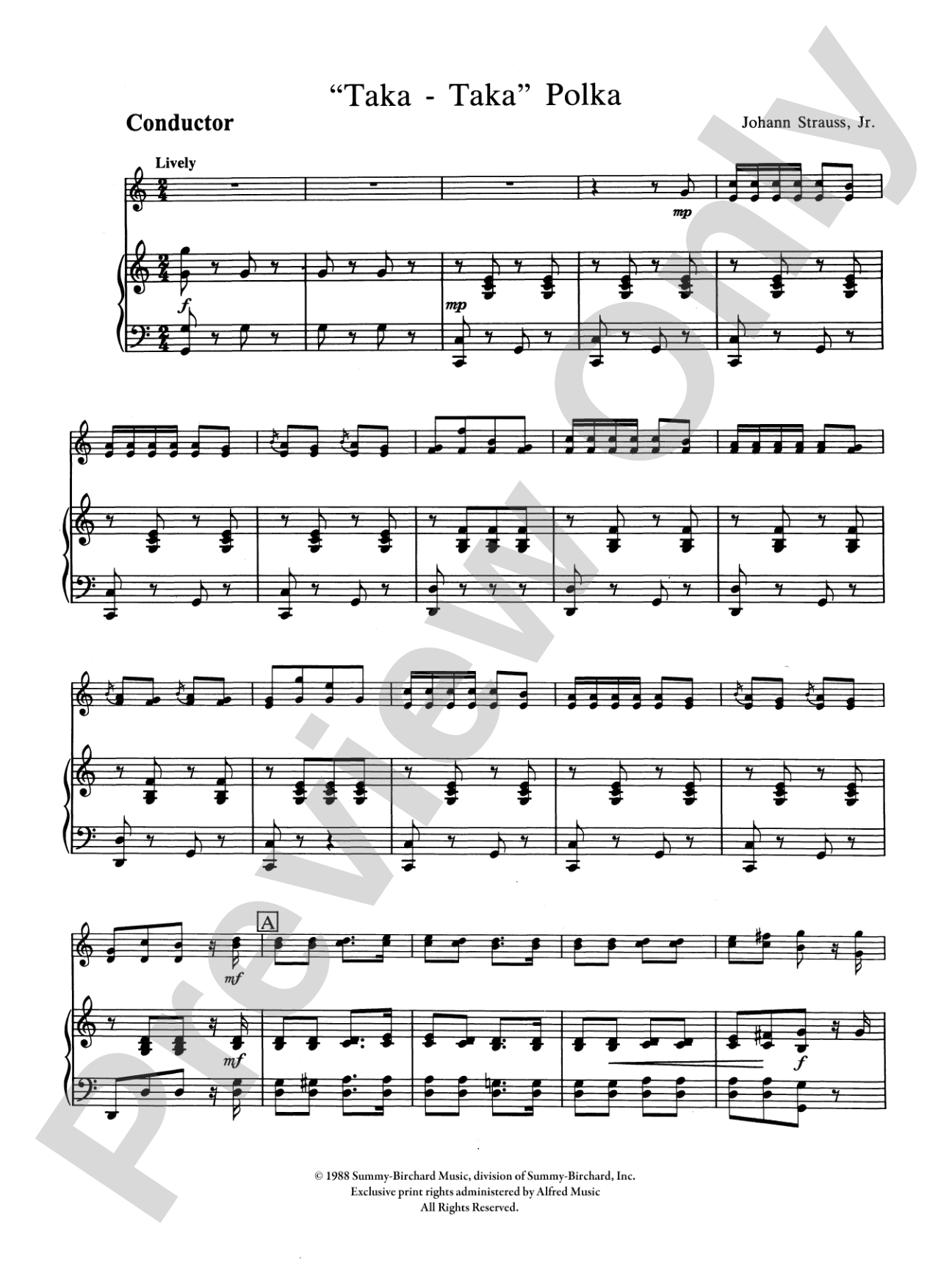
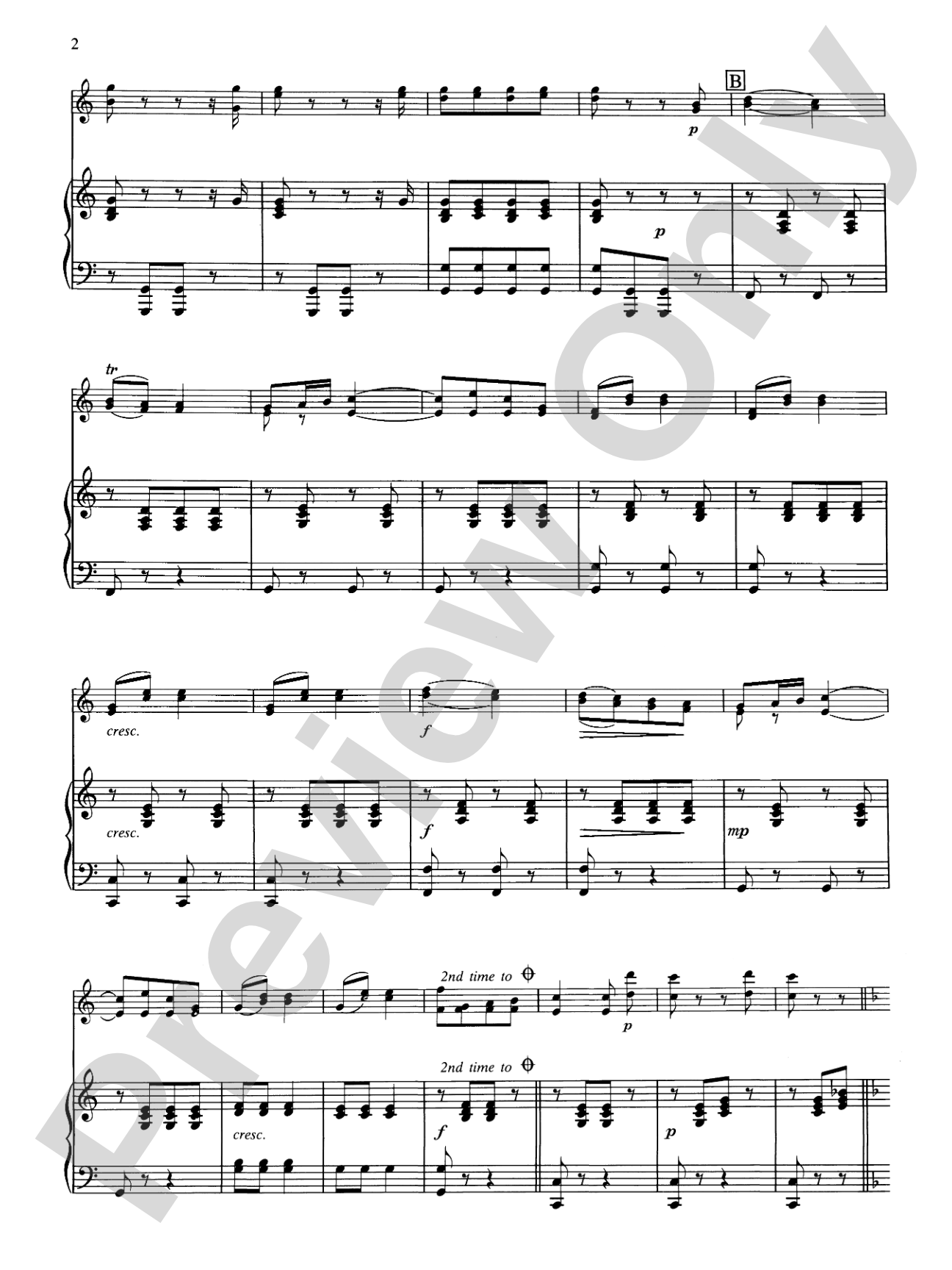
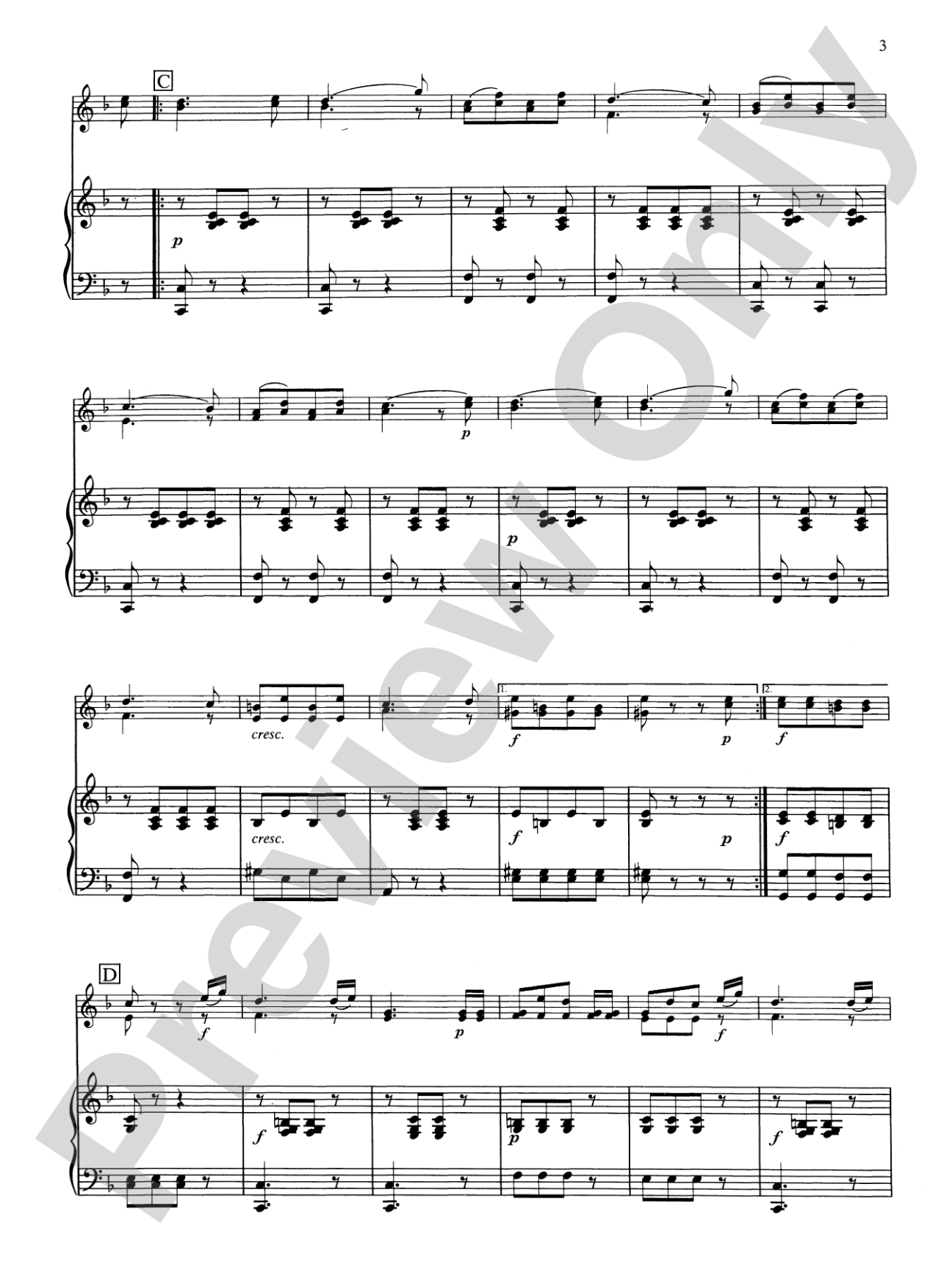
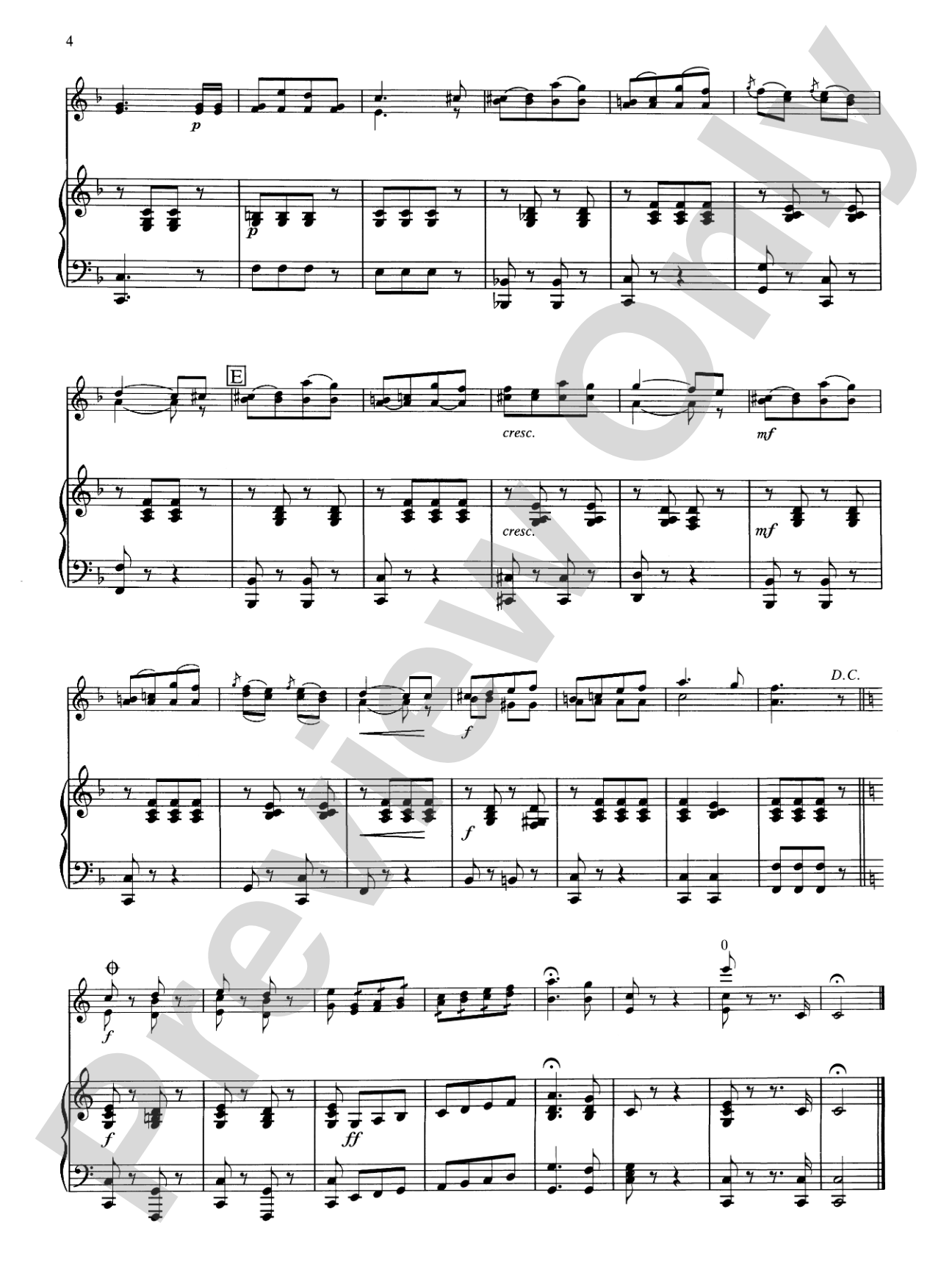
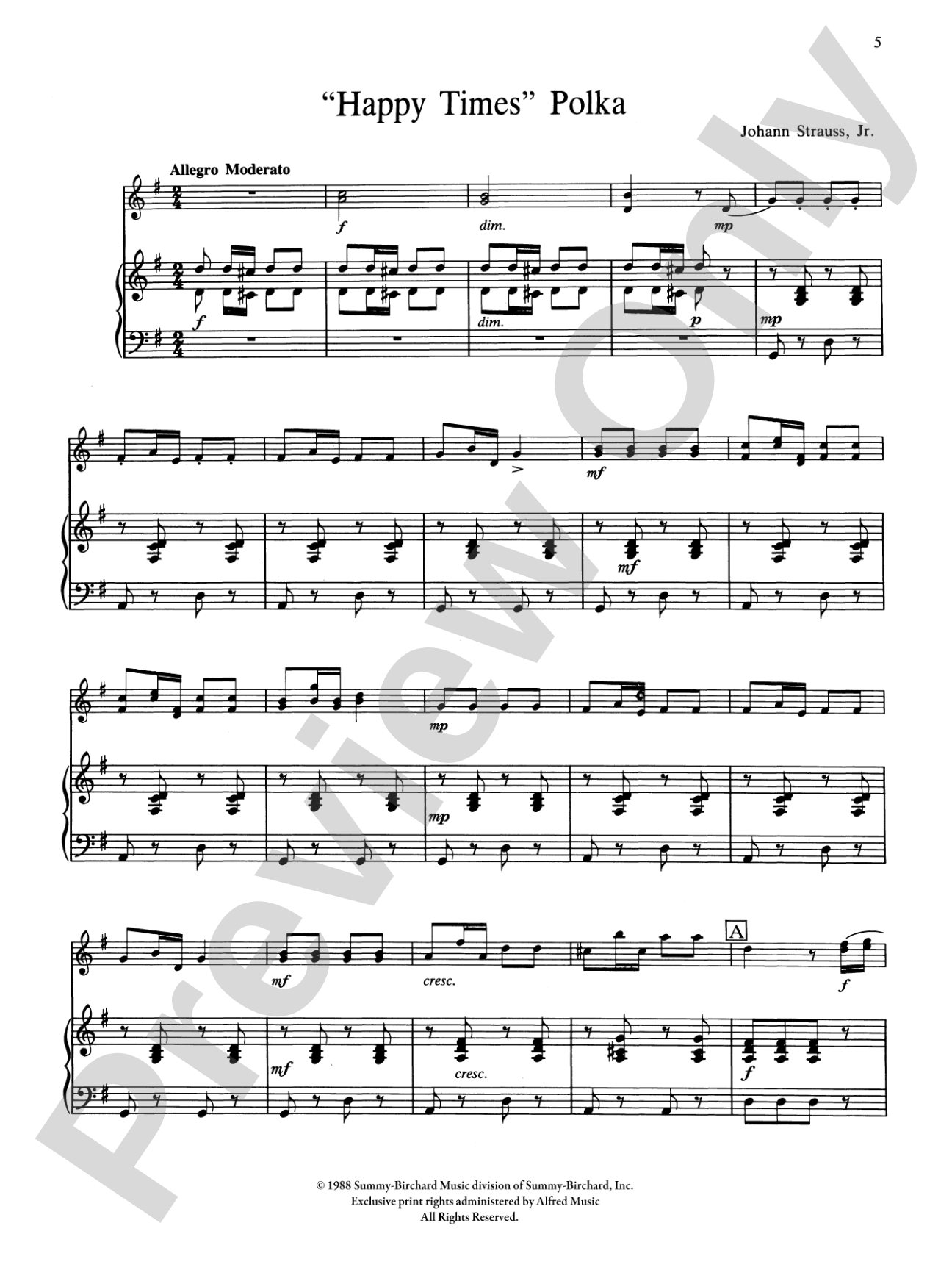
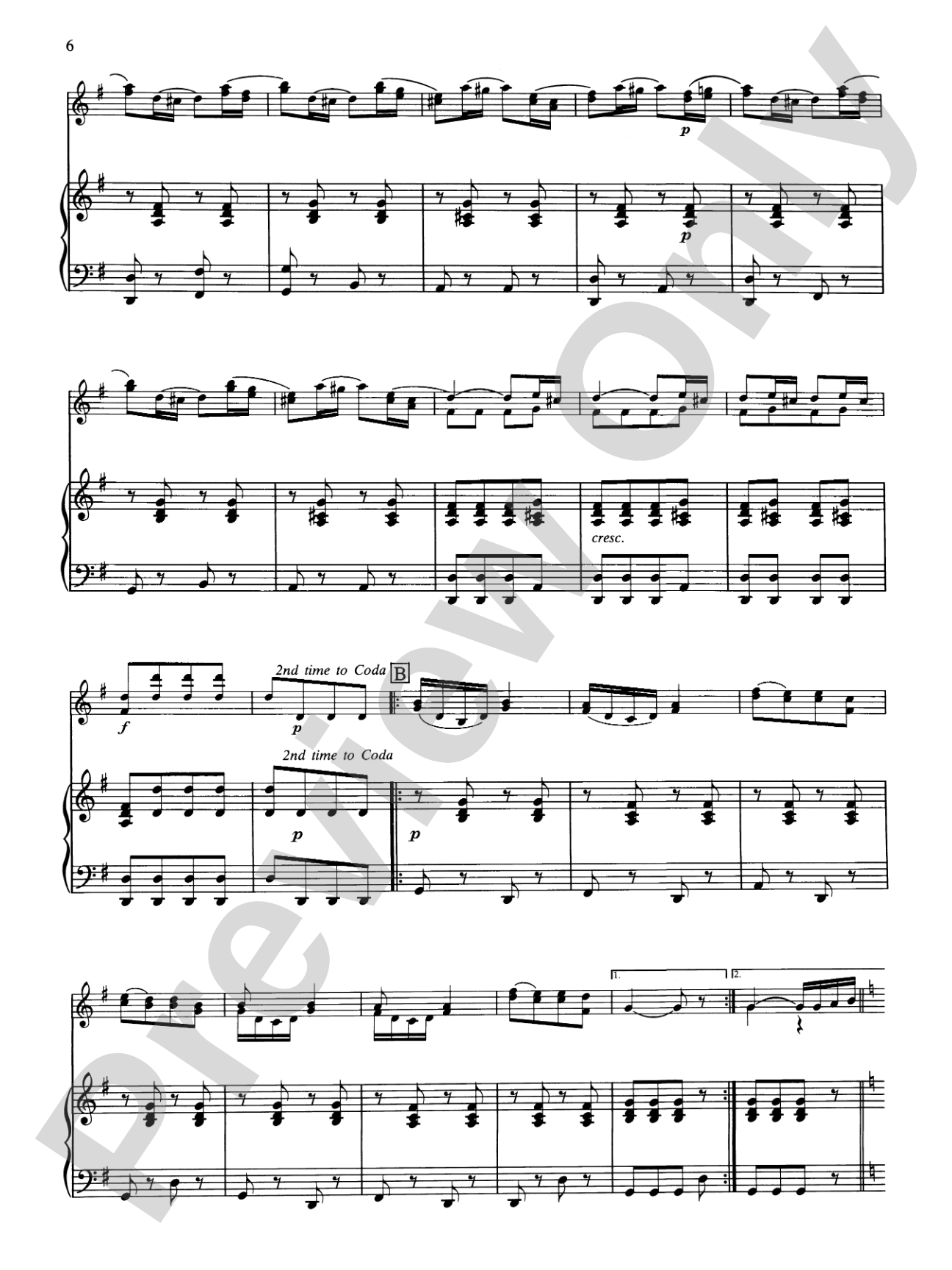
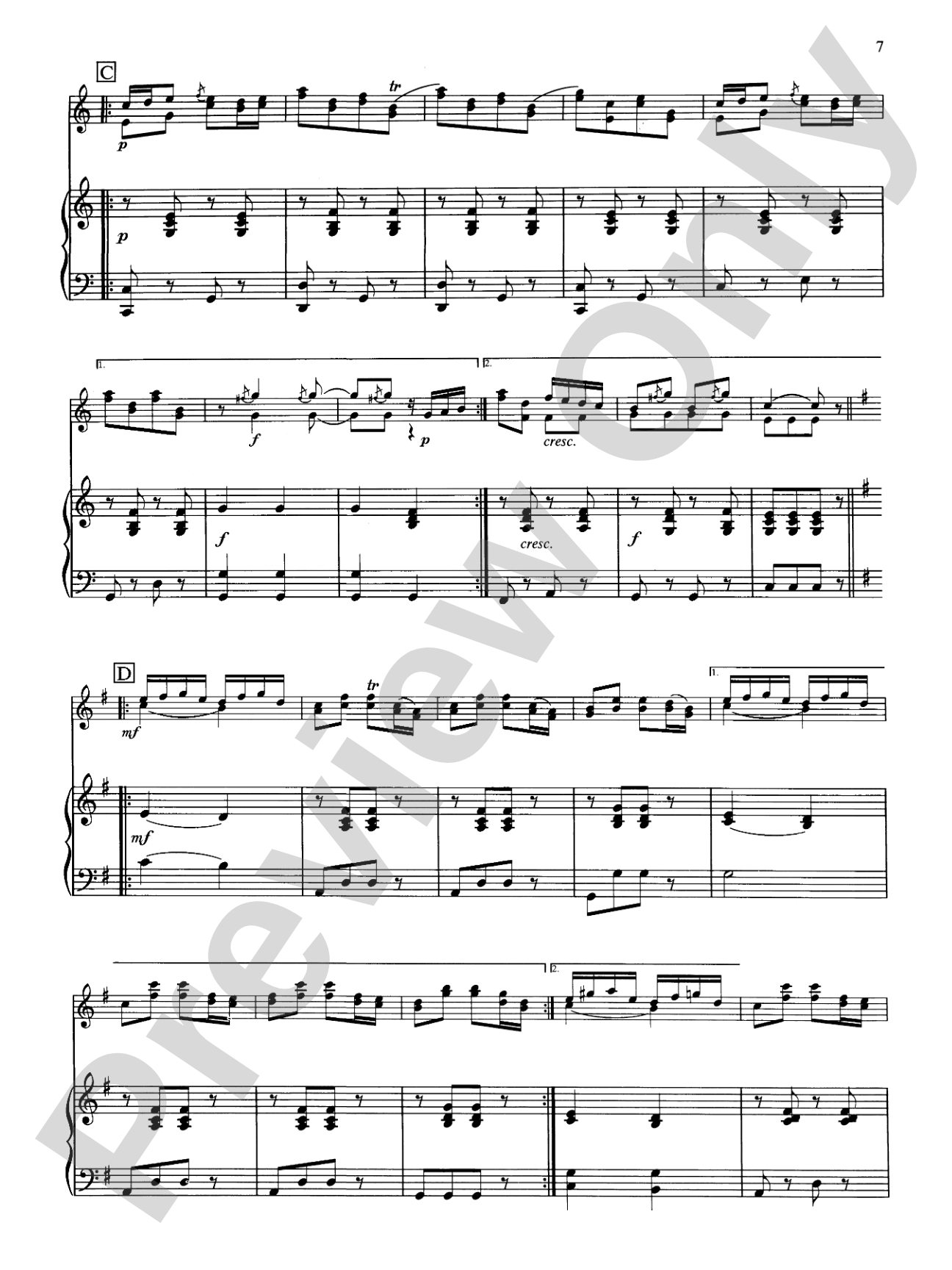
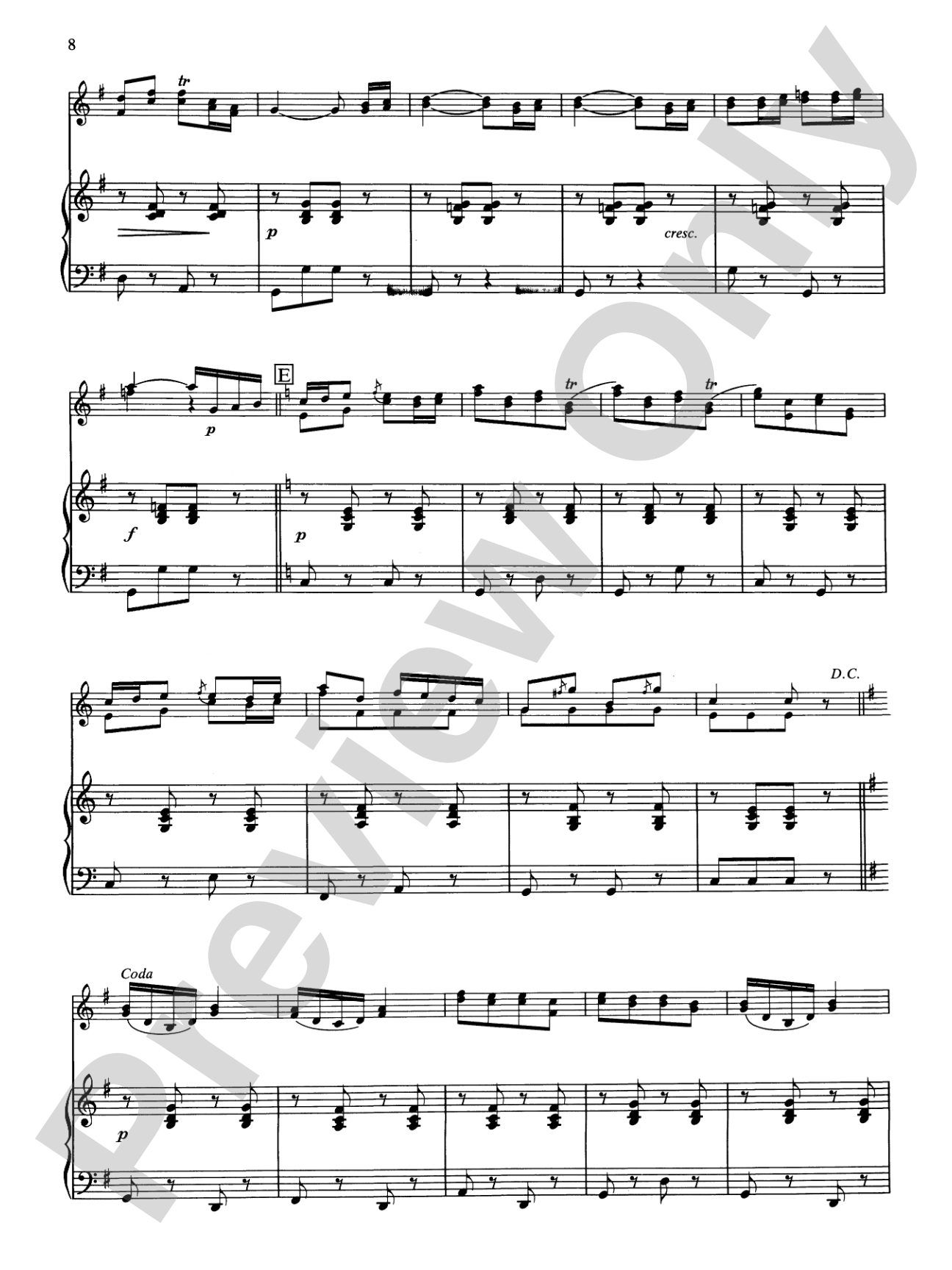
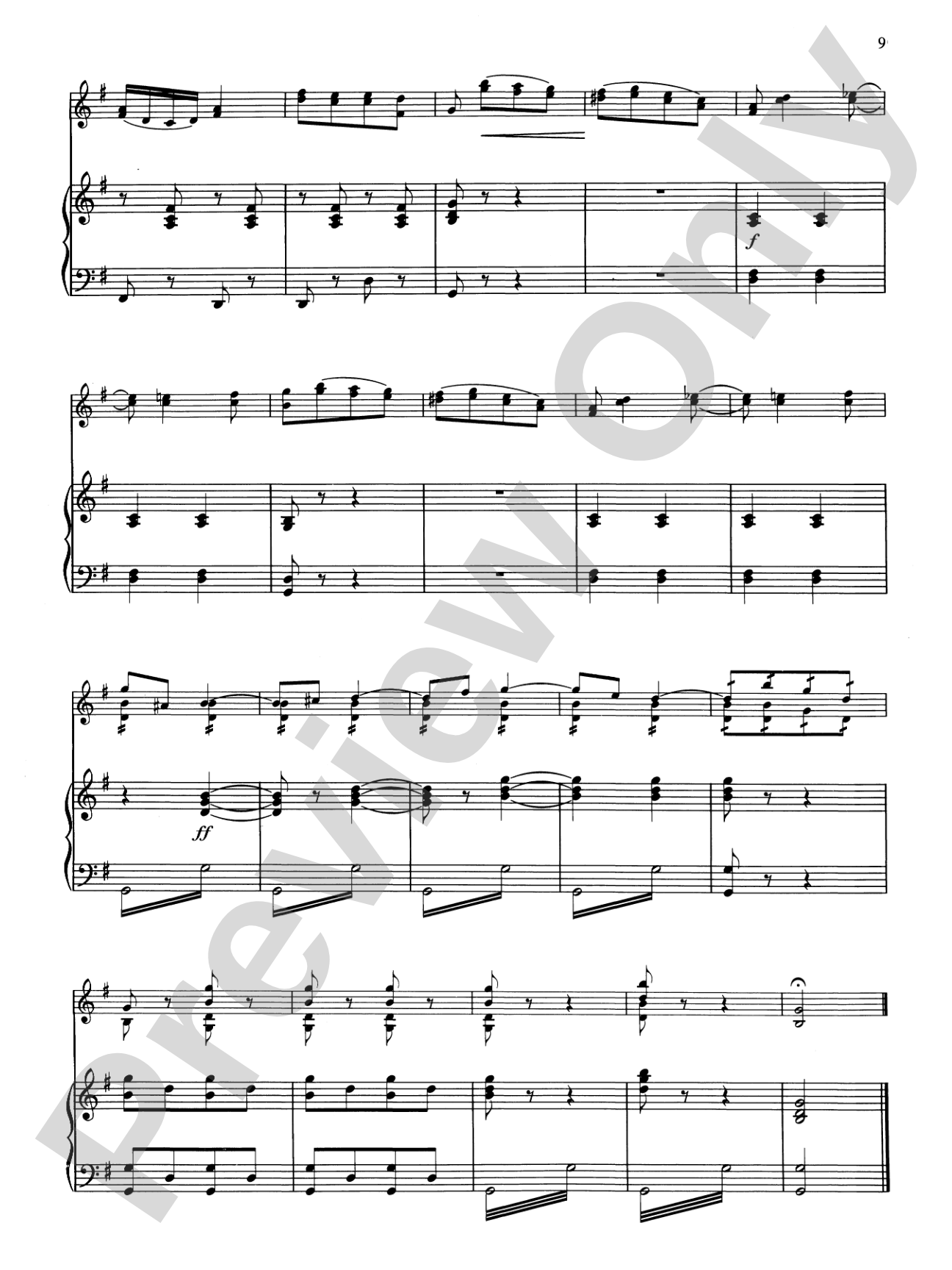

"Taka Taka" Polka and "Happy Times" Polka: Violin with Piano (Viola, Cello, Bass & Flute Opt.) Book
By Johann Strauss, Jr. / arr. William and Constance Starr
Item: 00-PK-0005895
$55.00
Pickup currently not available
Buy Extra Parts (Digital PDF Download)
Parts Added to Cart!
Description
These Sounds of the Symphony arrangements are intended to enrich the repertoire of Suzuki violin groups. Teachers are using these arrangements both for the enjoyment and musical development of the children. They are great for adding variety to the programming of group performances.


"Taka Taka" Polka and "Happy Times" Polka: Violin with Piano (Viola, Cello, Bass & Flute Opt.) Book isn't in MakeMusic Cloud just yet...but it could be. Let us know you'd like to see it, and you'll help shape what comes next. In the meantime, start a free trial and dive into thousands of interactive titles your students can play along with today.
Request This Title
Tell us you want it.
Start Your Free Trial
Explore everything that's ready to play right now.
Sample Audio
No sample audio found.
Sample Video
No sample videos found.
Additional Details
Series:
Sounds of the Symphony Series
Page Count:
132
SKU:
00-PK-0005895
Instrumentation:
Violin with Piano (Viola, Cello, Bass & Flute Opt.)
More about this title
About the Composer: Johann Strauss
Johann Strauss (1825-1899) earned his place in music history as the Waltz King, but his compositional range extended well beyond the ballroom. His polkas, marches, and orchestral works showcase the same melodic gift and rhythmic vitality that made his waltzes beloved across Europe. Strauss wrote music that celebrated joy and movement, qualities that made his work enduring repertoire for string players of all levels.
Why we love this
The Starrs have created flexible arrangements that honor Strauss's infectious melodies while respecting the developmental needs of Suzuki violin students. The optional instrumentation (viola, cello, bass, and flute) means you can perform these polkas with the musicians you have, whether that's a solo violin with piano or a fuller ensemble. Programming two contrasting polkas opens doors for variety in concert structure and gives students the satisfaction of playing genuine masterwork material alongside their core repertoire.
What to expect
These polkas sparkle with the lightness and rhythmic energy Strauss was famous for, inviting violinists into music that feels celebratory and alive. The melodies sit naturally under the violin's fingers, and the piano support gives students room to explore stylistic expression without technical barriers. You'll feel the dance rhythms propelling the music forward, turning what might otherwise be solo practice into ensemble joy.
Who it's for
Suzuki violin students (typically Book 3 and beyond) and string ensembles looking to expand their group performance repertoire with literature that bridges technical skill-building and musical enjoyment. Teachers seeking music that holds students' engagement while maintaining pedagogical value will find these arrangements particularly useful.
How to get the most out of it
- Maintain the rhythmic precision that polka dance rhythms demand; even small timing inconsistencies will blur the character. Use the piano part as your rhythmic anchor, and rehearse sections with a strong metronome pulse before performing with the accompaniment.
- Shape the melodic phrases with natural phrasing rather than treating polkas as relentless rhythmic displays. Let the violin line breathe between phrases, and invite students to notice where Strauss gives them space to move musically.
- Balance articulation between staccato and legato passages to highlight Strauss's orchestration ideas. The optional instruments add textural layers; rehearse cues carefully so every doubling serves the arrangement's intent.
- Keep tempos steady and energetic without rushing. The joy of a polka lives in its buoyant forward motion, not in speed; a slightly slower tempo played with rhythmic confidence often reads more authentically than a faster tempo that sacrifices clarity.
How to use it
Use these polkas to punctuate a concert program with contrasting energy and style; they work beautifully between more substantial or lyrical pieces. The dual-polka pairing lets you program a themed mini-suite that shows off your students' ability to shift character and style, or perform them individually as encore material or community outreach selections.
Skills your students will build
- Rhythmic precision in dance-form structures (polka meter and articulation)
- Reading optional parts and ensemble balance across multiple instruments
- Stylistic interpretation of Romantic-era salon music
- Sustaining clear articulation in passages with repeated rhythmic motifs
- Listening and responding to piano accompaniment for musical phrasing