Tainted Love (arr. Gitika Partington) Sheet Music Preview

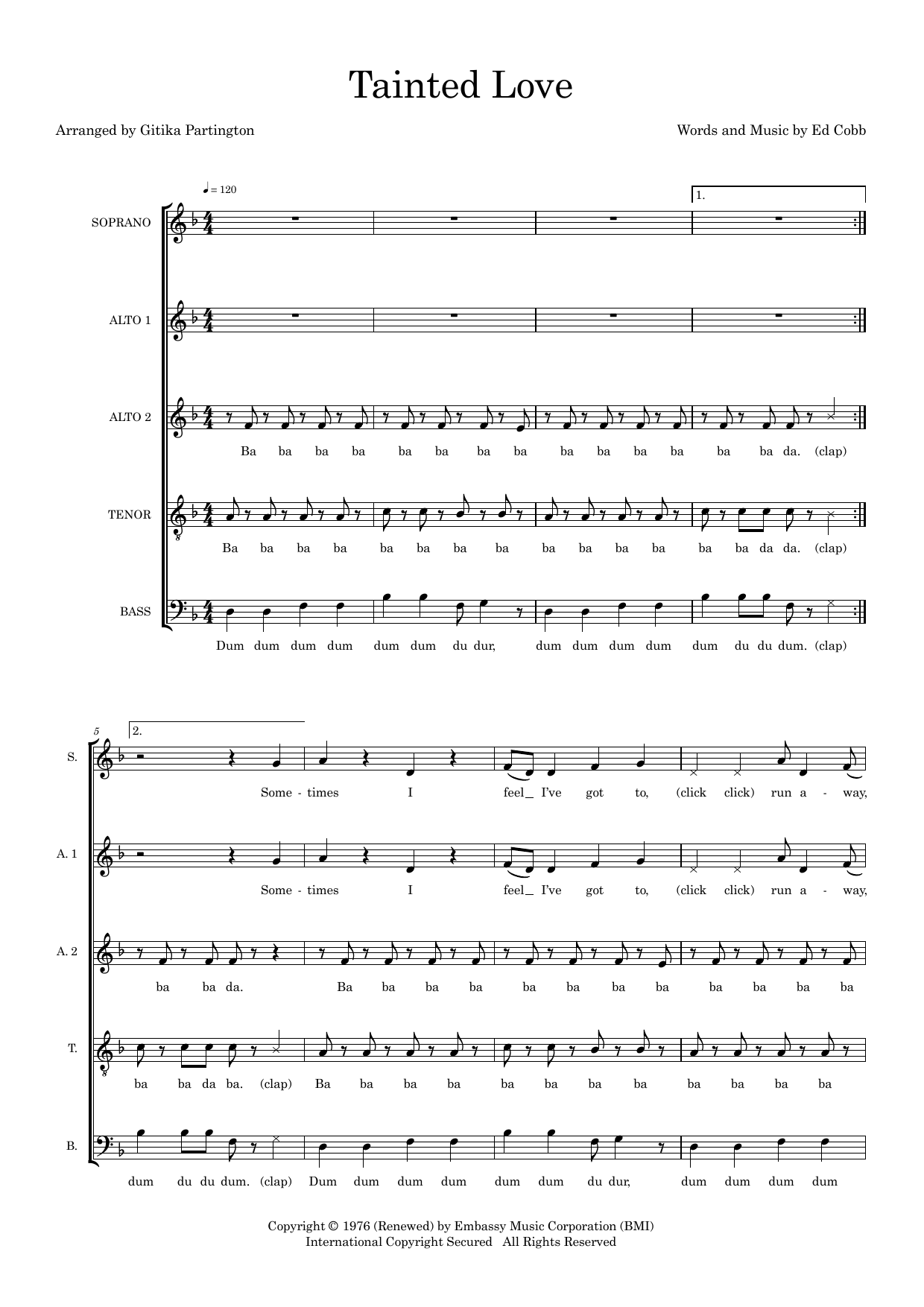
Tainted Love (arr. Gitika Partington): SAATB Choral Octavo

As performed by Soft Cell / Arranged by Gitika Partington

Item: 35-DS01423411

Digital Download
$1.99
Description

Tainted Love (arr. Gitika Partington): SAATB Choral Octavo isn't in MakeMusic Cloud just yet...but it could be. Let us know you'd like to see it, and you'll help shape what comes next. In the meantime, start a free trial and dive into thousands of interactive titles your students can play along with today.

Sample Audio
No sample audio found.
Sample Video
Additional Details
Publisher: Hal Leonard
Page Count: 7
SKU: 35-DS01423411

More about this title

About the Artist: Soft Cell

Soft Cell emerged from Leeds in the late 1970s as one of the defining acts of the British new wave and synthpop movement. The duo of Marc Almond and Dave Ball crafted some of the era's most distinctive electronic pop, blending synth-driven arrangements with Almond's distinctive vocal delivery. Their 1981 hit "Tainted Love" became an enduring cultural touchstone, proving that synthesizer-based pop could achieve both commercial success and artistic credibility.

Why we love this

Gitika Partington's arrangement captures the dark, propulsive energy of the original while making it genuinely singable for five-part choirs. The SAATB voicing creates rich harmonic possibilities without requiring split parts, and the arrangement respects what made the song memorable in the first place rather than burying the hook. Programming this alongside other 1980s pop repertoire gives choirs a piece that resonates with contemporary audiences and breaks the "classical only" stereotype.

What to expect

Moody and assertive. The piece carries the original's seductive darkness while maintaining the rhythmic drive of synth-pop. It's introspective yet propulsive, creating a space where emotional vulnerability and sonic confidence exist together.

Who it's for

Choirs comfortable with contemporary pop styles and looking to expand beyond traditional classical voicings. This arrangement works for high school, college, and community ensembles ready to perform music that connects with audiences outside classical concert halls.

How to get the most out of it

  • Nail the rhythmic precision in the opening sections. This piece thrives on a crisp, driving pulse; any rhythmic sloppiness undermines the song's dark electronic character.
  • Balance the Soprano line against the supporting voices so the main melody cuts through without drowning out the harmonic movement underneath.
  • Use the original recording as a reference for phrasing and attitude, but adapt Almond's vocal choices to work for ensemble singing. You'll need cohesion that a solo performance doesn't require.
  • Pay attention to dynamics markings as anchors for the mood. The contrast between softer verses and fuller choruses matters enormously to the arrangement's shape.

How to use it

Pair this with other repertoire exploring 1980s pop or contemporary songwriting to create a thematic concert section. The seven-page length makes it manageable for programs mixing genres, and its recognizability gives audiences an entry point into your choir's range.

Skills your students will build

  • Rhythmic precision in syncopated pop arrangements
  • Balancing melody and supporting harmony in five-part writing
  • Sustaining vocal lines over a driving rhythmic pulse
  • Interpreting contemporary vocal inflection in an ensemble setting
  • Reading and responding to dynamic and expressive markings that define the piece's character

You May Also Like