
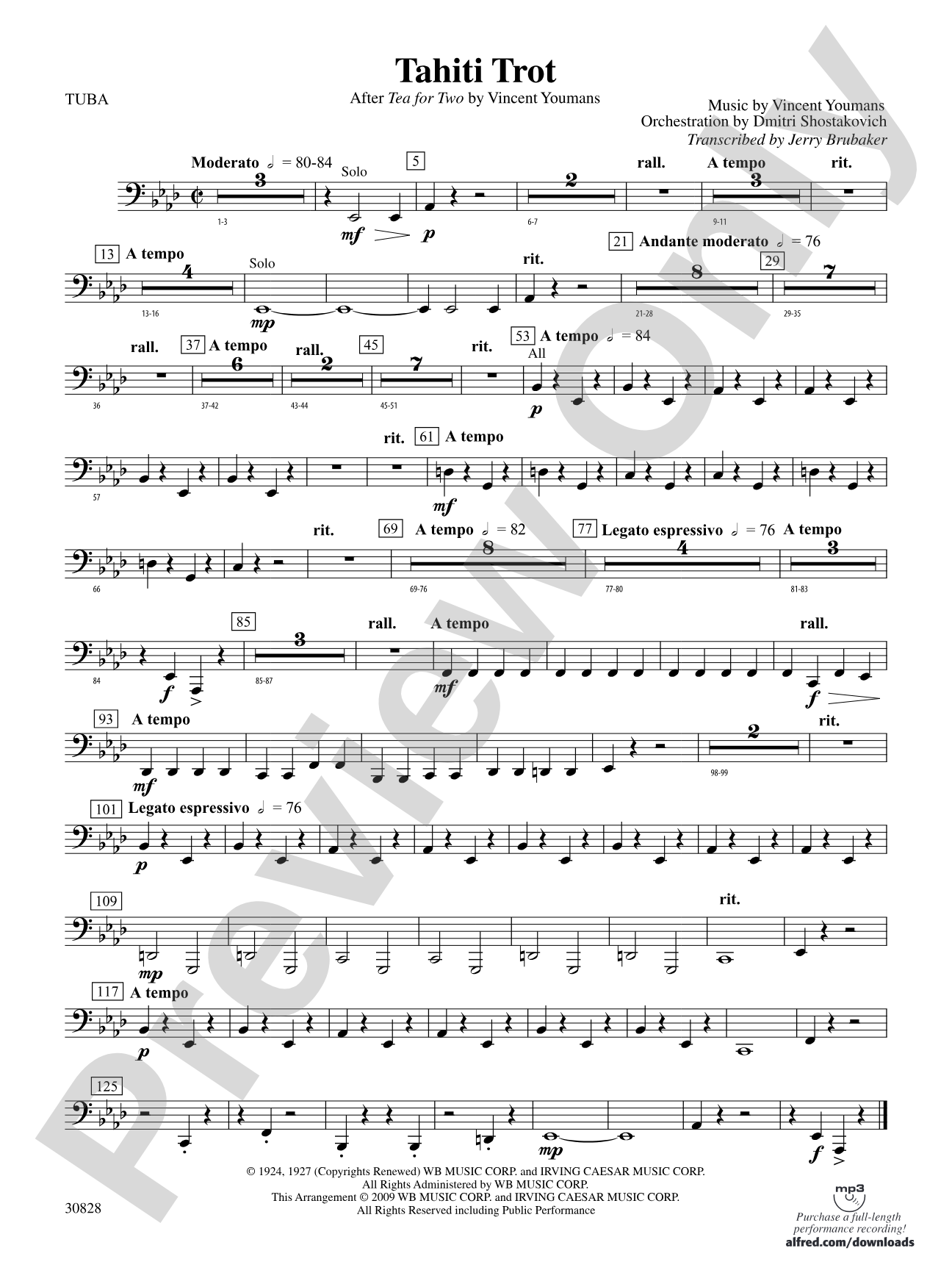

Tahiti Trot: Tuba
After "Tea for Two" by Vincent Youmans
Arr. Dmitri Shostakovich, transcr. Jerry Brubaker
Grade: 4 (Medium)
Item: 00-PC-0014306_TB1
$5.99
Pickup currently not available
Description
Borrowing melodic material from "Tea for Two," Dmitri Shostakovich's Tahiti Trott explores the familiar tune in a variety of settings based upon the characteristic fox trot form. Published originally in 1926, the creation was a challenge issued by conductor Nickolai Malko to orchestrate it in less than an hour. Leaving time for a cup of tea, Shostakovich completed it in 45 minutes! You'll be thrilled with the ultra-musical outcome! (3:52)


Don't just read it, hear it, play along with it, and watch your students grow with it. In MakeMusic Cloud, Tahiti Trot: Tuba comes alive with professional accompaniment, adjustable tempo, and built-in practice tools that turn solo practice into real progress.
Open in the Player
Jump straight in and assign it today.
Start Your Free Trial
Open this title and explore the full library in minutes.
Sample Audio
1
Audio File
--:--
0:00
0:00
Sample Video
No sample videos found.
Additional Details
Series:
Pop Symphonic Band
Publisher:
Alfred Music
Page Count:
196
SKU:
00-PC-0014306_TB1
More about this title
About the Arranger: Dmitri Shostakovich
Dmitri Shostakovich (1906-1975) was a Russian composer whose output spanned symphonies, concertos, chamber music, and film scores. He possessed a distinctive gift for orchestration and a keen ear for how familiar melodies could be transformed through harmonic color, rhythmic variation, and unexpected instrumental combinations. His willingness to work across genres, from high art to popular entertainment, made him one of the 20th century's most versatile musical voices.
Tahiti Trot exemplifies Shostakovich's ability to take light material and infuse it with sophisticated arranging. The piece began as a personal challenge: conductor Nickolai Malko wagered that Shostakovich could not orchestrate a recognizable tune in under an hour. Shostakovich completed the score in 45 minutes, proving that artistic craft and technical mastery could coexist with speed and spontaneity. The result remains a masterclass in orchestral writing.
Why we love this
Shostakovich's arrangement transforms "Tea for Two" into a vehicle for teaching orchestration principles without sacrificing musicality or fun. The work cycles through contrasting instrumental colors and rhythmic treatments, giving every section of your band meaningful material to play while the audience delights in recognizing the familiar melody. It's repertoire that sounds substantial and rewarding without requiring virtuosic soloists.
What to expect
Tahiti Trot sparkles with rhythmic vitality and playful orchestral color. The familiar melody becomes a prism: refracted through Shostakovich's harmonic sensibility and dance-form structure, it emerges fresh and sophisticated while remaining instantly appealing. Your band will feel the joy of executing precise, snappy rhythms alongside graceful melodic passages.
Who it's for
This arrangement suits concert bands at the Grade 4 level seeking repertoire that balances accessibility with musical sophistication. Directors looking for a showstopper that engages audiences without requiring extensive sectional rehearsal will find that Shostakovich's rhythmic clarity and instrumental variety keep ensemble parts interesting across all ability levels.
How to get the most out of it
- Balance the fox trot rhythms with clarity in the low woodwinds and brass foundation; the groove depends on a steady, dance-like pulse that never drags.
- Observe the orchestration changes carefully: each new section highlights different instruments, so ensure those featured colors emerge without drowning out accompanying figures.
- Maintain the jaunty character throughout. This piece thrives on lightness and wit, even in fuller tutti passages; avoid the temptation to play it broadly.
- The recorded accompaniment will anchor tempo and ensemble cohesion, especially valuable for locking in the rhythmic variations Shostakovich employs.
How to use it
Program this as a concert opener or closer to set a lively tone, or pair it with heavier symphonic works to provide textural and emotional contrast. Its 3:52 length and upbeat character make it ideal for pops concerts, family audiences, or any program where you want the ensemble to display both technical control and musical personality.
Skills your students will build
- Executing fox trot rhythms with precision and steadiness
- Responding to rapid orchestration changes and entrance cues
- Balancing melody against countermelody and accompaniment figures
- Maintaining stylistic consistency (lightness and clarity) across harmonic variations
- Reading concert band scores with multiple instrumental colors and textures