
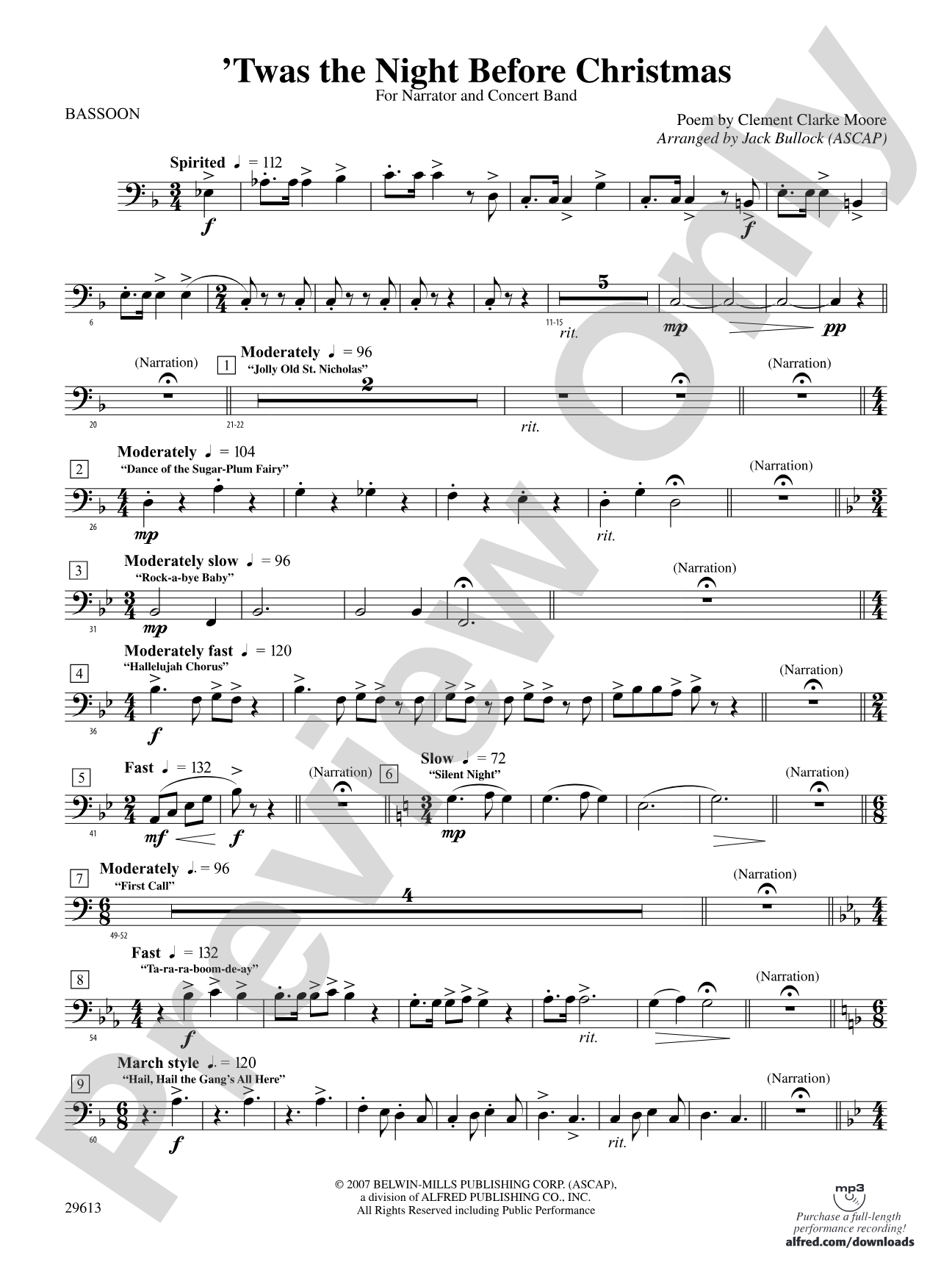

T'was the Night Before Christmas: Bassoon
For Narrator and Concert Band
Arr. Jack Bullock
Grade: 2.5 (Easy to Medium Easy)
Item: 00-PC-0001503_B1
$5.99
Pickup currently not available
Description
Performable by middle-school or high-school, this easy-to-assemble work will be a wonderful addition to every holiday program. You'll need to add a narrator to read the traditional poem. The musical vignettes that 'answer' each spoken segment range from comical to lush and musical. An ingenious holiday treat for your audience and students that's tongue-in-cheek! (7:03)


Don't just read it, hear it, play along with it, and watch your students grow with it. In MakeMusic Cloud, T'was the Night Before Christmas: Bassoon comes alive with professional accompaniment, adjustable tempo, and built-in practice tools that turn solo practice into real progress.
Open in the Player
Jump straight in and assign it today.
Start Your Free Trial
Open this title and explore the full library in minutes.
Sample Audio
1
Audio File
--:--
0:00
0:00
Sample Video
Additional Details
Series:
Belwin Concert Band
Publisher:
Alfred Music
Page Count:
252
SKU:
00-PC-0001503_B1
More about this title
About the Arranger: Jack Bullock
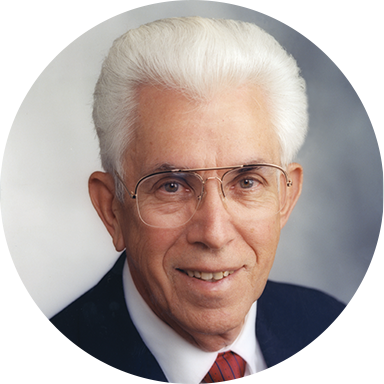
Jack Bullock brings deep classroom experience to his arranging work, having taught instrumental music for two decades and served as assistant band director at Ithaca College's School of Music. His portfolio includes over 600 compositions and arrangements across concert band, orchestra, jazz ensemble, and marching band, along with co-authorship of the Belwin 21st Century Band Method and contributions to Alfred Music's Music Expressions curriculum.
As a trumpeter, Bullock performed with the Miami Philharmonic Orchestra and Miami Opera Company, studied with acclaimed pedagogues including Harry Glantz and Craig McHenry, and toured nationally with dance bands. His work has earned recognition through ASCAP membership since 1980 and listings in Marquis publications; he has also led clinics and workshops across the United States, Canada, and England.
Why we love this
Bullock captures the spirit of the beloved poem while refusing to take himself seriously, pairing spoken passages with musical vignettes that range from genuinely lush to outright silly. The Grade 2.5 scoring makes it accessible to middle and high school bands while the narrator element transforms a concert into a storytelling event that audiences actually anticipate rather than tolerate.
What to expect
A concert hall celebration that winks at the audience while honoring Clement Clarke Moore's timeless text. The scoring dances between moments of genuine musicality and cheerful parody, creating an experience that feels both festive and intelligent.
Who it's for
Middle school and high school concert bands looking for a fresh holiday program option that avoids tired medleys and transcriptions. Bands with access to a reliable narrator and the flexibility to program something that blends spoken word with instrumental music.
How to get the most out of it
- Secure your narrator well before rehearsals begin; consider a staff member, local news anchor, or parent with clear diction and comfort projecting over a band.
- Balance the band's dynamic response to each spoken section by rehearsing the narrator and ensemble together from the first full run-through so players hear the dramatic arc they're supporting.
- Exploit the comedic vignettes fully; encourage players to lean into the tongue-in-cheek scoring with committed ensemble attacks and releases that land the humor without rushing the tempo.
- Use the digital parts to create large-print conductor score materials so the narrator's timing remains visible to the band at all times during performance.
How to use it
Place this as your holiday program centerpiece rather than a filler piece; it deserves top billing and a formal introduction to set audience expectations. The seven-minute runtime fits perfectly as an opening or closing number that allows the rest of your concert to breathe, or program it between more substantial concert works to provide contrast and audience engagement.
Skills your students will build
- Responding to non-musical cues (narrator entries) with rhythmic precision
- Contrasting musical character within a single work (dramatic versus comedic sections)
- Ensemble balance in Grade 2.5 orchestration that demands awareness of part independence
- Sustaining focused ensemble tone across thematic material designed to support spoken narrative