Syncopated Sam - Piano Duo (2 Pianos, 4 Hands) Sheet Music Preview

Syncopated Sam - Piano Duo (2 Pianos, 4 Hands): Piano Duets & Four Hands

By Martha Mier

Level: Intermediate

Item: 00-PB-0000791

Digital Download
$4.99
Description
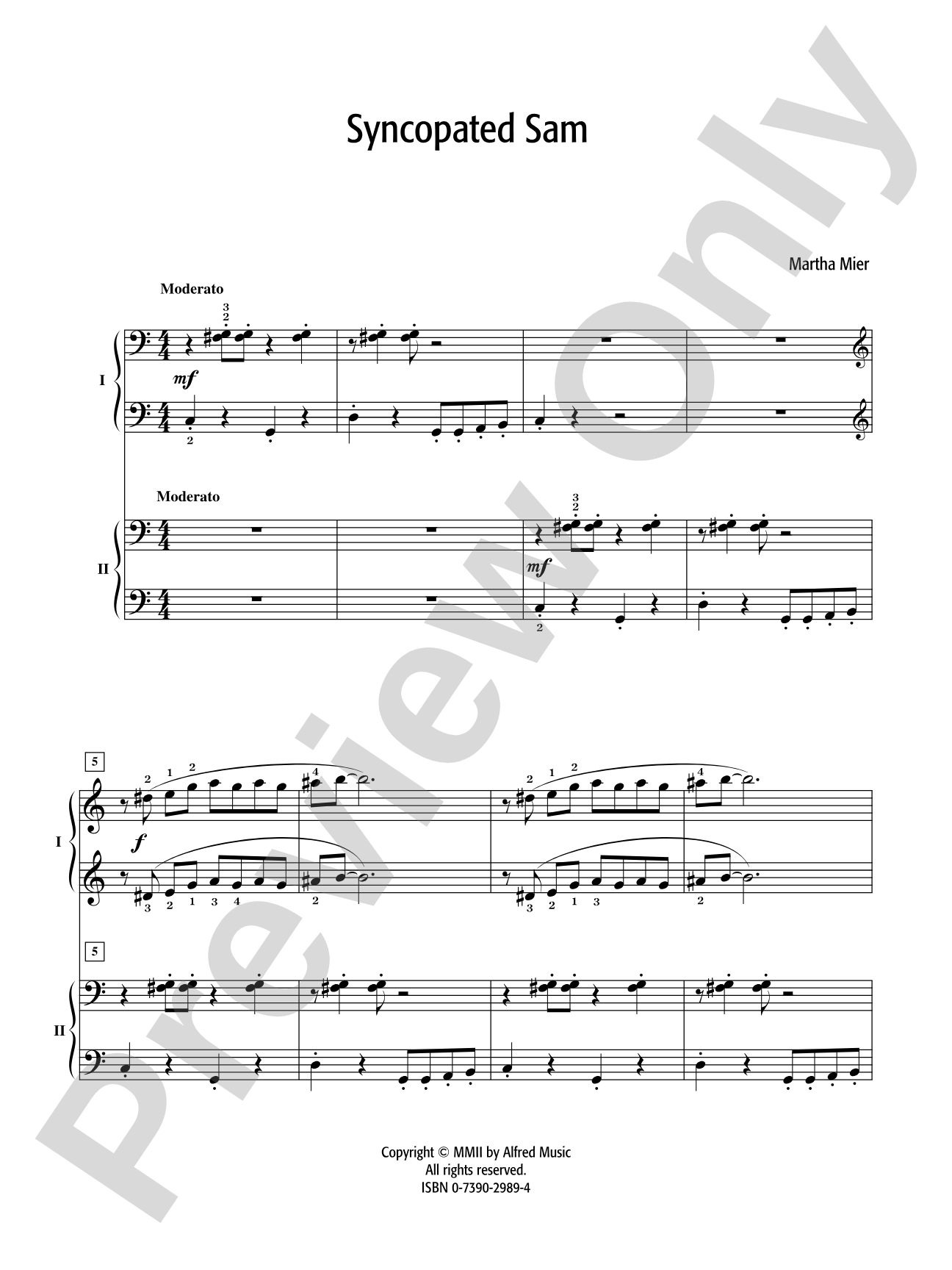
The light-hearted melody is perfectly combined with a rhythmic ostinato accompaniment in this piece that will leave you tapping your feet and smiling. Written in C major, the many accidentals used throughout give it a slight jazzy feel. The two piano parts are equal in difficulty and share the melodic and harmonic material. The 16-measure A section in which both pianos have the melody is followed by a short 8-measure B section featuring the melody in Piano I only. The A section returns with a 4-measure Coda bringing the piece to its conclusion with flair. A Federation Festivals 2024-2028 selection.

Syncopated Sam - Piano Duo (2 Pianos, 4 Hands): Piano Duets & Four Hands isn't in MakeMusic Cloud just yet...but it could be. Let us know you'd like to see it, and you'll help shape what comes next. In the meantime, start a free trial and dive into thousands of interactive titles your students can play along with today.

Sample Audio
No sample audio found.
Sample Video
Additional Details
Publisher: Alfred Music
Page Count: 8
SKU: 00-PB-0000791

More about this title

About the Composer: Martha Mier

Martha Mier

Martha Mier has built a prolific career writing accessible piano music that resonates with students across all levels. Since joining Alfred Music Publishing in 1989, she has become one of the most widely performed educational composers, with works ranging from her beloved Jazz, Rags & Blues series to the Romantic Impressions collections. Her pieces are staples in studios and festival festivals worldwide.

A Florida State University graduate and longtime piano studio owner, Mier brings deep pedagogical insight to her compositions. She holds certifications through the Music Teachers National Association, the Florida State Music Teachers Association, and the National Guild of Piano Teachers, and frequently serves as a clinician and adjudicator at major conferences and state conventions. Her contributions to Alfred's Premier Piano Course and more than 200 other publications have shaped music education across generations.

Why we love this

Mier understands the balance duo partners need: equal spotlight, complementary parts, and genuine musical satisfaction. The syncopated energy and jazzy accidentals give this piece contemporary charm while the shared melodic material keeps both players invested throughout, making it rewarding for ensemble work without forcing either pianist into a purely accompaniment role.

What to expect

Upbeat and syncopated, with enough rhythmic quirk to keep you engaged and smiling from start to finish. The jazzy accidentals give it a contemporary edge that feels fresh despite its C major simplicity, and the infectious ostinato makes you want to tap along.

Who it's for

Intermediate pianists working toward duet fluency and the independence that ensemble playing demands. This piece suits partners of similar ability who are ready to navigate shared melodic responsibility and rhythmic precision together.

How to get the most out of it

  • Lock the rhythmic ostinato in Piano II to establish a steady groove; this foundation lets Piano I confidently layer the melody on top, especially during the A section where both pianos carry melodic material.
  • Articulate the accidentals that create the jazzy flavor with intention. These chromatic inflections distinguish the piece from straightforward diatonic writing, so let them breathe rather than rushing through them.
  • Balance the dynamic profile between the two pianos during the shared melodic passages so neither partner overwhelms the other. Equal difficulty means equal voice.
  • The 4-measure Coda offers a chance to accelerate momentum and confidence. Practice it separately to ensure both pianos hit the final flourish with unified energy.

How to use it

Feature this on a recital or festival program where you want to showcase ensemble chemistry without losing momentum. Its spirited character works well alongside more lyrical or classical offerings, providing variety in tone and energy.

Skills your students will build

  • Rhythmic precision in syncopated contexts
  • Balance and blend between two equal melodic voices
  • Reading accidentals and chromatic alterations
  • Ensemble listening and meter coordination
  • Articulation of ostinato patterns with clarity and consistency

You May Also Like