
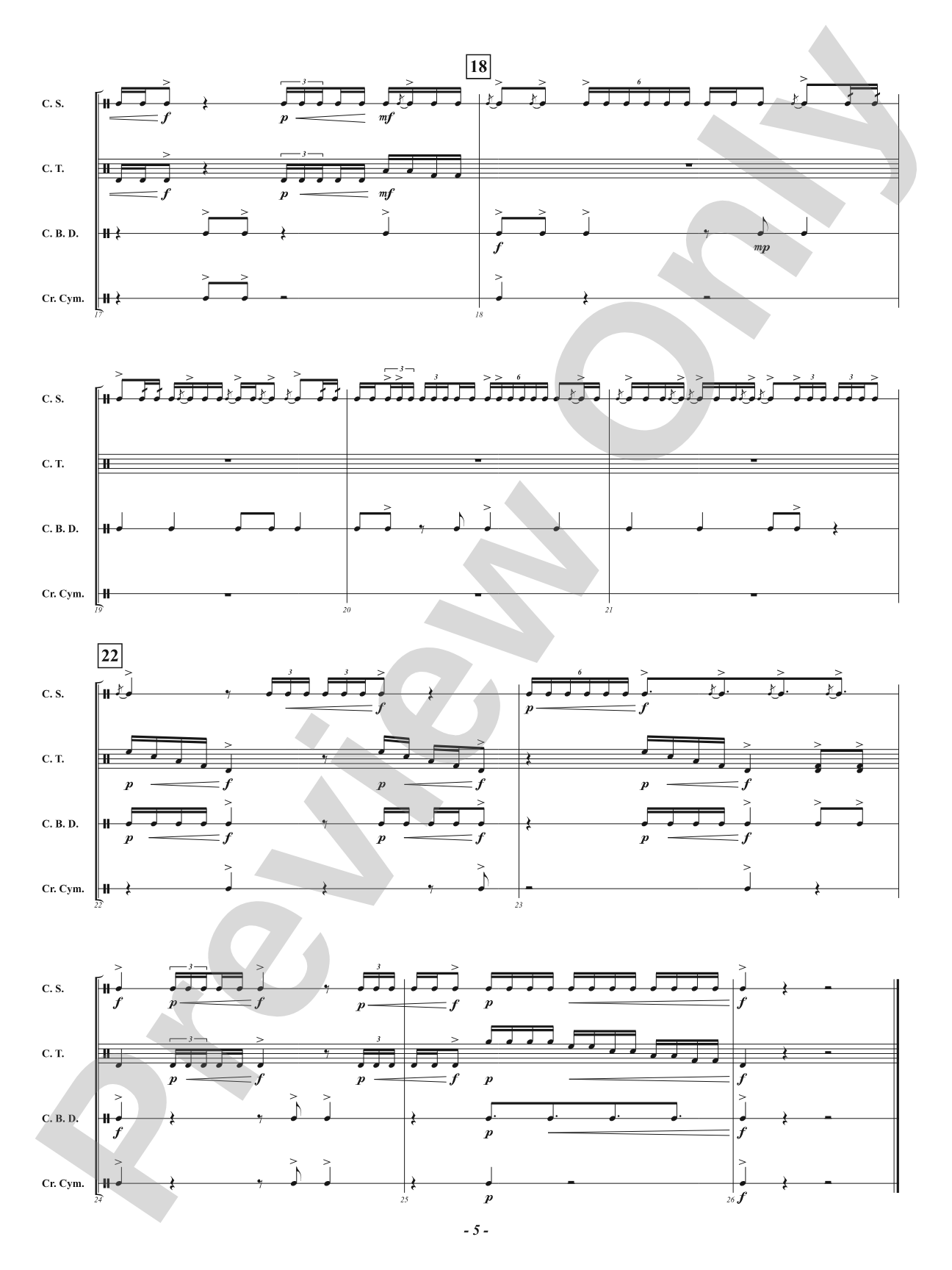




Sync - Percussion Quartet: Percussion Ensemble Conductor Score & Parts
Percussion Quartet
By Mike Hansen and Mitchell Beckman
Grade: 3
Item: 98-PK-RWS2351
$40.00
Pickup currently not available
Buy Extra Parts (Digital PDF Download)
| Product | Price | Quantity |
|---|---|---|
| Sync - Percussion Quartet: Score | $8.00 | |
| Sync - Percussion Quartet: Snare Drum | $3.99 | |
| Sync - Percussion Quartet: Toms | $3.99 | |
| Sync - Percussion Quartet: Bass Drum | $3.99 | |
| Sync - Percussion Quartet: Cymbals | $3.99 |
Parts Added to Cart!
Description
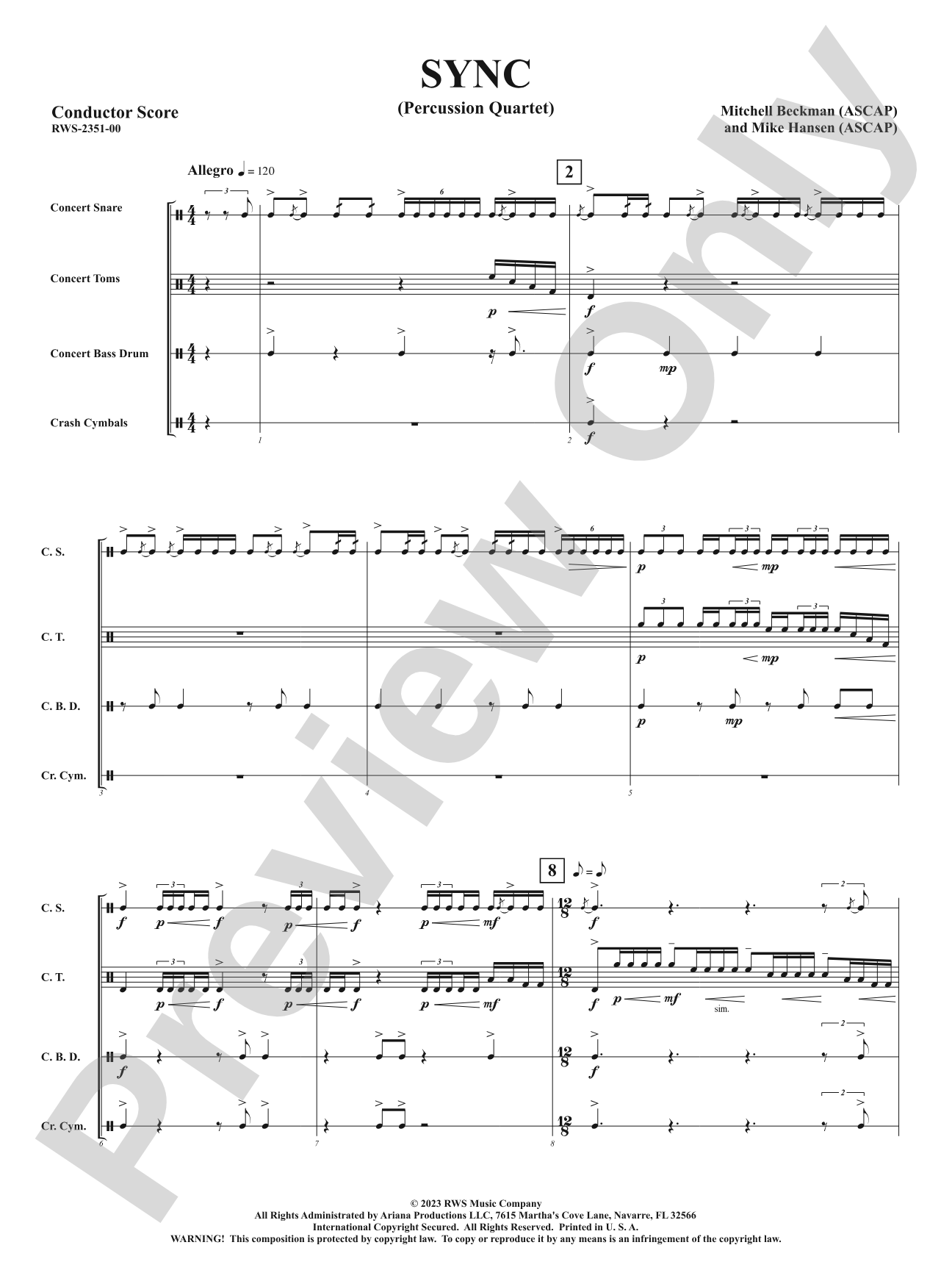
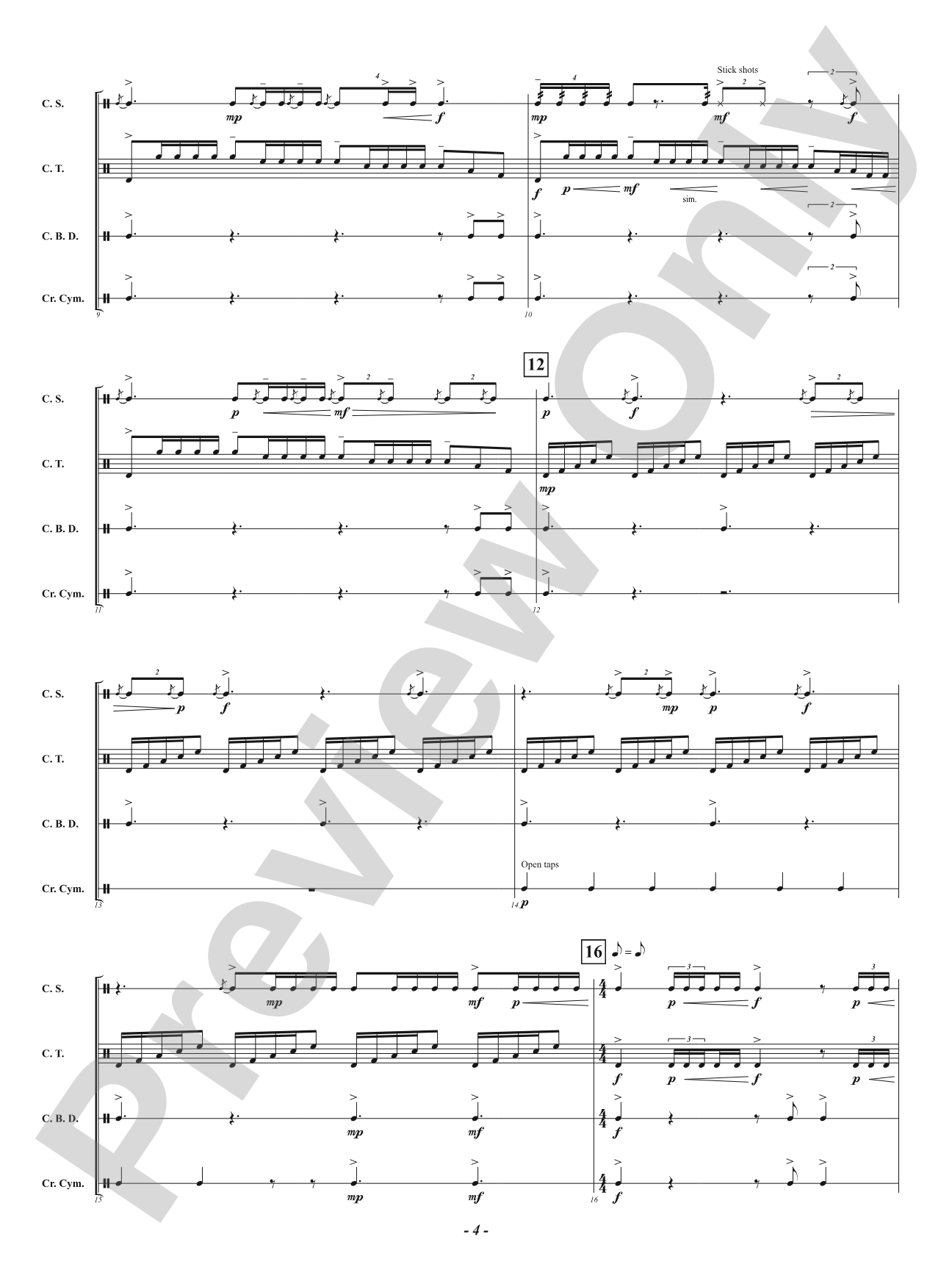
A brilliant opening statement for your percussion ensemble performance. Featuring four players, the composers have created a quartet of concert percussion instruments that will not only reinforce pristine technique, but teach/reinforce musical time and meter. An excellent choice for your more experienced players with a focus on playing techniques crucial to the success of the concert band and orchestra.
Original Item#: RWS-2351-00


Original Item#: RWS-2351-00
Sync - Percussion Quartet: Percussion Ensemble Conductor Score & Parts isn't in MakeMusic Cloud just yet...but it could be. Let us know you'd like to see it, and you'll help shape what comes next. In the meantime, start a free trial and dive into thousands of interactive titles your students can play along with today.
Request This Title
Tell us you want it.
Start Your Free Trial
Explore everything that's ready to play right now.
Sample Audio
1
Audio File
--:--
0:00
0:00
Sample Video
No sample videos found.
Additional Details
Series:
RWS - Infinity Percussion
Publisher:
RWS Music Company
SKU:
98-PK-RWS2351
More about this title
About the Composer: Mike Hansen
Mike Hansen brings practical experience in percussion pedagogy to his compositions, writing works that balance artistic ambition with the realities of ensemble instruction. His scores consistently challenge students to develop foundational techniques while engaging with meaningful musical material.
Why we love this
Sync demands real musicianship from your percussion section. Rather than relying on flashy effects or gimmicks, Hansen and Beckman built this piece around solid technique and rhythmic precision, which means your ensemble will grow stronger just by learning it. The focus on meter and time consciousness makes it invaluable preparation for players who will anchor your band and orchestra.
What to expect
Sync lands with intention and clarity. The writing respects the voices of all four players, creating a conversation rather than a solo with accompaniment. There's an architectural quality to the piece, with strong rhythmic architecture and purposeful phrasing that keeps listeners engaged from the opening statement through to the final resolution.
Who it's for
Advanced percussion students and experienced ensemble players ready to tackle repertoire that prioritizes precision and musicality over novelty. This is an excellent choice when you need a short, high-impact work that showcases your section's technical capabilities and rhythmic maturity.
How to get the most out of it
- Establish a clear pulse before the ensemble enters. Even slight timing inconsistencies between the four players will surface immediately, so use a metronome or conductor cues during early rehearsals to lock in together.
- Balance the voices so each player's line remains audible. In a four-person ensemble, there's nowhere to hide, which means each performer must commit fully to their part without overshadowing the others.
- Pay attention to dynamic shapes within phrases. Technique-focused pieces like this reward subtle control over volume and intensity; avoid playing at a single dynamic level throughout.
- Mark your parts clearly with rehearsal numbers and cues. With only four players, communication is essential, and written reminders about entrances and important passages prevent the piece from falling apart mid-performance.
How to use it
Use this as a centerpiece for a percussion-focused concert or as a sophisticated opener that demonstrates your ensemble's depth before moving into larger or more complex works. It also works well alongside other chamber pieces, offering a distinct percussion voice without requiring strings or winds.
Skills your students will build
- Reading mixed meters and maintaining meter changes across multiple voices
- Precision timing and ensemble synchronization in a small group setting
- Concert percussion technique on multiple instruments
- Listening and balance awareness within a four-part texture
- Sustaining dynamic control and shaping phrases without conductor reliance