Symphony No. 9 "New World", Finale: 2nd B-flat Clarinet Sheet Music Preview

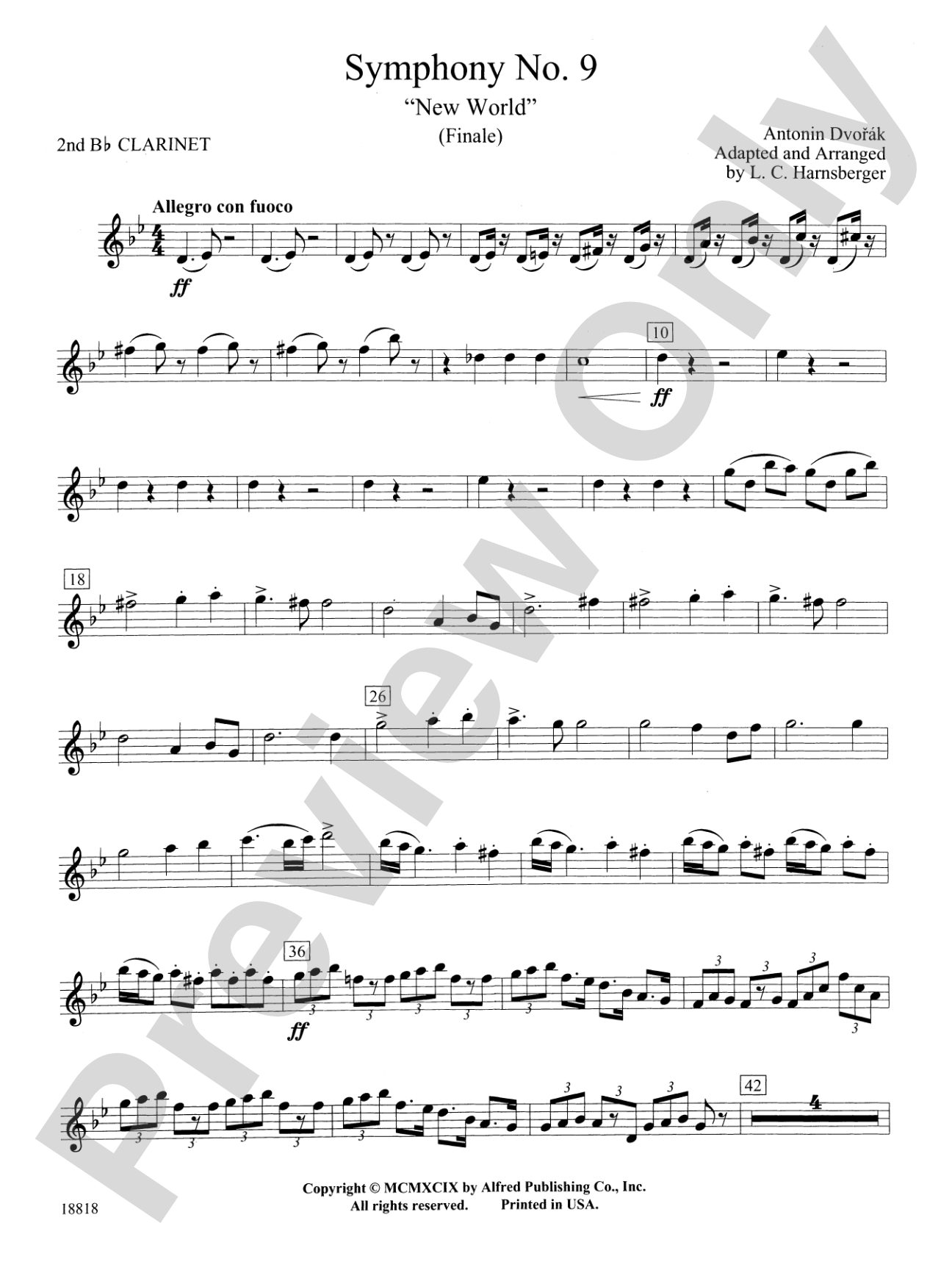
Symphony No. 9 "New World", Finale: 2nd B-flat Clarinet

By Antonín Dvorák / arr. L. C. Harnsberger

Grade: 3 (Medium)

Item: 00-PC-0000287_C2

Digital Download
$3.00
Description
This surprisingly accurate, yet playable Dvorák transcription will enhance any program. Great pains were taken to keep this transcription pure, and the result is a wonderfully written version of one of the orchestral repertoire's most popularly performed pieces. To further enhance the performance experience, the key has been changed from E minor to the more band-friendly key of F minor. Essential parts are cued, making this adaptation usable by bands with limited instrumentation. Give your audience the "new world" on your next concert!

Don't just read it, hear it, play along with it, and watch your students grow with it. In MakeMusic Cloud, Symphony No. 9 "New World", Finale: 2nd B-flat Clarinet comes alive with professional accompaniment, adjustable tempo, and built-in practice tools that turn solo practice into real progress.

Sample Audio
0:00
0:00
Sample Video
Additional Details
Series: Alfred Concert Band
Publisher: Alfred Music
Page Count: 252
SKU: 00-PC-0000287_C2

More about this title

About the Composer: Antonin Dvorák

Antonín Dvořák (1841-1904) stands among the most performed composers of the Romantic era, known for his gift for sweeping melody and sophisticated orchestration. A Czech nationalist who spent formative years in the United States, Dvořák brought European Romantic sensibility together with the musical idioms he encountered in the New World, creating works of enduring universal appeal. His symphonies remain staples of both orchestral and band literature, prized for their emotional directness and structural clarity.

Why we love this

Harnsberger's transcription respects the integrity of Dvořák's orchestral masterwork while solving a real logistics problem: the transposition to F minor makes the piece genuinely playable for bands without sacrificing its emotional weight. The cuing of essential parts means you can field this with a full complement or adapt on the spot, and the result sounds neither compromised nor simplified—your audience hears Dvořák, not a reduction.

What to expect

Heroic and warm. The Finale unfolds with broad, singing melody set against a foundation of steady harmonic support, creating moments of genuine grandeur alongside intimate, almost folk-like simplicity. The F minor tonality lends a reflective depth that tempers the triumphalism, making the work feel both noble and human.

Who it's for

Intermediate concert bands (Grade 3) seeking repertoire that challenges musicianship without requiring an atypical instrumentation. This is ideal for bands that want to program a recognized orchestral masterwork and deliver an authentic listening experience to their audience.

How to get the most out of it

  • Balance the famous theme carefully between first and second cornets or flugelhorns; the melody can get buried if upper reeds overshadow the brass foundation.
  • Attend to the articulation markings in faster passages; clarity in the rhythmic figurations prevents the texture from becoming muddy at the Grade 3 level.
  • Use the cued parts strategically during rehearsal to identify which sections are truly essential, then confirm your instrumentation early so players know their role in the full sound.
  • Shape the big melodic moments with dynamic breadth; this Finale is built on soaring lines that need room to breathe and time to land.

How to use it

Program this as a centerpiece on a concert dedicated to masterwork arrangements, or as the closing statement of a concert that builds toward something grand and recognizable. It works equally well in contest/festival settings where audiences appreciate craftsmanship and where a piece of this caliber signals serious musicmaking.

Skills your students will build

  • Balancing texture between upper voices and harmonic foundation
  • Sustaining long melodic lines with musical shape and phrasing
  • Reading and adapting cued parts for flexible instrumentation
  • Understanding transcription as a legitimate form of musical arrangement
  • Playing Romantic-era orchestral writing on concert band instruments

You May Also Like