Symphony No. 8, Mvt. 1: Piano Accompaniment Sheet Music Preview

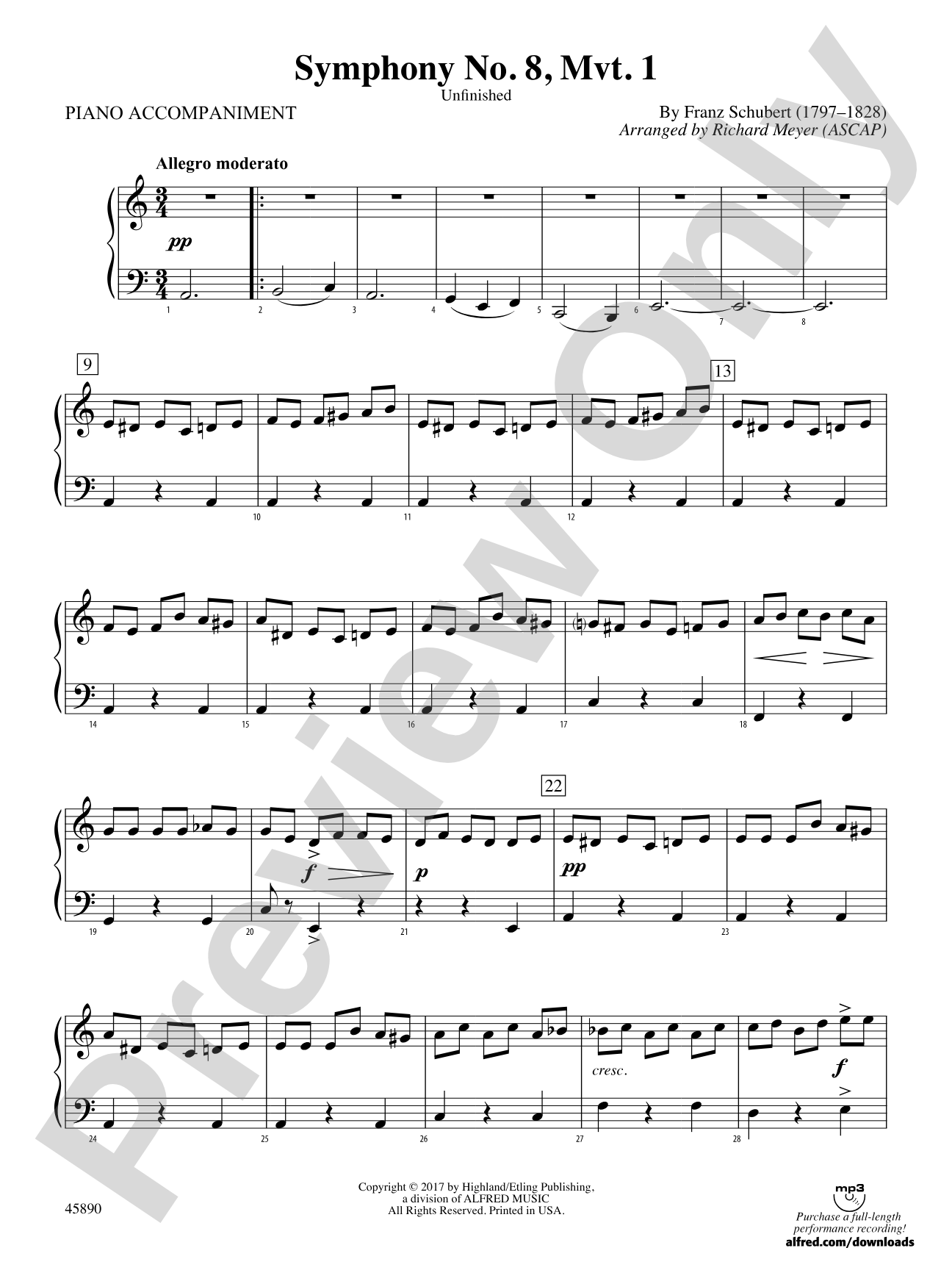
Symphony No. 8, Mvt. 1: Piano Accompaniment

Unfinished

By Franz Schubert / arr. Richard Meyer

Grade: 2.5

Item: 00-PC-0017688_K

Digital Download
$3.00
Description
Treat your students to one of the most-loved symphonic movements ever written by a master of the classical style in this Richard Meyer arrangement of Symphony No.8, Mvt. 1, known as the "Unfinished." All of Franz Schubert's unforgettably melodious themes are present, and the composer's imaginative orchestration has been carefully preserved. A must for any young symphonic orchestra! (6:00)

Don't just read it, hear it, play along with it, and watch your students grow with it. In MakeMusic Cloud, Symphony No. 8, Mvt. 1: Piano Accompaniment comes alive with professional accompaniment, adjustable tempo, and built-in practice tools that turn solo practice into real progress.

Sample Audio
0:00
0:00
Sample Video
Additional Details
Series: Highland/Etling First Philharmonic
Publisher: Alfred Music
Page Count: 196
SKU: 00-PC-0017688_K

More about this title

About the Composer: Franz Schubert

Franz Schubert (1797-1828) composed during the twilight of the Classical era and the rise of Romanticism, creating music that bridges both worlds with unprecedented lyricism. His gift for melody was extraordinary; he could spin out themes of such natural beauty and emotional depth that they seem inevitable once heard. Though he died at 31, Schubert left behind nearly 1,000 works, including nine symphonies that remain central to the orchestral repertoire.

Why we love this

Schubert's Eighth Symphony captures everything that makes the Romantic era compelling: yearning melodies, warm harmonic color, and emotional directness without bombast. Richard Meyer's arrangement respects the original's orchestral elegance while scaling it for young orchestras, so your students get to inhabit a genuine masterpiece rather than a watered-down approximation. This is the kind of piece that reminds musicians why they wanted to play in the first place.

What to expect

Wistful and deeply lyrical, with an undercurrent of longing that feels personal without becoming melodramatic. The movement unfolds like a conversation between old friends, where silence and space matter as much as the music itself.

Who it's for

Young orchestras at the Grade 2.5 level who are ready for substantial classical repertoire with genuine artistic rewards. This arrangement opens the door to symphonic thinking for students who might otherwise encounter only lighter fare at this level.

How to get the most out of it

  • Shape the opening theme with a singing tone in the first violins; Schubert's themes demand phrasing, not just accurate note-playing.
  • Balance the second theme carefully so the lower strings and clarinet can be heard equally; the dialogue between registers is essential to the movement's emotional arc.
  • Keep the accompaniment figures in the violas and cellos rhythmically precise but never mechanical; they should breathe with the melody.
  • Resist the urge to rush into climaxes. Schubert builds intensity through accumulation of texture and repetition, not tempo changes.

How to use it

Program this as a cornerstone work on a concert featuring the Romantic era, or use it to build a thematic program around themes of incompleteness and yearning in music. At six minutes, it anchors a program without overwhelming young players or audiences.

Skills your students will build

  • Sustaining long melodic lines with consistent tone and phrasing
  • Balancing multiple instrumental choirs (strings, woodwinds, brass) in an orchestral context
  • Responding to subtle dynamic gradations and harmonic color changes
  • Reading and executing a full orchestral score at Grade 2.5 level
  • Understanding Classical and early Romantic style through direct engagement with a masterwork

You May Also Like