
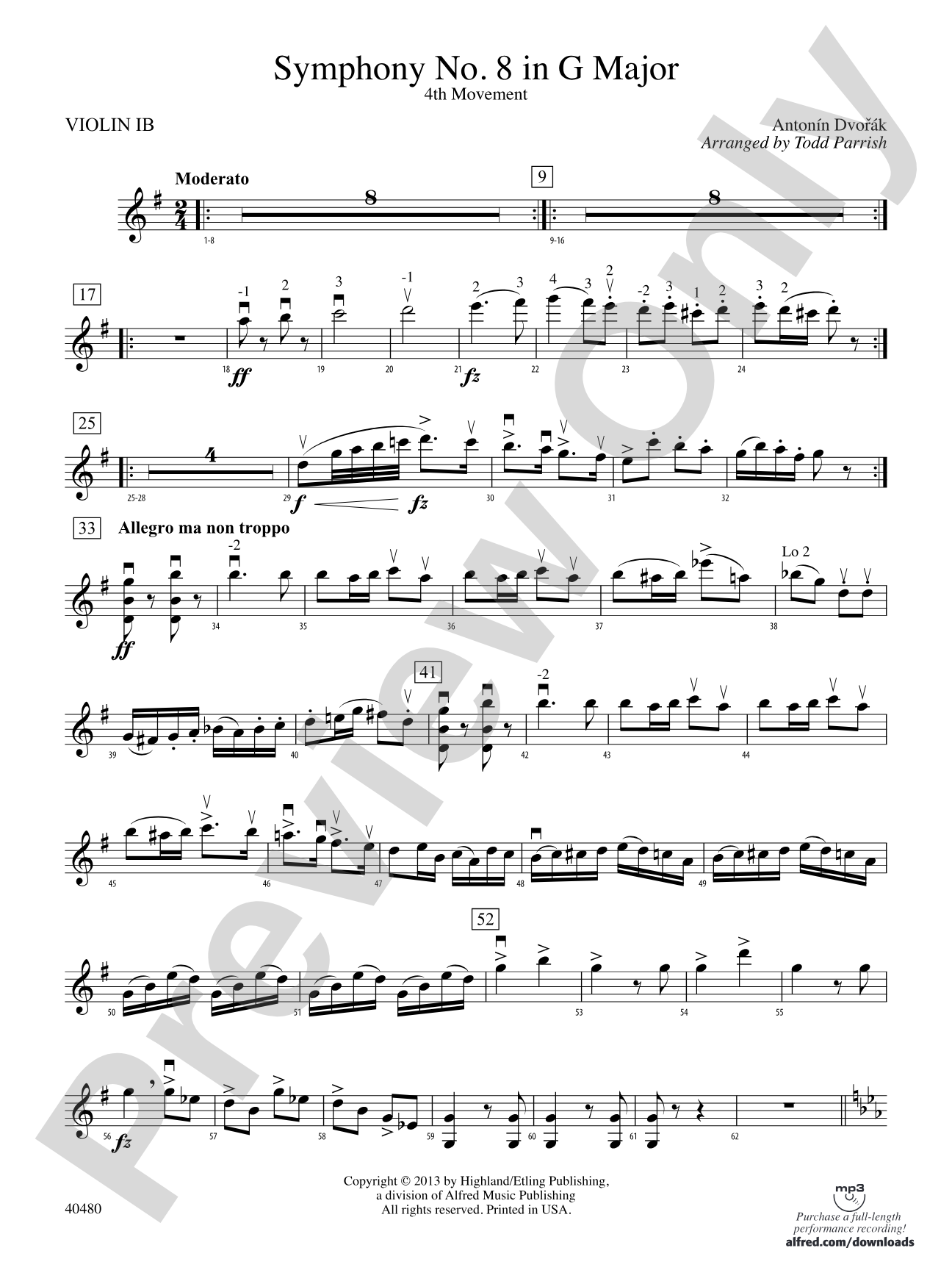

Symphony No. 8 in G Major: Violin 1B
4th Movement
By Antonín Dvorák / arr. Todd Parrish
Grade: 4.5
Item: 00-PC-0016012_VN1B
$5.99
Pickup currently not available
Description
Now you can experience the power and beauty of this fabulous Dvorák work at your next concert or festival. Written with the needs of high school string orchestras in mind, this arrangement will give your students a very accurate, yet playable, arrangement of the original. Studying this masterpiece will develop students' shifting, expressiveness, the ability to play accidentals, and bow technique. The 4th movement, known for its soaring melodies and energetic ending, is the perfect piece to close any performance.
This title is available in MakeMusic Cloud.


This title is available in MakeMusic Cloud.
Don't just read it, hear it, play along with it, and watch your students grow with it. In MakeMusic Cloud, Symphony No. 8 in G Major: Violin 1B comes alive with professional accompaniment, adjustable tempo, and built-in practice tools that turn solo practice into real progress.
Open in the Player
Jump straight in and assign it today.
Start Your Free Trial
Open this title and explore the full library in minutes.
Sample Audio
1
Audio File
--:--
0:00
0:00
Sample Video
Additional Details
Series:
Highland/Etling String Orchestra
Publisher:
Alfred Music
Page Count:
124
SKU:
00-PC-0016012_VN1B
More about this title
About the Composer: Antonín Dvorák
Antonín Dvořák (1841-1904) stands as one of the most important symphonists of the Romantic era, bridging the traditions of Brahms with a deeply personal musical voice rooted in Czech folk idiom. His eight symphonies form a remarkable body of work, each one a laboratory for orchestral color and structural innovation; the Eighth in particular marks a turning point where his mastery of symphonic form meets an almost chamber-like intimacy of expression.
For string orchestras and young musicians, Dvořák's string writing offers an ideal pedagogical gateway. His melodies sing naturally on the violin; his harmonic language rewards careful intonation; and his orchestrations, while sometimes complex, can be adapted for students without sacrificing the essential character of the work. Teachers return to Dvořák across all levels because his music demands genuine musicianship yet remains accessible to developing players.
Why we love this
Todd Parrish's arrangement captures the sweeping emotional arc of Dvořák's original without sacrificing the technical and expressive demands that make this symphony so rewarding to teach. The fourth movement provides natural momentum for a concert finale; its combination of soaring melody and rhythmic drive makes students sound and feel accomplished. High school orchestras can own this masterwork rather than merely survive it.
What to expect
The symphony opens with chamber-like intimacy before blossoming into full orchestral warmth. Dvořák's harmonic language feels both familiar and gently surprising; underneath the flowing melodies lies sophisticated voice-leading that keeps listeners engaged. By the fourth movement, energy and momentum dominate, building toward a conclusion that feels earned and triumphant.
Who it's for
Intermediate to advanced high school string orchestras seeking concert or festival repertoire with real artistic substance. This arrangement suits orchestras with solid fundamentals in bow control and shifting, as the piece will stretch these skills further while remaining within reach for dedicated student musicians.
How to get the most out of it
- Shape the main thematic material with long-line phrasing; resist the urge to subdivide measures. Dvořák's melodies reward conductor and players who commit to sustained legato across the bar line.
- Balance the accompaniment figures carefully in the opening movements so the string sections lock rhythmically without drowning out exposed upper voices. Layer the sound gradually as textures build.
- Attend to the accidental passages in detail during sectional rehearsals. The chromatic voice leading typical of this era requires clean, unified intonation to avoid murky sound.
- Approach the fourth movement's energetic sections with rhythmic precision in the rhythm section while allowing the first violins expressive freedom within the phrase structure.
How to use it
The fourth movement alone makes an excellent concert closer, offering students and audiences a satisfying final statement. If you program the full work, it serves as the architectural centerpiece of a concert, ideally paired with lighter opening selections and shorter works. This is ideal repertoire for spring festival competitions or end-of-year concerts where students need to demonstrate growth across a full arc.
Skills your students will build
- Shifting across multiple positions with control and clarity
- Singing through sustained legato lines across bar lines and phrase boundaries
- Reading and performing chromatic accidentals with clean intonation
- Refined bow technique including bow distribution for long phrases and control during rapid rhythmic figures
- Balance and blend within section and across the ensemble during layered textures
- Interpretation of dynamic shapes and expressive markings within a Romantic harmonic language