Symphony No. 7 (Second Movement): Baritone B.C. Sheet Music Preview

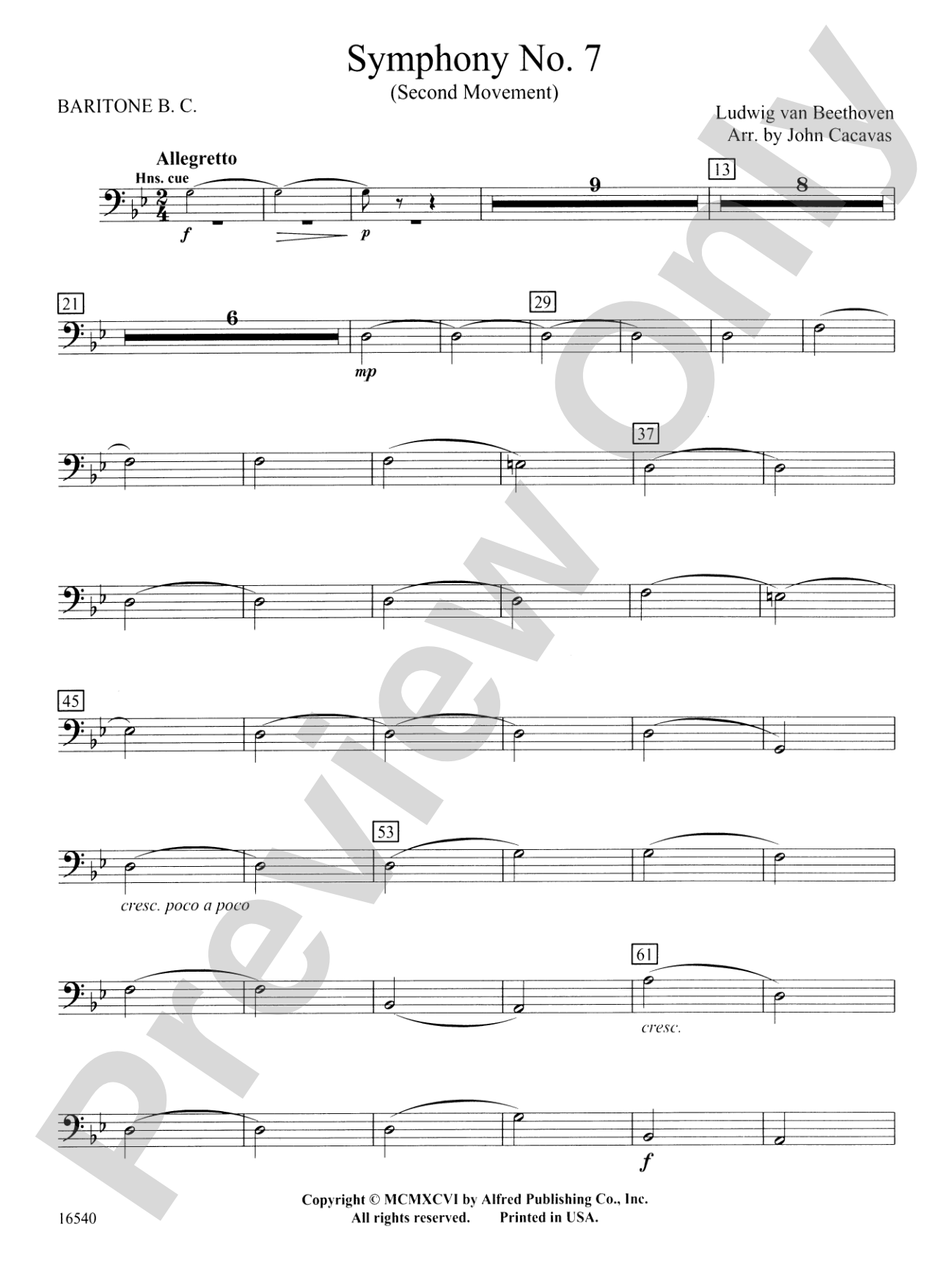
Symphony No. 7 (Second Movement): Baritone B.C.

By Ludwig van Beethoven / arr. John Cacavas

Grade: 3 (Medium)

Item: 00-PC-0014783_BBC1

Digital Download
$3.00
Description
One more masterful arrangement from the creative mind of John Cacavas! This is an excellent introduction to a mainstay of symphonic literature. The woodwinds are featured first, with other sections gradually added to create a feeling of tension true to the original. This piece will add a a touch of class and grandeur to your program.

Don't just read it, hear it, play along with it, and watch your students grow with it. In MakeMusic Cloud, Symphony No. 7 (Second Movement): Baritone B.C. comes alive with professional accompaniment, adjustable tempo, and built-in practice tools that turn solo practice into real progress.

Sample Audio
0:00
0:00
Sample Video
Additional Details
Series: Growing Band Series
Publisher: Alfred Music
Page Count: 114
SKU: 00-PC-0014783_BBC1

More about this title

About the Composer: Ludwig van Beethoven

Ludwig van Beethoven (1770–1827) fundamentally changed what composers could ask of orchestras and audiences. Working across the Classical and Romantic periods, he expanded symphonic form, deepened emotional expression, and proved that instrumental music alone could convey profound human experience. His nine symphonies remain central to the concert repertoire and continue to challenge and inspire musicians across every instrument and level.

Why we love this

Cacavas strips away nothing essential from Beethoven's architecture while making the piece entirely achievable for Grade 3 ensembles. The gradual entrance of woodwinds, building to fuller textures, gives students a clear path through the form and holds audience attention from the first note.

What to expect

The piece unfolds with quiet inevitability. Woodwinds emerge from silence as if discovering melody for the first time, each instrumental family adding voice until the texture becomes full and substantial. There is nothing rushed about it; instead, tension builds through patience and restraint, leaving audiences aware they are hearing something genuinely important.

Who it's for

Concert bands performing at Grades 2–4 festivals or concerts who want to program a work with genuine symphonic weight without overwhelming inexperienced players. Directors seeking a bridge between lighter entertainment fare and serious orchestral literature will find this arrangement strikes the balance perfectly.

How to get the most out of it

  • Balance the opening woodwind section carefully so each entrance (flute, oboe, clarinet) registers without one voice overpowering another; rehearse the sustained voices separately to ensure they support rather than mask the melody.
  • Shape the dynamic progression as new sections join. This arrangement's power comes from the cumulative effect, so each addition should feel like a gentle swell, not a sudden jump.
  • Maintain steady tempo through the gradual buildup; a slight drag here will undermine the tension Cacavas creates, so use a metronome in sectionals and conduct with precision.

How to use it

Program this as the centerpiece of a concert that otherwise features lighter selections, or pair it with other Cacavas arrangements to showcase the band's growing musicality. It works particularly well in a first-semester performance when students need a confidence-builder that still demonstrates artistry.

Skills your students will build

  • Sustaining long tones with consistent tone quality and intonation
  • Balancing sectional voices in a gradually building texture
  • Responding to clear dynamic shaping and architectural form
  • Playing with controlled entrance and release in a symphonic context

You May Also Like