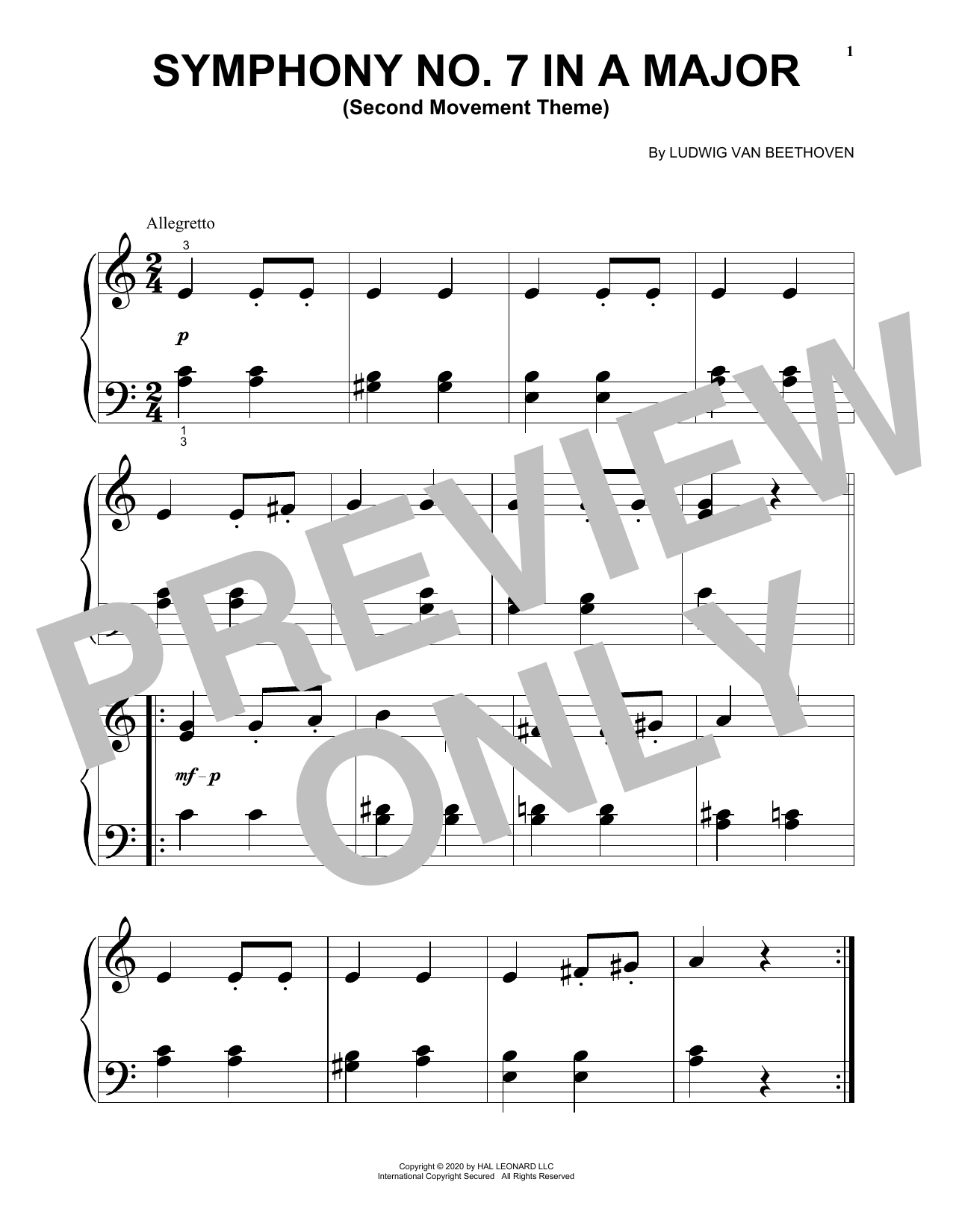
Symphony No. 7 In A Major, Second Movement (Allegretto) Sheet Music Preview

Symphony No. 7 In A Major, Second Movement (Allegretto): Beginning Piano Solo

By Ludwig Van Beethoven

Item: 35-DS00459553

Digital Download
$4.99
Description

Discover MakeMusic Cloud: thousands of interactive titles your students can play along with today.

Sample Audio
No sample audio found.
Sample Video
Additional Details
Publisher: Hal Leonard
Page Count: 1
SKU: 35-DS00459553

More about this title

About the Composer: Ludwig Van Beethoven

Ludwig van Beethoven (1770-1827) stands as one of the pivotal figures in Western music, a composer who bridged the Classical and Romantic periods while expanding the expressive possibilities of nearly every genre he touched. His nine symphonies remain cornerstones of the orchestral repertoire, and their arrangements for piano have served as essential teaching and performance works for generations of pianists seeking to understand symphonic architecture and harmonic innovation.

Beyond his monumental orchestral works, Beethoven was a master craftsperson of keyboard music. His approach to arranging his own symphonic material for solo piano demonstrates how instrumental idiom can be transformed while preserving the emotional and structural integrity of the original. For student pianists, his arrangements offer a direct pathway into understanding how a master composer thinks about texture, voice leading, and the unique resources of the piano.

Why we love this

This single movement captures one of Beethoven's most introspective moments, and the piano arrangement distills the essence of the orchestral texture without overwhelming a developing player. The Allegretto from the Seventh Symphony has always held a special place in the concert hall, and introducing students to it early builds both their technical confidence and their understanding of how great composers sustain emotional depth across an entire movement.

What to expect

There is a quality of patient inevitability in this movement, a sense of musical ideas unfolding with both dignity and quiet urgency. The harmonic language feels almost meditative, yet the underlying rhythmic pulse propels the listener forward, creating a tension between contemplation and forward motion that defines much of Beethoven's mature style.

Who it's for

Early intermediate pianists who have developed secure hand independence and basic chord reading skills will find this movement accessible and rewarding. Advanced beginners seeking their first encounter with Beethoven at the keyboard will benefit from both the historical significance and the measured technical demands of this arrangement.

How to get the most out of it

  • Shape the phrase contours by thinking of the accompanying voices as they existed in the orchestra. The piano left hand carries harmonic weight and rhythmic drive; resist the urge to bang it.
  • Let the harmonic rhythm breathe. Beethoven's chords here move with purpose, and each one deserves space to register in the listener's ear.
  • Balance the melody so it emerges naturally from the texture rather than sitting on top. The most memorable lines in this movement feel inevitable, not imposed.
  • Pedal conservatively. The harmonies are rich enough without blurring; clarity serves the music better than romantic wash.

How to use it

Place this as a recital piece where you want to signal that your student has entered the realm of classical composers with serious intent. It works equally well as a student showcase piece or as part of a program tracing Beethoven's compositional legacy. Consider pairing it with one of his shorter piano sonata movements to create a coherent Beethoven focus.

Skills your students will build

  • Reading and executing classical accompaniment patterns in the left hand
  • Balancing melody and harmony across both hands
  • Sustaining musical phrases across measures without unnecessary breaks
  • Understanding harmonic function and chord progression in tonal classical music
  • Controlling dynamic shape and voicing in a single-staff arrangement of orchestral texture

You May Also Like