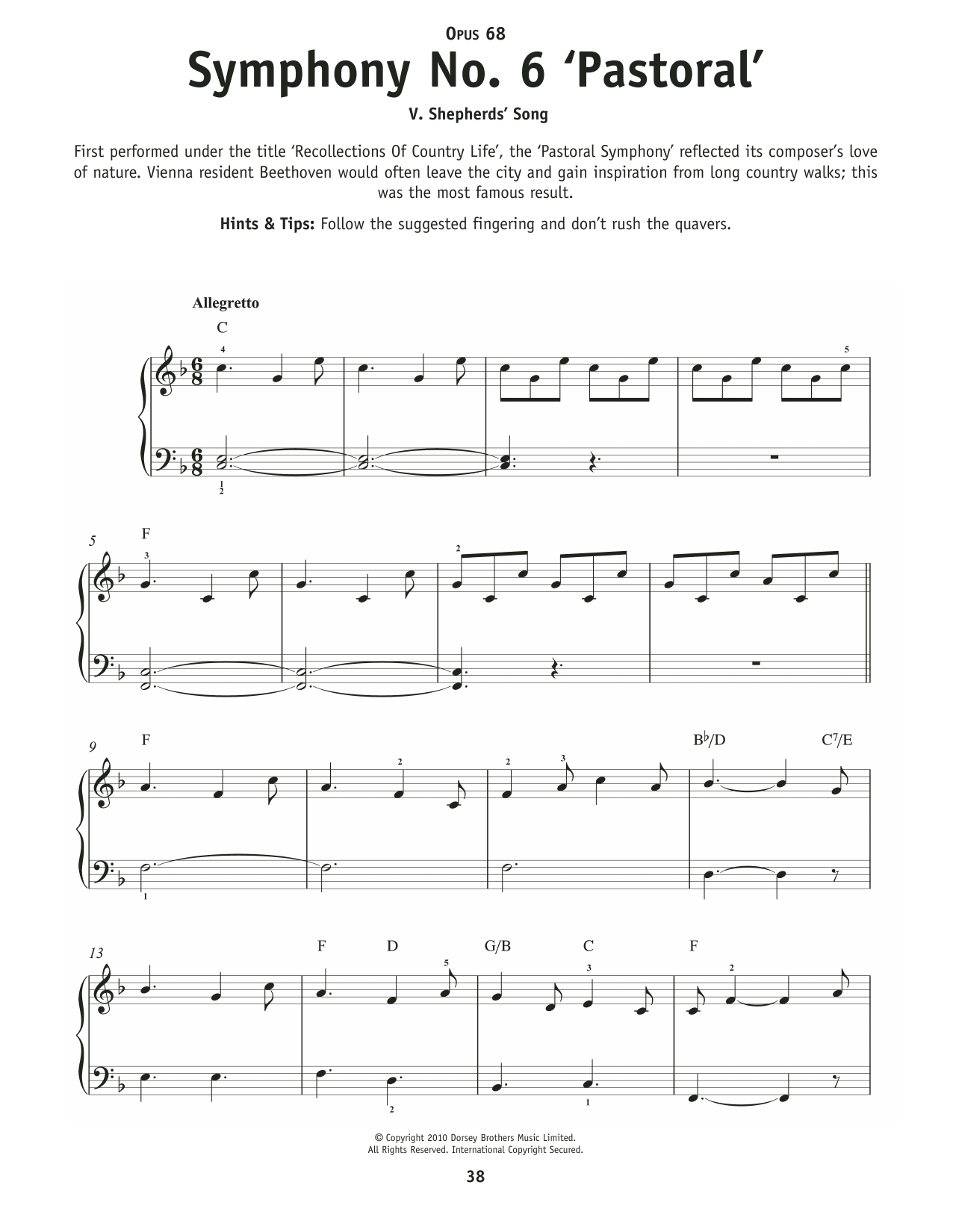
Symphony No. 6 In F Major ("Pastoral"), First Movement Excerpt Sheet Music Preview

Symphony No. 6 In F Major ("Pastoral"), First Movement Excerpt: Really Easy Piano

As performed by Ludwig Van Beethoven

Item: 35-DS01575202

Digital Download
$4.99
Description

Discover MakeMusic Cloud: thousands of interactive titles your students can play along with today.

Sample Audio
No sample audio found.
Sample Video
Additional Details
Publisher: Hal Leonard
Page Count: 2
SKU: 35-DS01575202

More about this title

About the Artist: Ludwig Van Beethoven

Beethoven fundamentally redefined what a symphony could be. Moving far beyond the elegant structural formulas of his predecessors, he treated the genre as a vehicle for profound human expression, architectural ambition, and revolutionary musical thought. His later symphonies became templates for Romantic composers seeking to balance form with emotional depth.

The Sixth Symphony stands apart even within his output. Written in 1808, it abandons pure abstraction to depict specific scenes from nature. Beethoven called it a "Sinfonia pastoralis," a work that invites performers and listeners into vivid landscapes of countryside life, thunderstorms, and gratitude. It remains one of classical music's most programmatic works, demonstrating that structural rigor and storytelling are not opposed but intimately linked.

Why we love this

This opening movement captures the quiet awakening of a pastoral scene with such clarity and restraint that students immediately grasp how orchestration itself creates imagery. The excerpted material preserves Beethoven's gift for making simple thematic material feel inevitable, giving performers something genuinely rewarding to shape and breathe.

What to expect

Sunlight filtering through trees. The movement opens with quiet contentment, voices entering one by one like birdsong beginning at dawn. There's no drama here, only peace and the gentle assurance that beauty exists in stillness.

Who it's for

This excerpt serves orchestras, wind ensembles, and chamber groups seeking an accessible entry point into Beethoven's symphonic language. It works equally well for musicians building confidence with Classical forms and for advanced ensembles wanting to refine interpretive nuance.

How to get the most out of it

  • Establish a flowing pulse without rushing; the Pastoral's opening unfolds like a natural landscape emerging from mist, not a sprint toward cadences
  • Balance transparency with warmth in the string writing. Listen to the lower instruments so the upper voices don't overwhelm the harmonic foundation
  • Shape phrases through gentle dynamic swells rather than aggressive attacks. These opening gestures invite rather than demand attention

How to use it

Pair this with other nature-inspired works to build a thematic concert exploring music and landscape. It also works as a thoughtful opener or interlude, offering the audience a moment of repose and perspective before moving into more dramatic repertoire.

Skills your students will build

  • Balancing independent melodic lines within an ensemble texture
  • Sustaining tone quality at soft dynamic levels (piano and pianissimo)
  • Maintaining forward momentum without accelerating
  • Listening actively to ensemble blend and intonation in slow tempos
  • Shaping long phrases with minimal harmonic movement

You May Also Like