
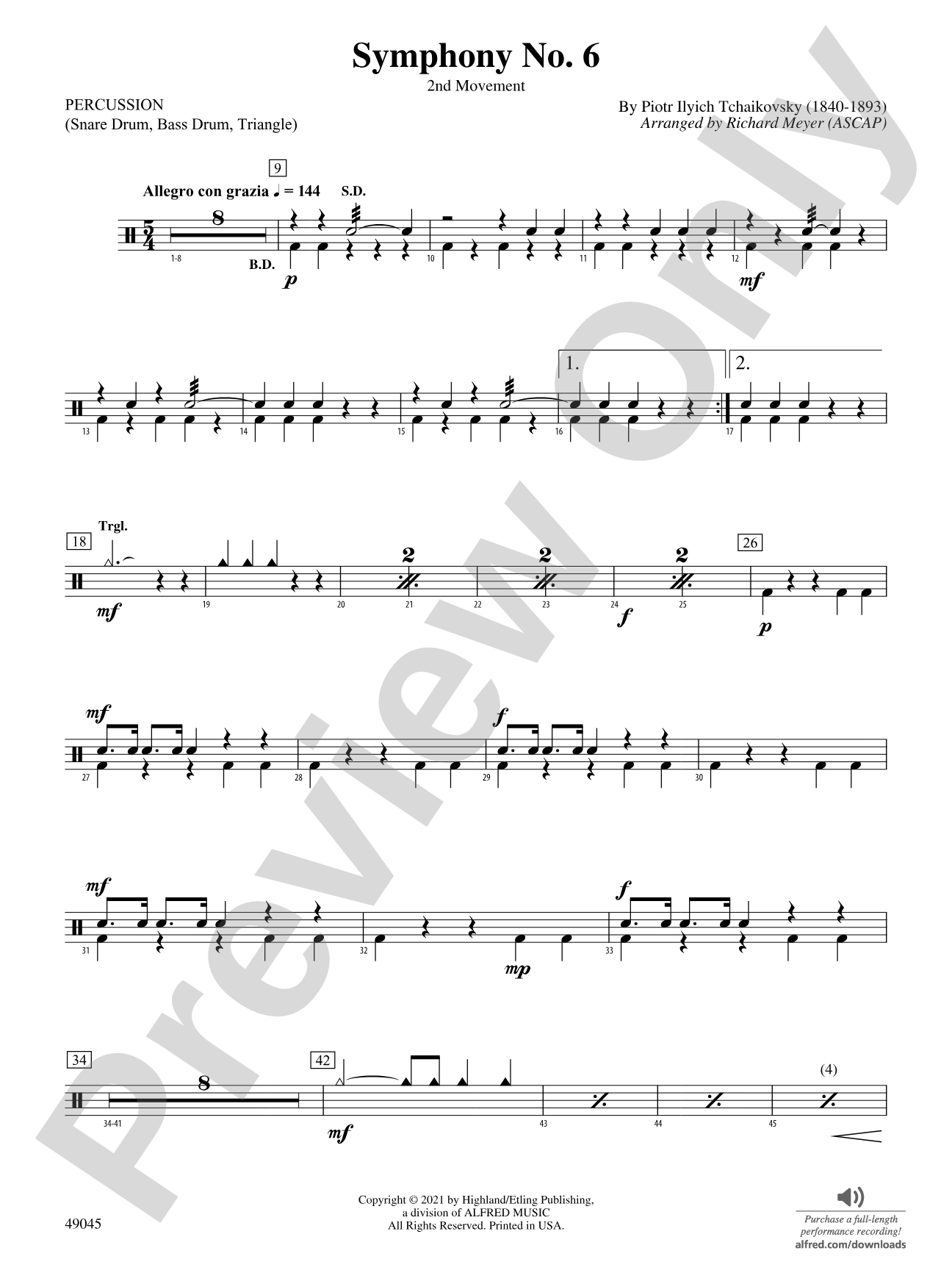

Symphony No. 6: 1st Percussion
2nd Movement
By Piotr Ilyich Tchaikovsky / arr. Richard Meyer
Grade: 2.5
Item: 00-PC-0018645_PC1
$3.00
Pickup currently not available
Description
The second movement from his sixth and last symphony finds Tchaikovsky at his melodic best, arranged by Richard Meyer. This elegant "waltz" in 5/4 meter has long been a favorite of audiences and is an excellent way to introduce your students to a too often neglected time signature. The interesting instrumentation features winds and strings complementing each other as the two halves of the orchestra take turns playing the melody and accompanying. The brooding and somber Trio section will allow your students to emote in an entirely different way. Five percussion parts have been tastefully weaved into the musical tapestry. From a master of symphonic expression at the height of his abilities, this selection is sure to showcase the best your students have to offer. (6:20)


Don't just read it, hear it, play along with it, and watch your students grow with it. In MakeMusic Cloud, Symphony No. 6: 1st Percussion comes alive with professional accompaniment, adjustable tempo, and built-in practice tools that turn solo practice into real progress.
Open in the Player
Jump straight in and assign it today.
Start Your Free Trial
Open this title and explore the full library in minutes.
Sample Audio
1
Audio File
--:--
0:00
0:00
Sample Video
Additional Details
Series:
Highland/Etling First Philharmonic
Publisher:
Alfred Music
Page Count:
163
SKU:
00-PC-0018645_PC1
More about this title
About the Composer: Pytor Ilyich Tchaikovsky
Pyotr Ilyich Tchaikovsky (1840-1893) stands as one of the nineteenth century's most direct and emotionally expressive voices in orchestral music. His six symphonies chart a compositional journey from youthful Russian nationalism toward increasingly sophisticated harmonic language and formal innovation, all while maintaining the melodic generosity that made his work beloved across Europe and America during his lifetime.
Why we love this
Richard Meyer has captured something essential here: a Tchaikovsky masterpiece that sits comfortably at Grade 2.5 without sacrificing the composer's orchestral sophistication. The 5/4 waltz meter teaches an often-overlooked time signature through genuine music rather than etude material, and the instrumental exchange between winds and strings creates natural sectional contrast that keeps every part engaged.
What to expect
Elegant and flowing, with the gentle sway of a ballroom transformed into orchestral architecture. The main section glides in triple time (despite the five-beat bar), creating a sense of graceful motion. When the Trio arrives, the temperature drops markedly; darker harmonies and reduced velocity shift the mood toward introspection before the waltz returns, lighter and more assured.
Who it's for
This arrangement works for intermediate orchestras (Grade 2.5) ready to tackle 5/4 meter as lived musical experience rather than abstract rhythm study. Directors seeking contest or festival material with both melodic substance and pedagogical purpose will find strong value here, especially if your ensemble includes beginning percussionists who benefit from straightforward, musical part-writing.
How to get the most out of it
- Shape the main waltz melody with a singing legato line; the 5/4 meter should feel dance-like and conversational, not metrically awkward. Meyer's arrangement gives the melody to both winds and strings, so nail the handoff between sections with confident phrasing.
- The Trio demands a shift in emotional temperature. Lean into the darker sonority and slower harmonic rhythm to let your ensemble breathe the brooding character fully before returning to the brightness of the waltz.
- Balance the five percussion parts carefully so they enhance rather than overwhelm the melodic exchanges between your wind and string sections. These voices add color and rhythmic definition but should never overshadow the lyrical material.
- Use the 6:20 timing as a reference, but don't rush the Trio section. Let the contrast land. Younger orchestras benefit from having their conductor mark clear tempo relationships between the A and B sections during rehearsal.
How to use it
Program this as a centerpiece in a concert exploring undervalued time signatures or Romantic orchestral color. It pairs well alongside other accessible masterwork arrangements at this level, offering audiences a genuine taste of Tchaikovsky's gift for melody while giving your orchestra a festival-ready showcase piece. The dual nature of the piece (elegant waltz plus brooding introspection) gives your program shape and variety.
Skills your students will build
- Reading and performing in 5/4 meter with stylistic authenticity
- Executing balanced sectional handoffs between wind and string sections
- Sustaining legato phrasing across longer melodic lines
- Creating contrast between major and minor tonalities through tone color and dynamics
- Ensemble balance with five independent percussion parts
- Responding to conducted tempo and emotional gesture between contrasting sections