Symphony No. 5 In C-sharp Minor ("Adagietto"), Fourth Movement Excerpt Sheet Music Preview

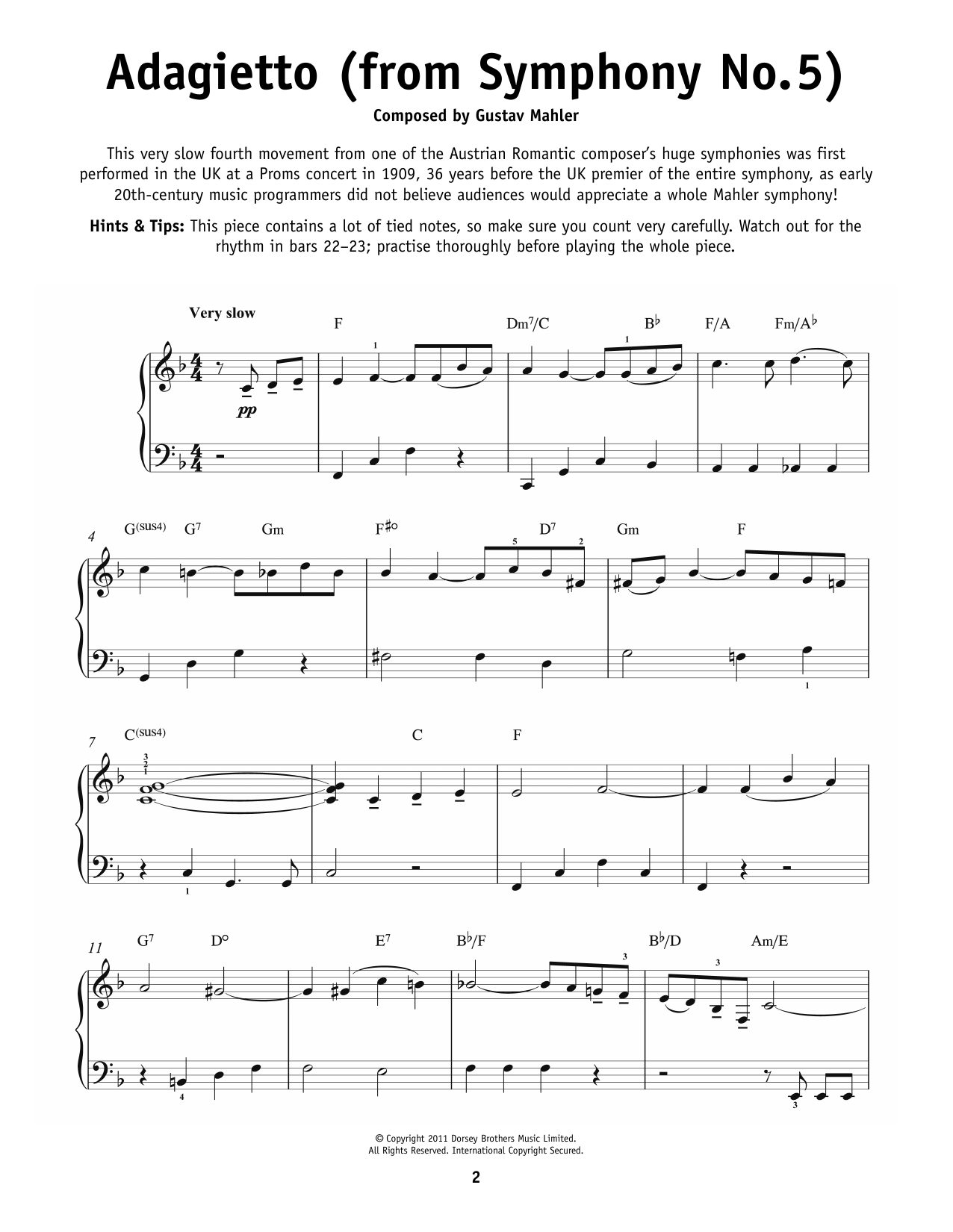
Symphony No. 5 In C-sharp Minor ("Adagietto"), Fourth Movement Excerpt: Really Easy Piano

As performed by Gustav Mahler

Item: 35-DS01588370

Digital Download
$4.99
Description

Discover MakeMusic Cloud: thousands of interactive titles your students can play along with today.

Sample Audio
No sample audio found.
Sample Video
Additional Details
Publisher: Hal Leonard
Page Count: 2
SKU: 35-DS01588370

More about this title

About the Artist: Gustav Mahler

Gustav Mahler (1860–1911) shaped the symphonic tradition by expanding the genre's emotional and structural possibilities. His ten symphonies blend late Romantic harmony with introspective, often autobiographical content, making him a pivotal figure between the Classical symphony and the modern era.

Mahler's influence on music education runs deep. His works demand that performers wrestle with complex emotional states, unconventional orchestrations, and the integration of folk material into sophisticated musical discourse. For student musicians, studying Mahler means learning how a composer can honor tradition while fundamentally questioning what a symphony can express.

Why we love this

The "Adagietto" from the Fifth Symphony ranks among the most transparently beautiful movements in the symphonic repertoire, yet it carries profound emotional weight without sentimentality. This excerpt captures exactly why Mahler matters in the concert hall: it proves that late Romantic music can be direct, accessible, and artistically uncompromising all at once. Programming this piece signals to your audience that beauty and substance are not opposing forces.

What to expect

Quiet intimacy tinged with longing. The harp and strings create a hushed, floating texture where every note seems to arrive from a great distance. There's tenderness here, but also a quality of suspension, as if the music is holding its breath before something inevitable.

Who it's for

This excerpt works beautifully for chamber orchestras, smaller ensembles, and rehearsal bands seeking to venture into the Romantic repertoire with a piece that rewards careful listening. It also serves string sections and wind sections wanting to explore the aesthetic priorities of early twentieth century composition.

How to get the most out of it

  • Shape long phrases by thinking in terms of breath rather than bar lines; the music should feel conversational even when the tempo sits still
  • Balance the harp accompaniment so it sits beneath the primary melodic voice without ever disappearing; transparency matters as much as support
  • Avoid the trap of making this movement precious or overly sentimental; Mahler's restraint is what makes the emotional content cut through

How to use it

Position this excerpt on a concert devoted to the long nineteenth century; it pairs naturally with chamber works by Brahms or other post-Romantic composers. The modest instrumentation and two-page length make it an excellent choice for a thematic concert about orchestration or for demonstrating how Mahler reimagined the symphony's expressive range.

Skills your students will build

  • Sustaining long melodic lines across phrase boundaries without losing direction
  • Balancing individual instrumental colors within a transparent orchestral texture
  • Responding to rubato and flexible phrasing from a conductor's leadership
  • Reading and performing harp parts with sensitivity to their support function

You May Also Like