
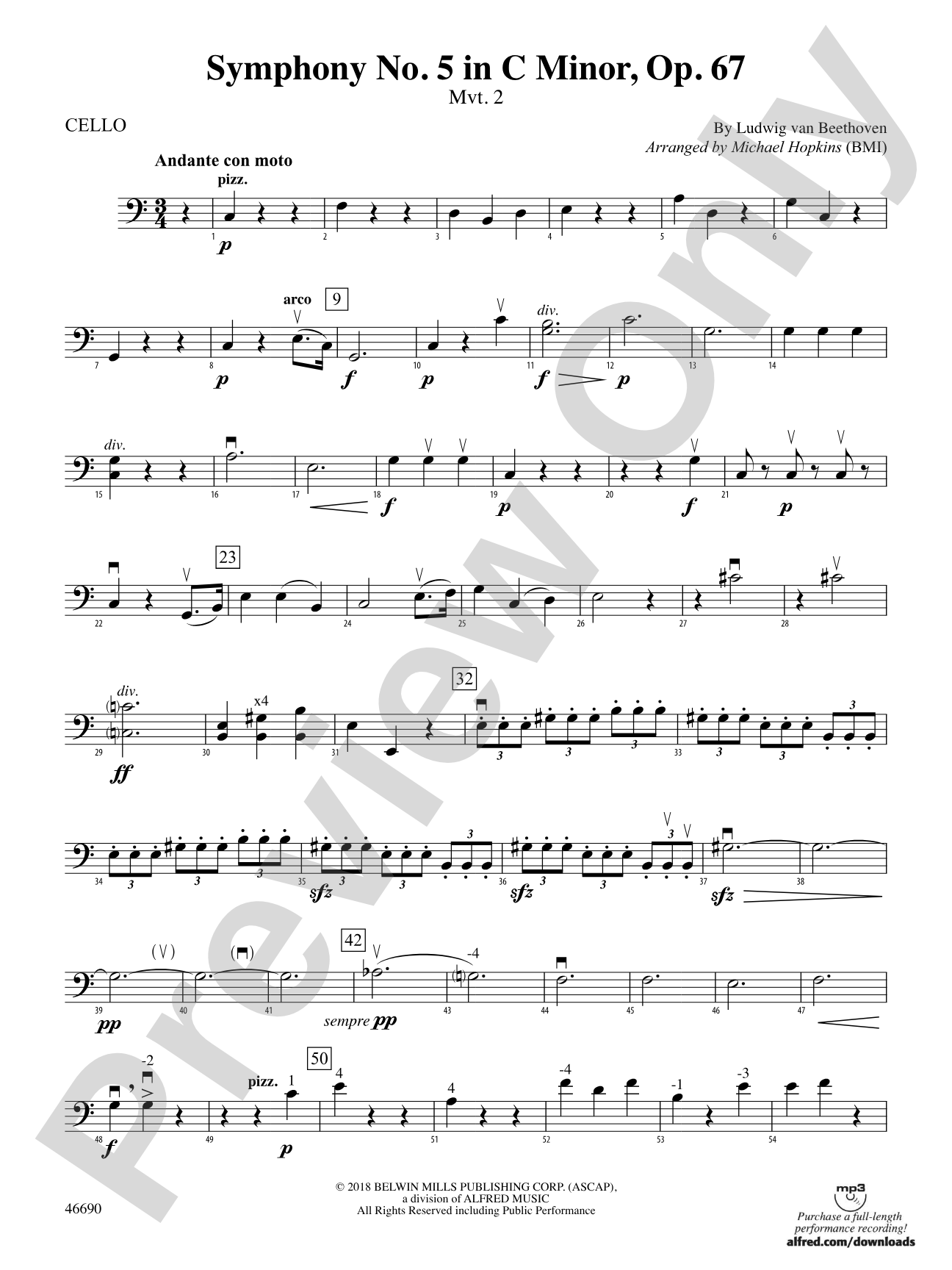

Symphony No. 5 in C Minor, Op. 67: Cello
2nd Movement
By Ludwig van Beethoven / arr. Michael Hopkins
Grade: 4
Item: 00-PC-0017828_VC1
$5.99
Pickup currently not available
Description
The heroic second movement of Beethoven's Symphony No. 5 in C minor, Op. 67 is a theme and variations. In this arrangement by Michael Hopkins the original key of A-flat major has been changed to C major, and the original time signature of 3/8 has been changed to 3/4 meter. Beethoven's original dynamic markings and harmonies have been preserved. This movement is an excellent piece for teaching legato, hooked, martelé, and spiccato bowings; bow distribution; dynamic contrast; and phrasing. Your students will enjoy playing this accessible arrangement of one of the great masterpieces of the classical era.


Don't just read it, hear it, play along with it, and watch your students grow with it. In MakeMusic Cloud, Symphony No. 5 in C Minor, Op. 67: Cello comes alive with professional accompaniment, adjustable tempo, and built-in practice tools that turn solo practice into real progress.
Open in the Player
Jump straight in and assign it today.
Start Your Free Trial
Open this title and explore the full library in minutes.
Sample Audio
1
Audio File
--:--
0:00
0:00
Sample Video
Additional Details
Series:
Belwin Symphonic String Orchestra
Publisher:
Alfred Music
Page Count:
124
SKU:
00-PC-0017828_VC1
More about this title
About the Composer: Ludwig van Beethoven
Ludwig van Beethoven (1770-1827) stands at the threshold between Classical and Romantic music, a composer who expanded the symphony from a courtly diversion into a form capable of expressing profound human struggle and transcendence. His nine symphonies revolutionized orchestral writing by enlarging the orchestra, deepening harmonic language, and treating thematic development with almost obsessive intensity. Deaf for much of his compositional life, Beethoven proved that deafness could not silence a mind of extraordinary power and originality.
Why we love this
This arrangement delivers an uncompromising masterwork at a level where student orchestras can actually succeed with it. Hopkins has made intelligent choices that preserve Beethoven's architectural genius while removing the technical barriers; the shift to C major and 3/4 meter feels natural, not compromised. Your students will walk off stage knowing they've performed something genuinely significant.
What to expect
Beethoven's second movement breathes with quiet heroism. The theme floats in gentle legato before variations crack it open with sharper articulation and richer harmonic color. There is nobility here, but also intimacy; the variations feel like conversations with the melody rather than departures from it.
Who it's for
Grade 4 string orchestras with solid fundamentals in bow control and basic articulation. This works for orchestras mature enough to sustain lyrical playing and balance multiple bowing textures within a single movement, whether preparing for festival performance or building a concert program around a major classical work.
How to get the most out of it
- Isolate the bowing patterns before running full passages. Hopkins preserves Beethoven's original bowings, and the mix of legato, martelé, hooked, and spiccato requires precision so the articulation changes read as compositional choices, not accidents.
- Shape phrases around the harmonic rhythm, not just the barline. This theme-and-variations structure lives in the dialogue between melody and supporting voices; conductors who guide the orchestra toward harmonic anchor points will unlock the movement's architecture.
- Use dynamic contrast as a formal tool. The theme itself relies on shifts between p and f to define its character; variations that alter dynamics should feel like genuine recompositions, not arbitrary changes.
- Slow the tempo slightly if bow coordination struggles emerge in the spiccato sections. A conductor who finds the right tempo for clean articulation will be rewarded with transparency Beethoven intended.
How to use it
This single movement works beautifully as a centerpiece for a concert built around Classical or Romantic masterworks, or as the anchor piece in a themed program exploring theme-and-variations forms. Its length and inherent weight also make it a strong festival entry that stands apart from shorter orchestral showpieces. Consider pairing it with a lighter contemporary work or Baroque selection to balance program architecture.
Skills your students will build
- Legato, hooked, martelé, and spiccato bowings in context
- Bow distribution across phrase shapes and dynamic levels
- Dynamic contrast and shaping within a theme-and-variations structure
- Balance between melody and harmonic accompaniment
- Sustaining lyrical phrasing across longer musical forms