Symphony No. 5 - Allegro Sheet Music Preview

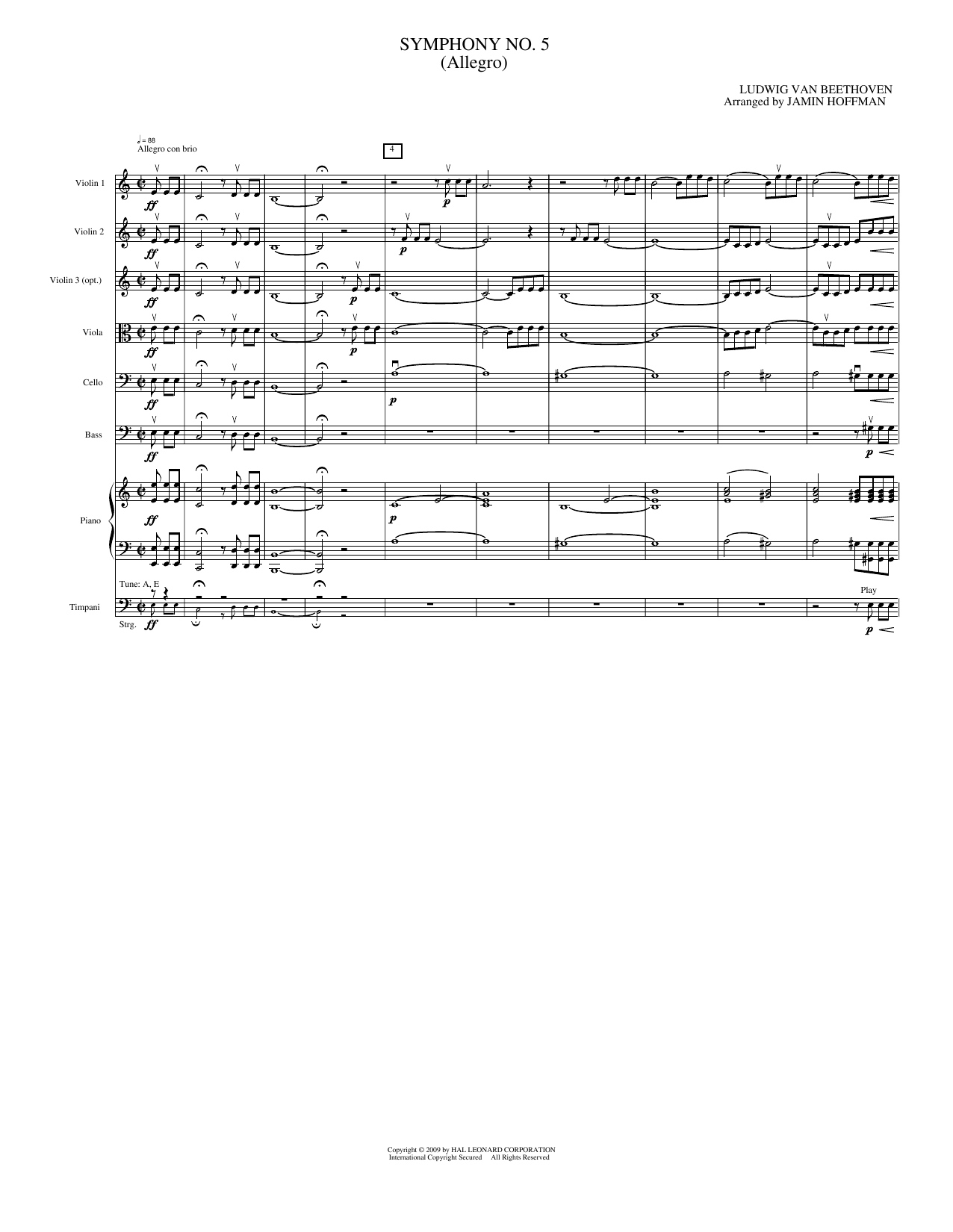
Symphony No. 5 - Allegro: String Orchestra Conductor Score & Parts

By Ludwig Van Beethoven / Arranged by Jamin Hoffman

Grade: 3-4

Item: 35-PK00426660

Digital Download
$50.00

Buy Extra Parts (Digital PDF Download)

Product Price Quantity
Symphony No. 5 - Allegro - Full Score $50.00

Parts Added to Cart!

Description
Symphony No. 5 - Allegro

Symphony No. 5 - Allegro: String Orchestra Conductor Score & Parts isn't in MakeMusic Cloud just yet...but it could be. Let us know you'd like to see it, and you'll help shape what comes next. In the meantime, start a free trial and dive into thousands of interactive titles your students can play along with today.

Sample Audio
No sample audio found.
Sample Video
Additional Details
Publisher: Hal Leonard
SKU: 35-PK00426660

More about this title

About the Composer: Ludwig Van Beethoven

Beethoven transformed the symphony from a graceful courtly form into a vehicle for profound human expression. His five symphonies span his creative lifetime and chart a journey from classical tradition toward Romanticism, making them essential study for any musician serious about understanding how the genre evolved.

The Fifth Symphony stands as perhaps his most iconic work. Its opening four-note motif became shorthand for fate itself, and the symphony's architecture from darkness to triumph influenced generations of composers. For students, studying Beethoven's symphonic writing reveals how thematic development, orchestration, and structural clarity can create overwhelming emotional power.

Why we love this

Jamin Hoffman's arrangement opens this cornerstone work to orchestras that might otherwise lack the instrumentation for Beethoven's original scoring. The Allegro encapsulates everything that makes this symphony unforgettable: the urgent drive of that famous motive, clear harmonic progressions, and the building sense of momentum that feels irresistible to both players and listeners. Your students will feel the weight of musical history in their hands.

What to expect

Urgent and propulsive from the downbeat. The relentless forward momentum of Beethoven's Allegro creates a sense of purpose and determination, as if something inevitable is unfolding before you. Even as the themes weave through the ensemble, that driving pulse underneath keeps everything pointed toward resolution.

Who it's for

String orchestras at the intermediate level who want to engage with canonical repertoire without requiring the full orchestral complement. This arrangement works equally well for high school orchestras seeking substantial musical content and for community ensembles looking to program something their audiences will recognize and respect.

How to get the most out of it

  • Shape the famous four-note motive with precision at the opening; these notes establish the entire symphony's character, so rhythmic clarity and controlled articulation matter more than volume.
  • Track the interplay between viola and cello lines in passages where they carry the thematic material; many students focus only on violin parts and miss the architecture underneath.
  • Build intensity gradually through the movement's development section rather than jumping to full volume early; Beethoven's pacing rewards patience and allows the accumulation to feel inevitable.

How to use it

Pair this with lighter classical works to anchor a concert around the Viennese Classical period. The movement's relative brevity and high recognition factor make it ideal for opening a concert that needs immediate engagement or closing one with a strong, recognizable statement. Many directors use it as a year-end program piece once students have developed solid ensemble control.

Skills your students will build

  • Following thematic material as it passes between sections
  • Maintaining rhythmic precision in a fast tempo with complex rhythmic figures
  • Balancing parts when multiple lines carry equally important musical content
  • Understanding sonata form through direct engagement with Beethoven's structure
  • Responding to subtle dynamic shaping that builds cumulative intensity

You May Also Like