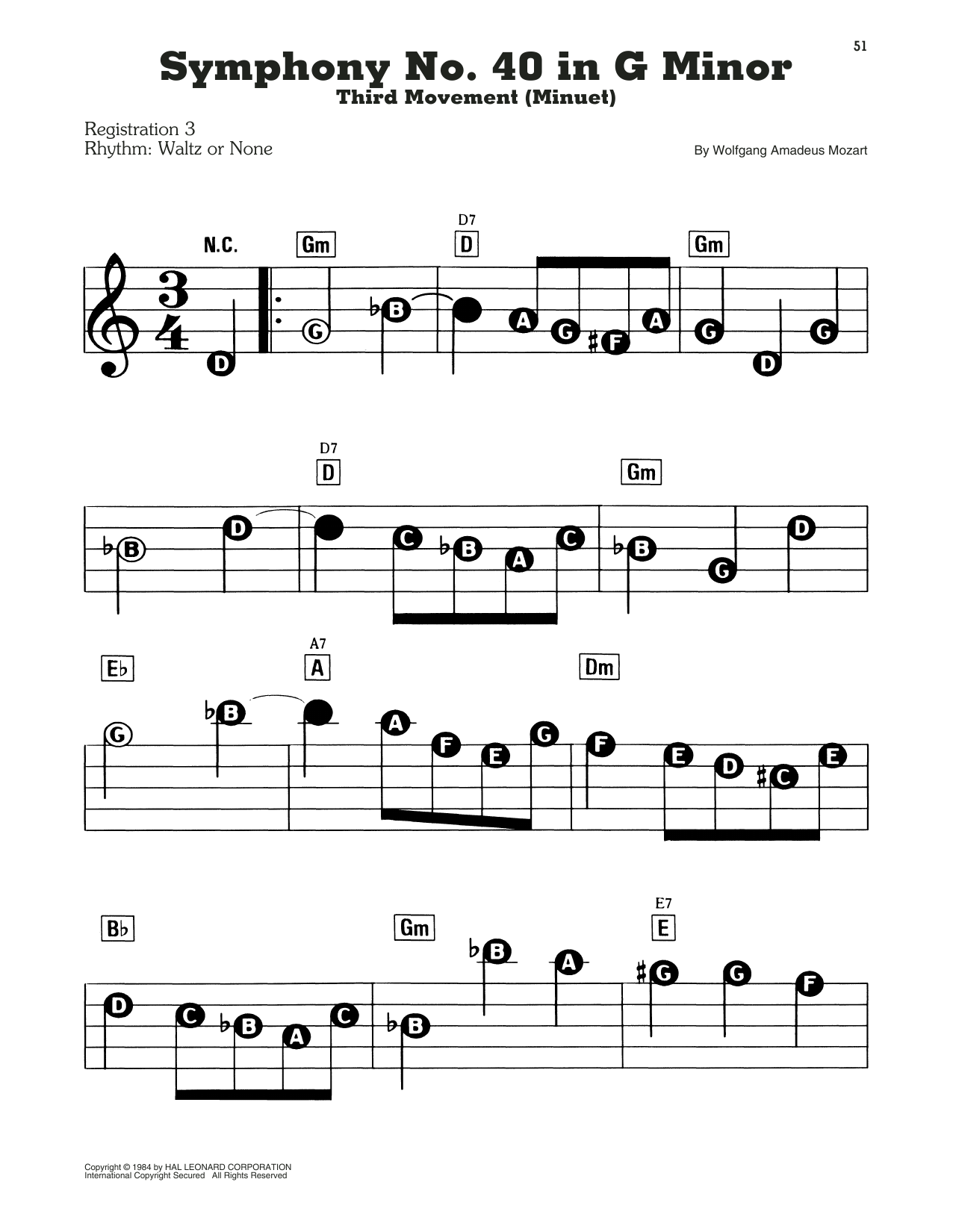
Symphony No. 40 In G Minor, Third Movement ("Minuet") Sheet Music Preview

Symphony No. 40 In G Minor, Third Movement ("Minuet"): E-Z Play Today

Item: 35-DS00911651

Digital Download
$4.99
Description

Symphony No. 40 In G Minor, Third Movement ("Minuet"): E-Z Play Today isn't in MakeMusic Cloud just yet...but it could be. Let us know you'd like to see it, and you'll help shape what comes next. In the meantime, start a free trial and dive into thousands of interactive titles your students can play along with today.

Sample Audio
No sample audio found.
Sample Video
Additional Details
Publisher: Hal Leonard
Page Count: 3
SKU: 35-DS00911651

More about this title

About the Creator: Wolfgang Amadeus Mozart

Wolfgang Amadeus Mozart (1756-1791) composed his Symphony No. 40 in G minor during an extraordinarily productive period in Vienna, completing this work in 1788 alongside two other major symphonies within the span of just eight weeks. The G minor symphony stands apart from Mozart's other symphonies as one of only two in a minor key, giving it a restless, introspective character that reflects the emotional intensity of his mature compositional style. His mastery of orchestration and harmonic sophistication in this work demonstrated the depth he brought to the symphonic form, influencing generations of composers who followed.

Why we love this

The minuet movement captures Mozart's elegant writing in a form that remains accessible to developing pianists. This E-Z Play arrangement strips away complexity without sacrificing the essential character of the original, making one of the classical repertoire's most recognizable movements playable for students who are still building technical skills.

What to expect

Mozart's minuet unfolds with aristocratic poise, though an underlying restlessness prevents it from settling into complacency. The movement breathes with the formality of the dance it represents, yet the harmonic shifts hint at deeper emotional territory beneath its refined surface.

Who it's for

Student pianists in the intermediate stages of classical repertoire study will find this accessible while still engaging with authentic Mozart. Teachers seeking to introduce symphonic literature to piano students have an immediate, playable solution that requires minimal arrangement compromise.

How to get the most out of it

  • Maintain clarity in the melodic line even while keeping tempo moderate; the minuet's courtly nature depends on precise articulation rather than speed
  • Shape the repeated phrases with slight dynamic variation to reveal the question-and-answer dialogue that Mozart embedded in the structure
  • Balance the accompaniment texture so it supports rather than overwhelms the melody, particularly in the trio section if included

How to use it

Feature this as a solo recital piece for students exploring classical forms, or use it as a bridge between Baroque dance movements and Romantic character pieces in a thematic concert. It also serves as an excellent sight-reading or ensemble introduction to Mozart's symphonic style, particularly when performed alongside other digitally available arrangements from the same work.

Skills your students will build

  • Reading key signature with two flats and minor key tonality
  • Interpreting dynamic and articulation markings in a Classical context
  • Maintaining steady pulse in moderate tempo while shaping melodic phrases
  • Managing hand independence between melody and accompaniment texture

You May Also Like