

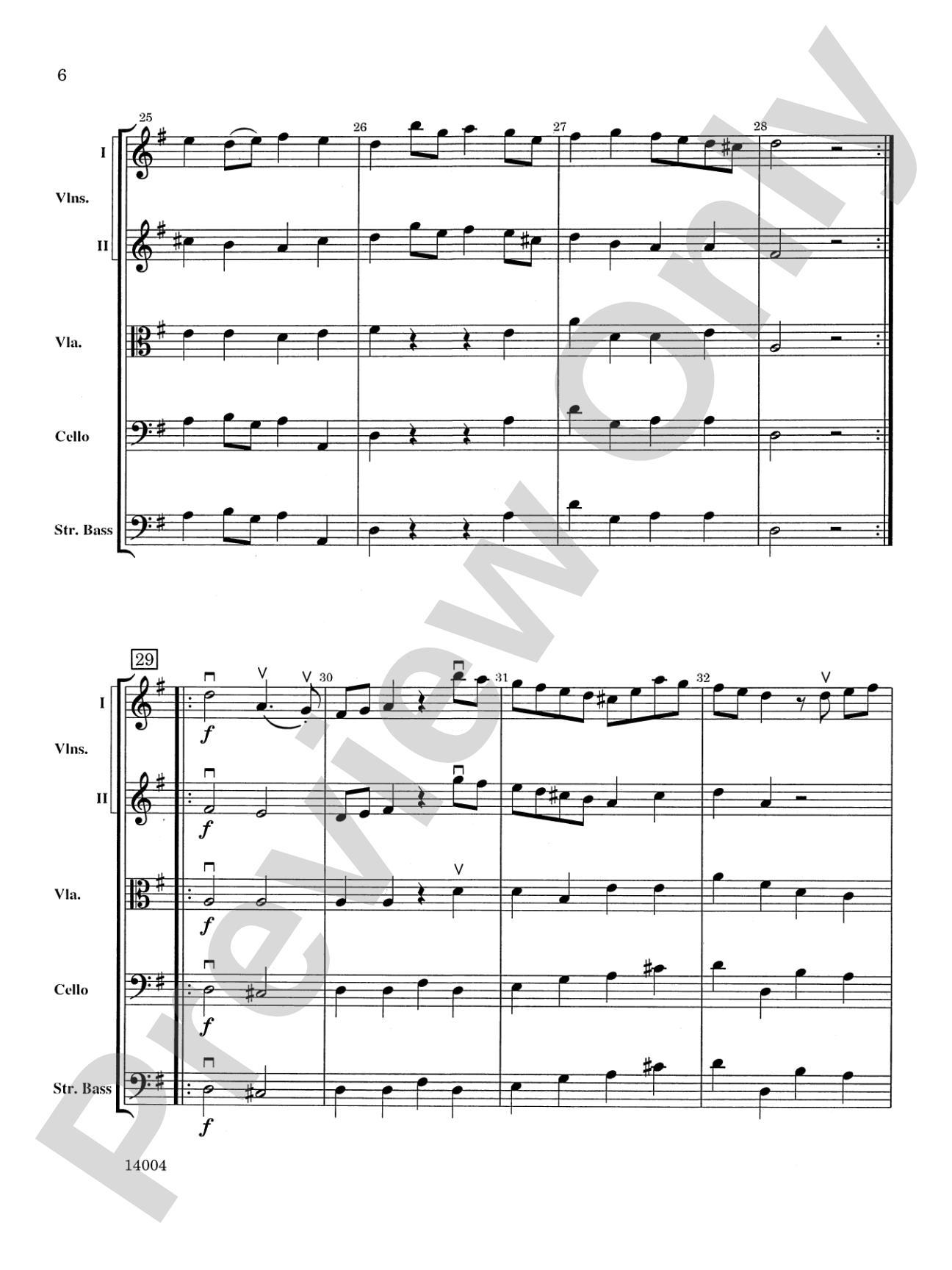
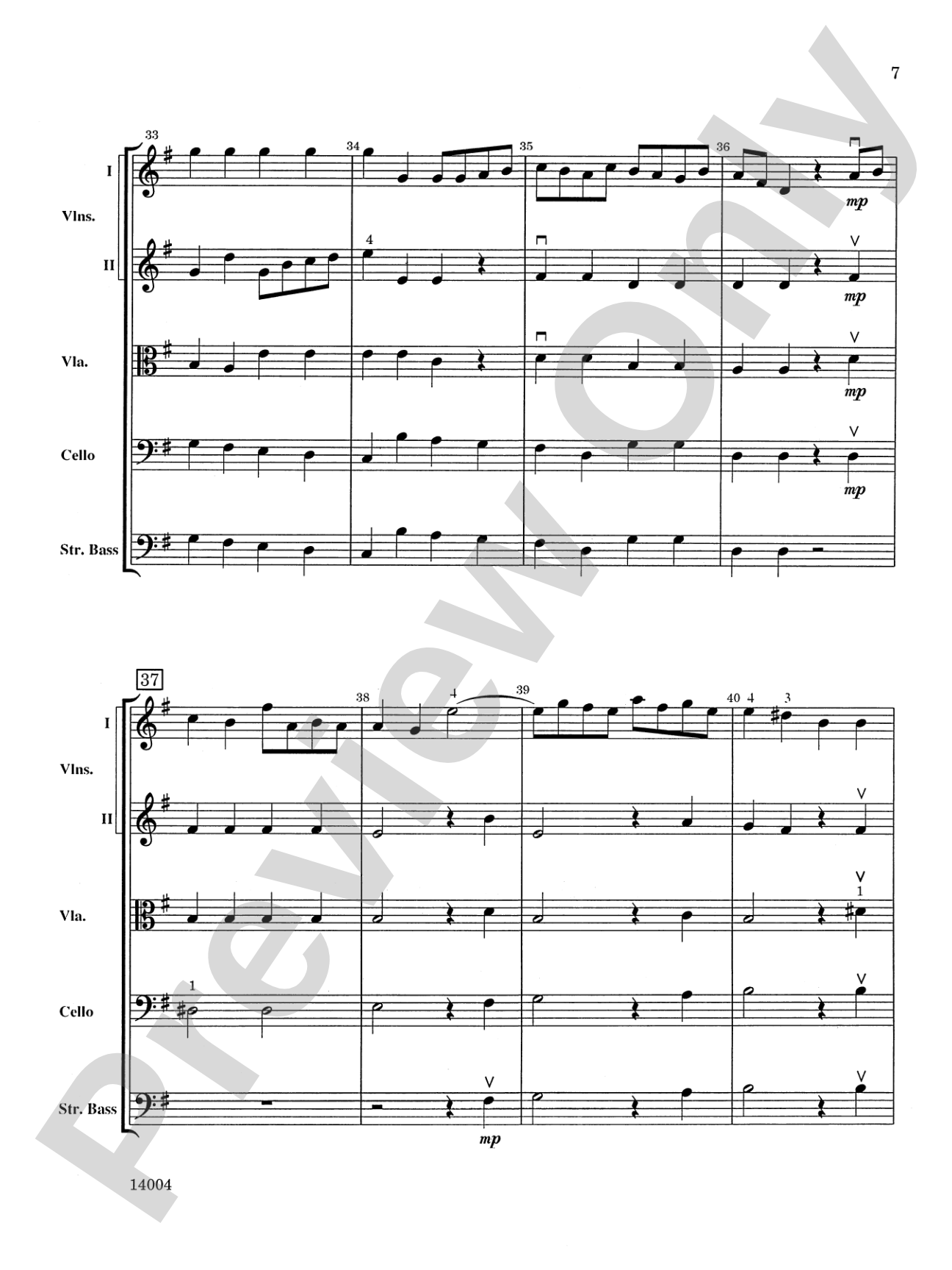
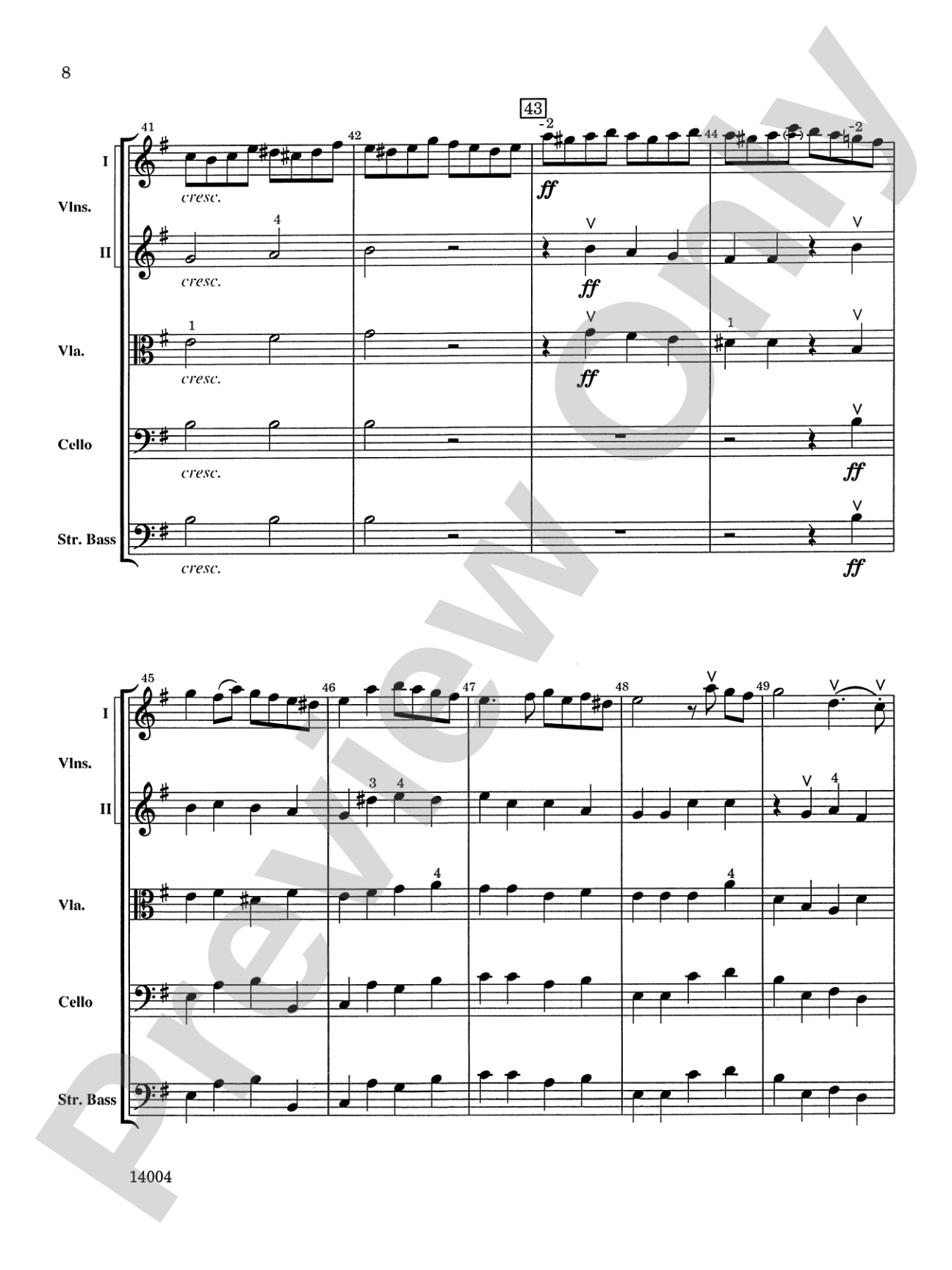
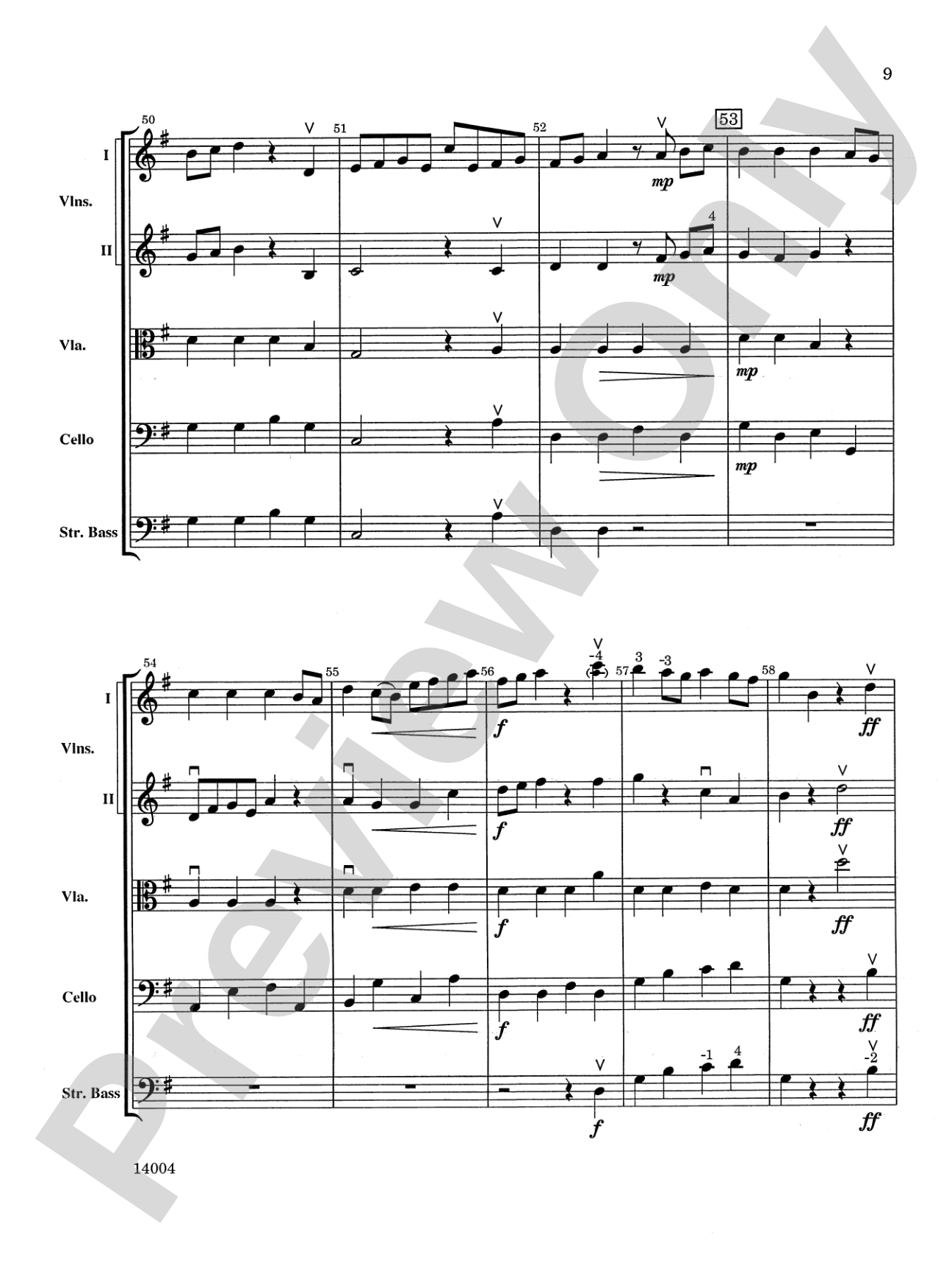


Symphony No. 4, 1st Movement: String Orchestra Conductor Score & Parts
(First Movement)
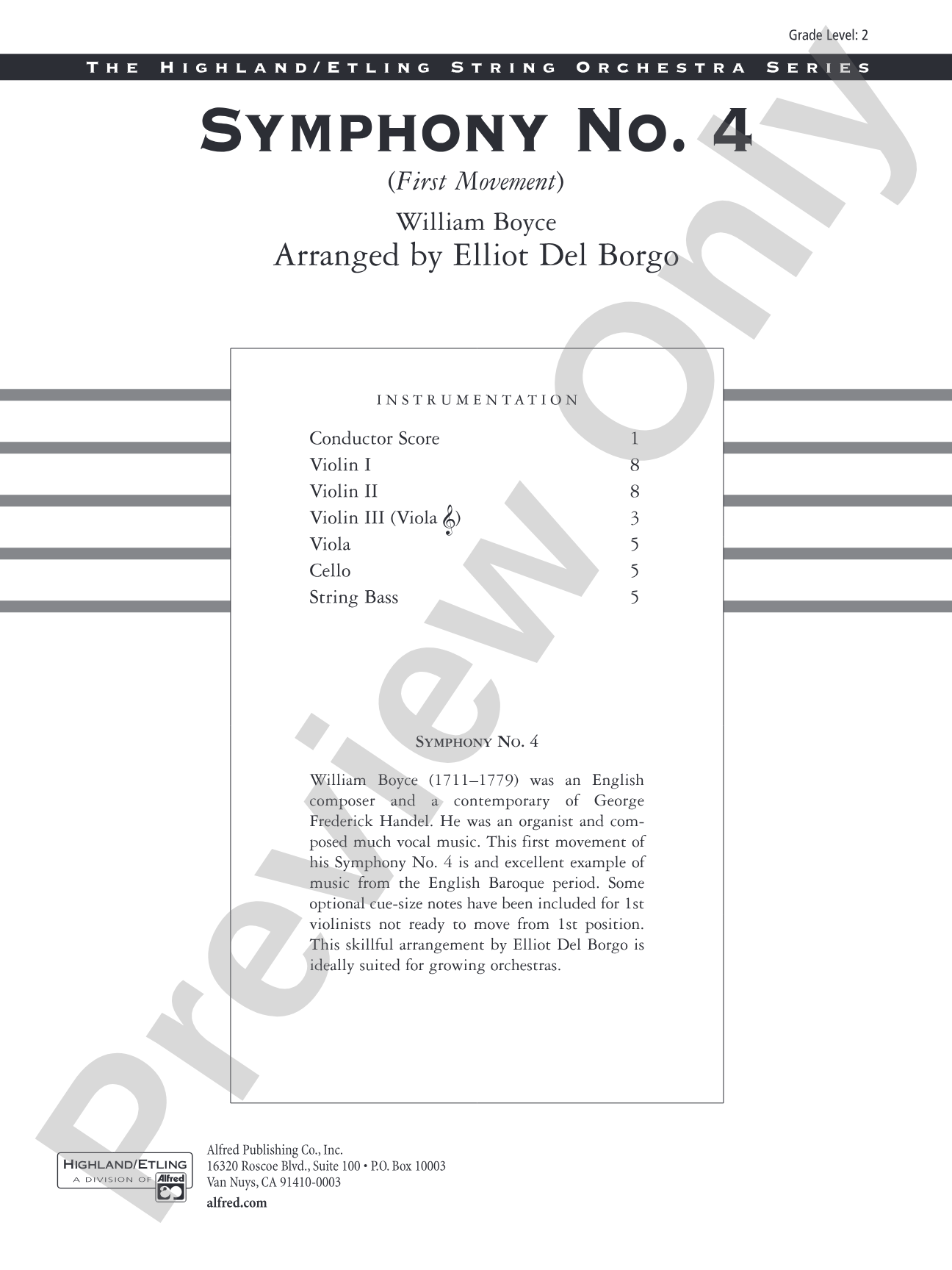
By William Boyce / arr. Elliot Del Borgo
Grade: 2
Item: 00-PK-0000159

$60.00
Pickup currently not available
Buy Extra Parts (Digital PDF Download)
| Product | Price | Quantity |
|---|---|---|
| Symphony No. 4, 1st Movement: Score | $9.00 | |
| Symphony No. 4, 1st Movement: 1st Violin | $5.99 | |
| Symphony No. 4, 1st Movement: 2nd Violin | $5.99 | |
| Symphony No. 4, 1st Movement: 3rd Violin (Viola [TC]) | $5.99 | |
| Symphony No. 4, 1st Movement: Viola | $5.99 | |
| Symphony No. 4, 1st Movement: Cello | $5.99 | |
| Symphony No. 4, 1st Movement: String Bass | $5.99 |
Parts Added to Cart!
Description
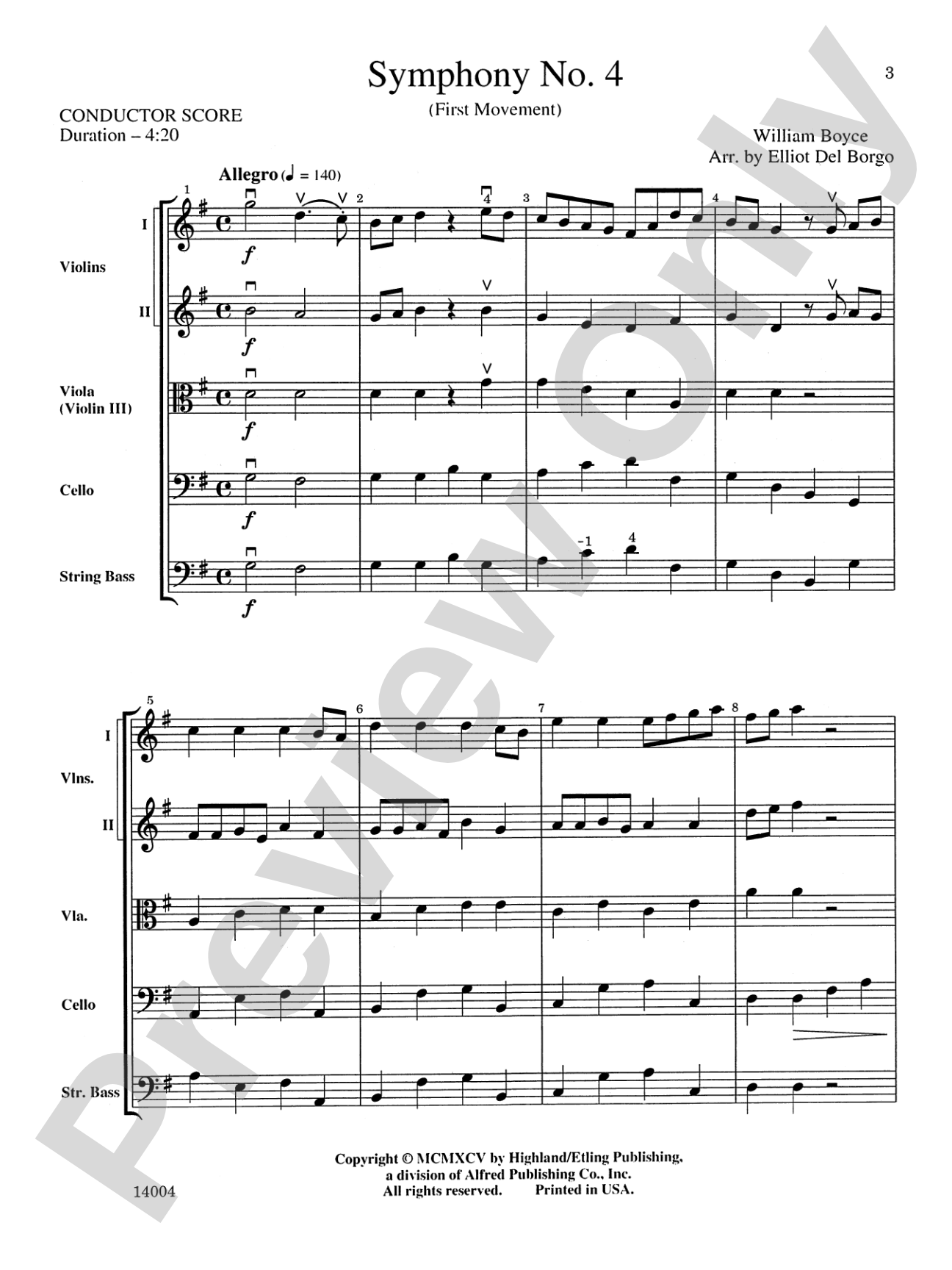
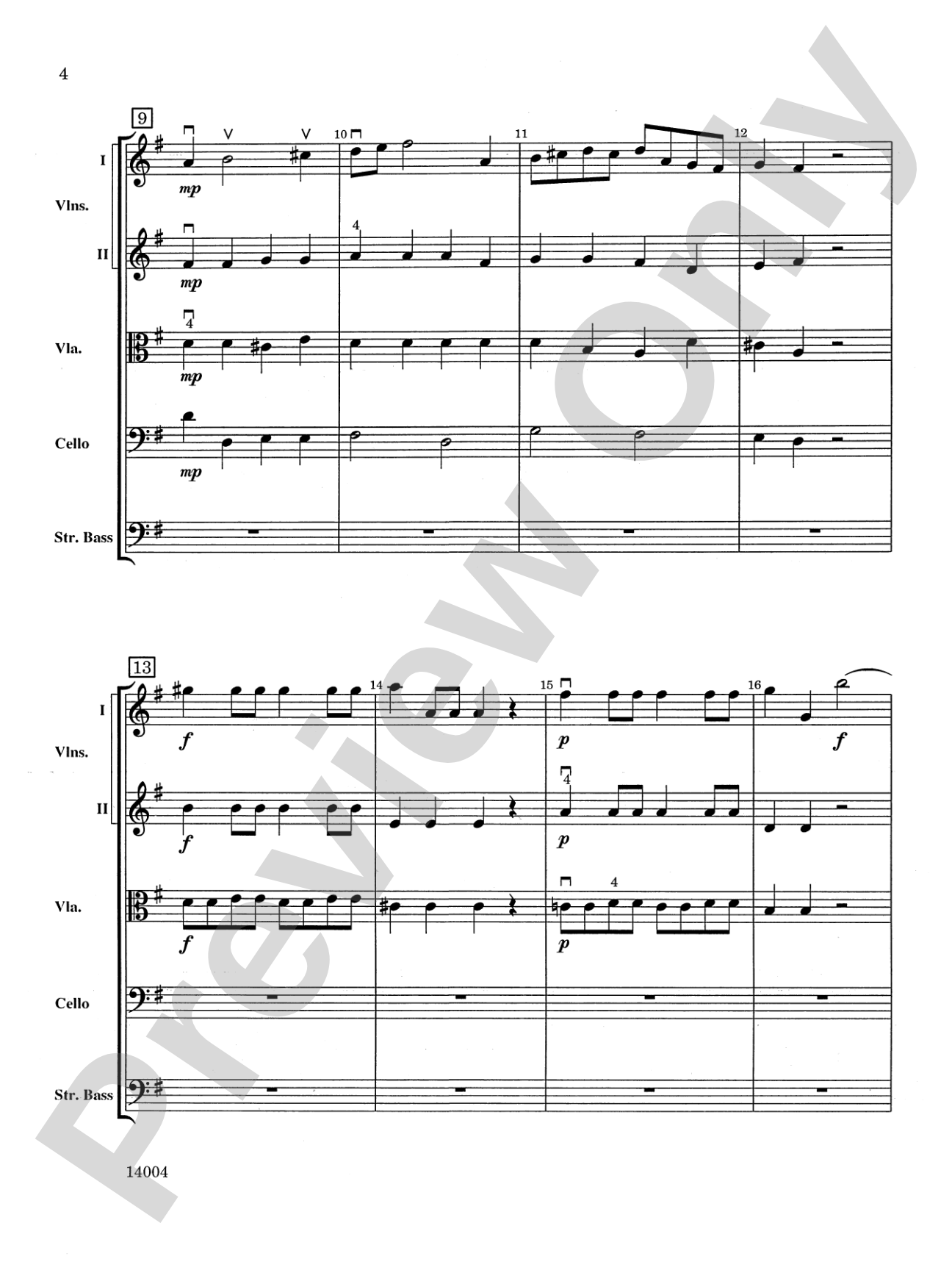
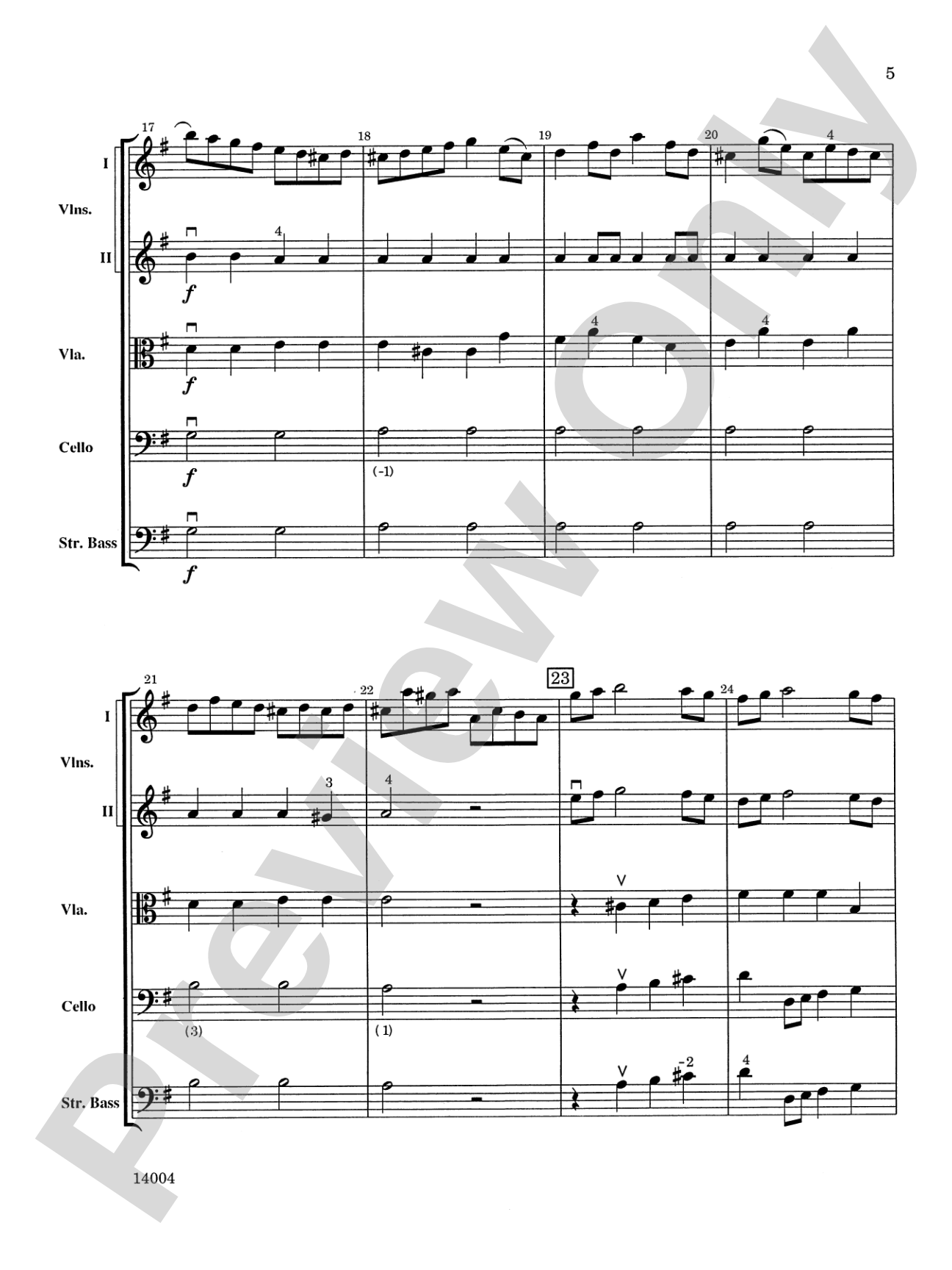
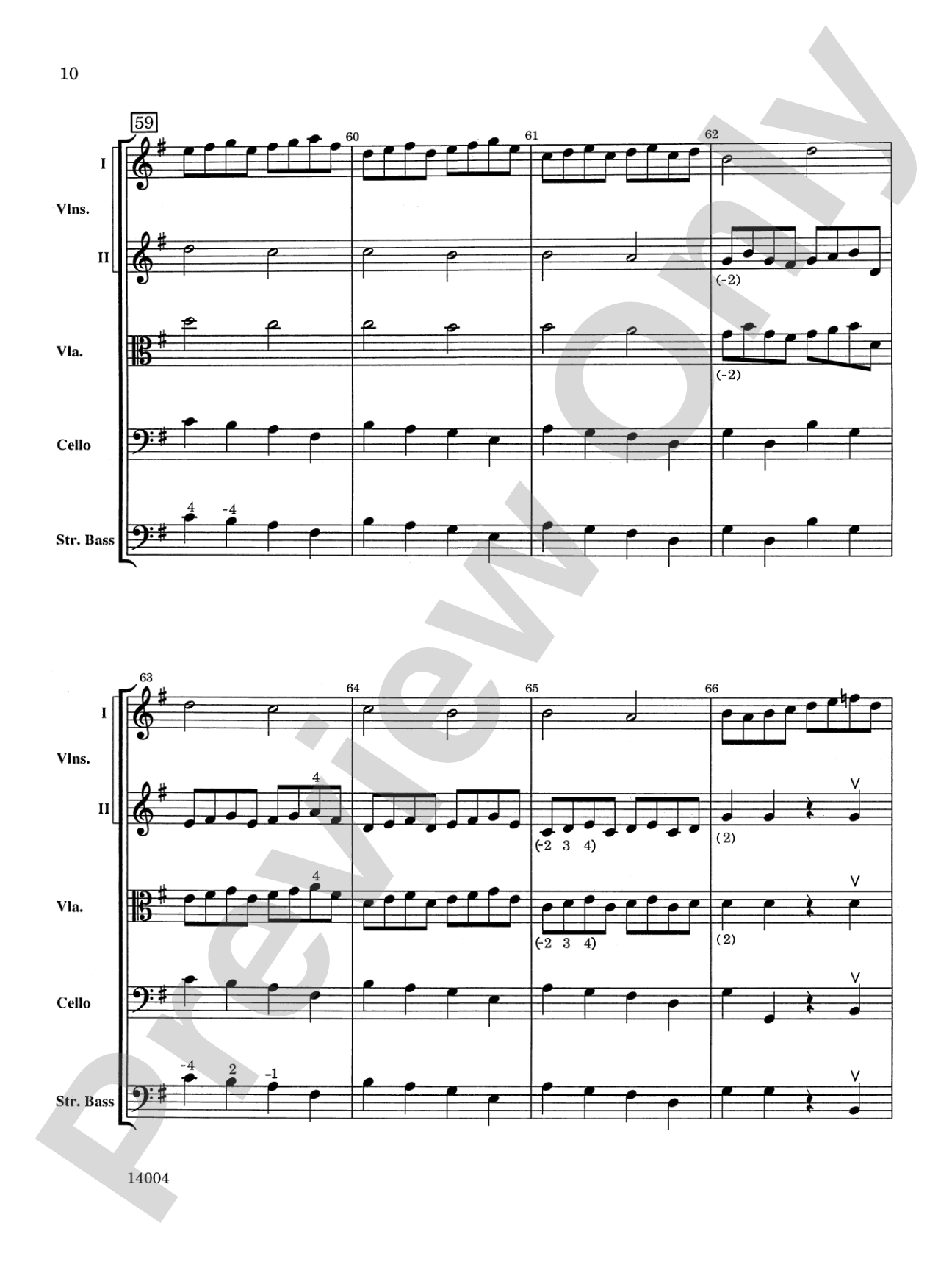
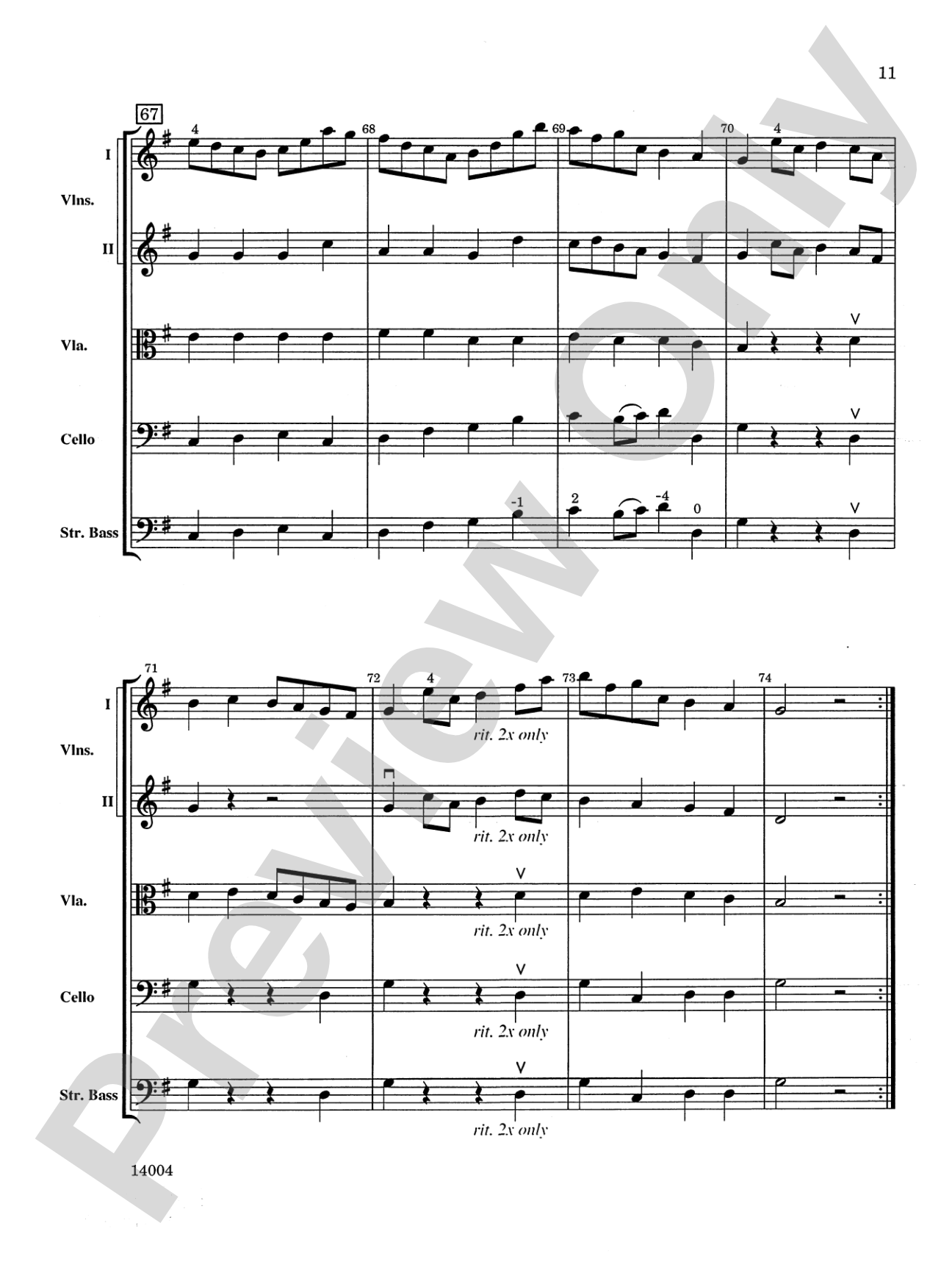
William Boyce was an English composer who lived in the same time as Handel. This arrangement of music from his elegant and graceful Fourth Symphony is an excellent addition to concert and contest literature by renowned composer Elliot Del Borgo. A great vehicle for working on the Baroque style, this piece will help students immensely in learning to play contrapuntal music. An especially nice segment featuring 2nd violins and violas makes this an outstanding choice for developing orchestras. (Grade 2) This title is available in MakeMusic Cloud.


Don't just read it, hear it, play along with it, and watch your students grow with it. In MakeMusic Cloud, Symphony No. 4, 1st Movement: String Orchestra Conductor Score & Parts comes alive with professional accompaniment, adjustable tempo, and built-in practice tools that turn solo practice into real progress.
Open in the Player
Jump straight in and assign it today.
Start Your Free Trial
Open this title and explore the full library in minutes.
Sample Audio
1
Audio File
--:--
0:00
0:00
Sample Video
No sample videos found.
Additional Details
Series:
Highland/Etling String Orchestra
Publisher:
Alfred Music
Page Count:
136
SKU:
00-PK-0000159
More about this title
About the Composer: William Boyce
William Boyce (1711, 1779) was a dominant figure in English musical life during the eighteenth century, serving as organist at the Chapel Royal and later as Master of the King's Musick. Though less celebrated today than his Continental contemporaries, Boyce commanded remarkable craft in both instrumental and vocal writing, and his symphonies established him as a serious architectural thinker in large forms. His output includes church music, theatrical works, and orchestral pieces that reveal a composer equally fluent in English national style and the cosmopolitan language of the Baroque and emerging Classical periods.
Boyce's Four Symphonies remain vivid windows into mid-eighteenth-century orchestration and taste. They combine the harmonic sophistication and contrapuntal clarity of the Baroque with a growing emphasis on melody and dramatic shape. His string writing is consistently elegant and singable, which is precisely why this symphony works so well for developing ensembles: the lines sit gratefully on the instruments and reward careful attention to voice independence.
Why we love this
Del Borgo's arrangement captures the essence of Boyce's symphonic writing while crafting a piece that sits comfortably in the Grade 2 repertoire without sacrificing musical substance. The contrapuntal passages and the featured viola-and-second-violin section give developing orchestras real musical work to do, not just note-reading.
What to expect
Graceful and proportioned, with a clarity that belongs entirely to the mid-18th century. The writing favors elegant melodic lines and transparent textures over dramatic gestures, inviting players into the world of Baroque orchestration where every line carries musical weight.
Who it's for
Developing string orchestras ready to engage with Baroque style and counterpoint but still building technical facility. This arrangement works especially well for orchestras with solid second violins and violas who deserve showcase moments.
How to get the most out of it
- Invest rehearsal time in the contrapuntal sections where lines weave together. Young players often hear only their own part; conduct with clear independence between voices so they understand how their line relates to others.
- Shape the elegant phrasing with natural breath points. Baroque style thrives on architectural clarity, not romantic sweep; help students feel the forward motion within balanced phrases.
- Feature the second violin and viola passage with careful balance. This is not background accompaniment; it deserves prominence so the secondary voices shine as equals to the first violins.
How to use it
Program this on a concert celebrating orchestral literature from the English baroque and classical tradition. It pairs naturally with other Boyce works or with period-appropriate repertoire by Vivaldi or Telemann, and serves equally well as a contest selection at the Grade 2 level.
Skills your students will build
- Reading and performing contrapuntal passages with independence between string sections
- Understanding Baroque articulation and phrase structure
- Balancing secondary voices (violas and second violins) within a four-part texture
- Executing clean ensemble attacks and releases in homophonic sections