
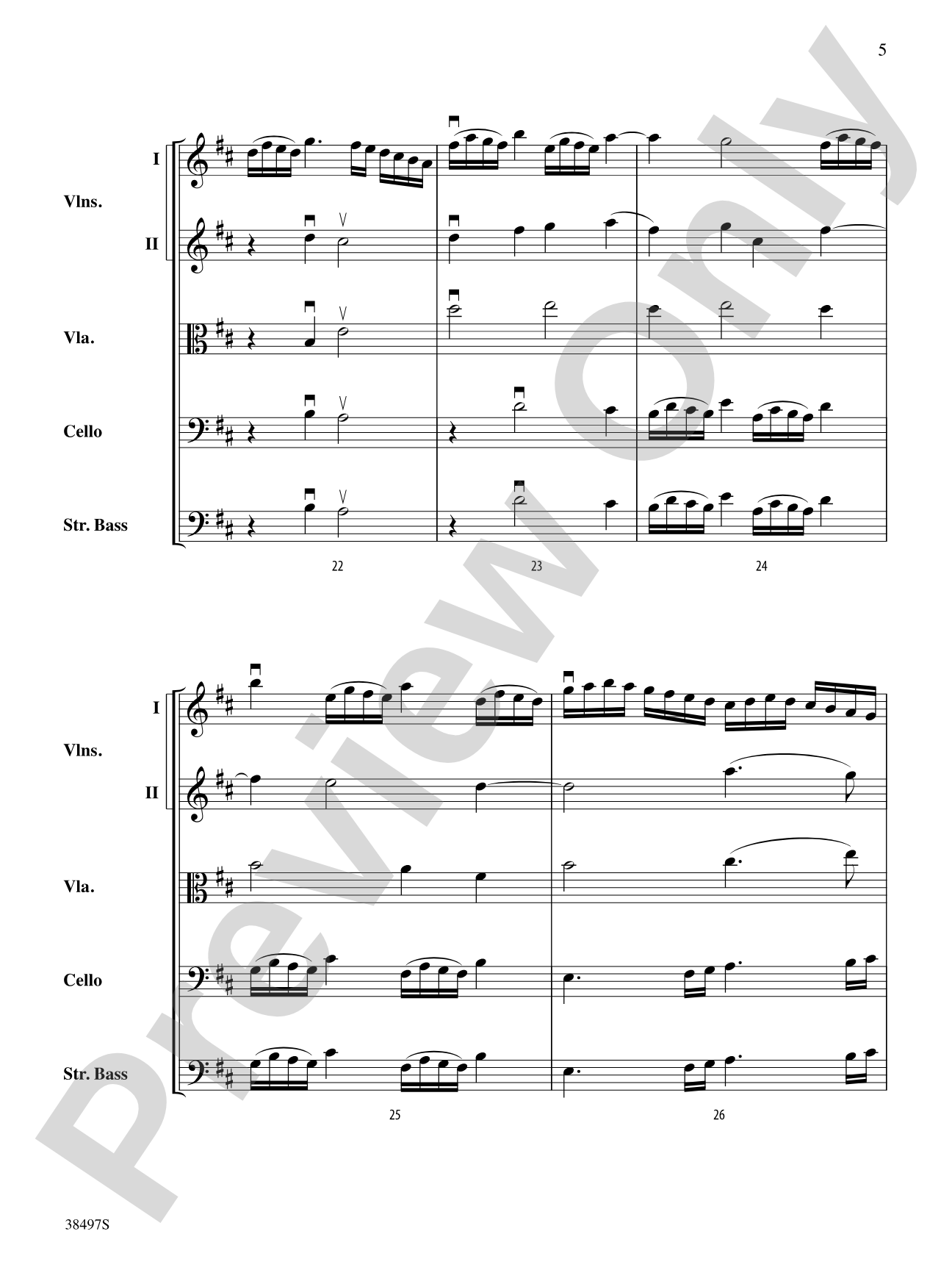
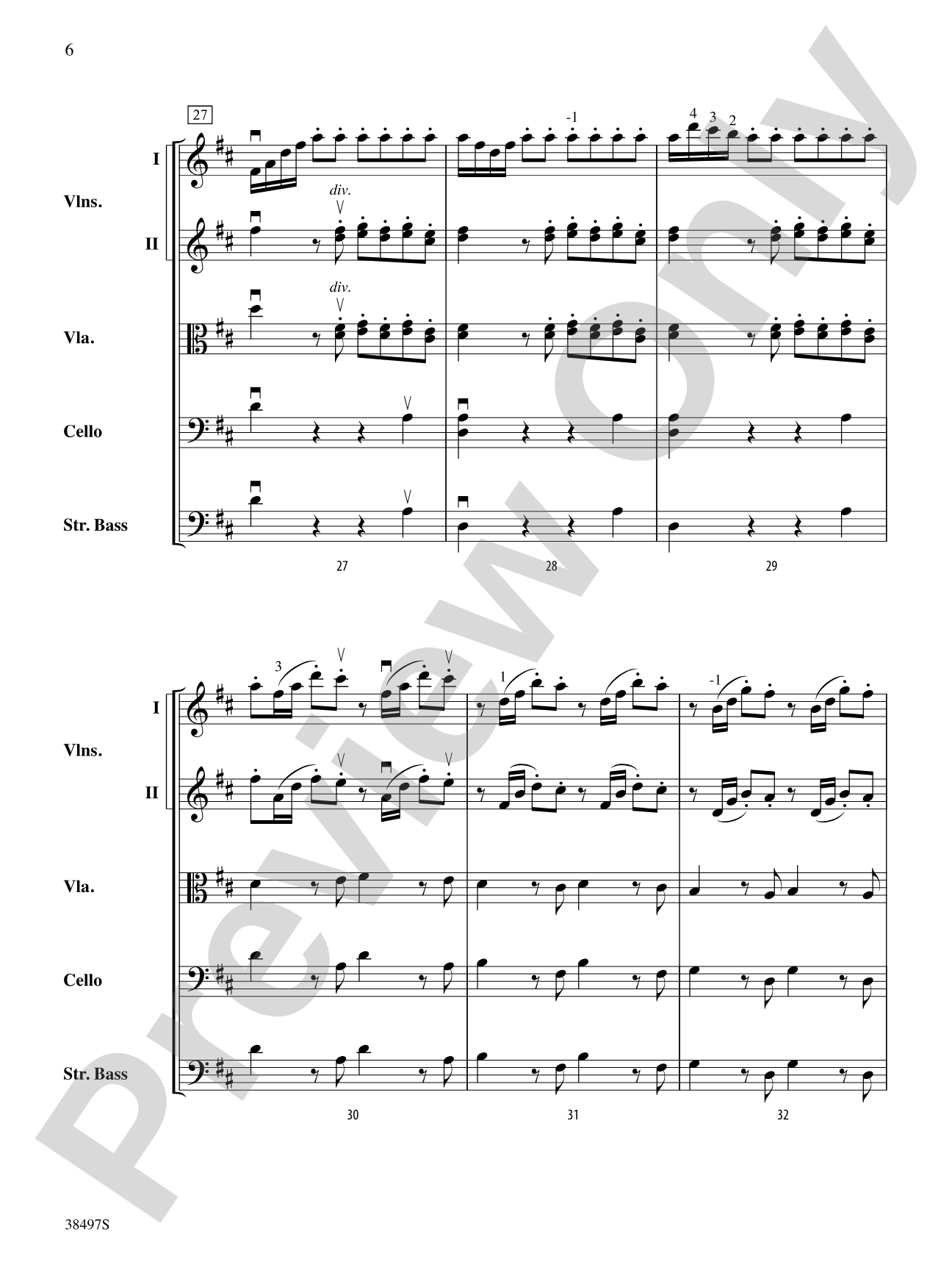
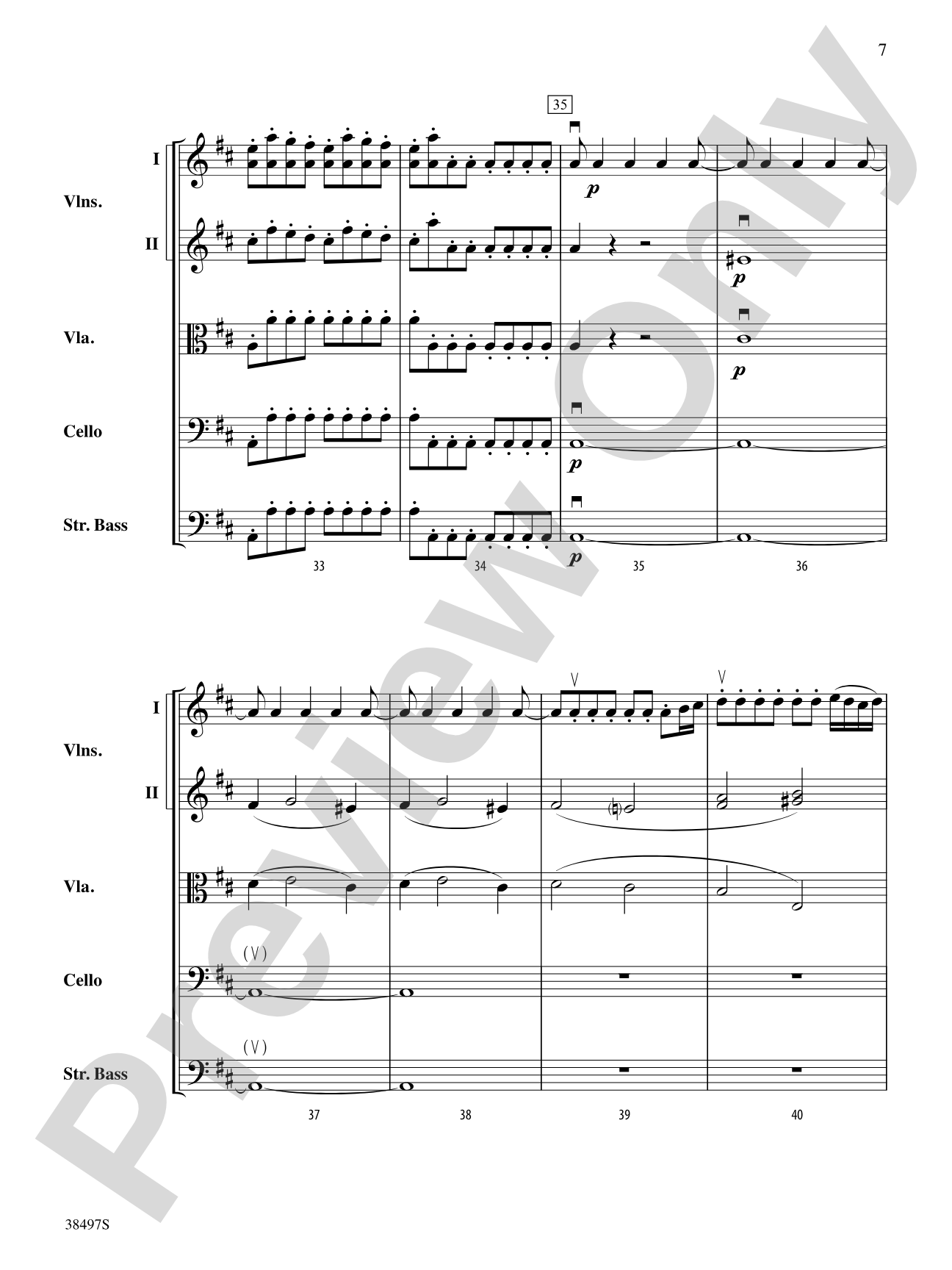
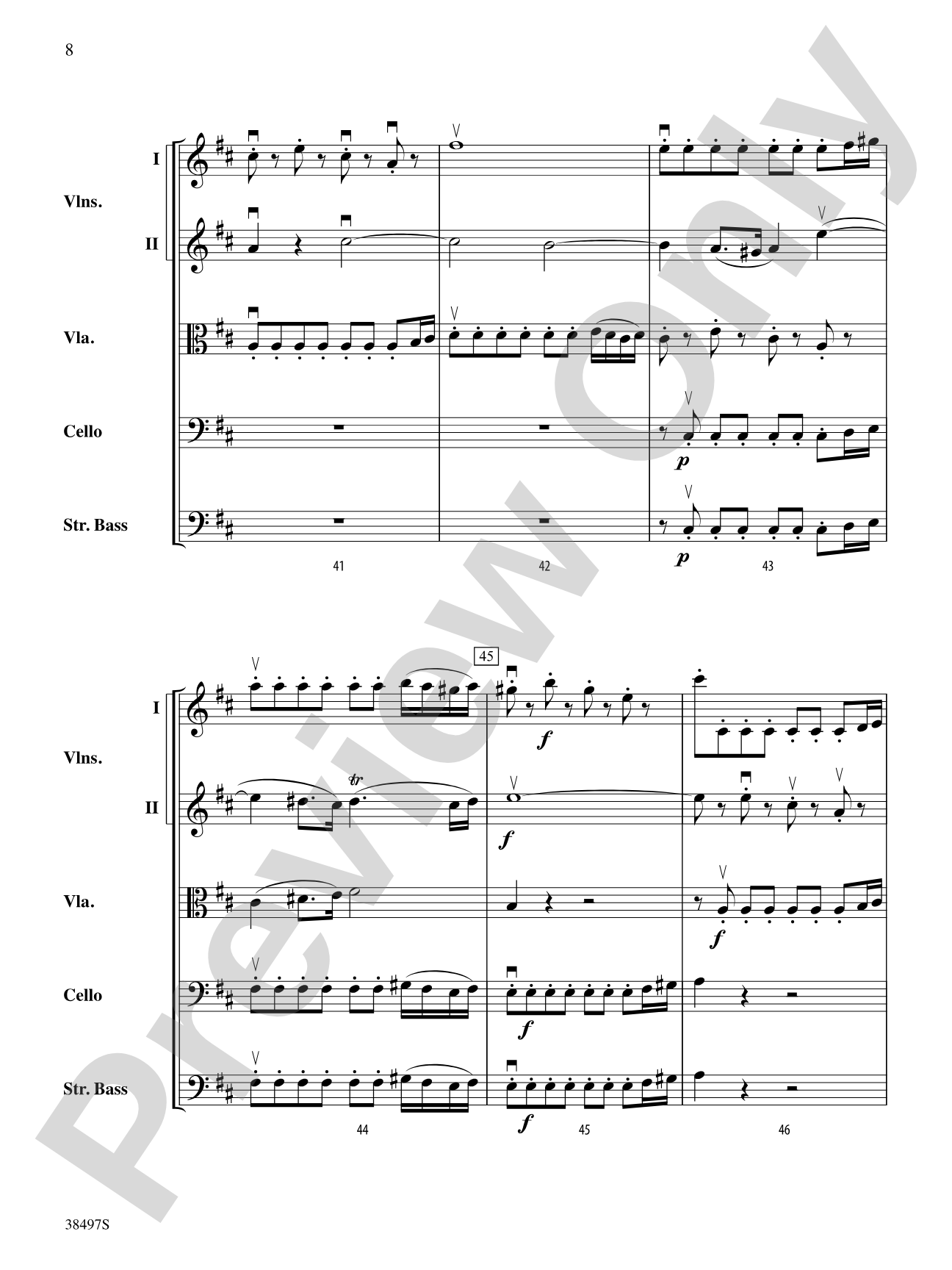
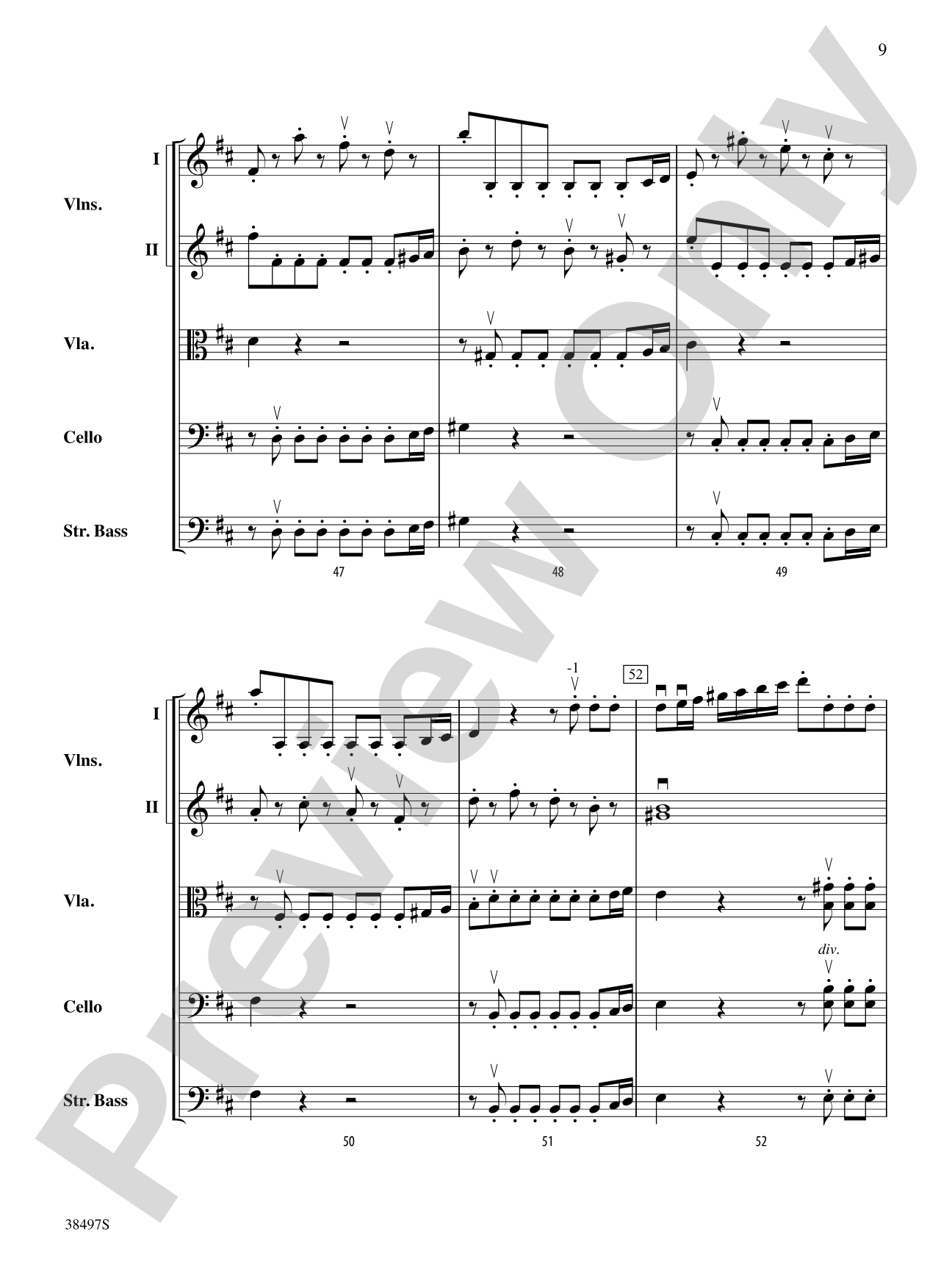
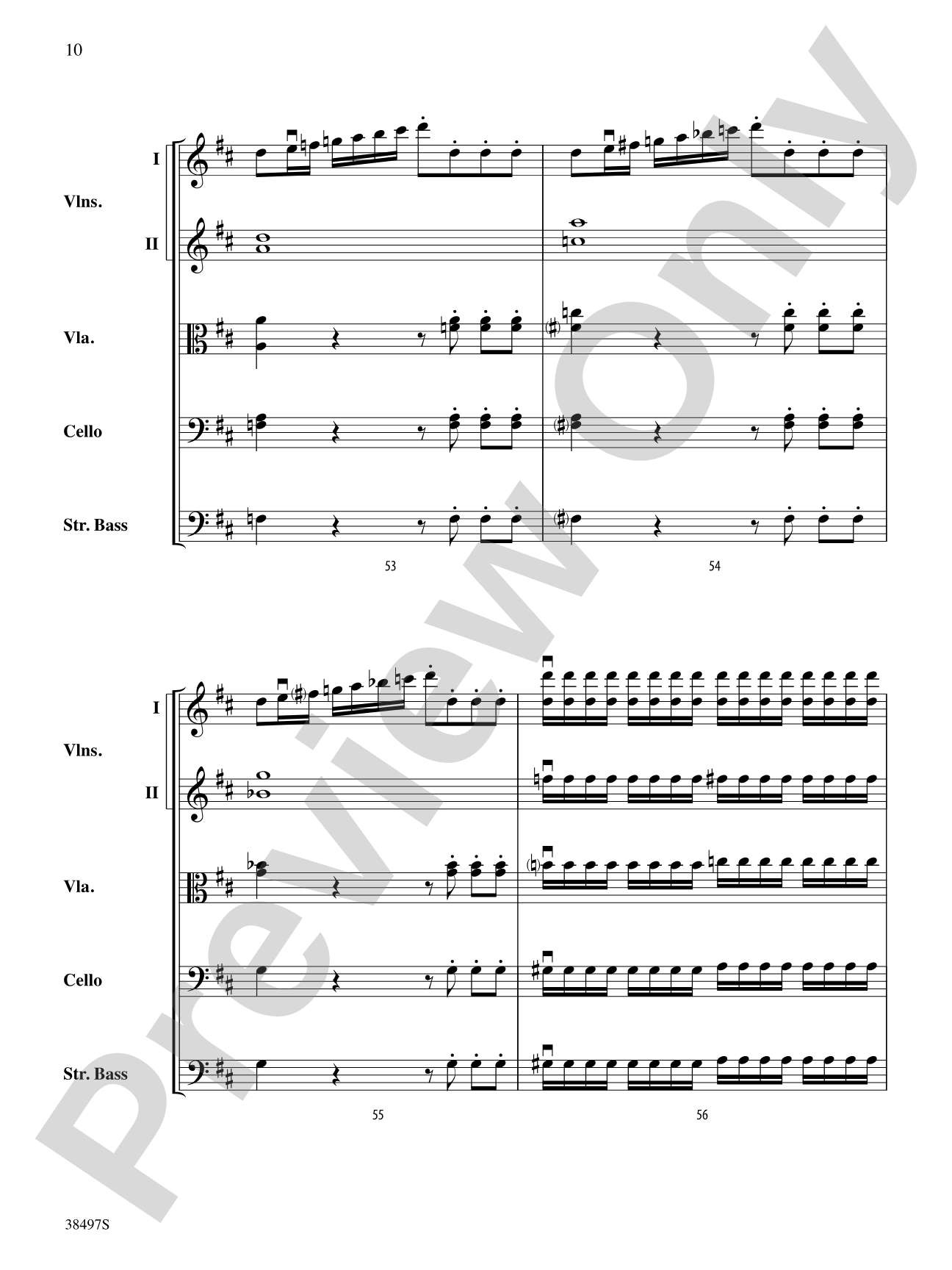
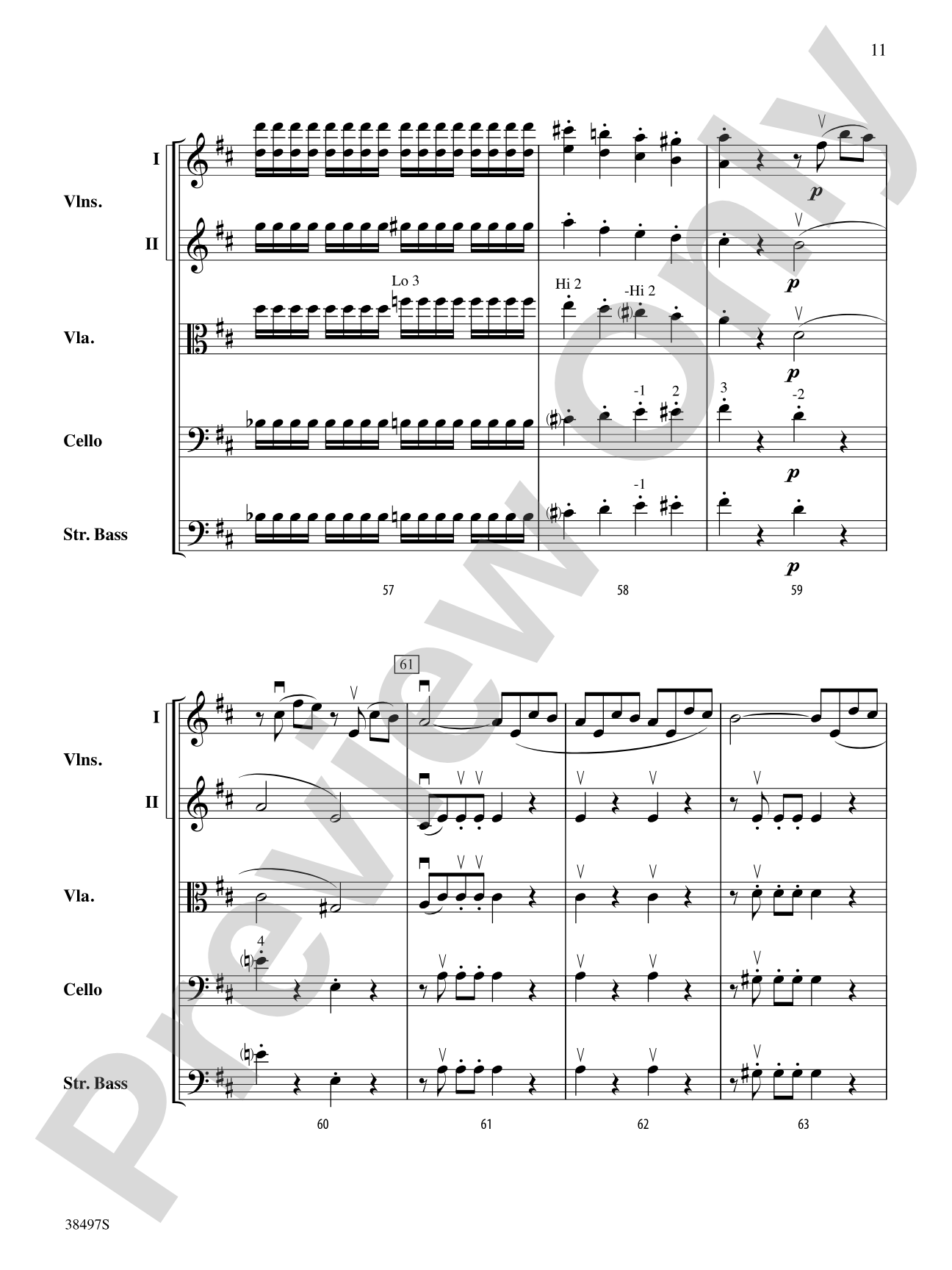
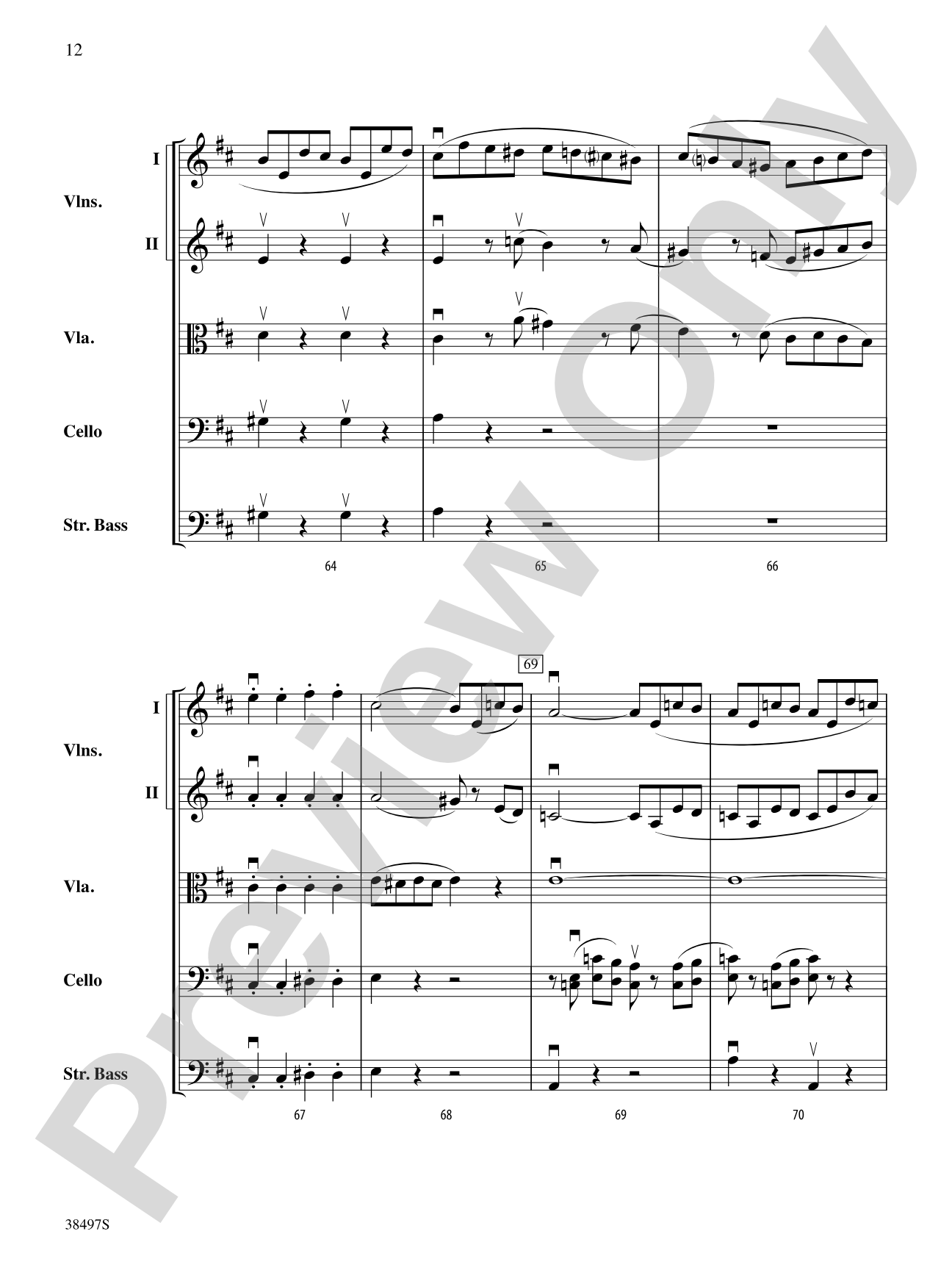
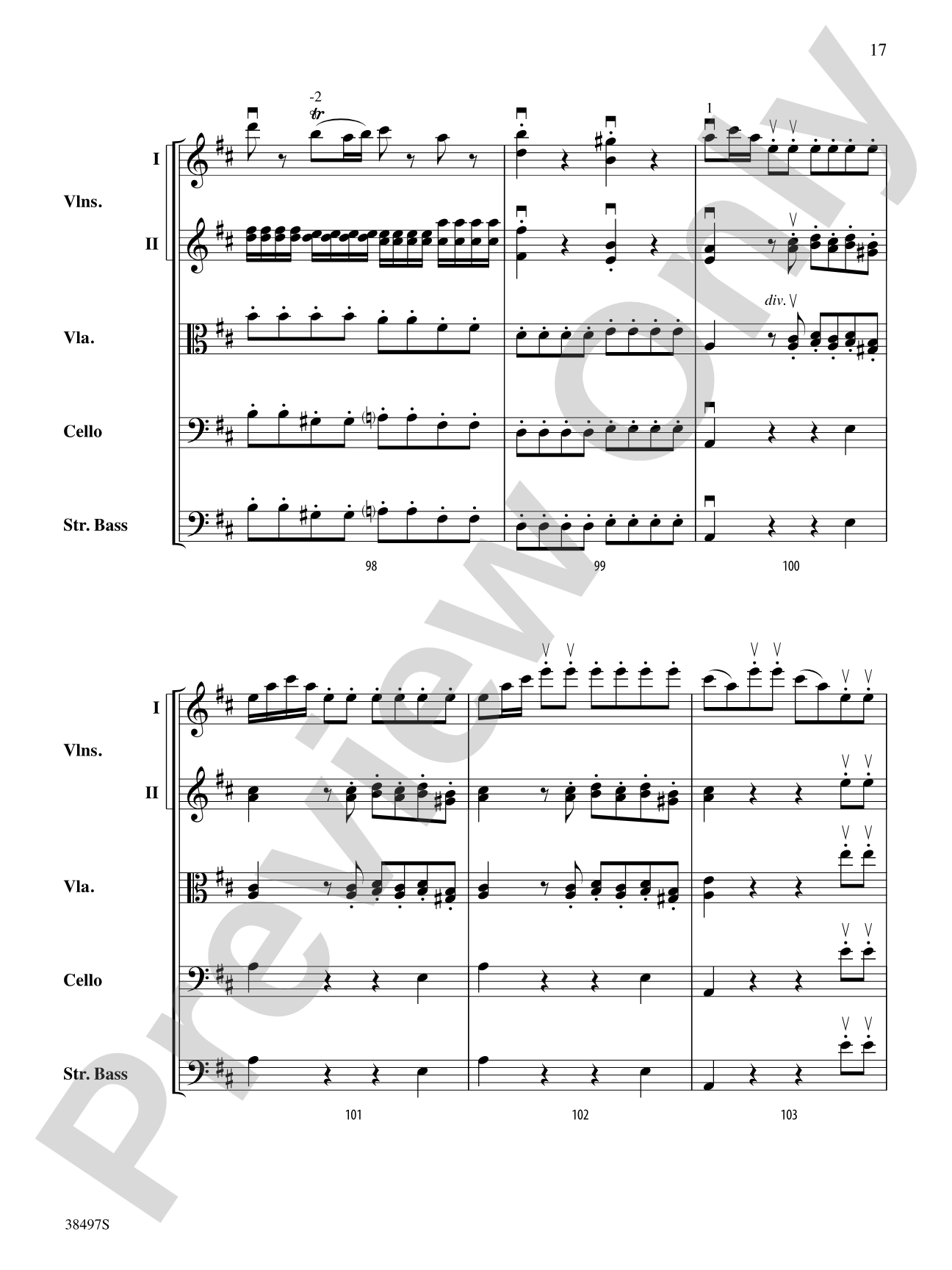
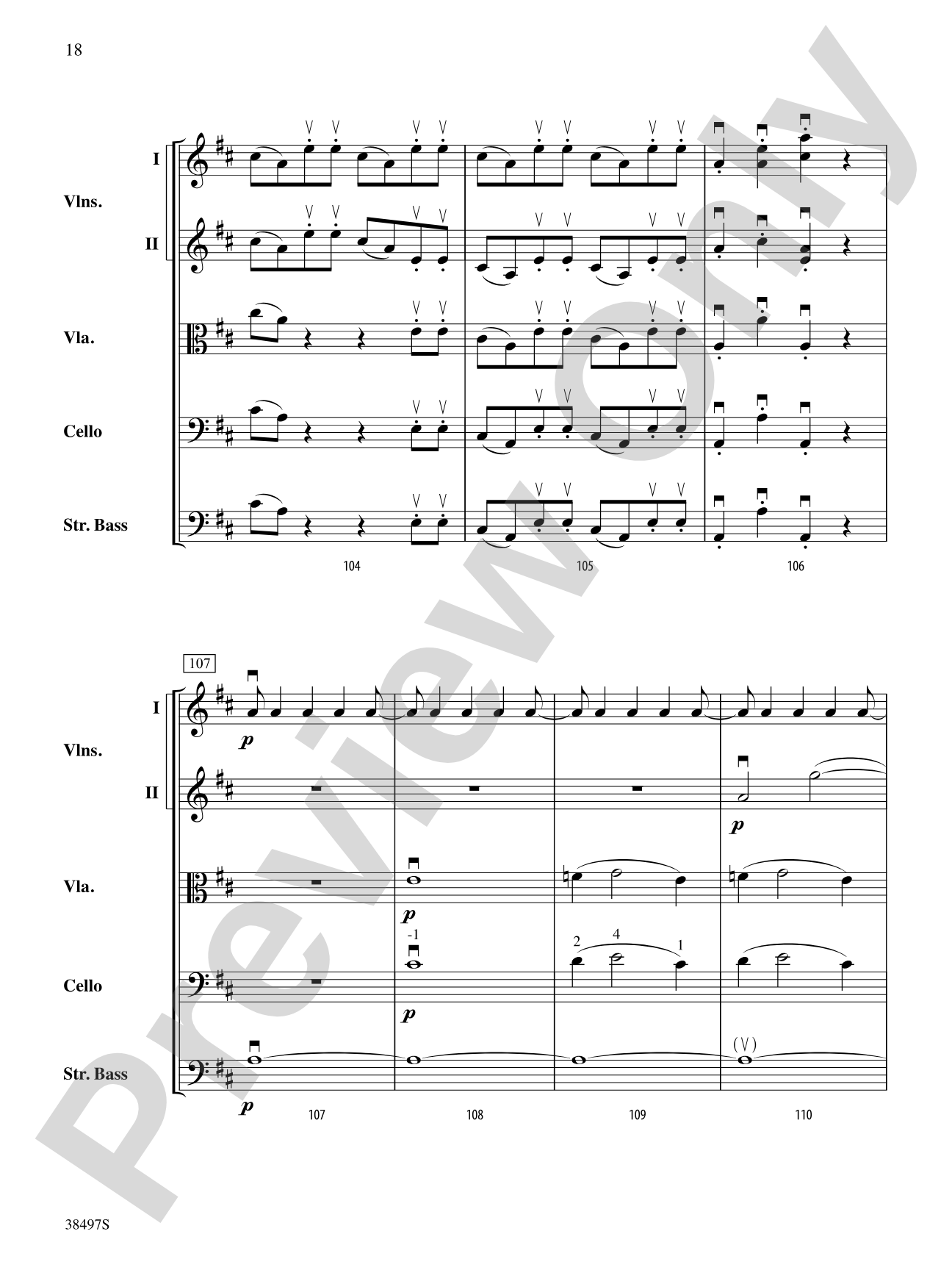
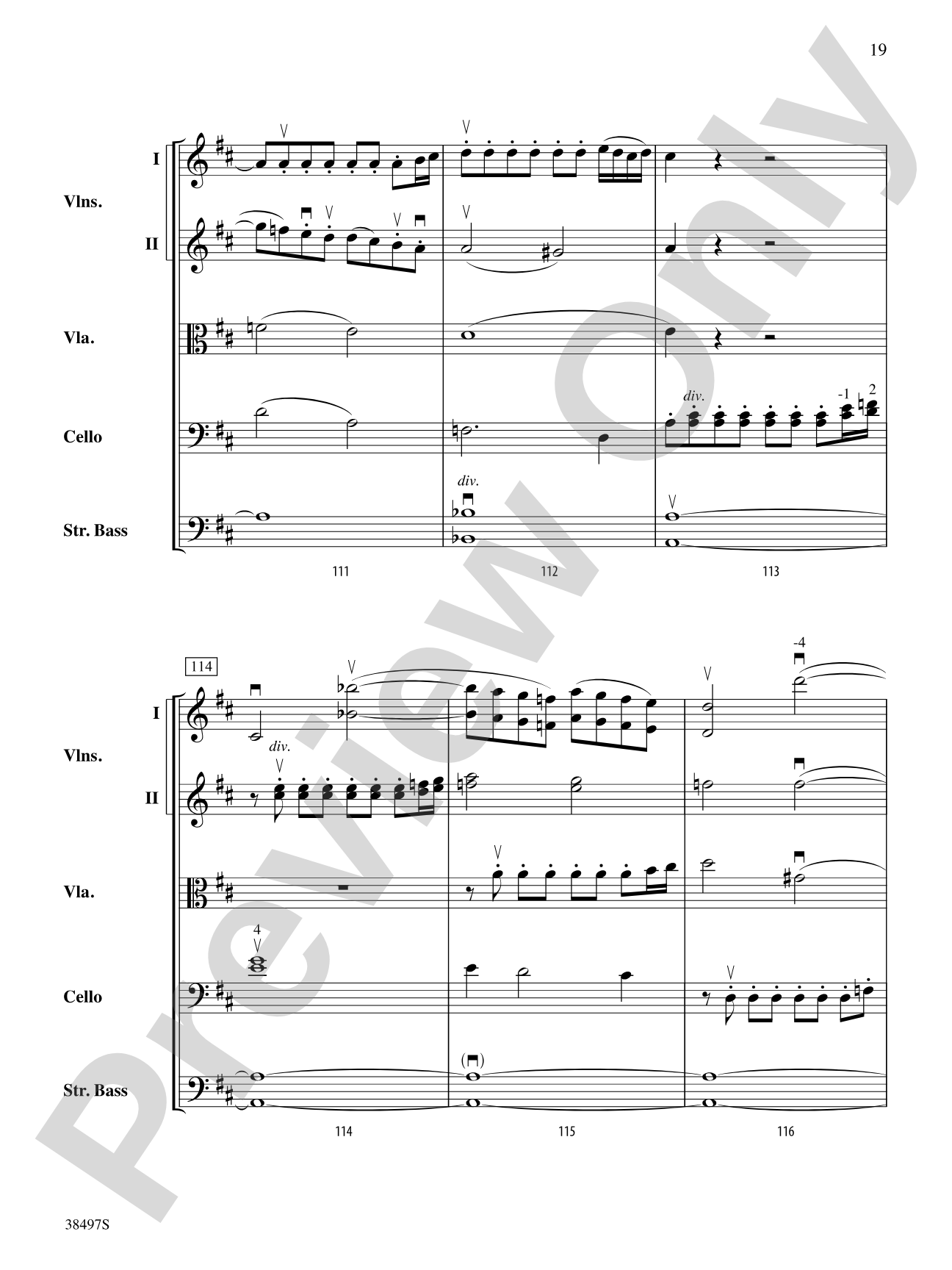
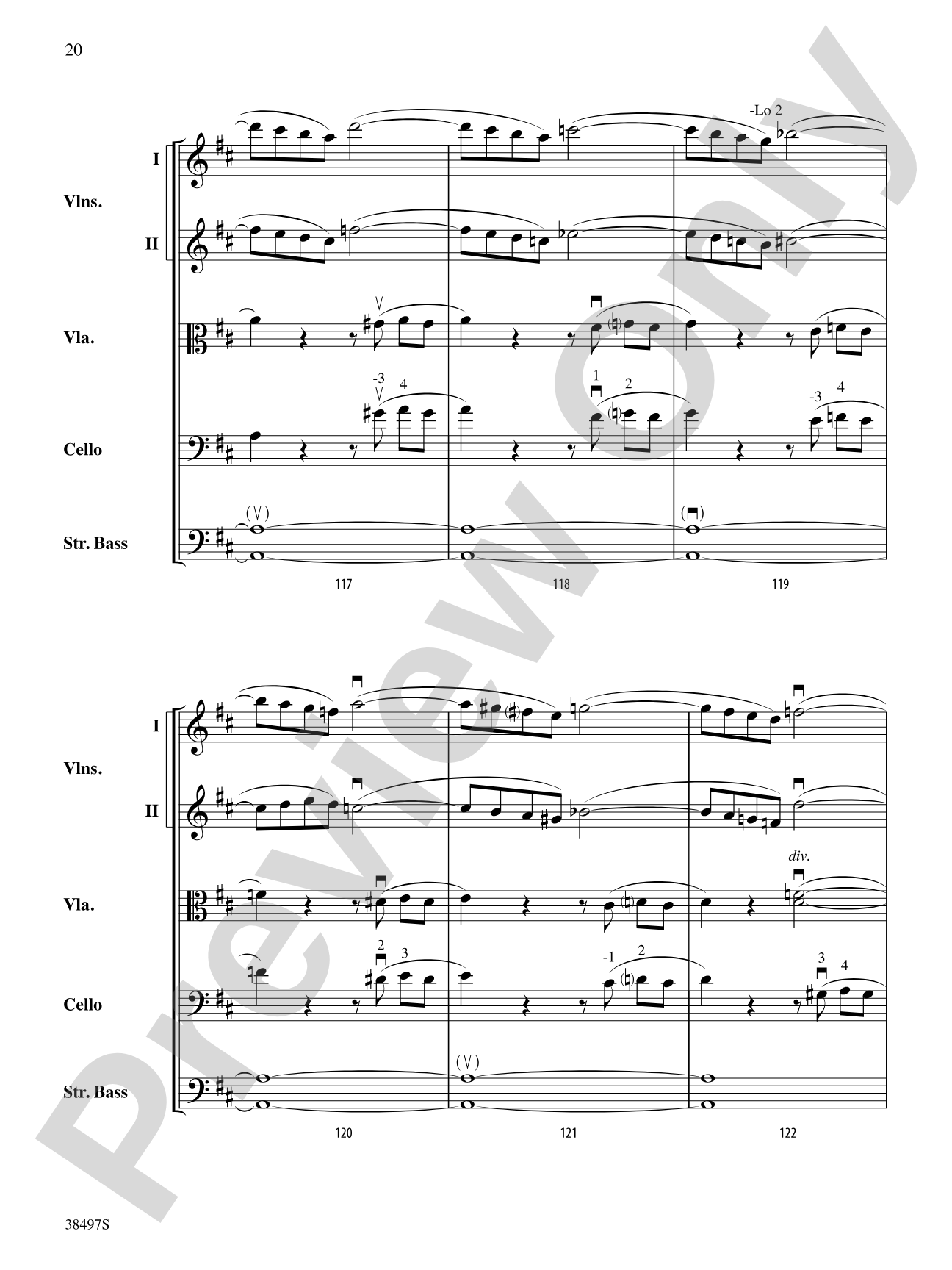
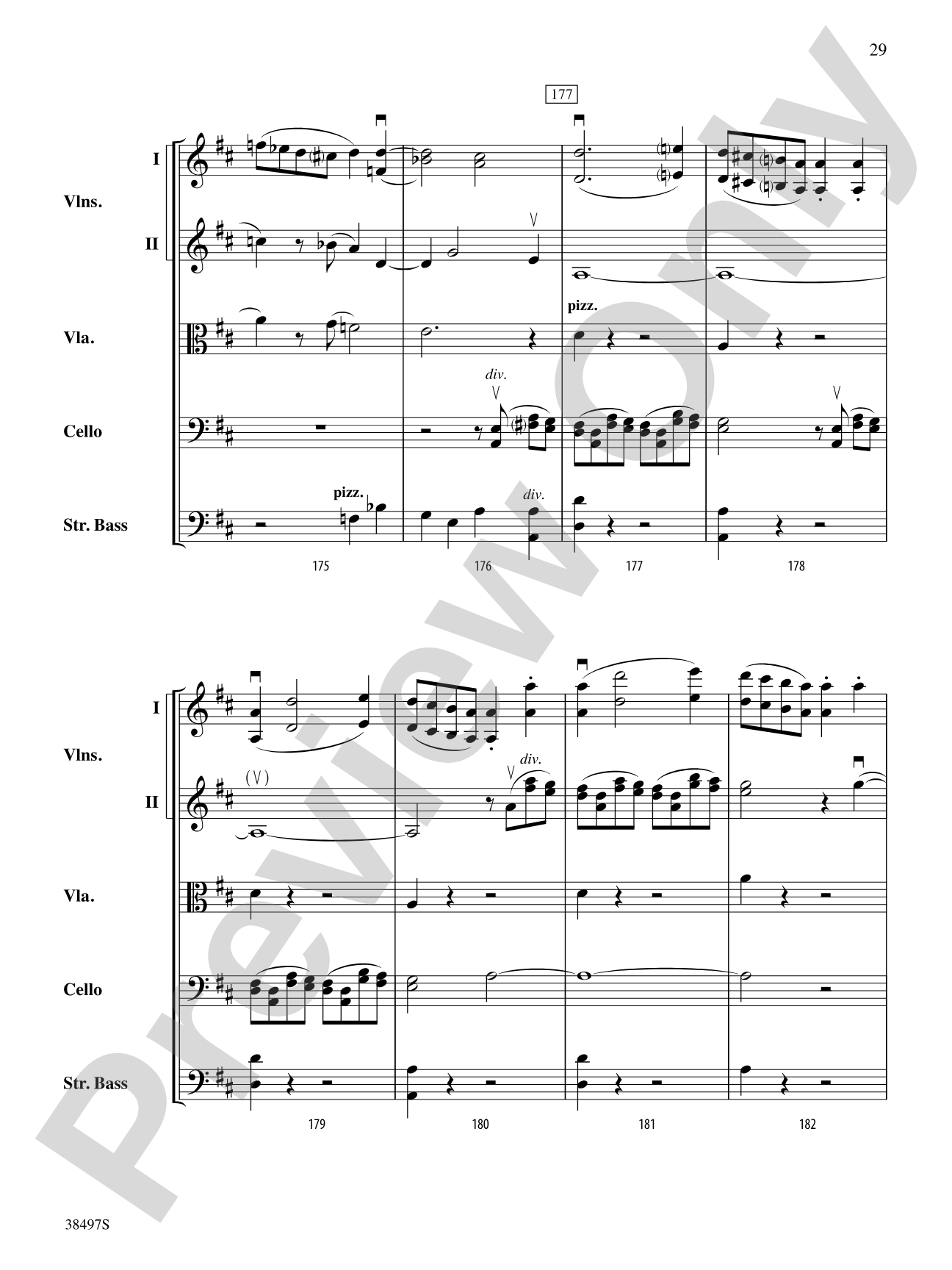
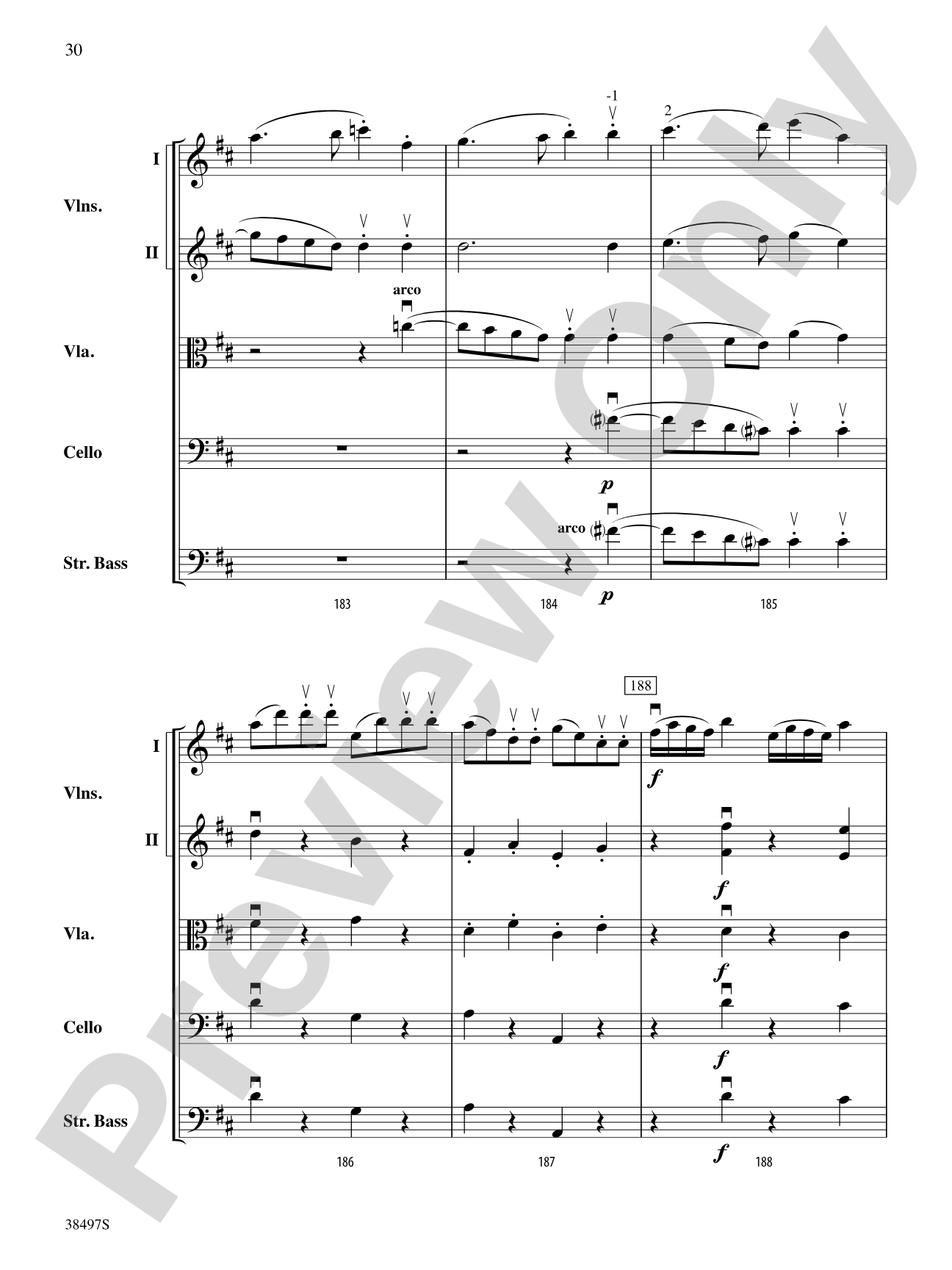
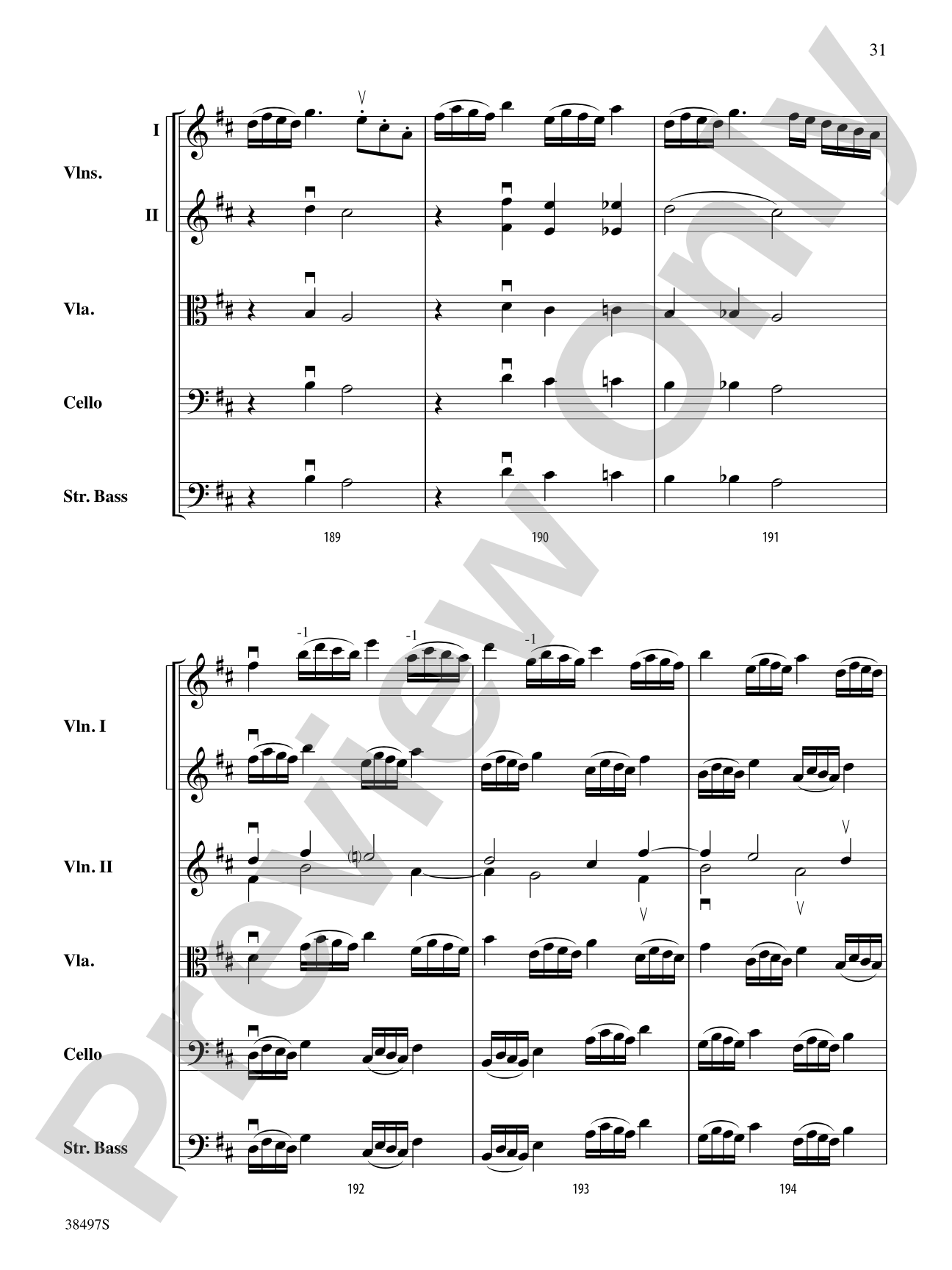
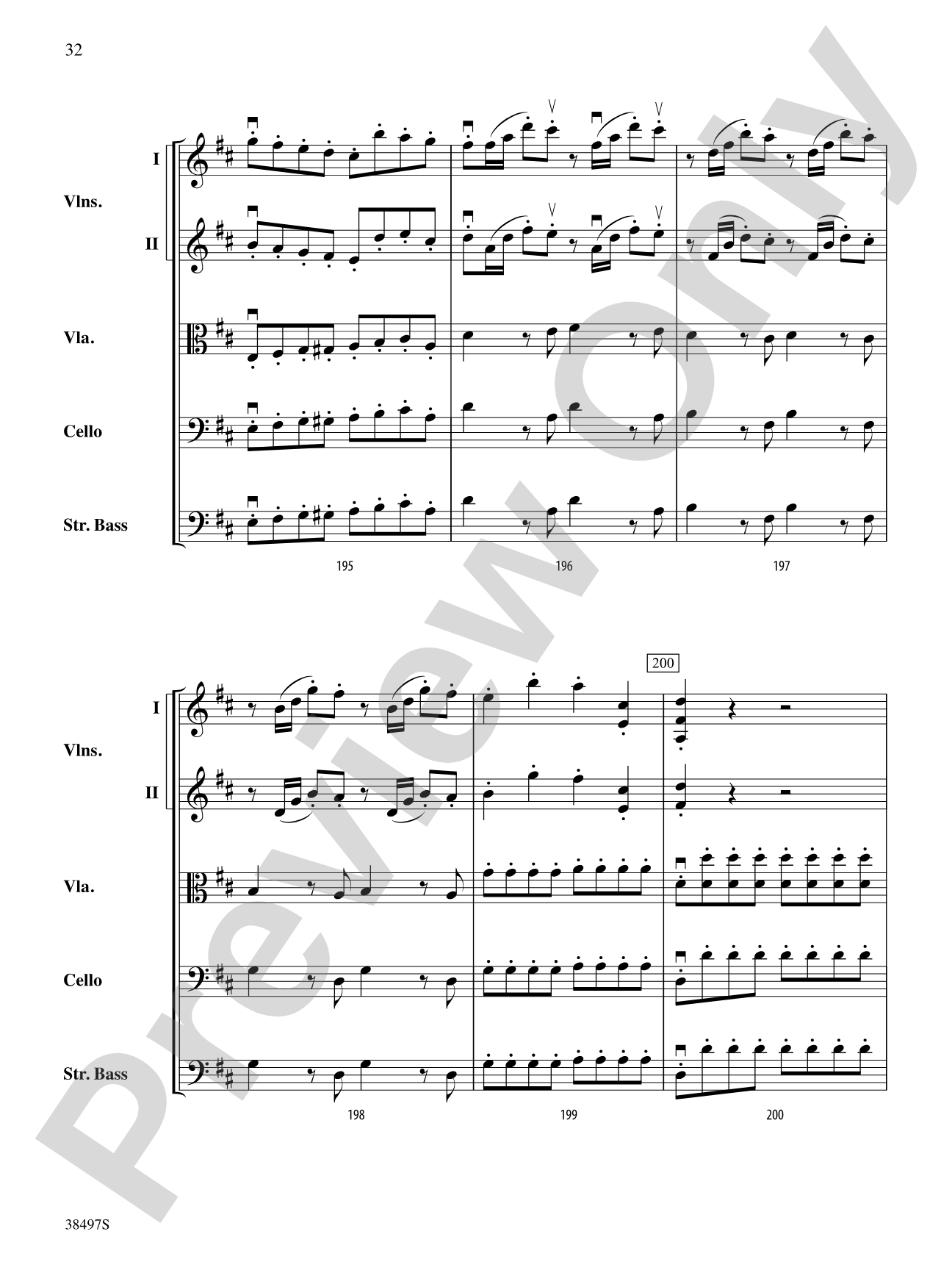

Symphony No. 38: String Orchestra Conductor Score & Parts
"Prague"
By Wolfgang Amadeus Mozart / arr. Todd Parrish
Grade: 4
Item: 00-PK-0005289

$62.00
Pickup currently not available
Buy Extra Parts (Digital PDF Download)
| Product | Price | Quantity |
|---|---|---|
| Symphony No. 38: Score | $8.00 | |
| Symphony No. 38: 1st Violin | $5.99 | |
| Symphony No. 38: 2nd Violin | $5.99 | |
| Symphony No. 38: Viola | $5.99 | |
| Symphony No. 38: Cello | $5.99 | |
| Symphony No. 38: String Bass | $5.99 |
Parts Added to Cart!
Description
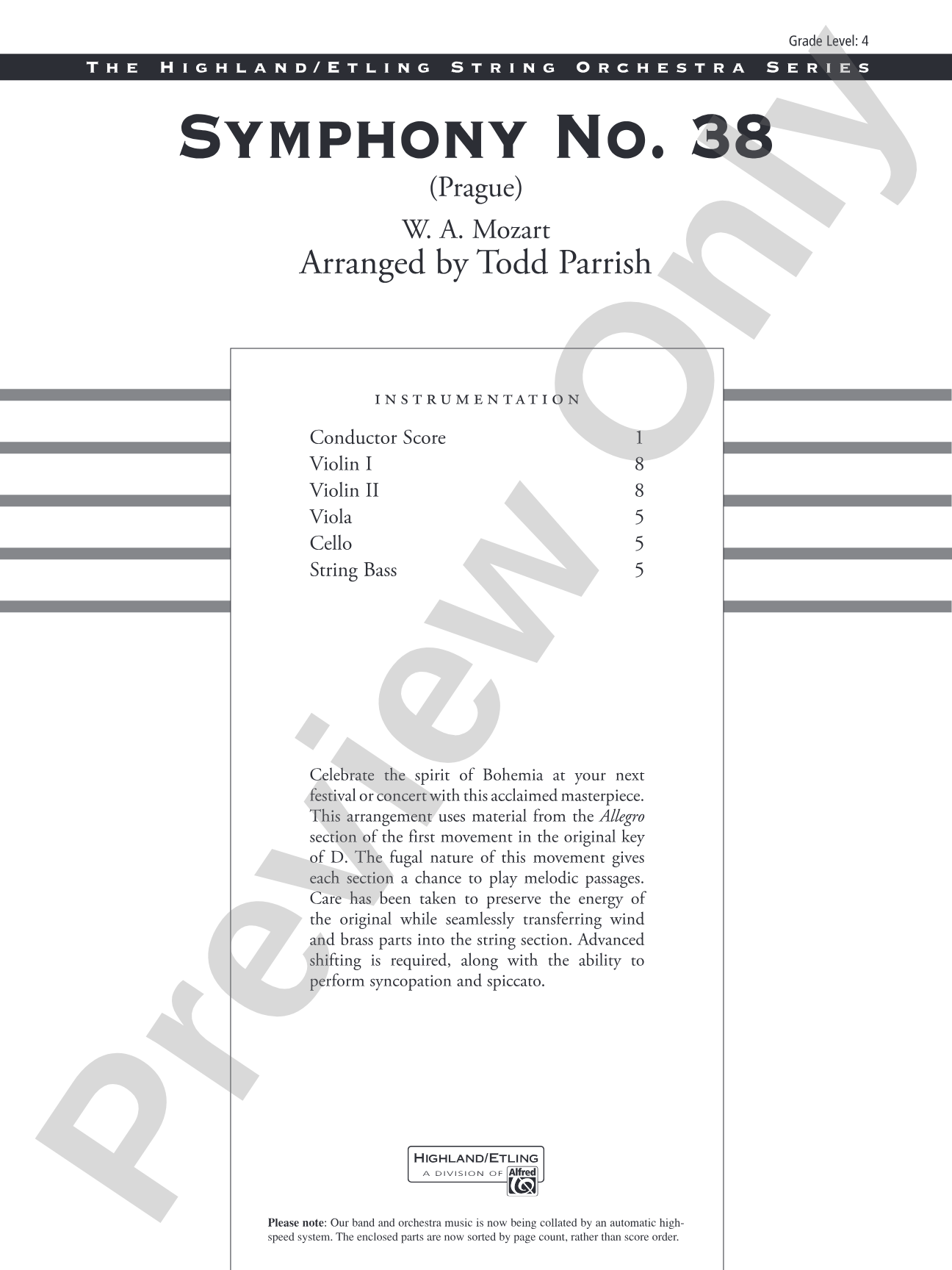
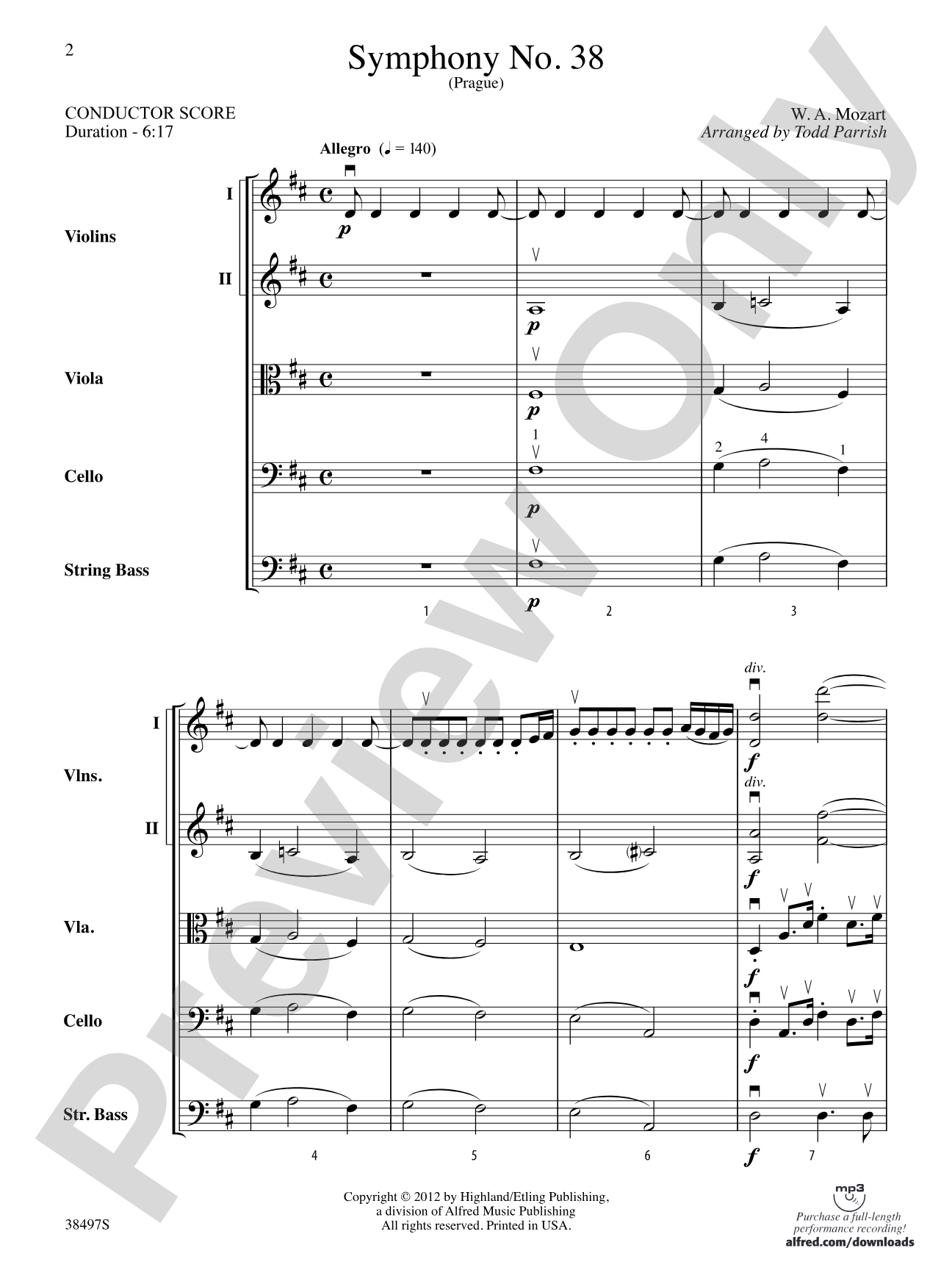
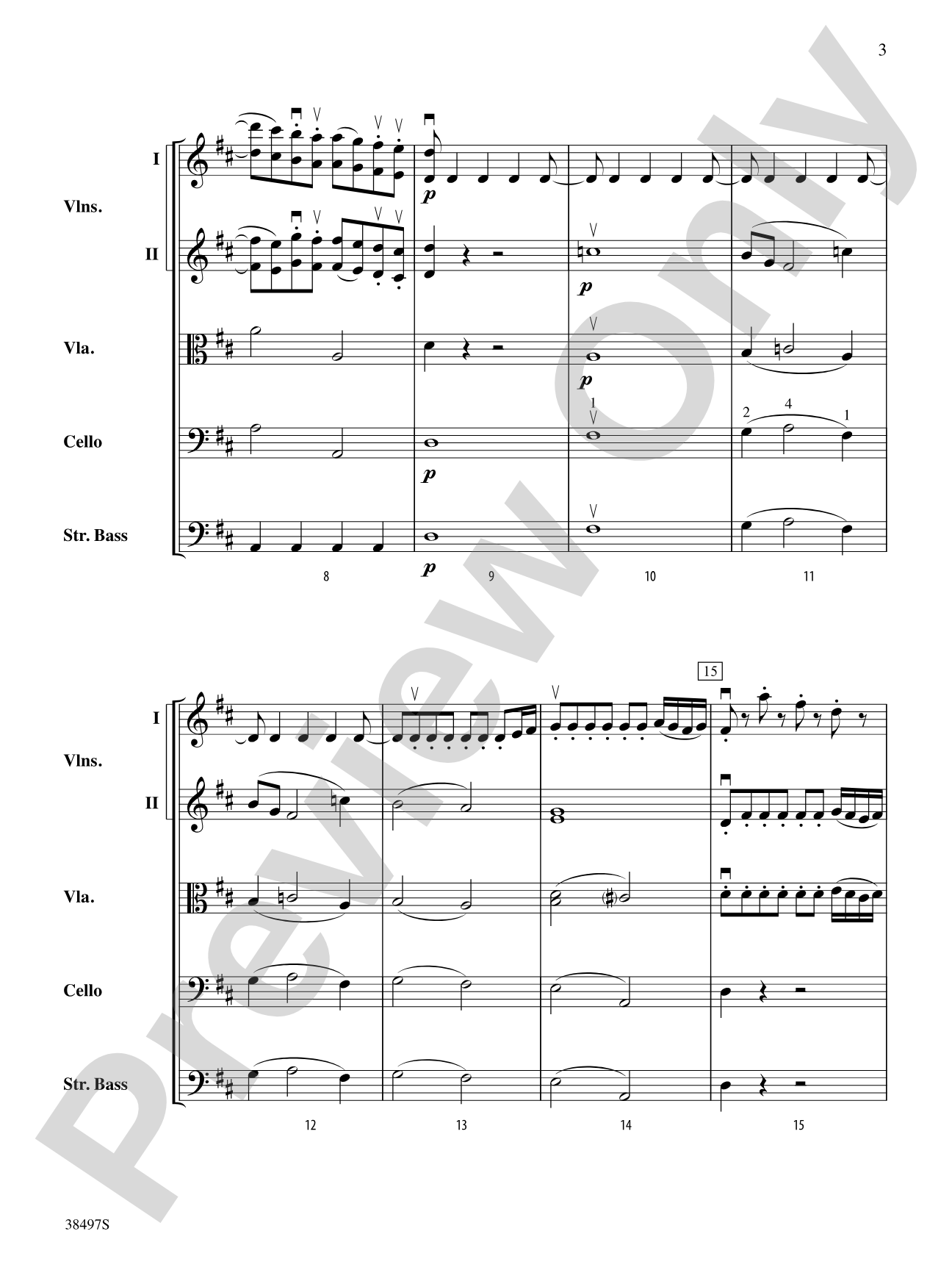
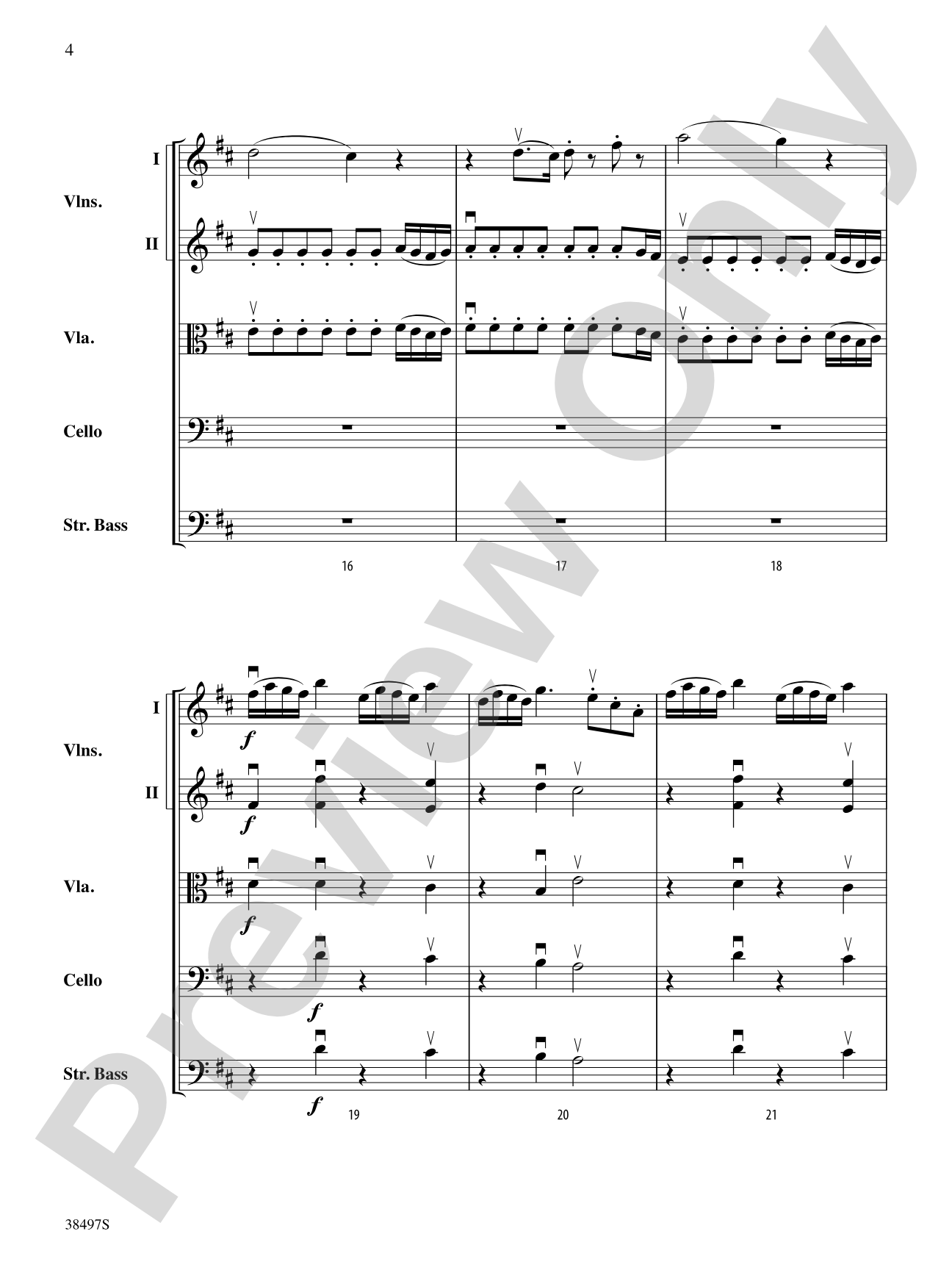
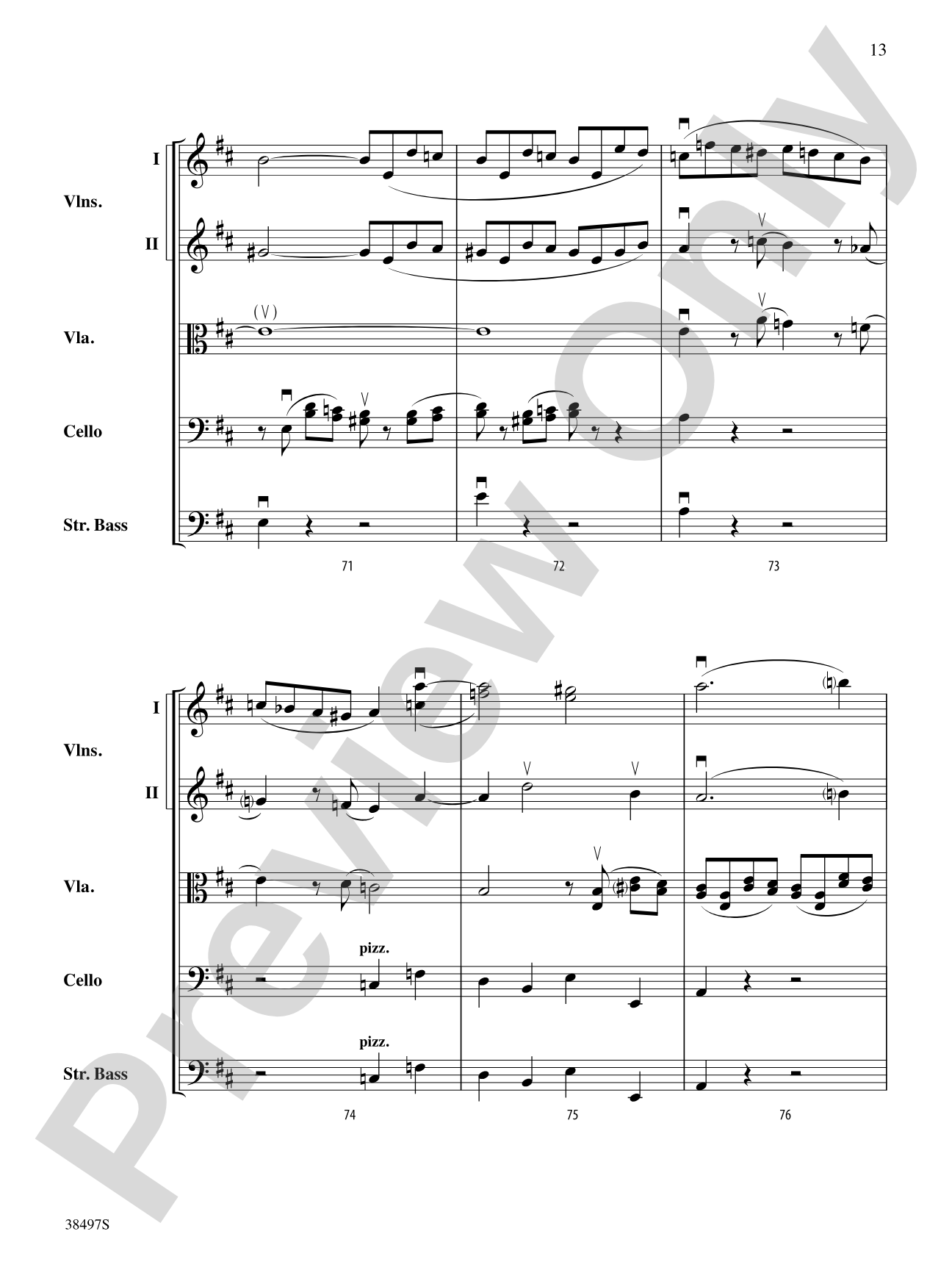
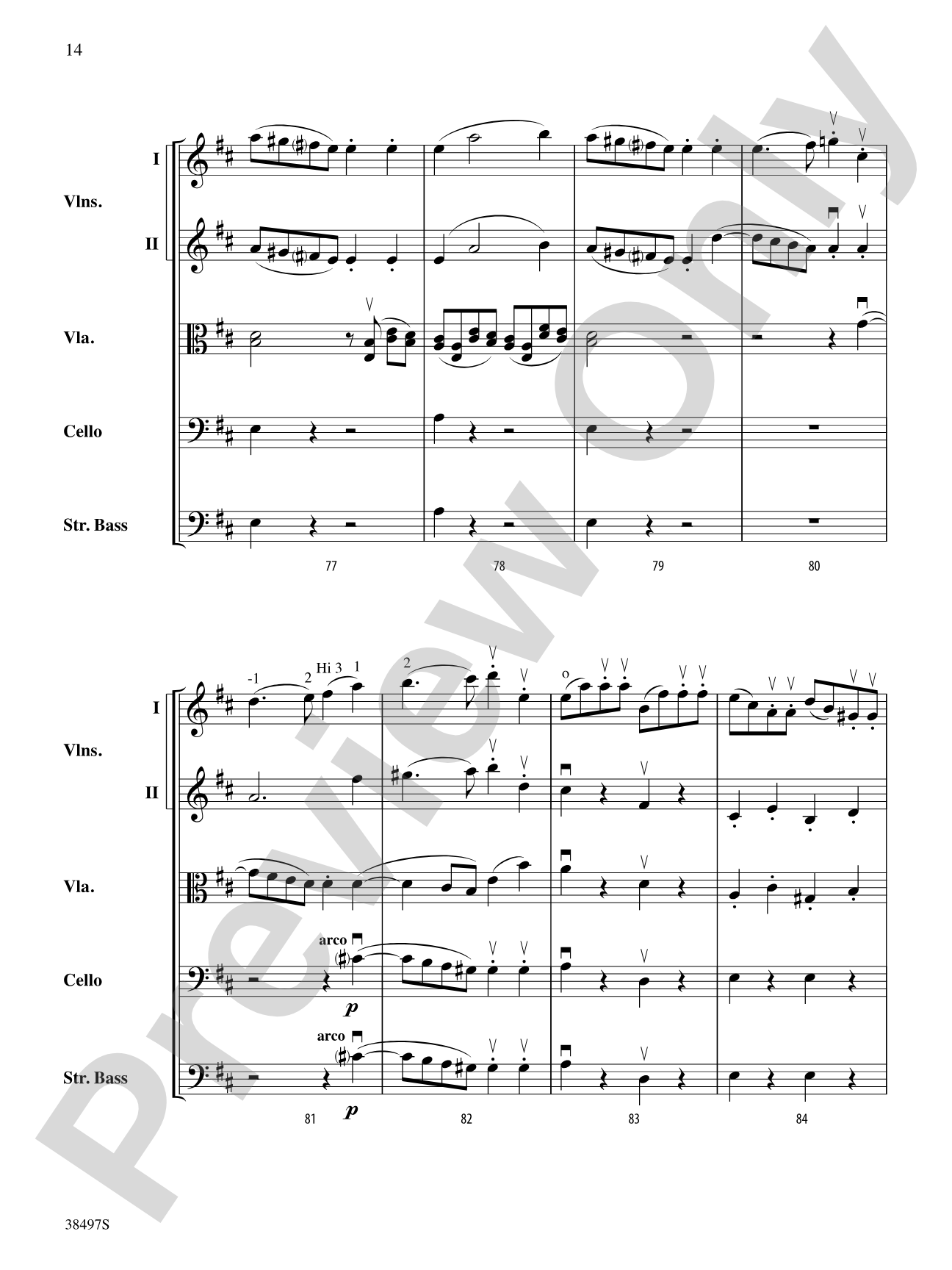
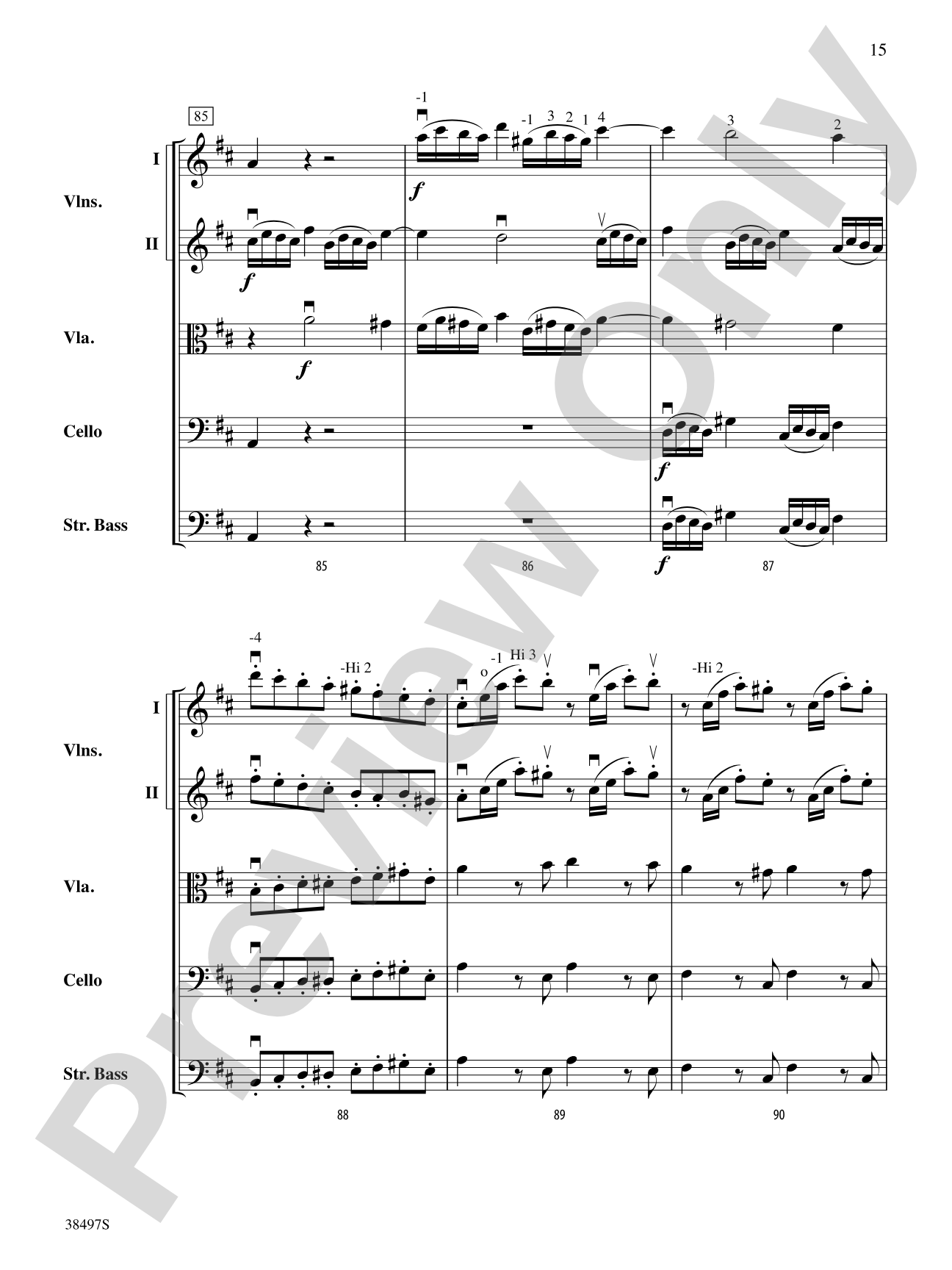
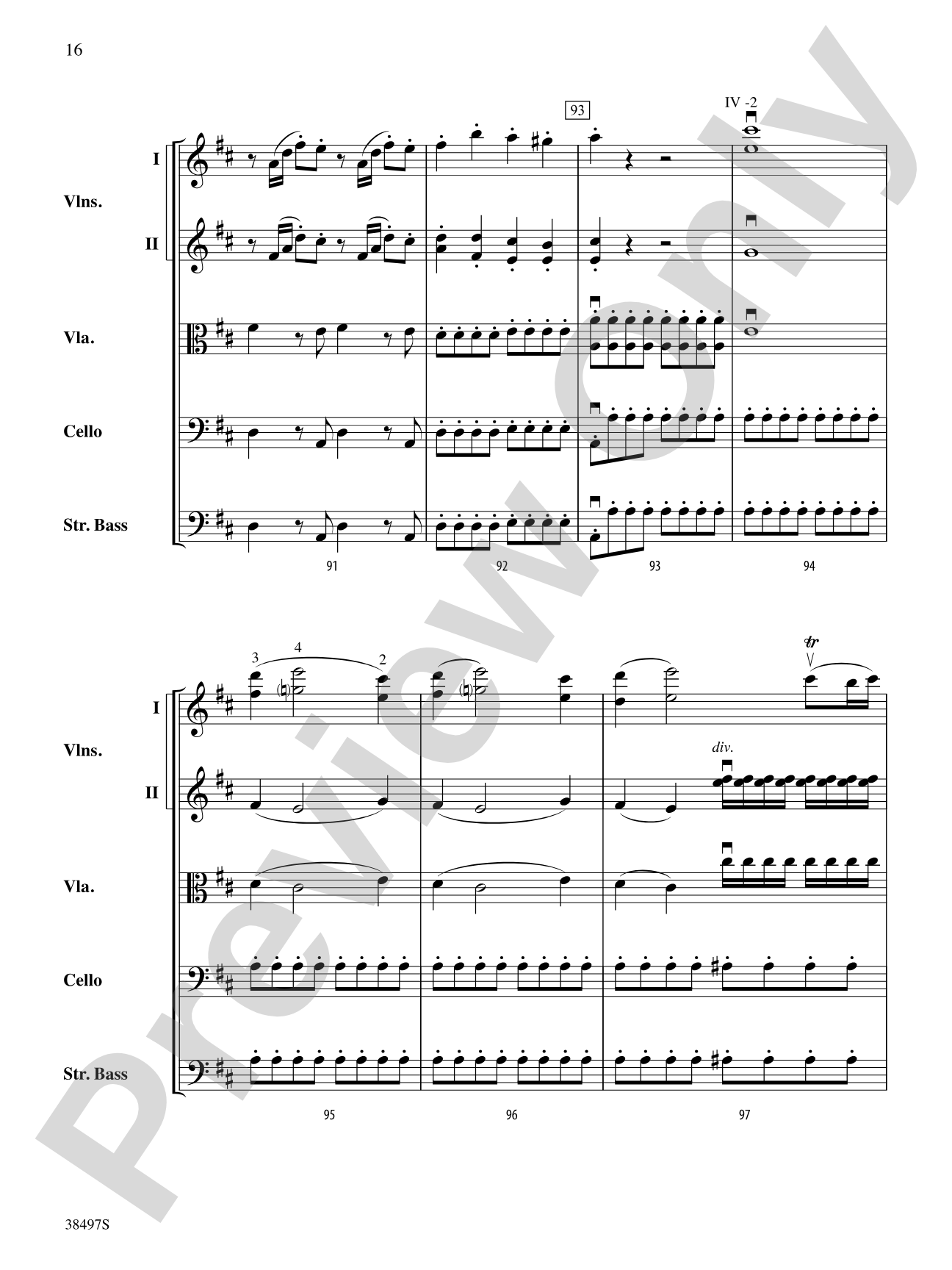
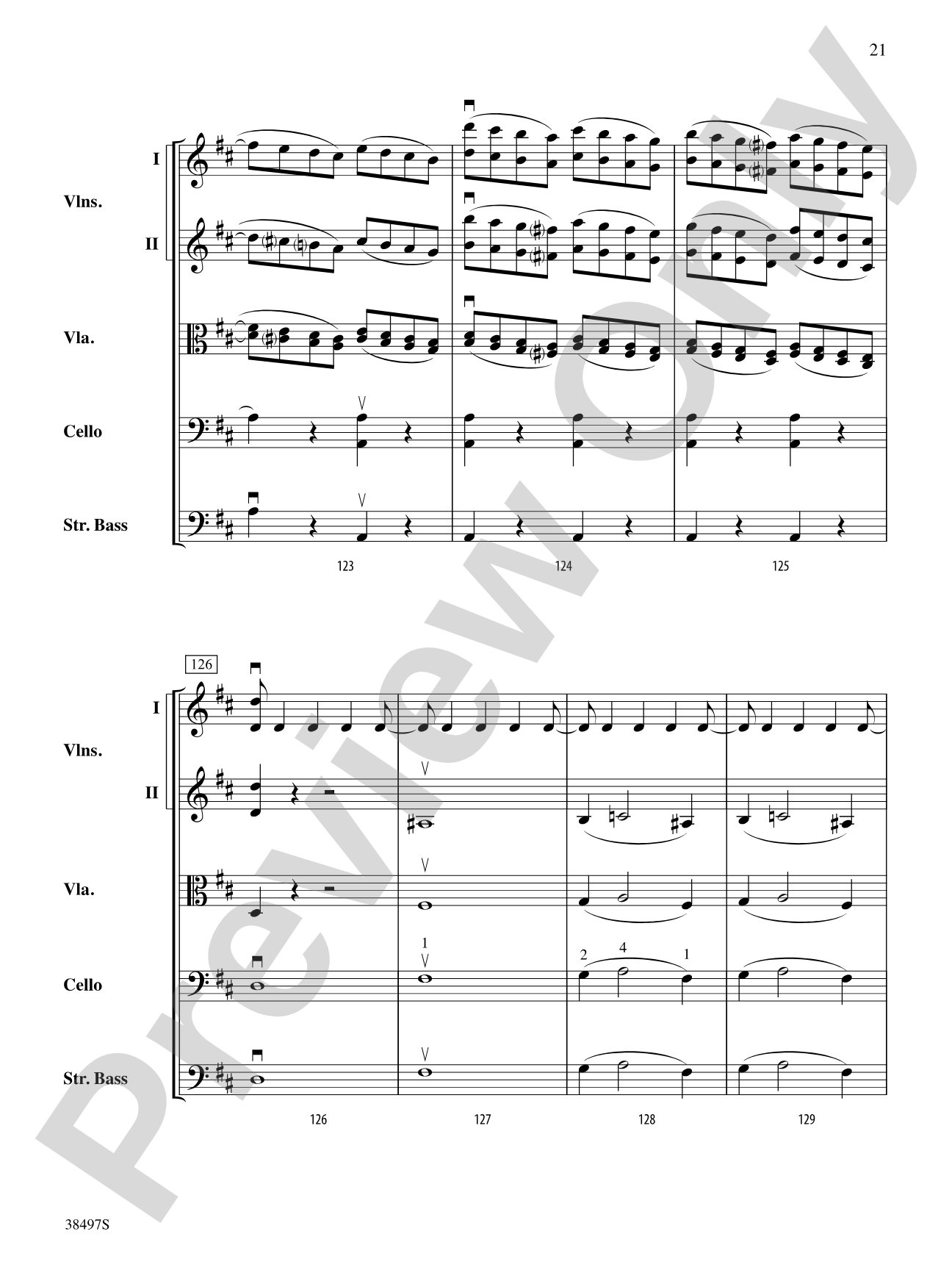
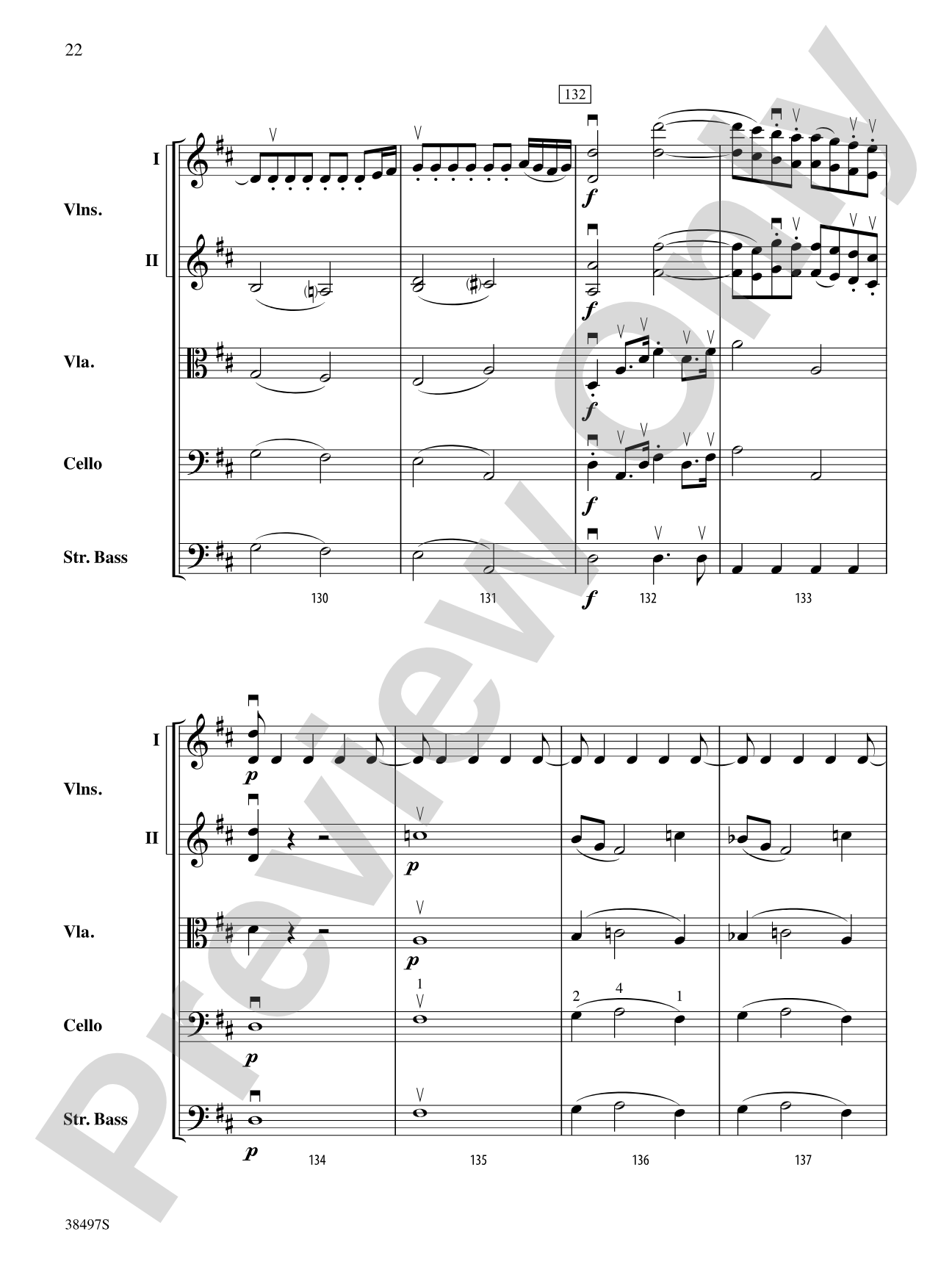
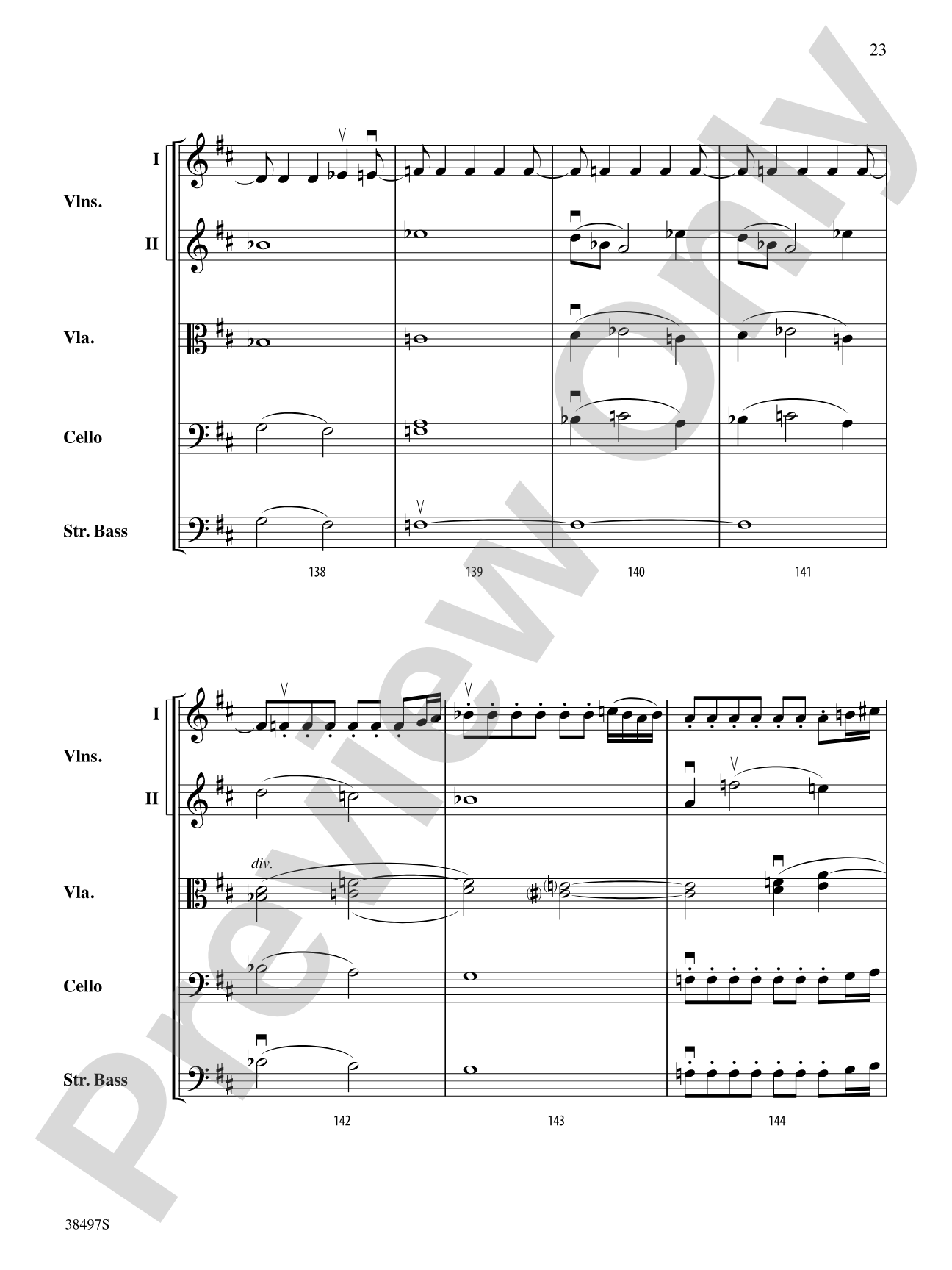
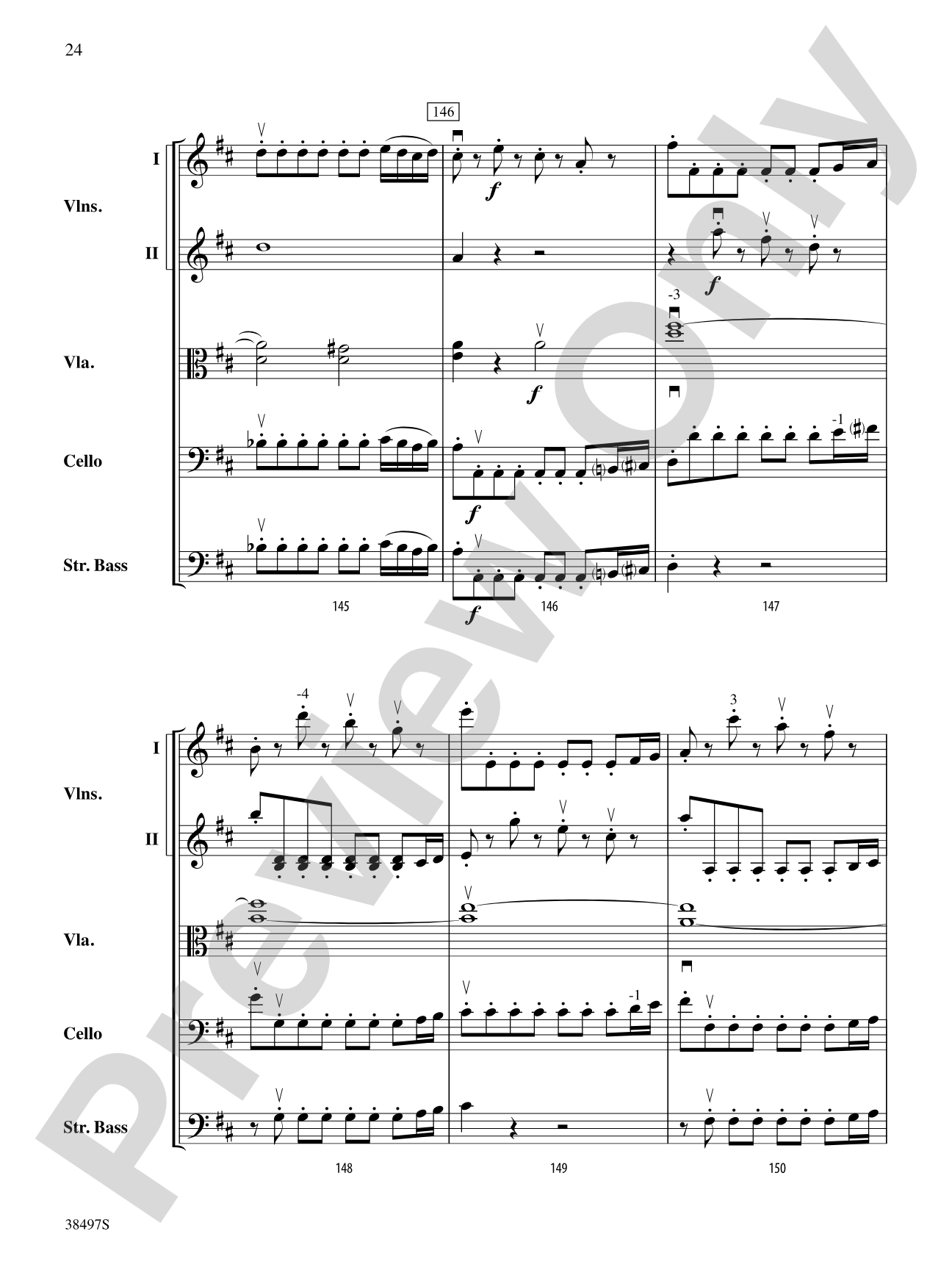
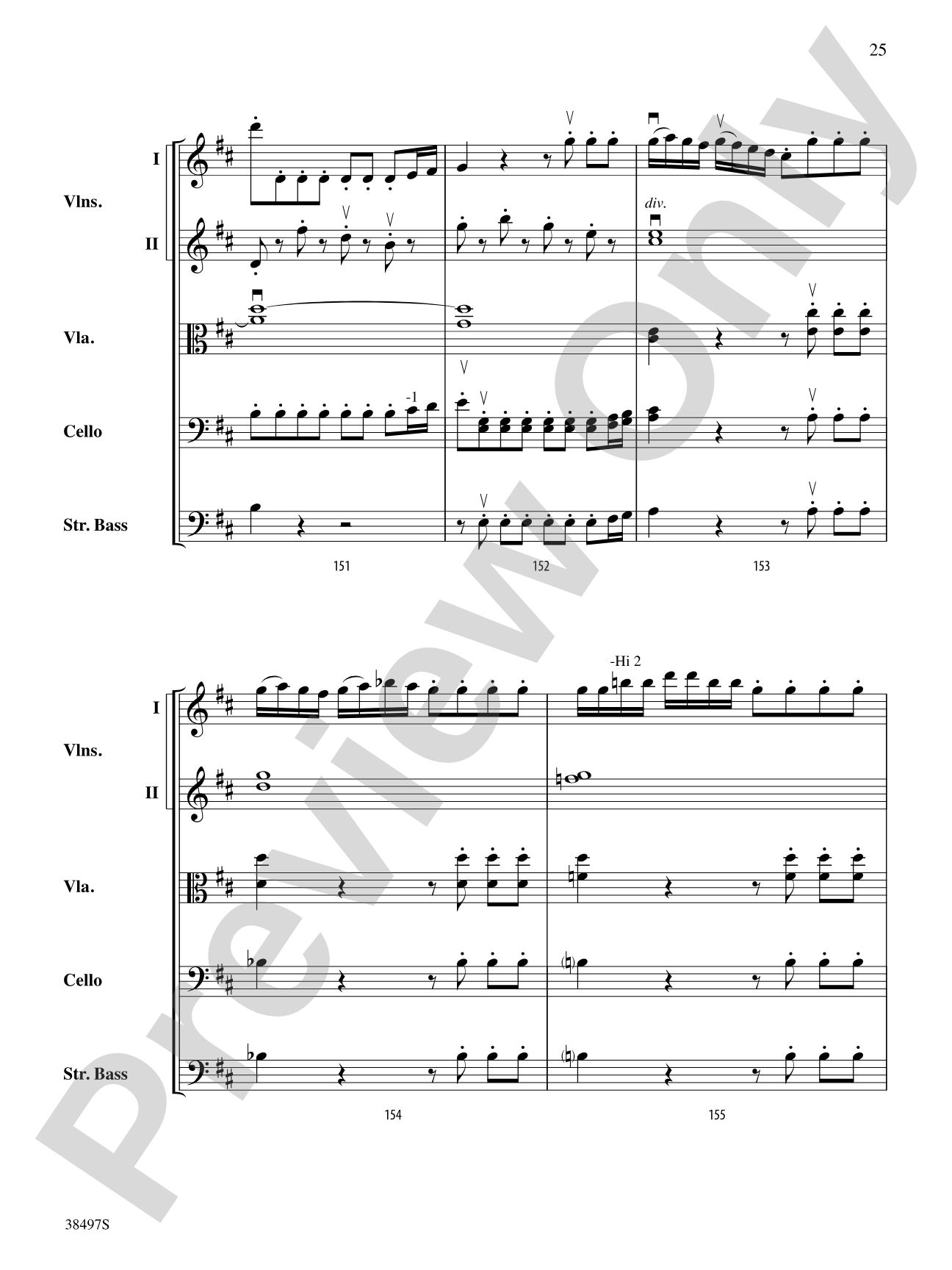
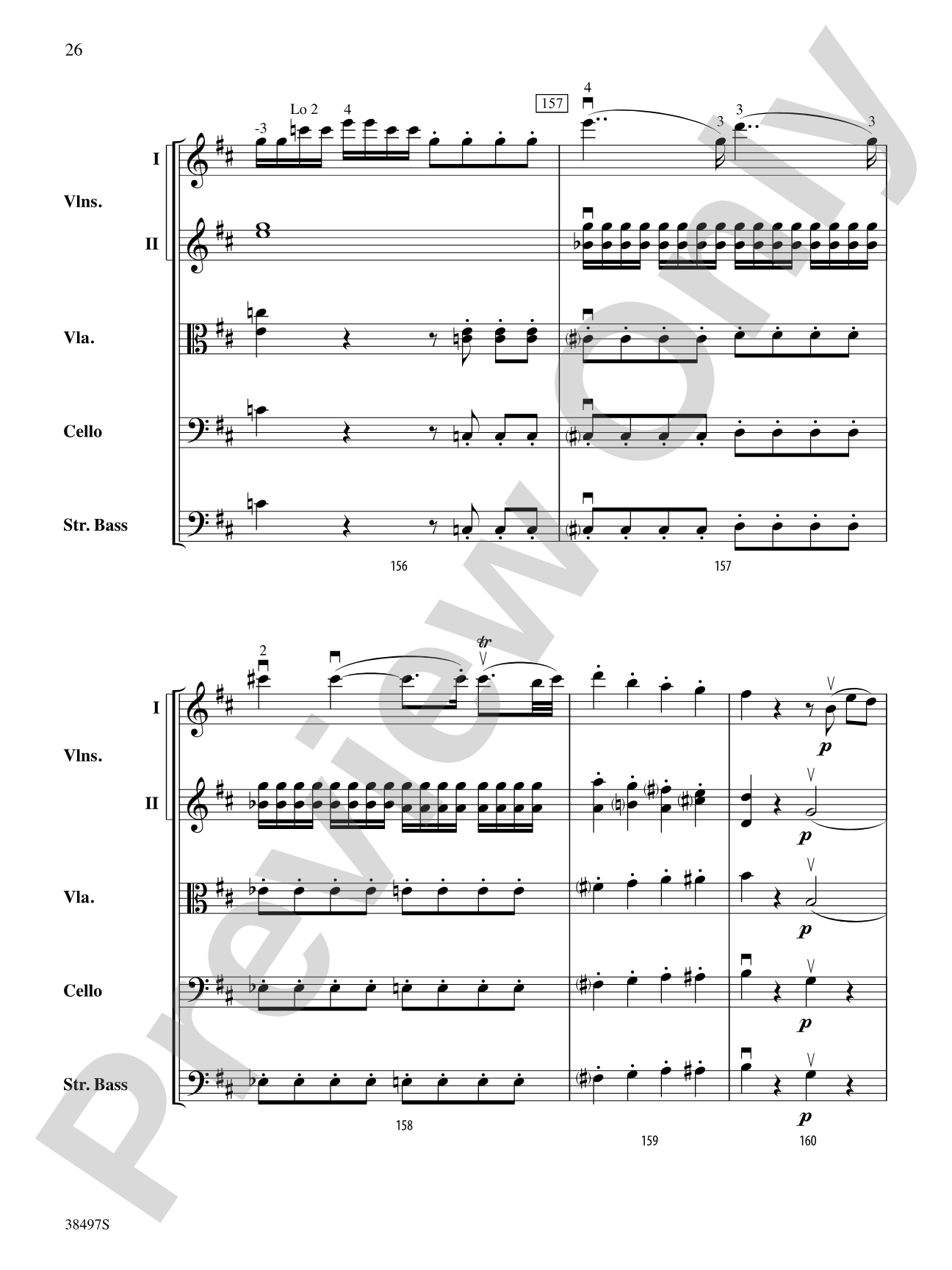
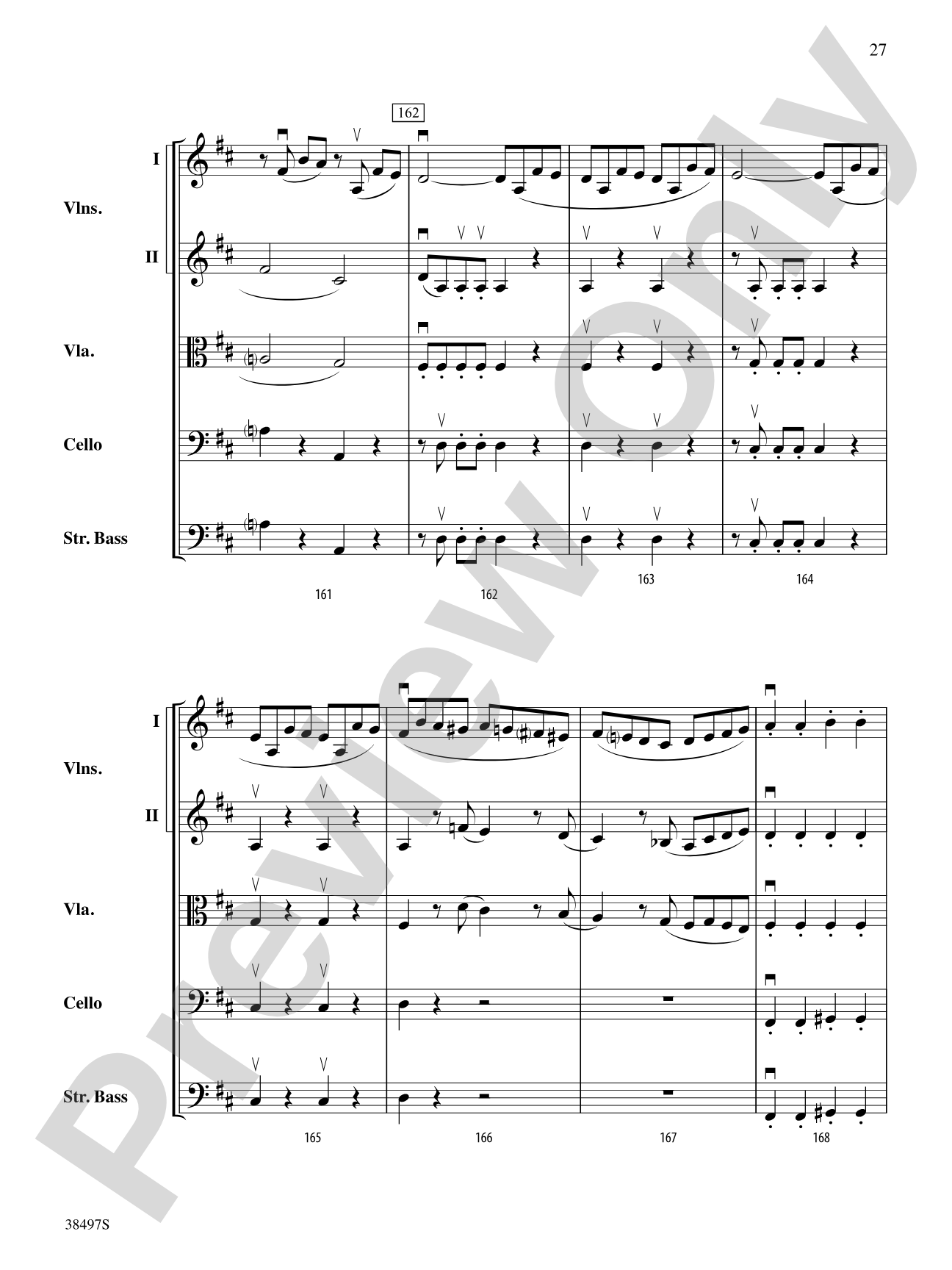
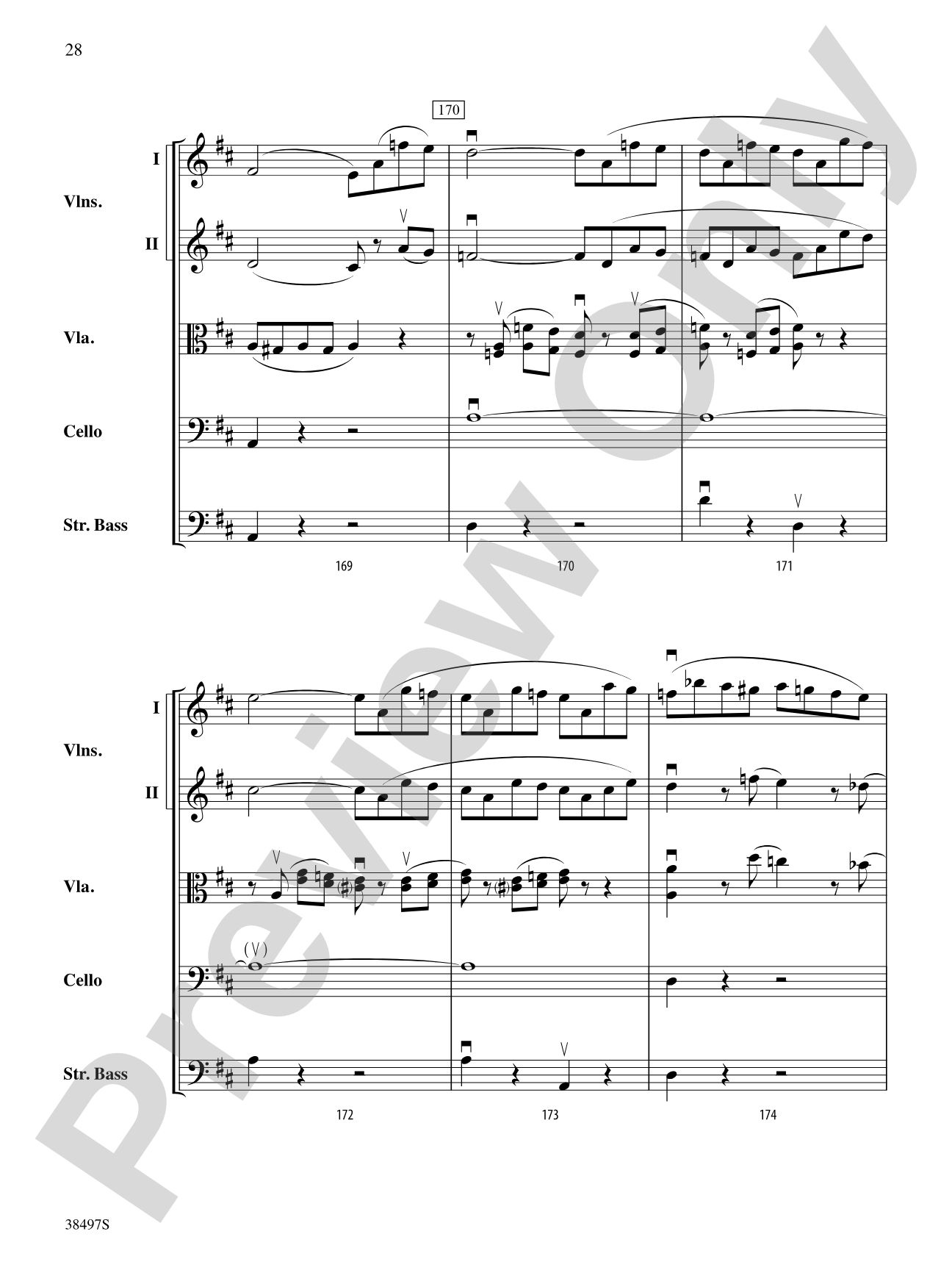
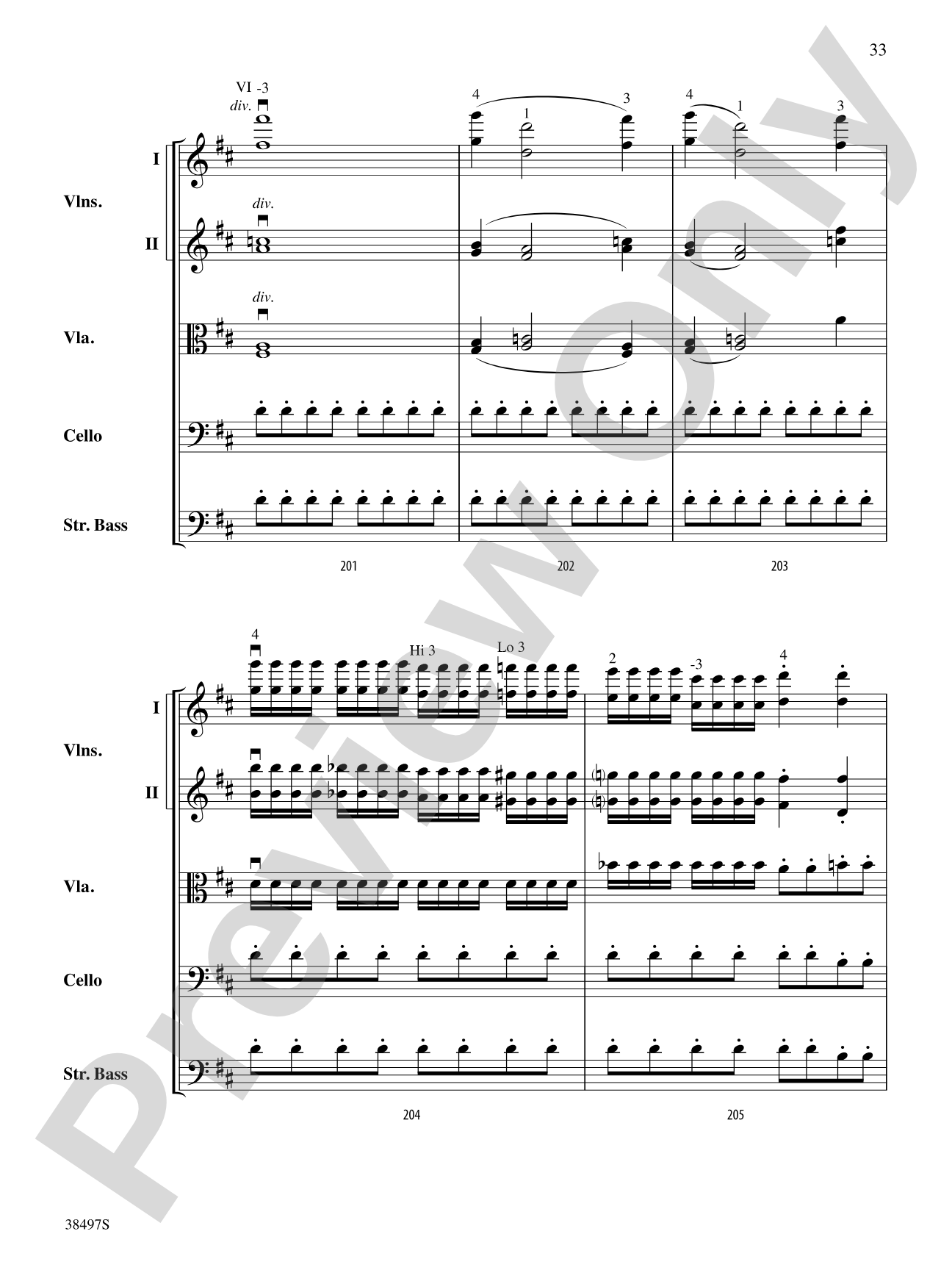
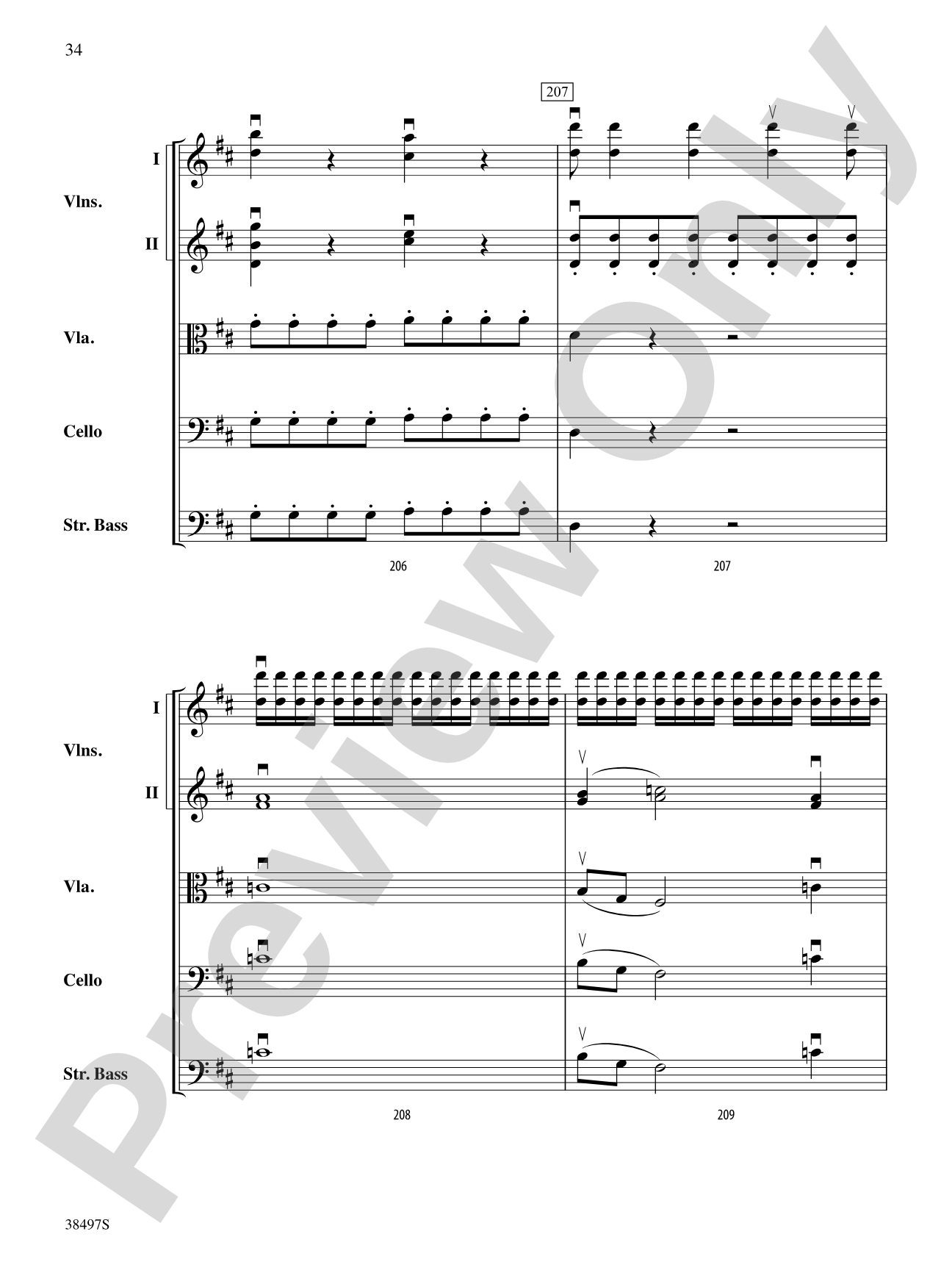
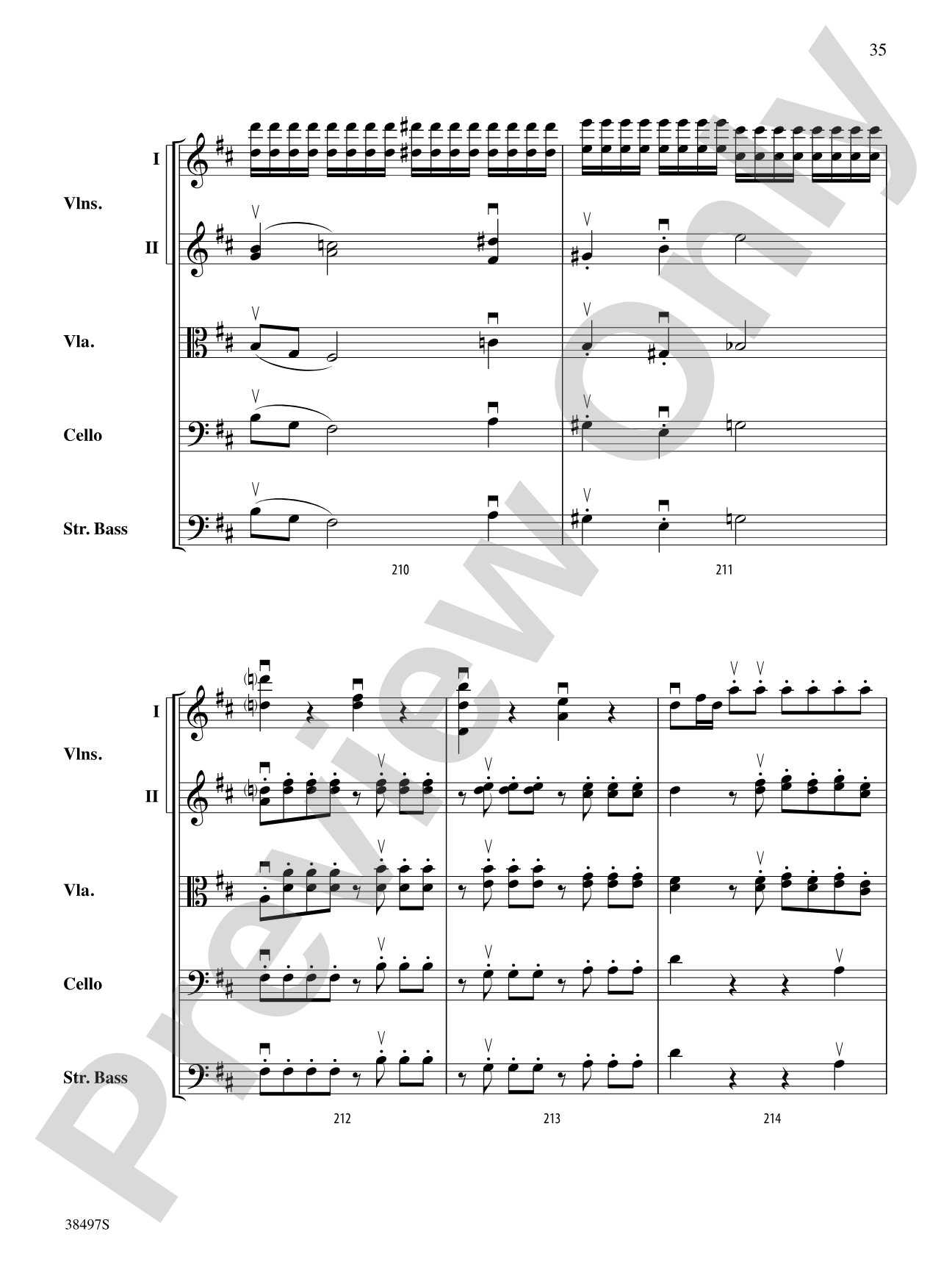
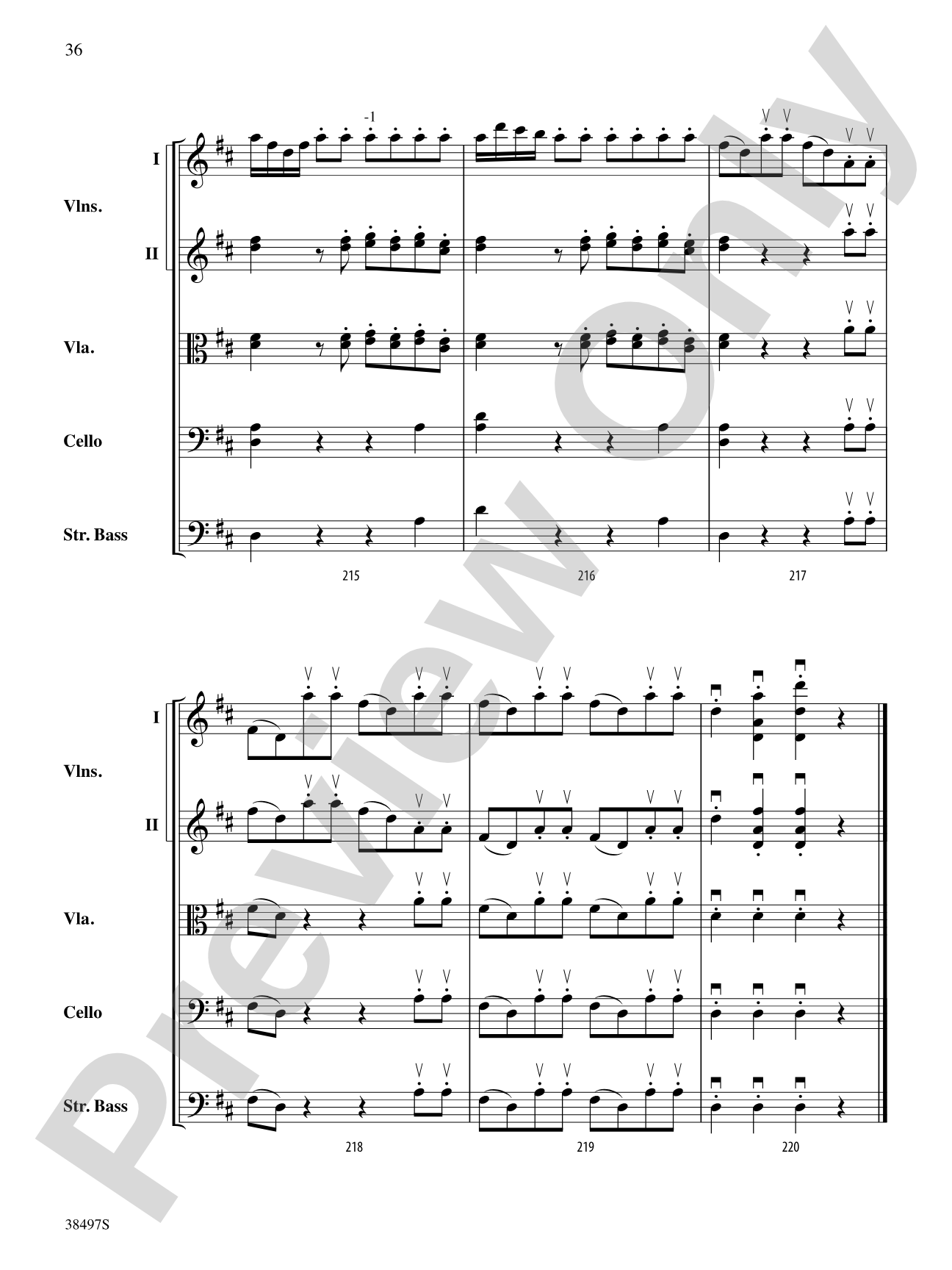
Celebrate the spirit of Bohemia at your next festival or concert with this acclaimed masterpiece. This arrangement uses material from the Allegro section of the first movement in the original key of D. The fugal nature of this movement gives each section a chance to play melodic passages. Care has been taken to preserve the energy of the original while seamlessly transferring wind and brass parts into the string section. Advanced shifting is required, along with the ability to perform syncopation and spiccato.


Don't just read it, hear it, play along with it, and watch your students grow with it. In MakeMusic Cloud, Symphony No. 38: String Orchestra Conductor Score & Parts comes alive with professional accompaniment, adjustable tempo, and built-in practice tools that turn solo practice into real progress.
Open in the Player
Jump straight in and assign it today.
Start Your Free Trial
Open this title and explore the full library in minutes.
Sample Audio
1
Audio File
--:--
0:00
0:00
Sample Video
No sample videos found.
Additional Details
Series:
Highland/Etling String Orchestra
Publisher:
Alfred Music
Page Count:
184
SKU:
00-PK-0005289
More about this title
About the Composer: Wolfgang Amadeus Mozart
Wolfgang Amadeus Mozart (1756-1791) composed across every major genre of his time with a facility that still astonishes musicians. His symphonies span from the early works written as a touring prodigy to the masterworks of his mature years, each revealing his gift for melody, structural clarity, and instrumental color. For string players, Mozart's writing remains essential repertoire because it demands both technical precision and lyrical sensitivity, qualities that shape musicians across all stylistic periods.
Why we love this
Todd Parrish's arrangement captures the architectural brilliance of the Allegro without padding or editorial excess. A fugal first movement transfers naturally to strings when the arranger respects the voice leading, and this version does exactly that, giving every section genuine melodic material rather than filler. Programming a Mozart symphony tells your audience that your orchestra can handle genuine sophistication.
What to expect
The Allegro unfolds with the kind of effortless forward momentum that only Mozart achieves, each new entry arriving as if the melody were inevitable. The texture brightens as sections join the fugal fabric, building from intimate counterpoint to full orchestral texture without ever losing transparency or elegance.
Who it's for
String orchestras at the advanced high school and early college level will find this arrangement accessible in ensemble size while remaining genuinely challenging in execution. Directors programming festival or competition concerts need repertoire that satisfies both adjudicators and audiences, and a well-played Mozart arrangement delivers on both fronts.
How to get the most out of it
- Establish the fugal entrances with clarity and independence. Each section needs to hear its own line distinctly before worrying about balance with other voices.
- Approach the spiccato passages with articulation that feels effortless rather than choppy. Mozart's energy comes from rhythmic precision, not aggressive bow strokes.
- Map out the advanced shifting passages in rehearsal without the parts, so players understand the geometric logic of the positions before executing them under tempo.
- Let the syncopated rhythms breathe. Resist the urge to compress the pulse; these figures sit more naturally when the underlying beat feels spacious.
How to use it
Place this early in a concert when the orchestra is fresh and can deliver the precision the counterpoint demands. It pairs well alongside original Mozart symphonies for an all-Mozart program, or anchor a classical works concert with this as the centerpiece, flanked by shorter contemporary pieces that offer textural contrast.
Skills your students will build
- Reading fugal writing and tracking independent voice lines
- Advanced shifting techniques in multiple positions
- Spiccato articulation at tempo
- Syncopated rhythm execution
- Balance and blend within dense contrapuntal texture