Symphony No. 36, The "Linz": String Bass Sheet Music Preview

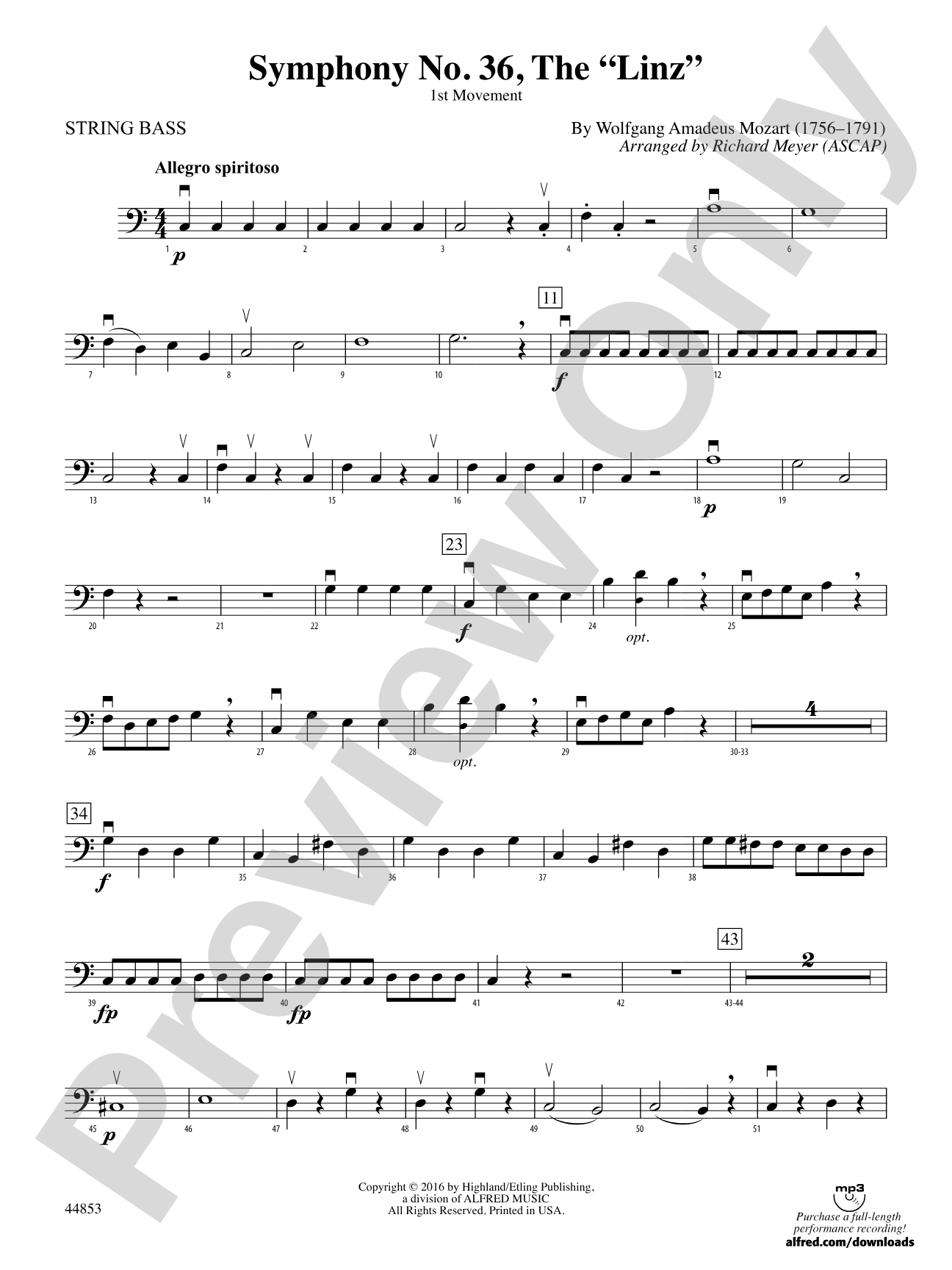
Symphony No. 36, The "Linz": String Bass

1st Movement

By Wolfgang Amadeus Mozart / arr. Richard Meyer

Grade: 2.5

Item: 00-PC-0017370_SB

Digital Download
$3.00
Description
The "Linz Symphony "is included among Mozart's best. The first movement is cheerful and buoyant in mood, yet retains an air of dignity and poise reflective of a true master of the genre. Richard Meyer's full orchestra arrangement of this classic is a terrific addition for any concert or contest. (5:20)

Don't just read it, hear it, play along with it, and watch your students grow with it. In MakeMusic Cloud, Symphony No. 36, The "Linz": String Bass comes alive with professional accompaniment, adjustable tempo, and built-in practice tools that turn solo practice into real progress.

Sample Audio
0:00
0:00
Sample Video
Additional Details
Series: Highland/Etling First Philharmonic
Publisher: Alfred Music
Page Count: 196
SKU: 00-PC-0017370_SB

More about this title

About the Composer: Wolfgang Amadeus Mozart

Wolfgang Amadeus Mozart (1756-1791) stands among history's most prolific and influential composers, having written over 600 works across every major genre before his death at 35. His mastery of melody, harmonic innovation, and orchestral color established the Classical style and continue to define musical excellence in education and concert halls worldwide. Mozart's symphonies remain essential repertoire for developing musicians because they balance technical clarity with expressive depth, making them ideal models for understanding structure, phrasing, and ensemble balance.

Why we love this

Richard Meyer's Grade 2.5 arrangement captures the elegance and forward momentum of Mozart's original without sacrificing the architectural sophistication that makes this symphony endure. The "Linz" opens with character and warmth, giving young orchestras a genuine masterwork to sink their teeth into rather than a pastiche, and its five-minute duration fits naturally into concert programming. This is the kind of piece that reminds students why they play in orchestra.

What to expect

The opening radiates confidence and purpose, driven by a melody that feels both immediate and refined. There is a quality of assured elegance throughout, as if the music knows exactly where it is going, inviting the ensemble to move with clarity and joy.

Who it's for

This arrangement serves orchestras in Grades 2-4 that are ready to engage with genuine symphonic literature at an accessible level. Directors seeking contest or concert repertoire that teaches musicianship without condescension will find this especially valuable.

How to get the most out of it

  • Establish the tempo of the first movement early in rehearsals and hold it steady; Mozart's buoyancy depends on rhythmic confidence from the ensemble, especially the strings.
  • Balance the melodic lines between sections so that the opening theme sings clearly while accompaniment parts support rather than overshadow.
  • Pay attention to dynamic shape within phrases rather than treating dynamics as static; Mozart's phrasing often calls for subtle swells and releases that bring the music to life.
  • Use the conductor's score to trace how the orchestration unfolds and make clear preparatory gestures to each section so entries feel unified and intentional.

How to use it

This works beautifully as a centerpiece on a concert celebrating Classical masterworks or as an opener that sets a refined tone for an evening. It also stands well alongside lighter contemporary pieces or as a contrast to Romantic-era repertoire on the same program.

Skills your students will build

  • Phrasing and dynamic shape in Classical style
  • Rhythmic precision and ensemble balance in fast movements
  • Reading and executing clear orchestral textures
  • Responding to conductor gestures across multiple instrumental sections

You May Also Like