Symphony No. 3 In E-Flat Major, Op. 55 Sheet Music Preview

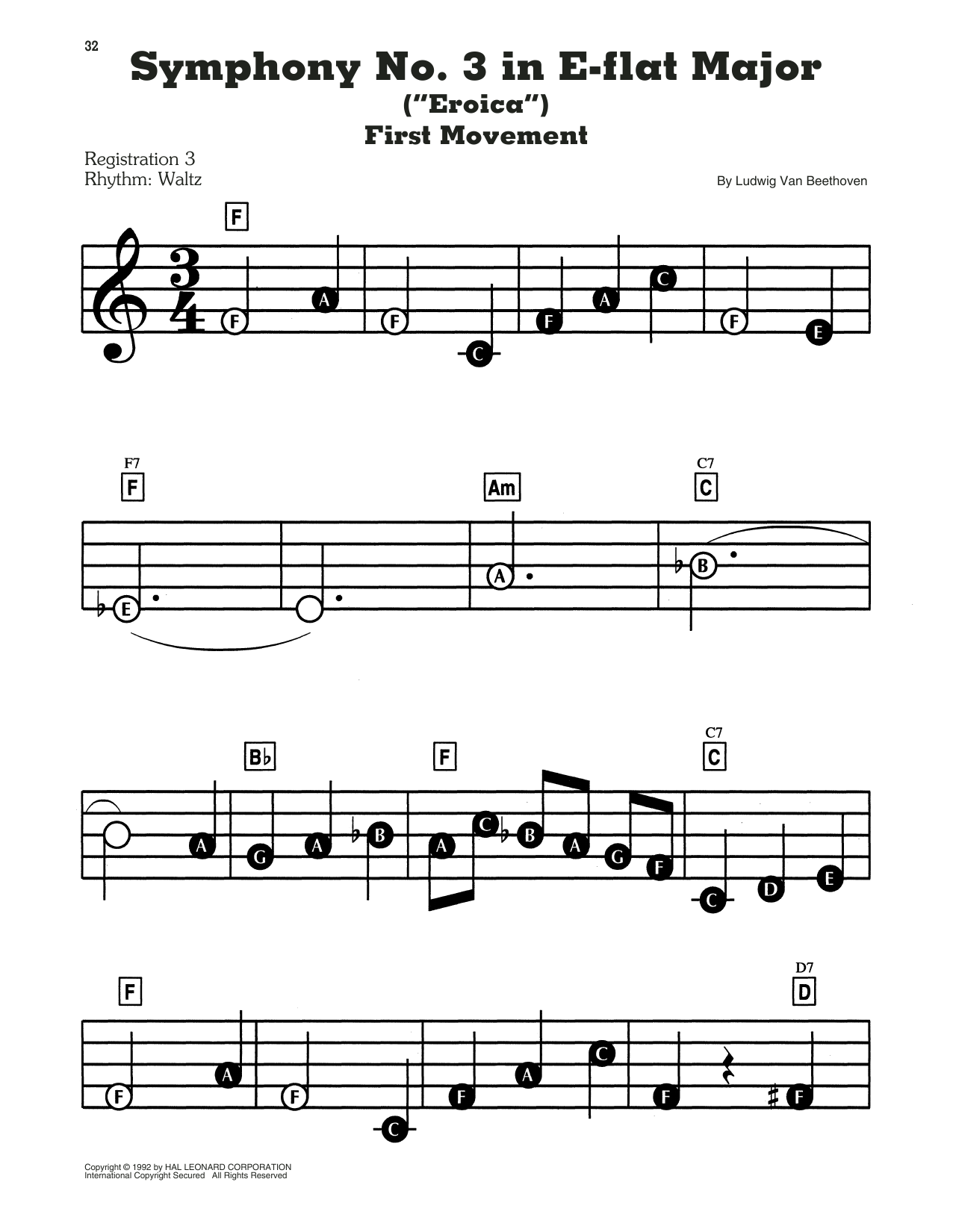
Symphony No. 3 In E-Flat Major, Op. 55: E-Z Play Today

By Ludwig Van Beethoven

Item: 35-DS00603411

Digital Download
$4.99
Description

Symphony No. 3 In E-Flat Major, Op. 55: E-Z Play Today isn't in MakeMusic Cloud just yet...but it could be. Let us know you'd like to see it, and you'll help shape what comes next. In the meantime, start a free trial and dive into thousands of interactive titles your students can play along with today.

Sample Audio
No sample audio found.
Sample Video
Additional Details
Publisher: Hal Leonard
Page Count: 2
SKU: 35-DS00603411

More about this title

About the Composer: Ludwig Van Beethoven

Beethoven's Third Symphony, completed in 1804, marked a watershed moment in orchestral music. The work announced his mature compositional voice: heroic, expansive, and uncompromisingly original. Written during a period of personal struggle, the symphony channels defiance and triumph into a structure that fundamentally redefined what the form could express.

For music educators, Beethoven's symphonies remain foundational texts. They show students how large-scale musical architecture emerges from motif, how rhythm and harmony drive narrative tension, and how a composer can bend convention to serve artistic vision. His legacy in the classroom is immeasurable: he teaches us that craft and emotion are inseparable.

Why we love this

This E-Z Play arrangement opens one of classical music's most profound works to pianists who might otherwise never encounter it. The two-page format removes the intimidation factor while preserving the symphonic breadth and heroic character that make this piece so rewarding to work with. Students grasp immediately why this symphony changed music history.

What to expect

Heroic and urgent. The opening motif carries an insistent, almost confrontational energy that gives way to lyrical passages of surprising tenderness. Throughout, there's a sense of forward propulsion, as though the music knows exactly where it needs to go and refuses to be stopped.

Who it's for

Pianists at the intermediate level who want to explore symphonic repertoire without tackling a full orchestral score or a concert grand sonata. Teachers seeking accessible entry points to canonical works will find this valuable for students building music history knowledge alongside technique.

How to get the most out of it

  • Shape the opening motif with clear articulation. The famous three-note figure needs definition at whatever tempo feels comfortable for your hands; let the gesture breathe rather than rush.
  • Honor the dynamic contrasts. Even in a simplified arrangement, the shifts between forte and piano sections carry the work's emotional architecture, so don't minimize these changes.
  • Track phrase endings carefully. Beethoven builds momentum through long lines, and knowing where phrases naturally conclude helps you sustain forward motion without losing structure.

How to use it

Pair this with other classical works on a student recital to give context to Beethoven's place in symphonic development. Alternatively, use it as a listening and analysis tool in music history or theory class, having students follow the simplified score while hearing a full orchestral recording. It bridges the gap between understanding Beethoven conceptually and experiencing his music physically at the keyboard.

Skills your students will build

  • Balancing melody and accompaniment across two hands
  • Sustaining long dynamic arcs over multiple phrases
  • Recognizing and executing classical sonata conventions at the keyboard
  • Maintaining steady pulse through rhythmic variations and tempo changes

You May Also Like