
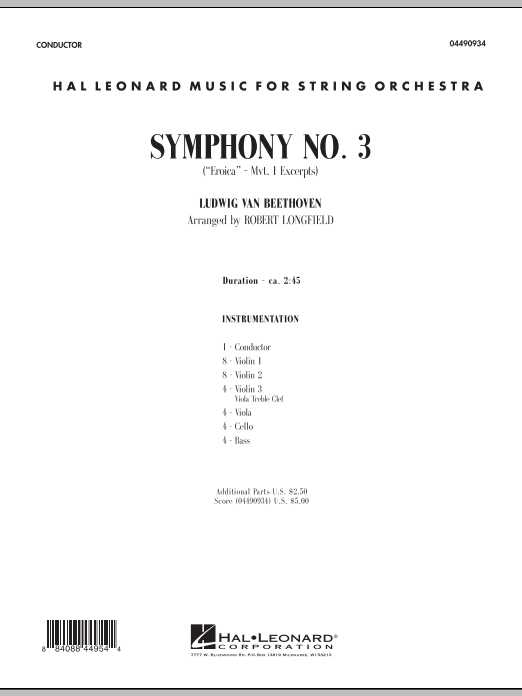

Symphony No. 3 ("Eroica" - Mvt. 1 Excerpts): String Orchestra Conductor Score & Parts
By Ludwig Van Beethoven / Arranged by Robert Longfield
Grade: 3-4
Item: 35-PK00135957
$45.00
Pickup currently not available
Buy Extra Parts (Digital PDF Download)
Parts Added to Cart!
Description
Recently heard throughout the dramatic film "The Soloist," Beethoven's moving, engaging melody line is amongst his most memorable. This new edition captures the essence of the opening movement of Beethoven's monumental third symphony, which continues to be one of his most revered symphonic works. Dur: 2:45


Symphony No. 3 ("Eroica" - Mvt. 1 Excerpts): String Orchestra Conductor Score & Parts isn't in MakeMusic Cloud just yet...but it could be. Let us know you'd like to see it, and you'll help shape what comes next. In the meantime, start a free trial and dive into thousands of interactive titles your students can play along with today.
Request This Title
Tell us you want it.
Start Your Free Trial
Explore everything that's ready to play right now.
Sample Audio
No sample audio found.
Sample Video
No sample videos found.
Additional Details
Publisher:
Hal Leonard
SKU:
35-PK00135957
More about this title
About the Composer: Ludwig Van Beethoven
Beethoven fundamentally transformed the symphony from Classical elegance into a vehicle for heroic struggle and human triumph. Working across the threshold between two centuries, he expanded the orchestra's expressive range and demanded new levels of virtuosity from performers, establishing templates that composers still follow today.
His third symphony stands as a watershed moment in Western music. Dedicated initially to Napoleon before Beethoven's political disillusionment, the Eroica announced a new creative phase in which personal conviction and large-scale architecture became inseparable. Students who study this work encounter one of history's most consequential artistic statements.
Why we love this
This excerpt preserves everything that makes the Eroica's opening so gripping: the storming D major chord, the soaring horn calls, and that infectious principal theme that lodges immediately in the ear. Robert Longfield's arrangement respects Beethoven's orchestration while keeping the string section at the musical center, creating a version that challenges musicians at grades 3 to 4 without diluting the work's dramatic power or emotional weight.
What to expect
Heroic and unstoppable. The opening establishes a kind of fearless energy that propels the music forward; even in quieter passages, you sense an inevitability beneath the surface. The emotional landscape shifts between noble aspiration and intimate questioning, creating dramatic tension that feels entirely earned.
Who it's for
String orchestras working at the intermediate to advancing levels who are ready for genuine Beethoven. This arrangement lets young musicians encounter a pivotal work in the symphonic canon with technical demands that remain honest without becoming prohibitive.
How to get the most out of it
- Let the opening two D major chords breathe as distinct events rather than blending them together. The silence between them gives the work its arresting quality.
- Guard against rushing the principal theme. Its nobility comes from unhurried phrasing and consistent tone across the entire line, even as energy builds beneath it.
- Balance the horn calls so they shine through the string texture without overwhelming. These figures are essential to the work's character and deserve clarity.
- Shape the dynamic waves deliberately. Beethoven uses crescendo and diminuendo as structural tools, not merely ornamental gestures.
How to use it
This works beautifully as the centerpiece of a concert exploring Beethoven's influence on later composers, or as a standalone statement of intent early in the season. At 2:45, it carries real weight without dominating a program, and it pairs naturally with lighter works that might follow or precede it.
Skills your students will build
- Balancing a sustained melodic line against accompanying texture
- Responding to large-scale dynamic architecture across multiple phrases
- Precision in simultaneous articulation across the ensemble
- Intonation control in extended passages without frequent rest points
- Stylistic awareness of Classical period orchestration and phrasing