
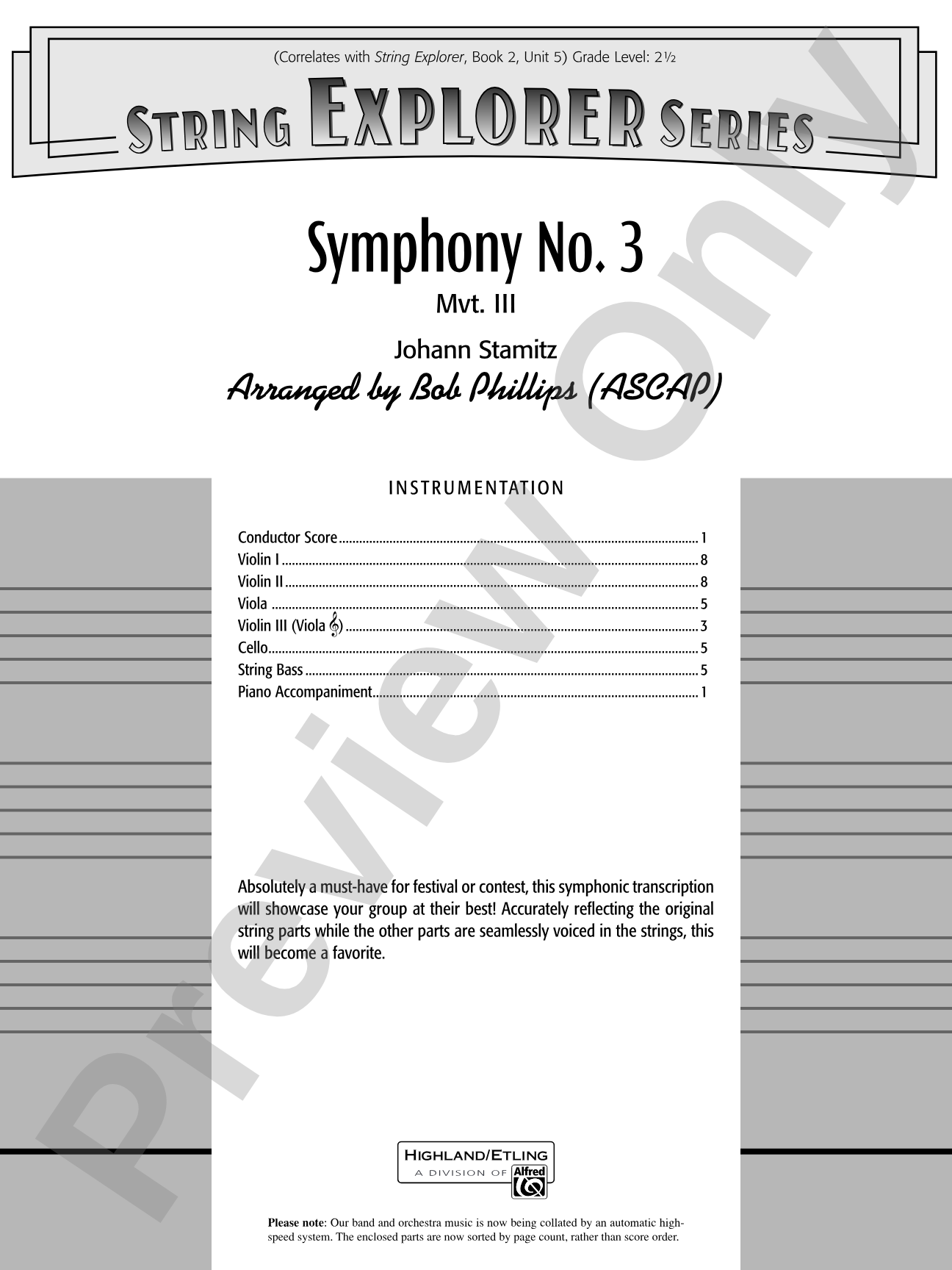
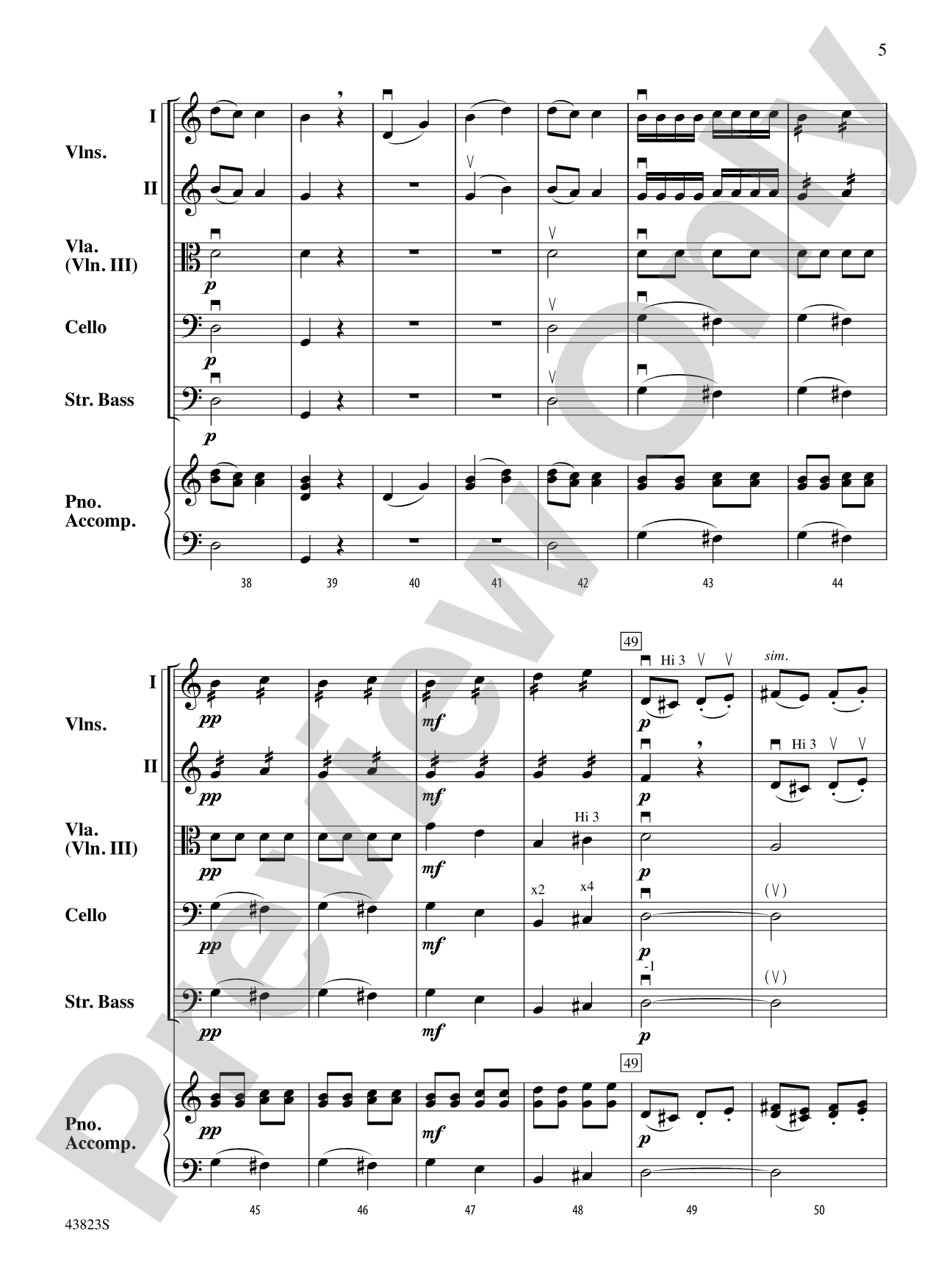
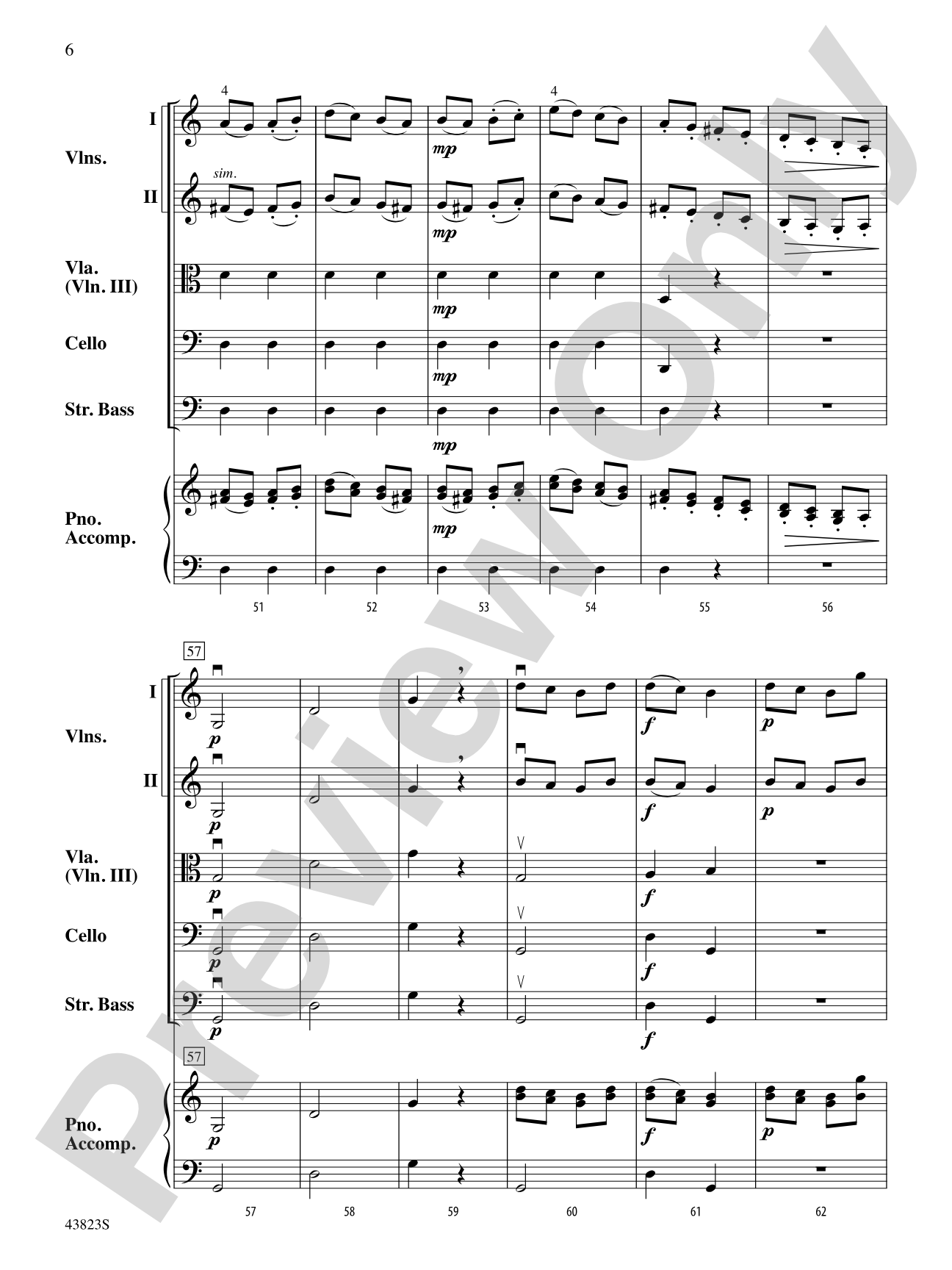
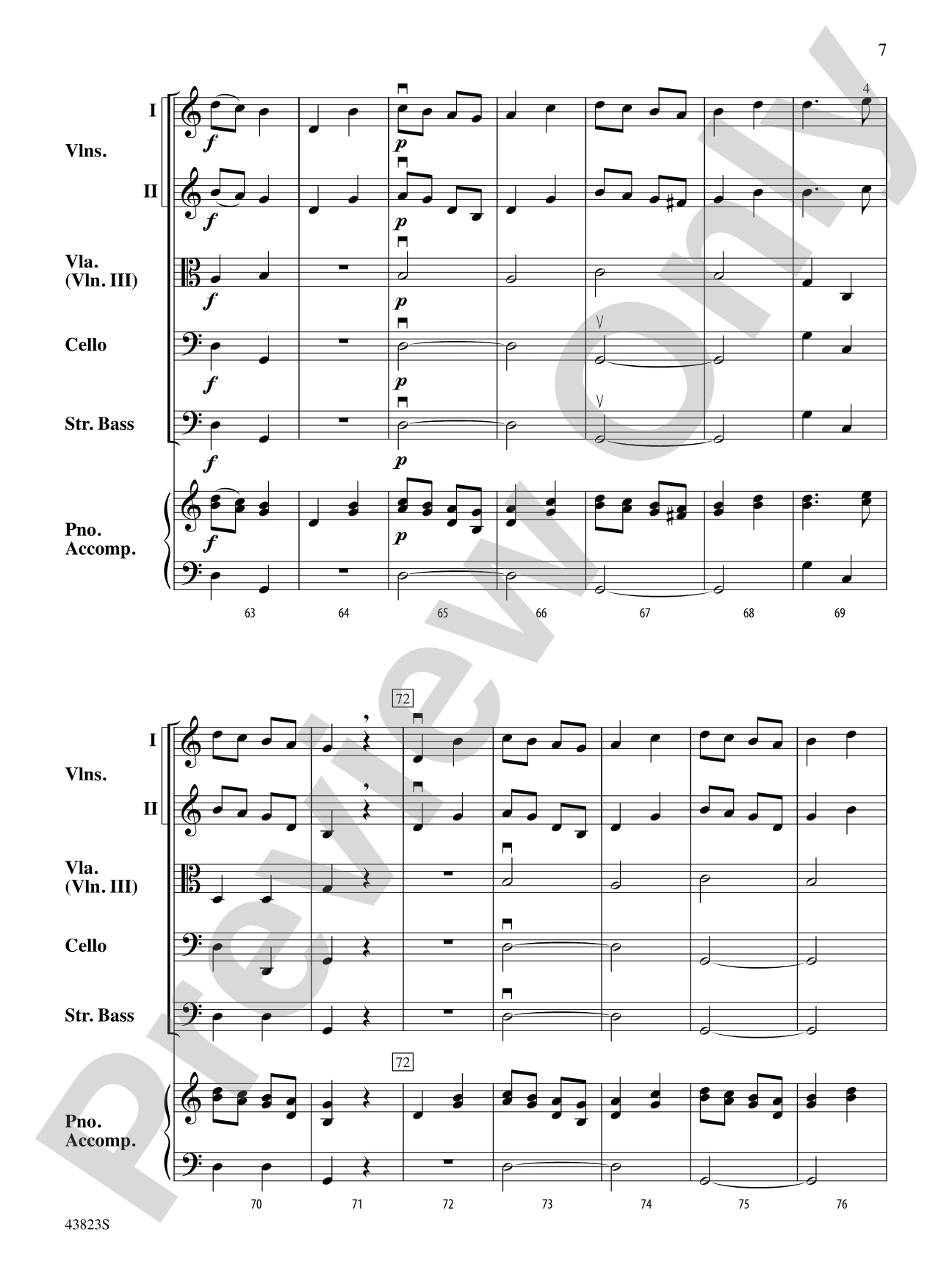
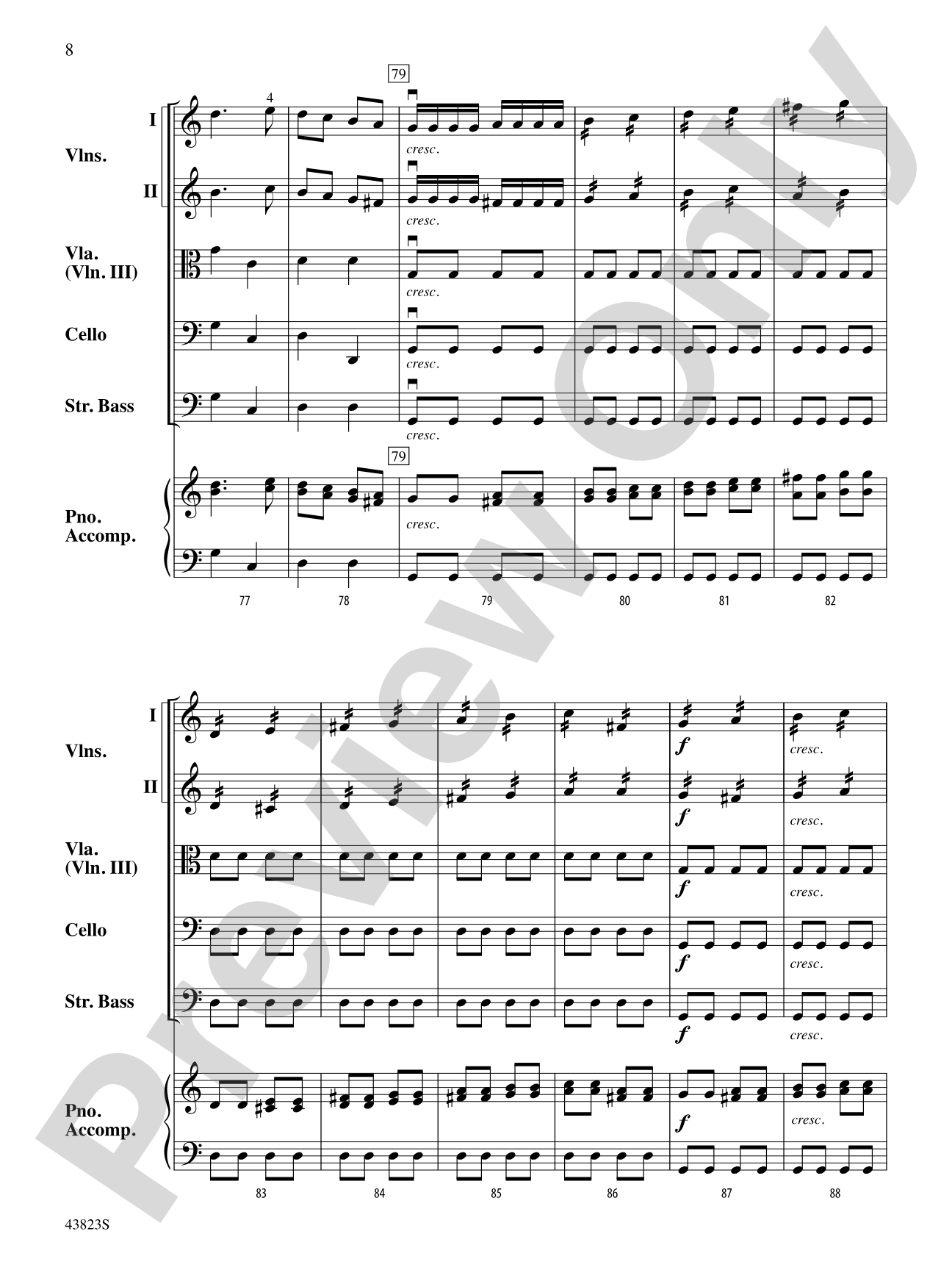
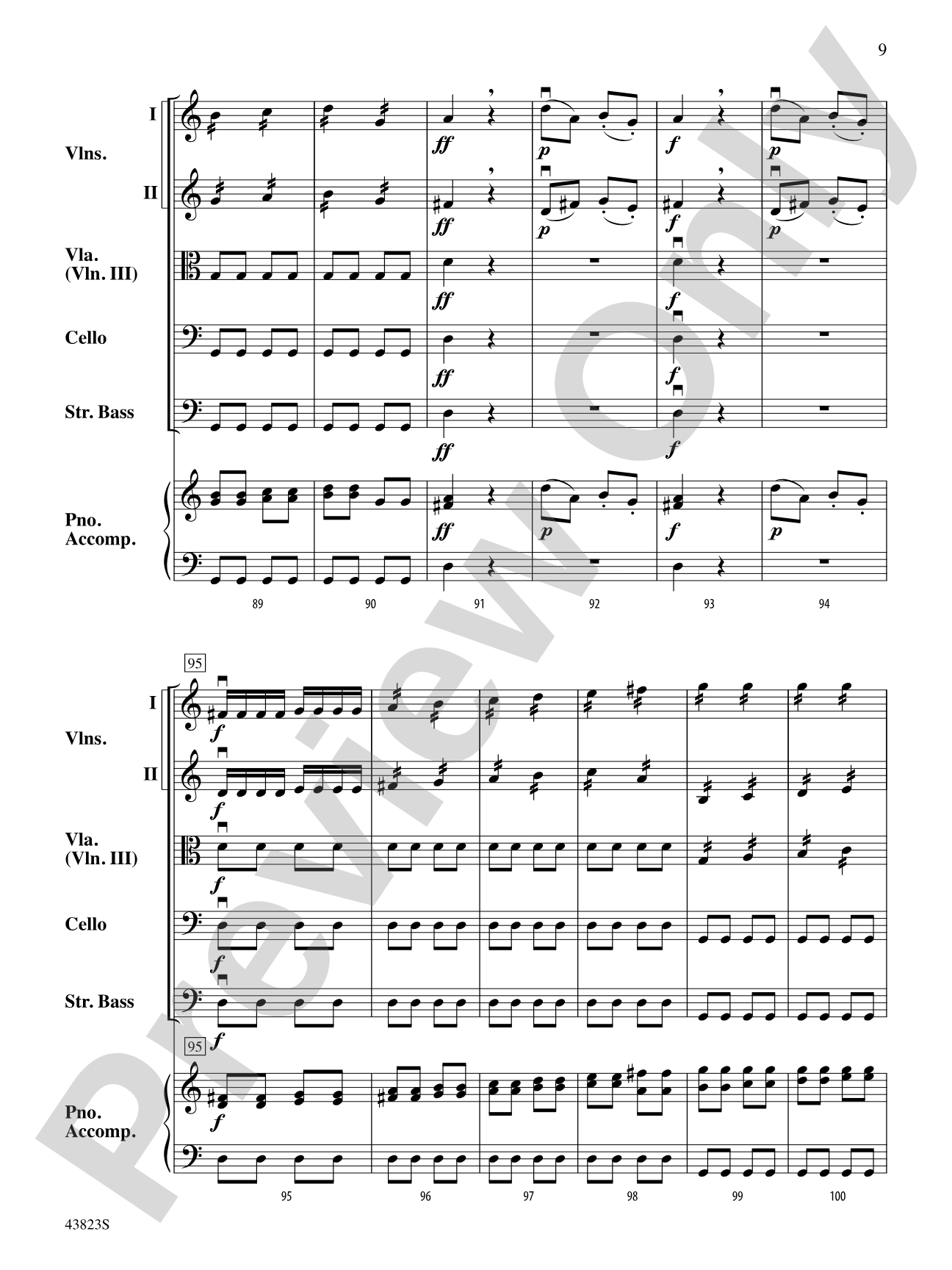
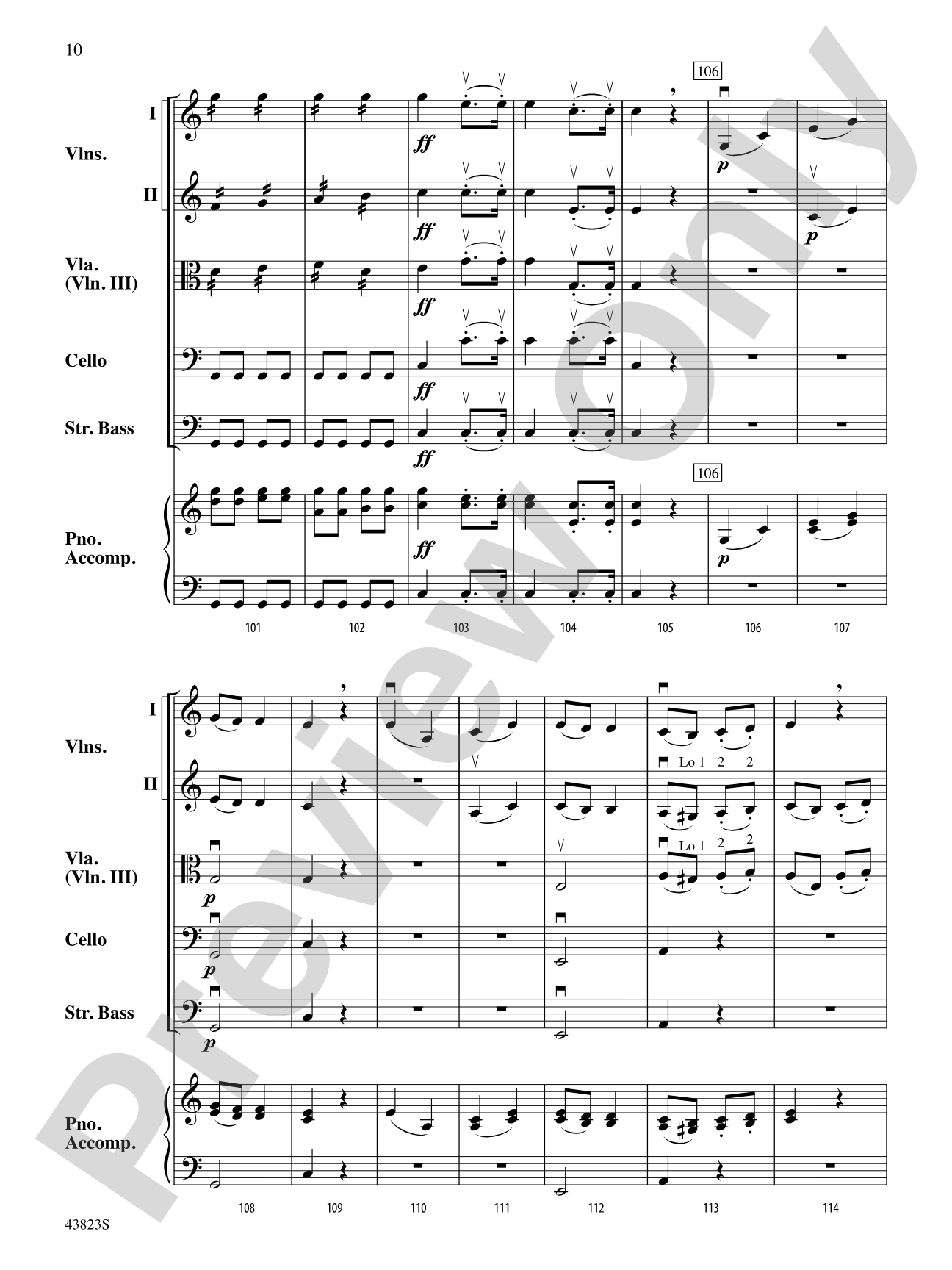
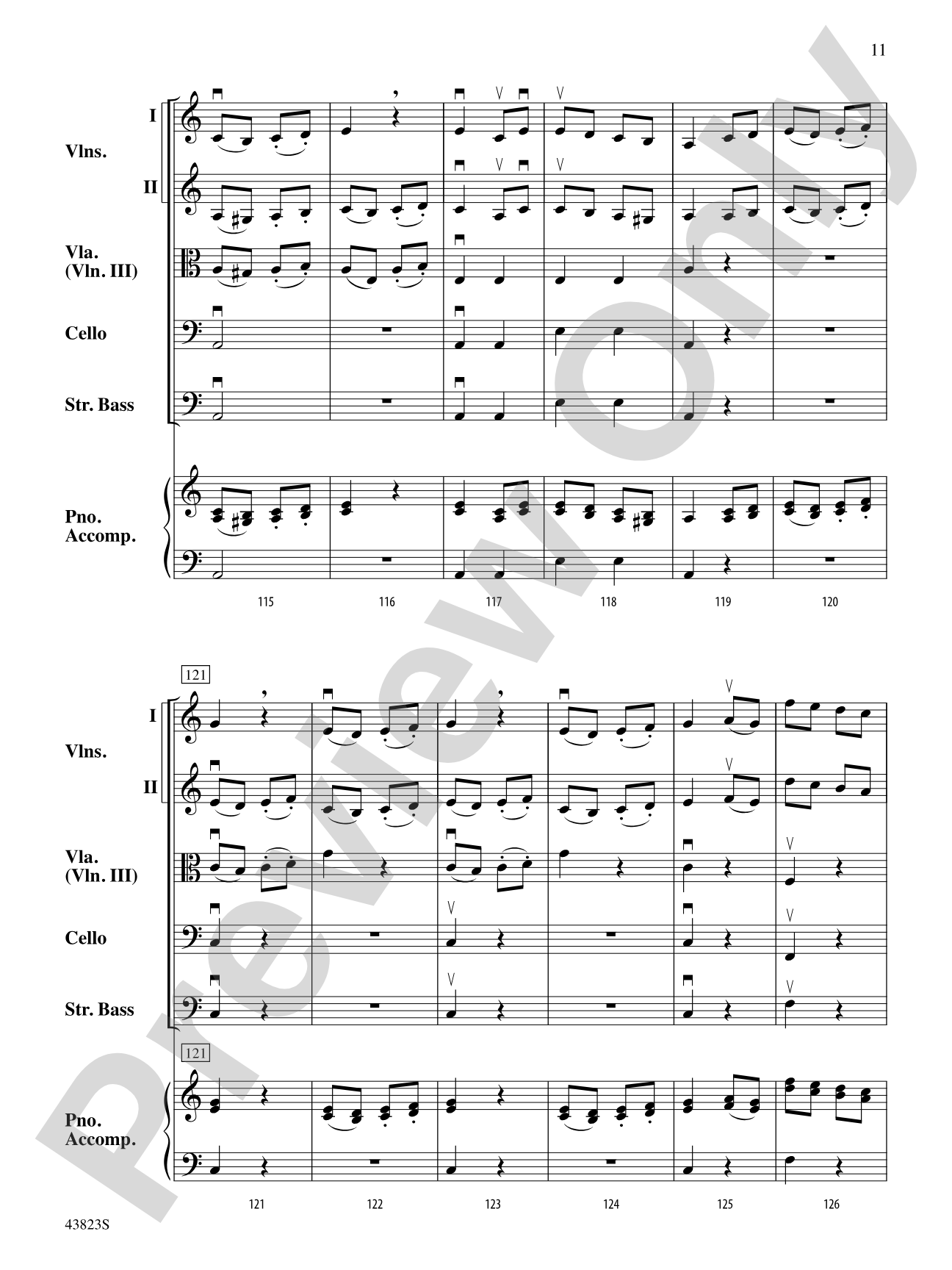
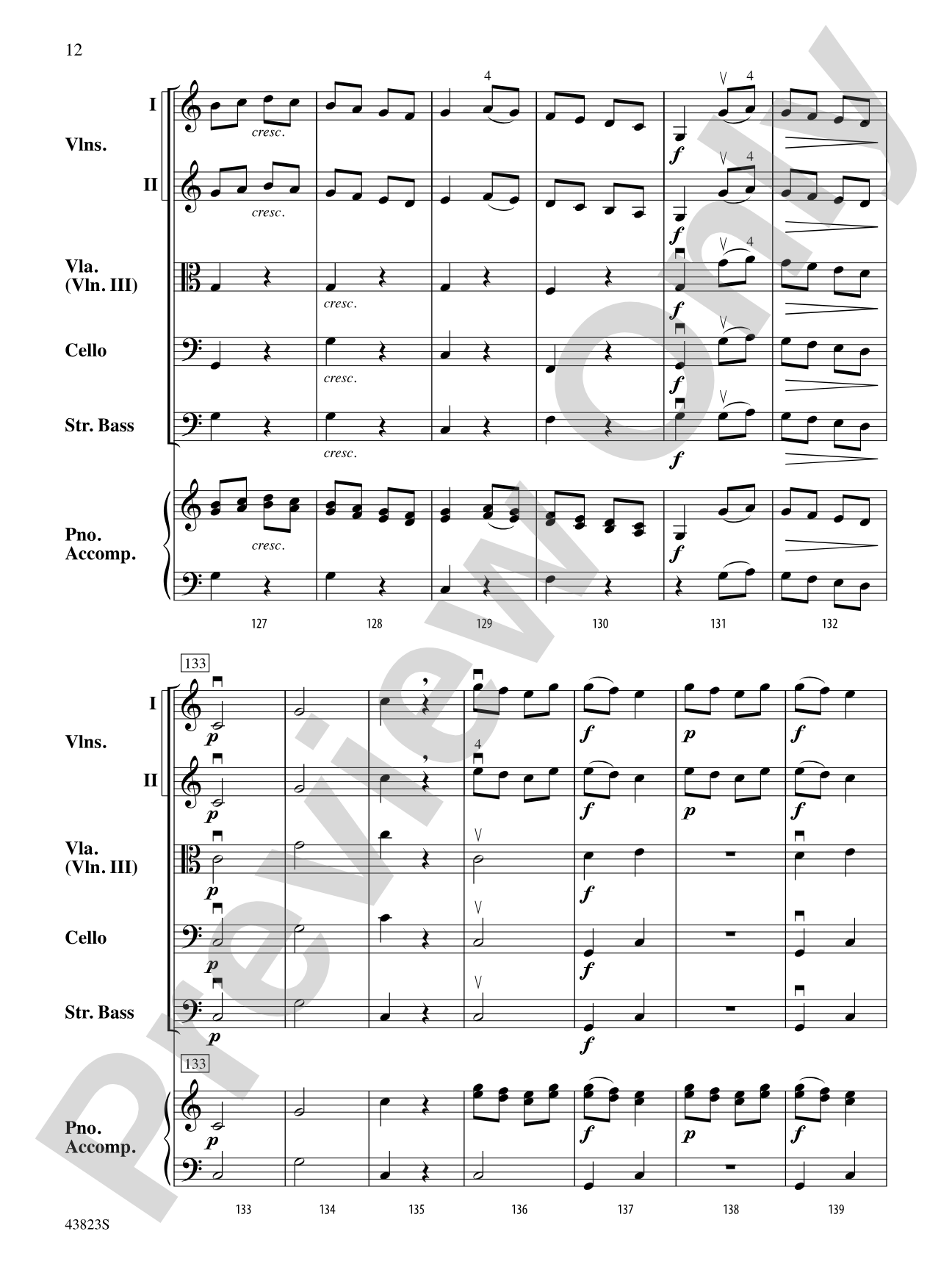
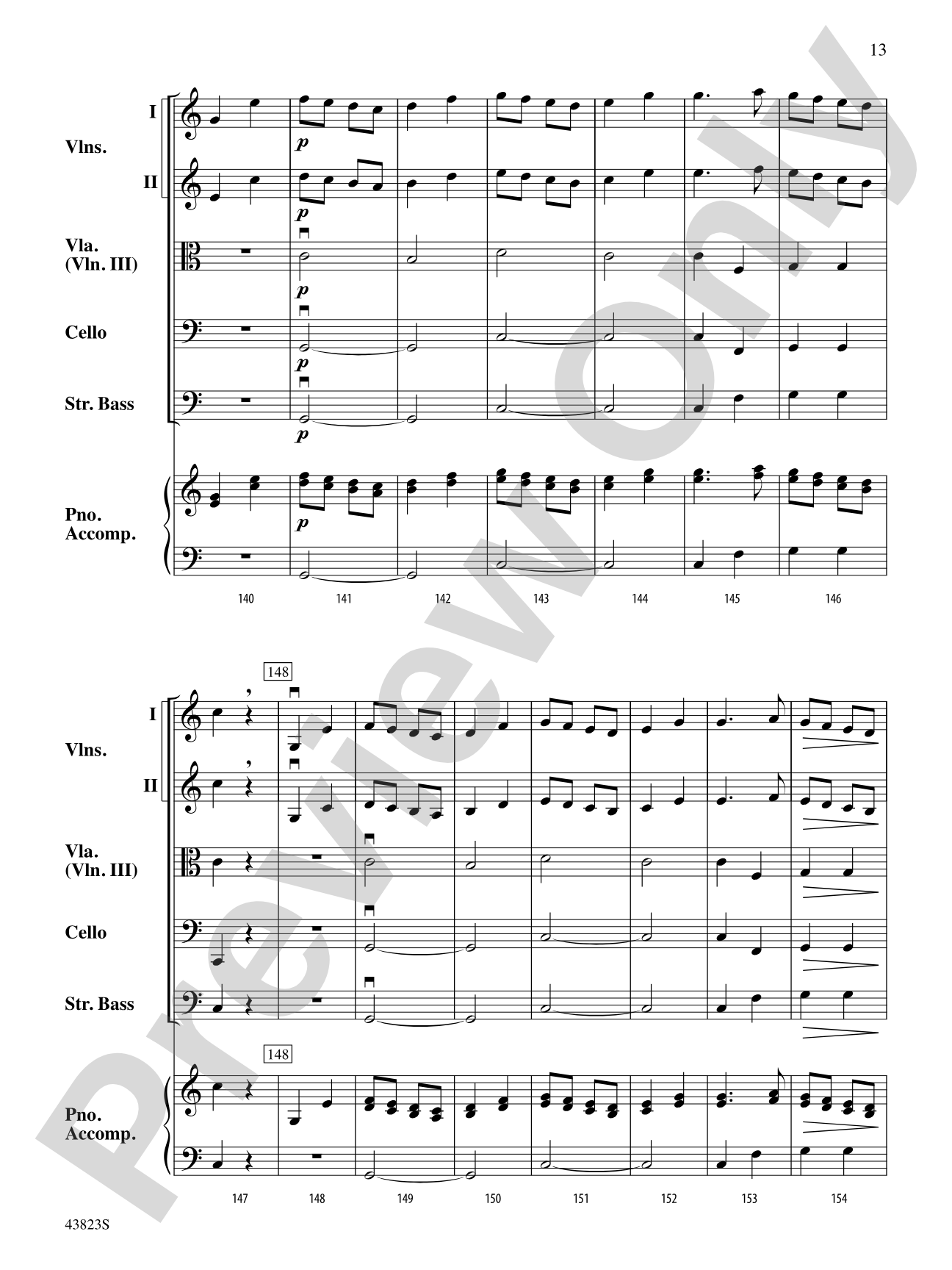
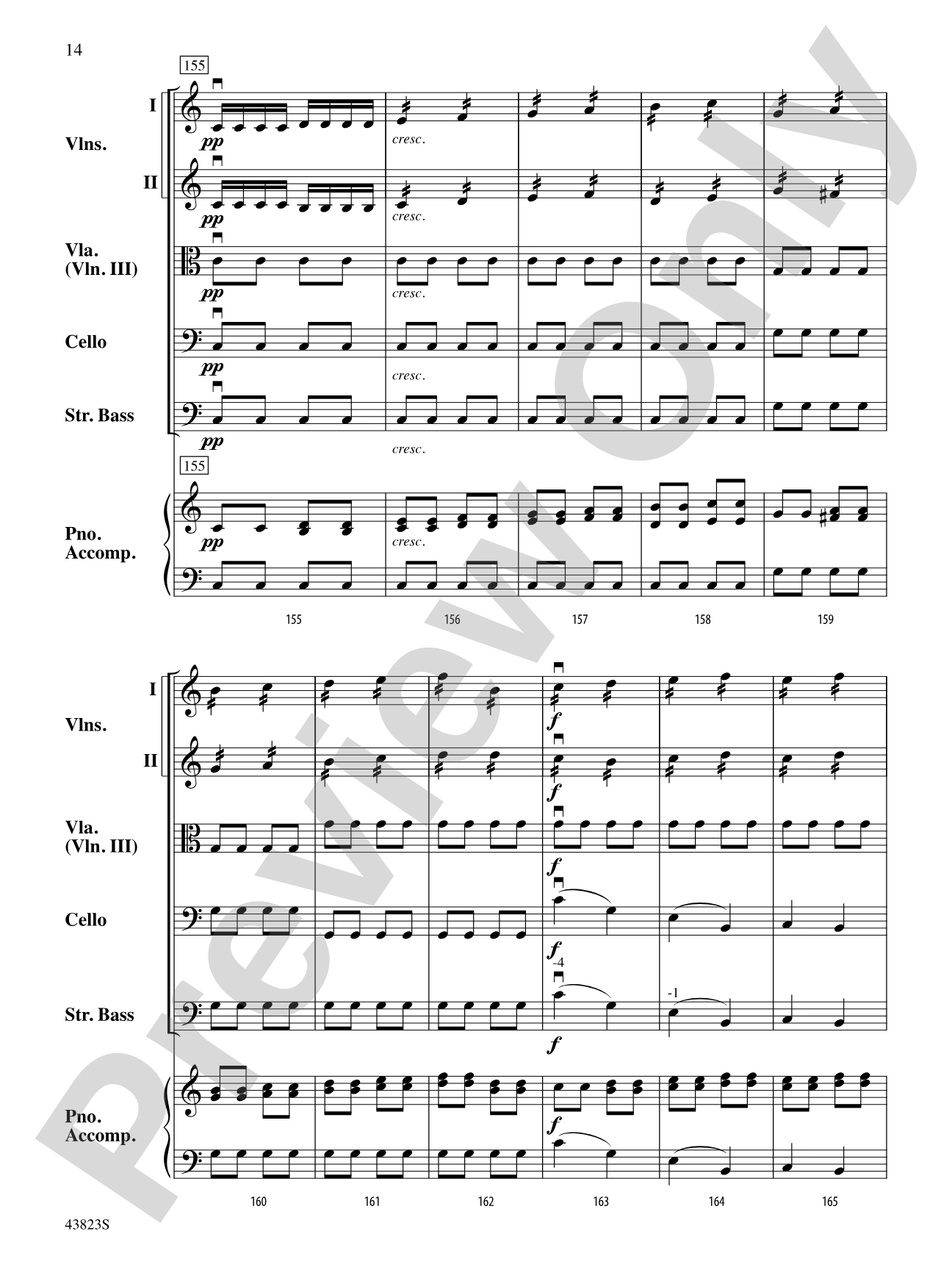
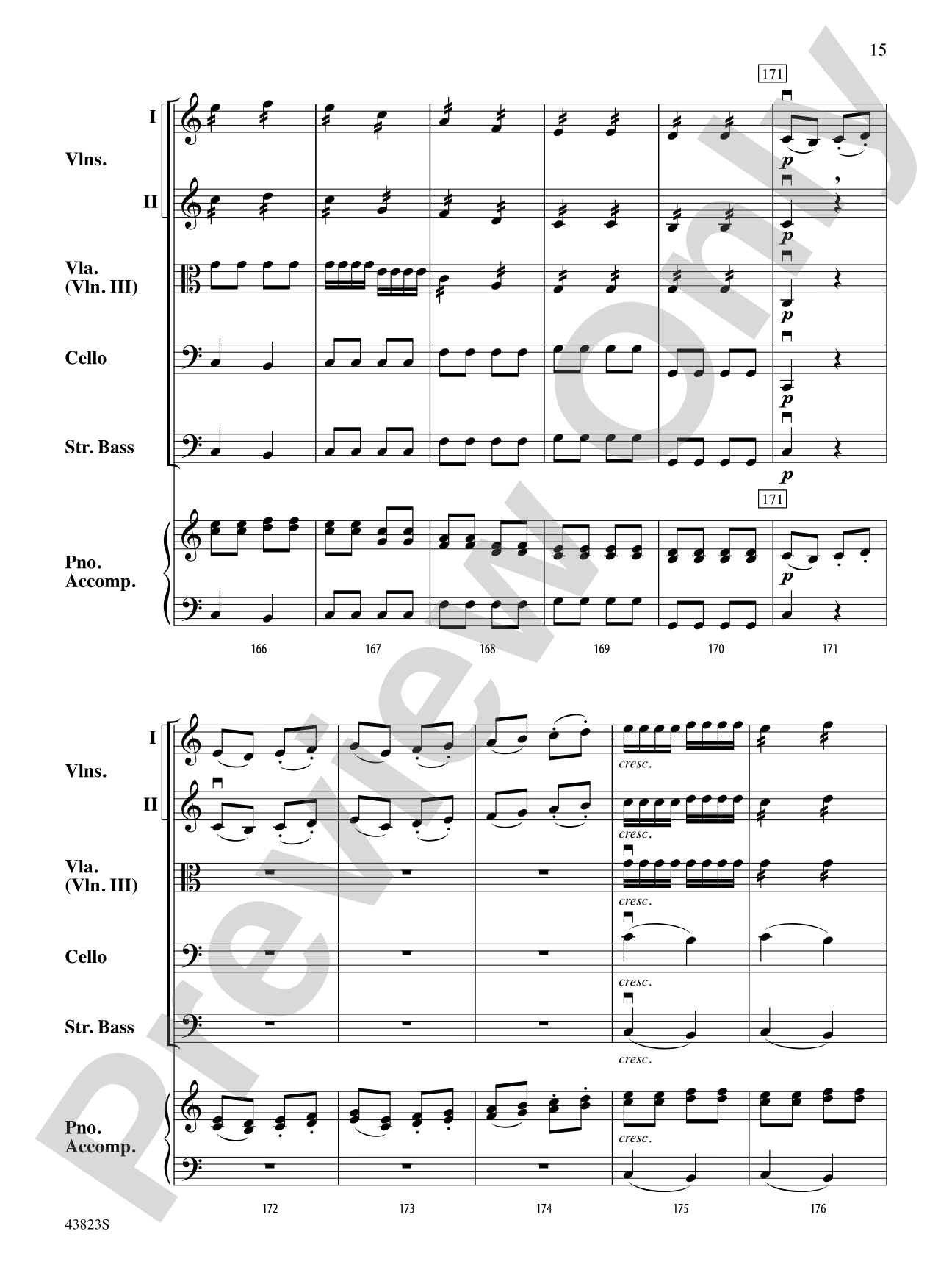
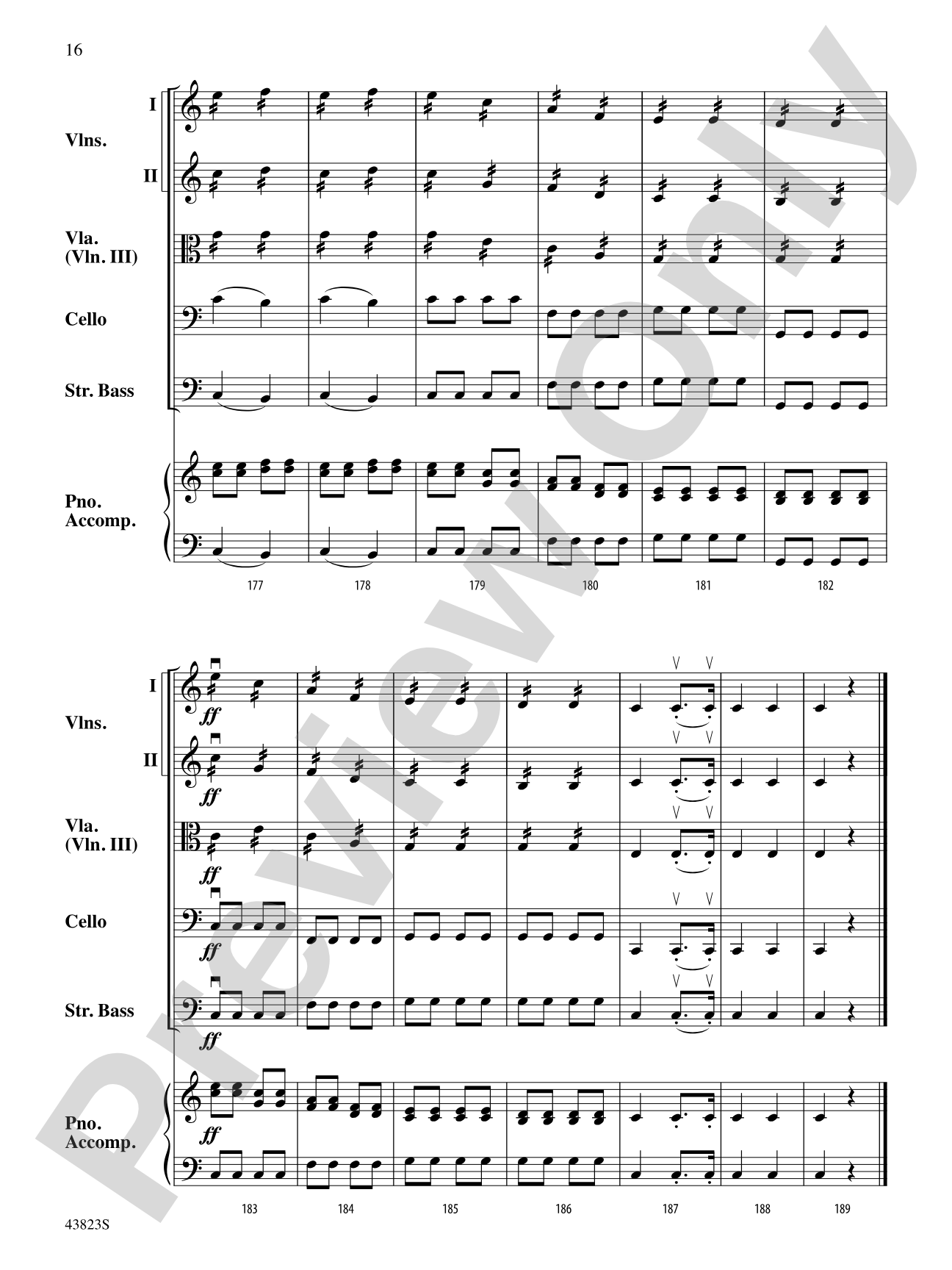

Symphony No. 3: String Orchestra Conductor Score & Parts
Mvt. III
By Johann Stamitz / arr. Bob Phillips
Grade: 2.5
Item: 00-PK-0006672

$46.00
Pickup currently not available
Buy Extra Parts (Digital PDF Download)
| Product | Price | Quantity |
|---|---|---|
| Symphony No. 3: Score | $8.00 | |
| Symphony No. 3: 1st Violin | $7.99 | |
| Symphony No. 3: 2nd Violin | $7.99 | |
| Symphony No. 3: 3rd Violin (Viola [TC]) | $7.99 | |
| Symphony No. 3: Viola | $7.99 | |
| Symphony No. 3: Cello | $7.99 | |
| Symphony No. 3: String Bass | $7.99 | |
| Symphony No. 3: Piano Accompaniment | $7.99 |
Parts Added to Cart!
Description
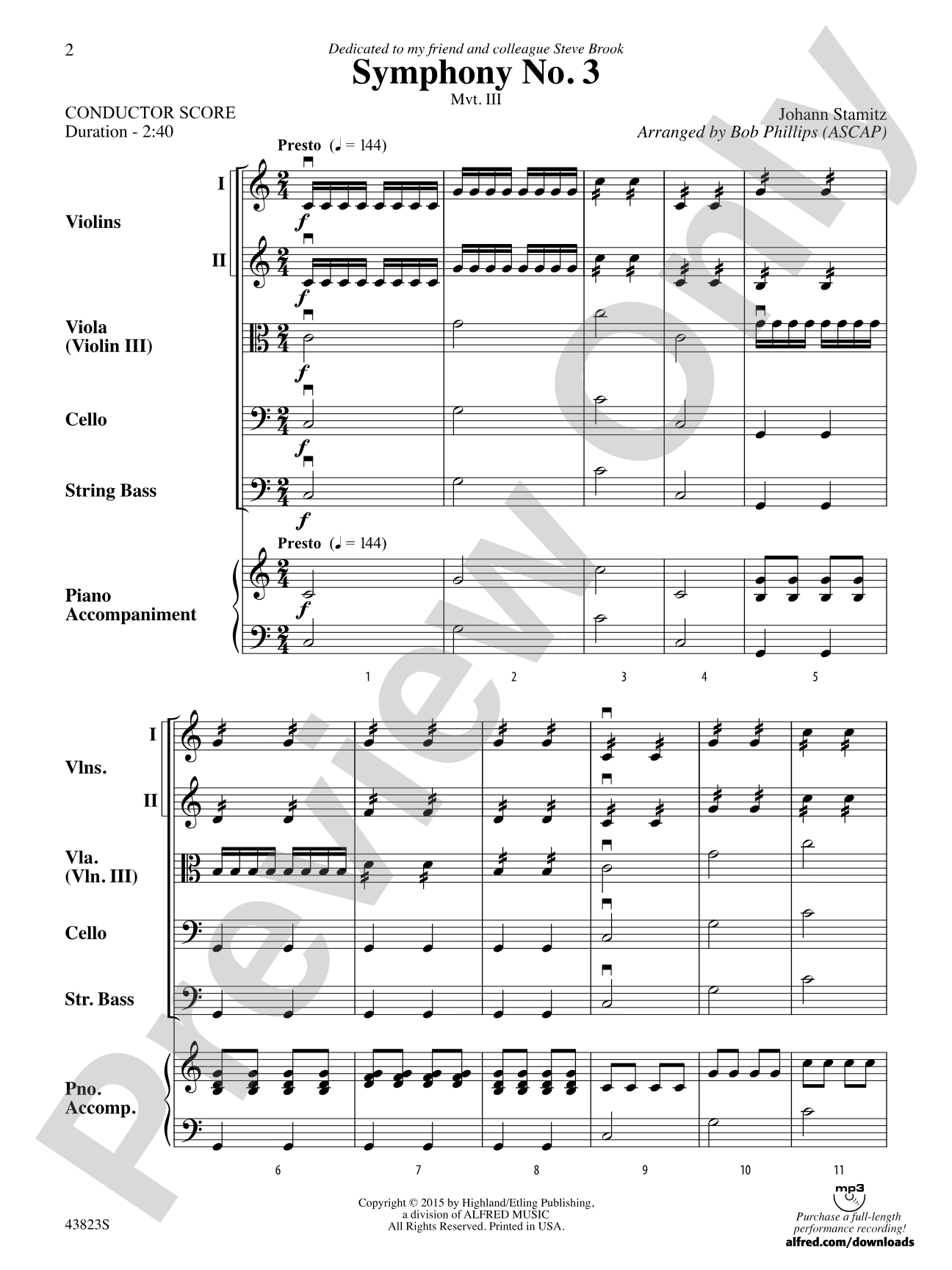
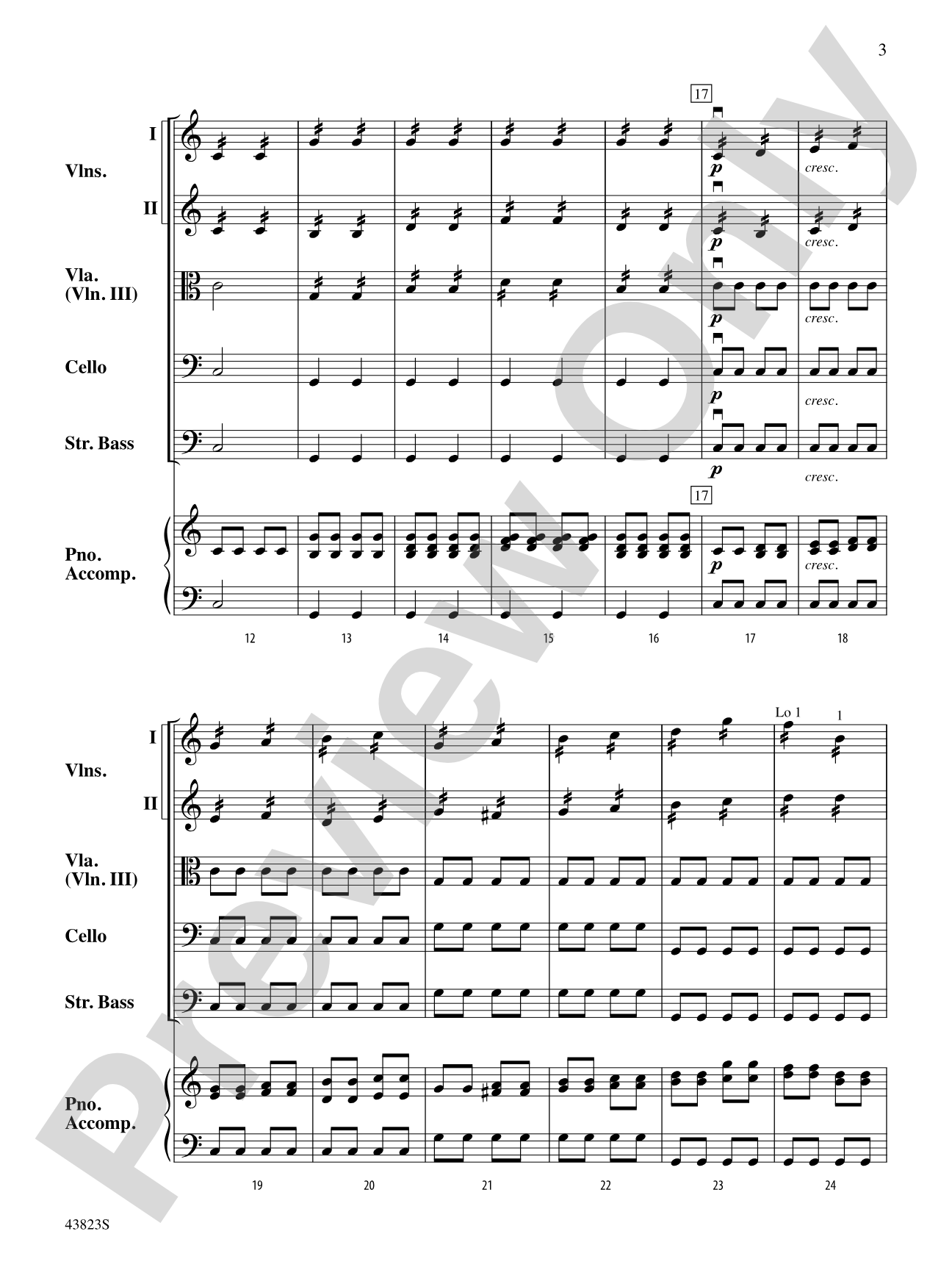
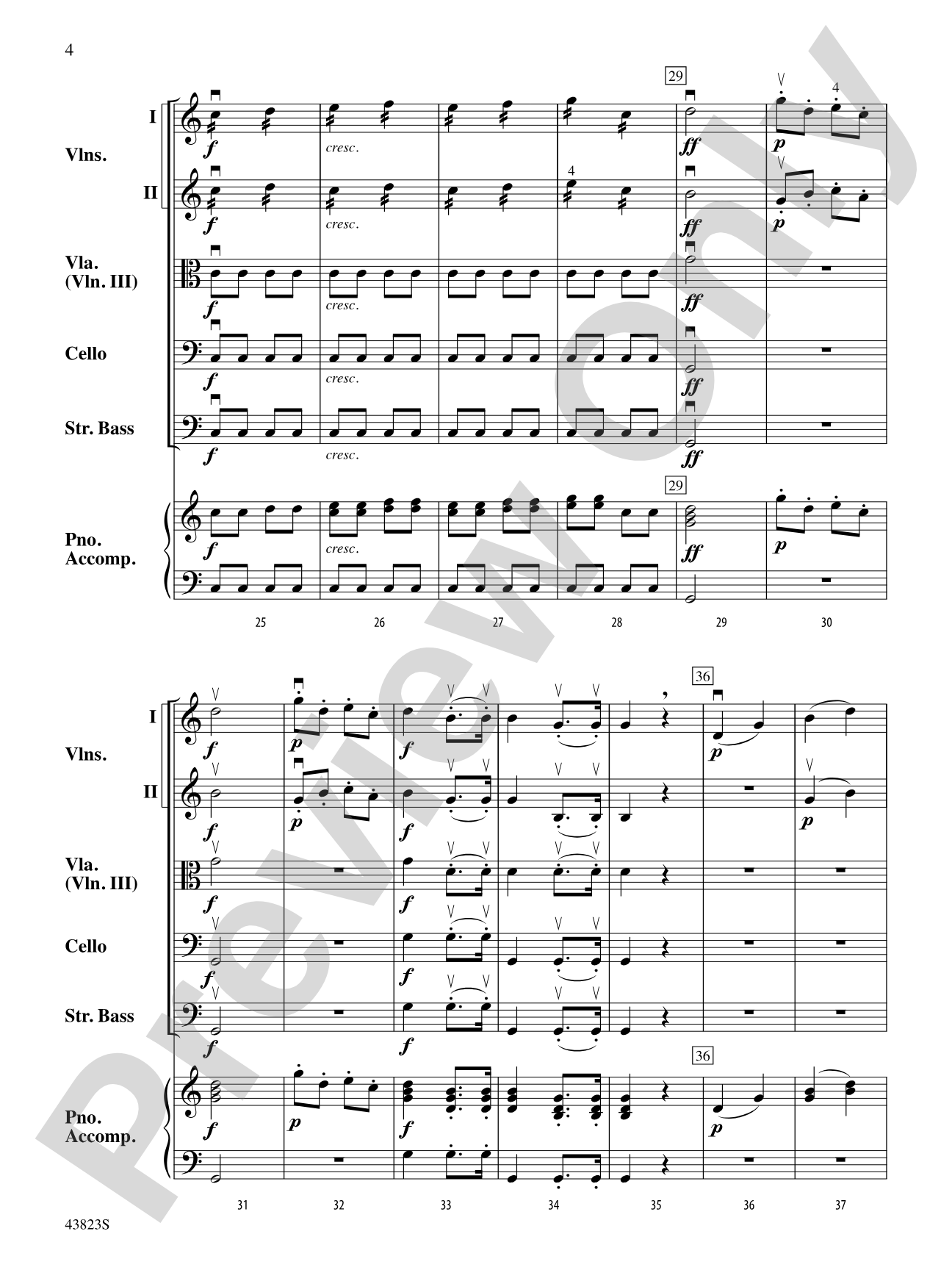
Absolutely a must-have for festival or contest, this symphonic transcription will showcase your group at their best! Accurately reflecting the original string parts while the other parts are seamlessly voiced in the strings, this will become a favorite. (2:40)


Don't just read it, hear it, play along with it, and watch your students grow with it. In MakeMusic Cloud, Symphony No. 3: String Orchestra Conductor Score & Parts comes alive with professional accompaniment, adjustable tempo, and built-in practice tools that turn solo practice into real progress.
Open in the Player
Jump straight in and assign it today.
Start Your Free Trial
Open this title and explore the full library in minutes.
Sample Audio
1
Audio File
--:--
0:00
0:00
Sample Video
No sample videos found.
Additional Details
Series:
Highland/Etling String Explorer
Publisher:
Alfred Music
Page Count:
140
SKU:
00-PK-0006672
More about this title
About the Composer: Joahnn Stamitz
Johann Stamitz (1717–1757) was a Bohemian composer and violinist who fundamentally shaped the early symphony. Working primarily at the Mannheim court, he developed innovative orchestration techniques and contributed significantly to the transition from Baroque to Classical style. His symphonies are characterized by clear formal structures, expressive melodies, and dynamic contrasts that influenced composers throughout Europe.
Why we love this
This arrangement preserves the symphonic architecture and melodic richness of Stamitz's original while sitting comfortably within a developing string orchestra's technical range. At Grade 2.5, it offers genuine symphonic substance without overwhelming your ensemble, making it an ideal choice for festivals where you want to program serious literature rather than showpieces.
What to expect
The work carries the refined elegance of the Classical period, balancing Baroque counterpoint with emerging Classical clarity. You'll hear elegant phrasing, transparent voicing across the strings, and the kind of formal logic that makes Stamitz's symphonies essential to understanding how orchestral music developed.
Who it's for
String orchestra directors preparing repertoire for festival or contest performance will find this work genuinely rewarding. Ensembles at the intermediate level benefit from its clear writing and historical significance without struggling against overly dense orchestration.
How to get the most out of it
- Balance the primary melodic line across your first violins while allowing the secondary voices in violas and lower strings to support without disappearing; Stamitz's orchestration rewards transparency.
- Shape the phrasing in four-bar units where possible, allowing natural breathing points to emerge rather than pushing through phrase boundaries mechanically.
- Establish a confident tempo at the outset and maintain it steadily; the 2:40 duration suggests a brisk yet controlled pace that lets the Classical idiom breathe.
How to use it
Position this as a centerpiece for a concert built around Classical symphonic literature, or use it as your anchor piece in a festival program where you want to demonstrate your ensemble's maturity and musicianship. Its 2:40 duration makes it an efficient yet substantial choice for contest time limits.
Skills your students will build
- Balancing primary and secondary melodic lines in multi-part string writing
- Phrasing in dialogue between upper and lower strings
- Sustaining ensemble cohesion in Classical forms
- Articulation clarity in passage work characteristic of the Classical period