Symphony No. 25, First Movement: String Bass Sheet Music Preview

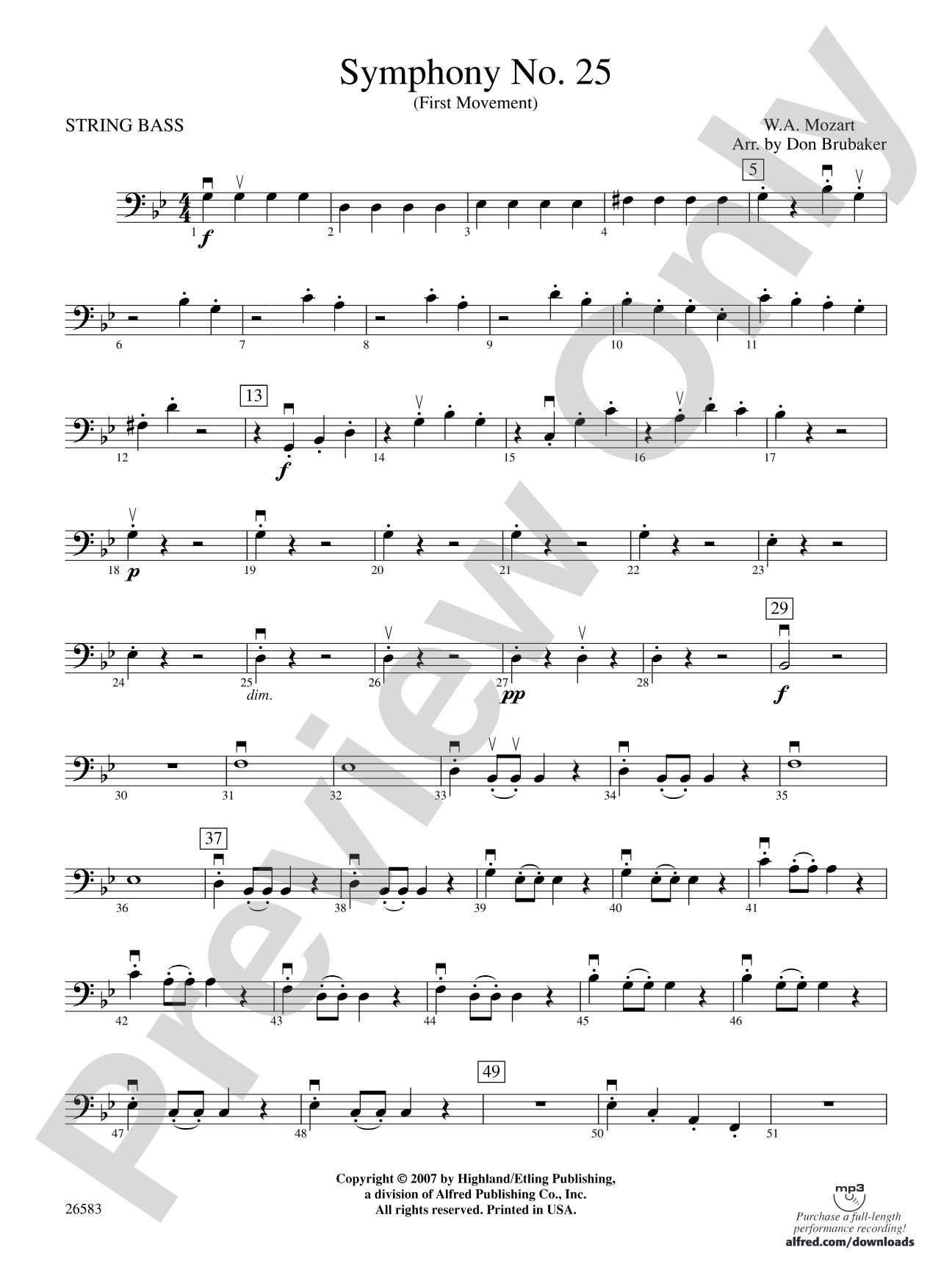
Symphony No. 25, First Movement: String Bass

By Wolfgang Amadeus Mozart / arr. Don Brubaker

Grade: 3.5

Item: 00-PC-0001099_SB

Digital Download
$5.99
Description
This fresh new arrangement retains all of the fire and passion found in Mozart's first minor-key symphony. The second violin and viola parts are playable in first position, and the use of optional notes and divisi make the first violin, cello, and bass parts accessible to less advanced players. Mature junior high and high school players will enjoy playing this energetic movement, which opens the movie Amadeus. This title is available in MakeMusic Cloud.

Don't just read it, hear it, play along with it, and watch your students grow with it. In MakeMusic Cloud, Symphony No. 25, First Movement: String Bass comes alive with professional accompaniment, adjustable tempo, and built-in practice tools that turn solo practice into real progress.

Sample Audio
0:00
0:00
Sample Video
Additional Details
Series: Highland/Etling String Orchestra
Publisher: Alfred Music
Page Count: 124
SKU: 00-PC-0001099_SB

More about this title

About the Composer: Wolfgang Amadeus Mozart

Wolfgang Amadeus Mozart (1756-1791) was an Austrian composer whose prolific output across every major genre established him as one of the most influential figures in Western classical music. His ability to write music of both intellectual rigor and immediate emotional appeal made his work essential to the standard repertoire for orchestras, chamber ensembles, and soloists for over two centuries.

Why we love this

This arrangement captures the urgency and minor-key drama of one of Mozart's most accessible symphonies without compromising its essential character. Brubaker's smart use of optional notes and first-position voicings means your section doesn't need advanced players to deliver a polished, energetic performance, yet mature players will find genuine musical substance in every part.

What to expect

Energy and minor-key urgency propel this opening movement from start to finish. Mozart's signature melodic clarity shines through even in this streamlined arrangement, creating a sense of dramatic momentum that feels both classical in structure and immediately engaging to players and audiences alike.

Who it's for

This arrangement works for junior high and high school string orchestras with players at mixed technical levels. Directors programming concert or festival performances will find a piece that sounds polished and substantial without requiring years of prior training from every section member.

How to get the most out of it

  • Establish the driving rhythmic pulse early in rehearsals; this movement lives and dies by forward momentum, and younger players often rush when excited by the tempo.
  • Balance the second violins and violas carefully in the opening theme. These parts carry harmonic weight, and a thin middle voice will rob the orchestration of its urgency.
  • Encourage first violins to shape the main theme with dynamic clarity rather than searching for technical perfection. The character matters more than the polish at this level.
  • Take advantage of the optional notes by assigning them strategically rather than having all players execute them; this keeps the texture clean and builds confidence in less advanced performers.

How to use it

Program this as a concert opener to command immediate attention, or use it in festival settings where judges appreciate recognizable masterworks arranged for accessibility without sacrifice of musical integrity. Its appearance in the film Amadeus gives it cultural resonance that can hook student performers and audiences alike.

Skills your students will build

  • Maintaining rhythmic precision in a driving tempo across all string parts
  • Balancing harmonic texture when middle voices carry essential material
  • Shaping a classical melody with dynamic control and phrase awareness
  • Reading parts with optional notes and divisi passages
  • Ensemble coordination between first-position and higher-position voicings

You May Also Like