
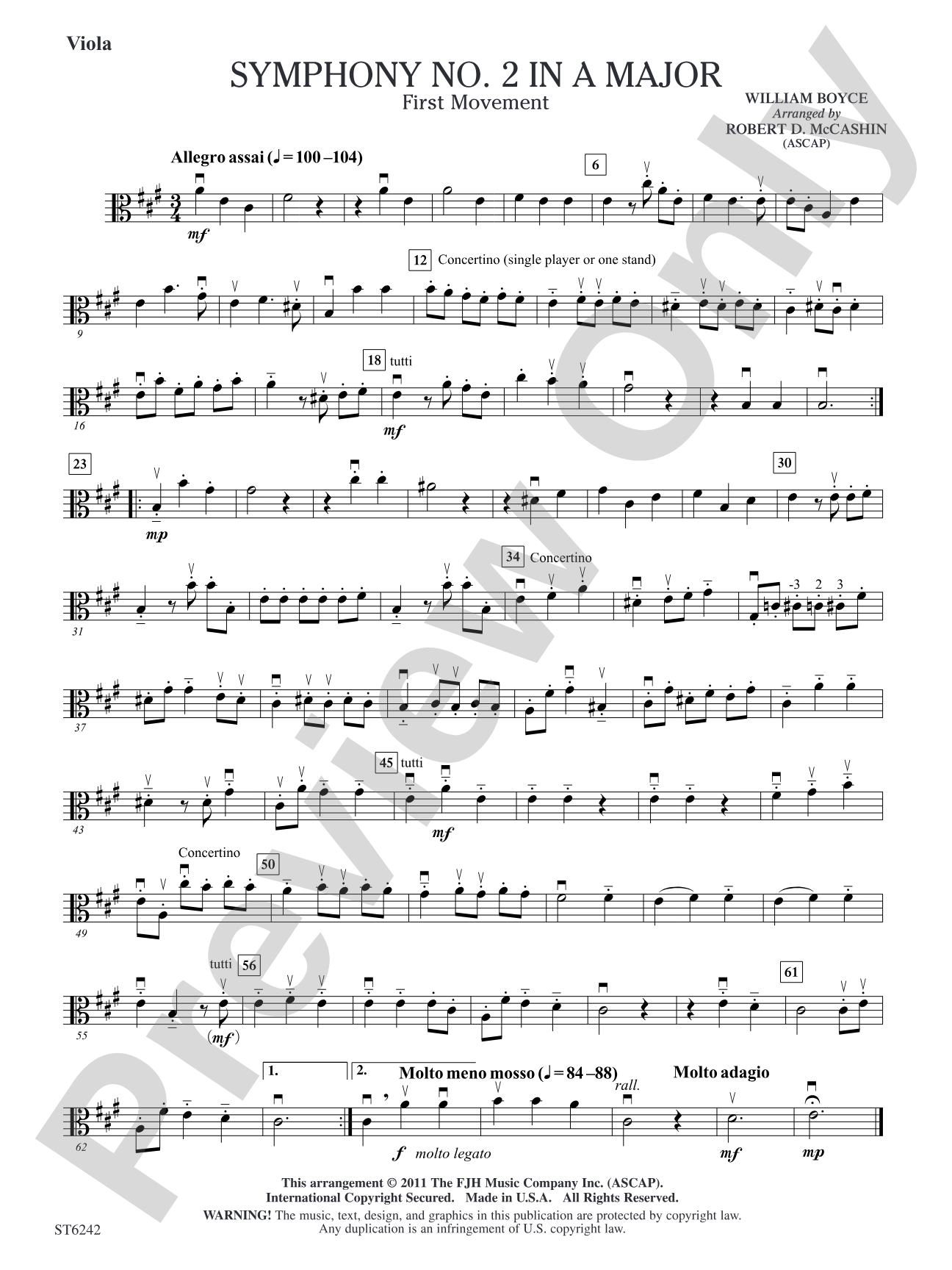

Symphony No 2 in A Major: Viola
Arranged by Robert D. McCashin
Grade: 3
Item: 98-PC-DST6242_VA1
$7.00
Pickup currently not available
Description
Feature many of your principal players in this fantastic arrangement of a William Boyce masterpiece. The entire work alternates between tutti and concertino-style playing. The work can be performed with soloists among the ensemble or separate. Excellent in chamber or large group settings.


Don't just read it, hear it, play along with it, and watch your students grow with it. In MakeMusic Cloud, Symphony No 2 in A Major: Viola comes alive with professional accompaniment, adjustable tempo, and built-in practice tools that turn solo practice into real progress.
Open in the Player
Jump straight in and assign it today.
Start Your Free Trial
Open this title and explore the full library in minutes.
Sample Audio
1
Audio File
--:--
0:00
0:00
Sample Video
No sample videos found.
Additional Details
Series:
FJH String Orchestra
Publisher:
The FJH Music Company, Inc.
SKU:
98-PC-DST6242_VA1
More about this title
About the Arranger: Robert D. McCashin
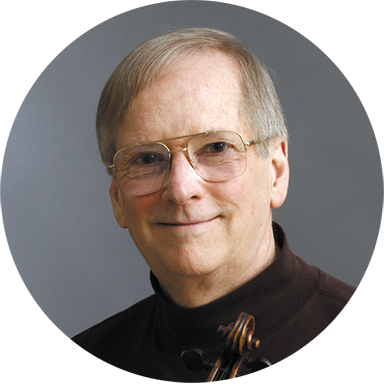
Robert D. McCashin brings four decades of conducting and string pedagogy to his arrangement work, having shaped orchestral training at James Madison University as Director of Orchestras and Professor of Conducting before his retirement. A violinist with deep roots in both performance and education, he earned his DMA in conducting from the University of Arizona and spent his early career performing with regional orchestras across Texas while building youth ensemble programs from the ground up.
McCashin's prolific output as an arranger reflects his intimate understanding of what works in the rehearsal room. Nearly 80 published works spanning Grade I through V have established him as a trusted voice in educational music publishing, with multiple arrangements recognized as bestsellers and Editors' Choice selections. He co-authored the widely used New Directions for Strings method series, cementing his influence on how string musicians develop their craft.
Why we love this
McCashin has solved the real challenge of feature-writing for mixed-ability orchestras by structuring this Boyce symphony to let soloists shine without abandoning the ensemble. The alternating tutti and concertino sections give you built-in flexibility: pull out your principals for the chamber passages, keep everyone together when the full sound is needed. At Grade 3, the writing is transparent enough to expose individual players while remaining musically substantial.
What to expect
Boyce's elegant classical sensibility shines through McCashin's transparent orchestration, blending baroque counterpoint with classical clarity. The alternating textures create momentum and lightness, never heavy or dense; soloists emerge from the ensemble like spotlit dancers stepping forward and retreating. There's intelligence in the harmonic writing and genuine musical conversation between the concertino and tutti sections.
Who it's for
Directors seeking repertoire that showcases individual players within a cohesive ensemble framework will find this arrangement invaluable for both chamber and full orchestra settings. High school orchestras at the intermediate level and college pre-major groups benefit from the balanced demands and flexible performance options. Festival and contest programs benefit from music that combines pedagogical value with genuine musical substance.
How to get the most out of it
- Balance the concertino sections by seating soloists slightly forward; resist the urge to over-amplify them, as Boyce's counterpoint needs clarity rather than dominance.
- Establish a clear textural contrast between tutti and solo passages in early rehearsals so the ensemble understands when they're accompanying versus participating equally.
- Use the recorded accompaniment to lock tempo and phrasing if rehearsal time is limited, especially for the ensemble sections that frame the solos.
- Attend to bow coordination in the tutti moments; Boyce's rhythmic drive depends on precision across your string sections.
How to use it
Nest this work alongside other baroque-influenced masterwork arrangements to build a themed concert on classical orchestration and the art of the concertino. Its Grade 3 accessibility makes it ideal for fall or early winter festivals when your ensemble is still building stamina. The flexible scoring works equally well in a chamber concert setting or as a contrasting mid-program piece in a larger orchestral concert.
Skills your students will build
- Balancing solo and ensemble roles within a single work
- Baroque-classical phrasing and rhythmic articulation
- Maintaining transparency and clarity in contrapuntal textures
- Listening to other sections while maintaining independent lines
- Coordinating bow attacks across an entire string section