
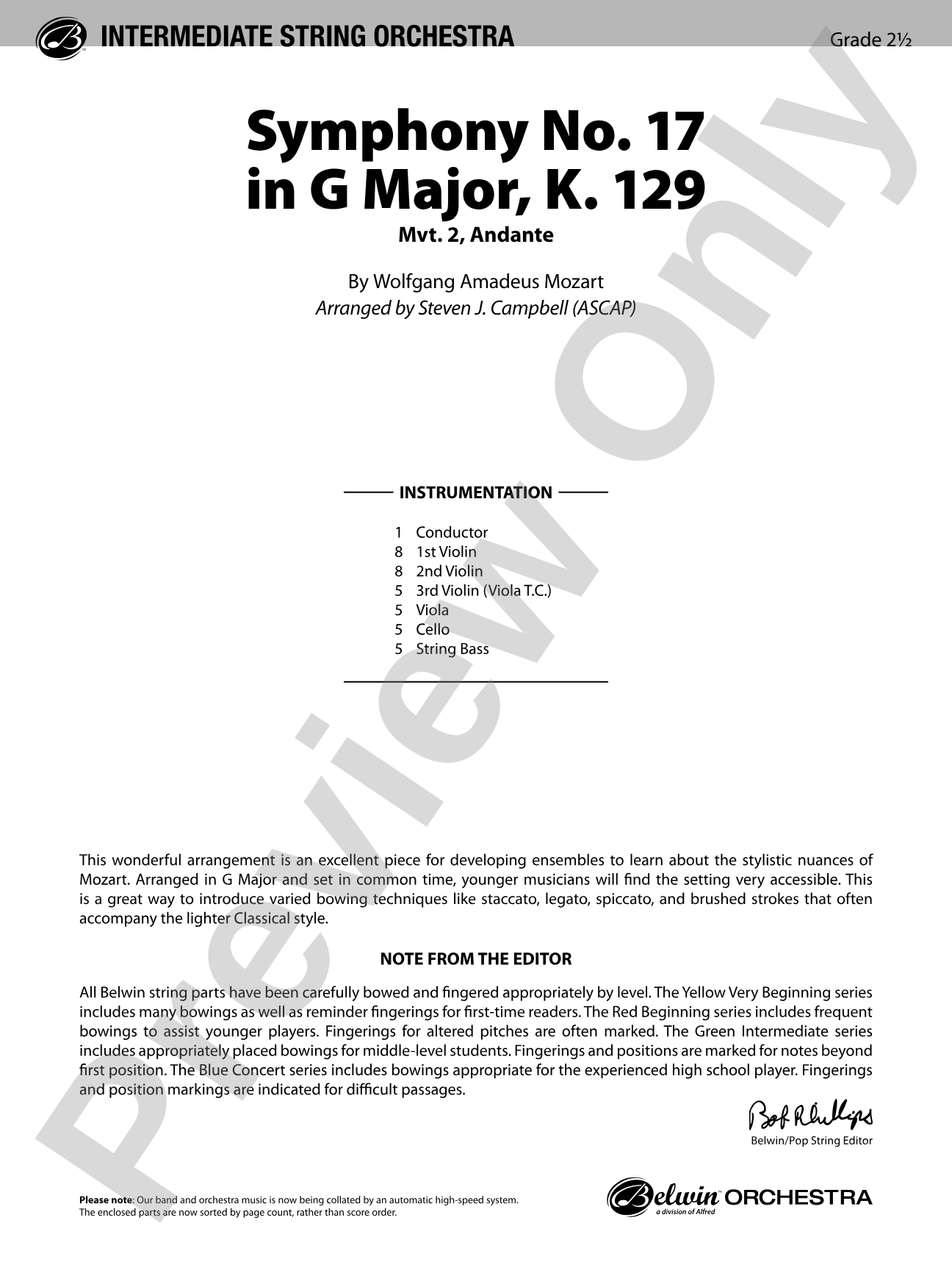
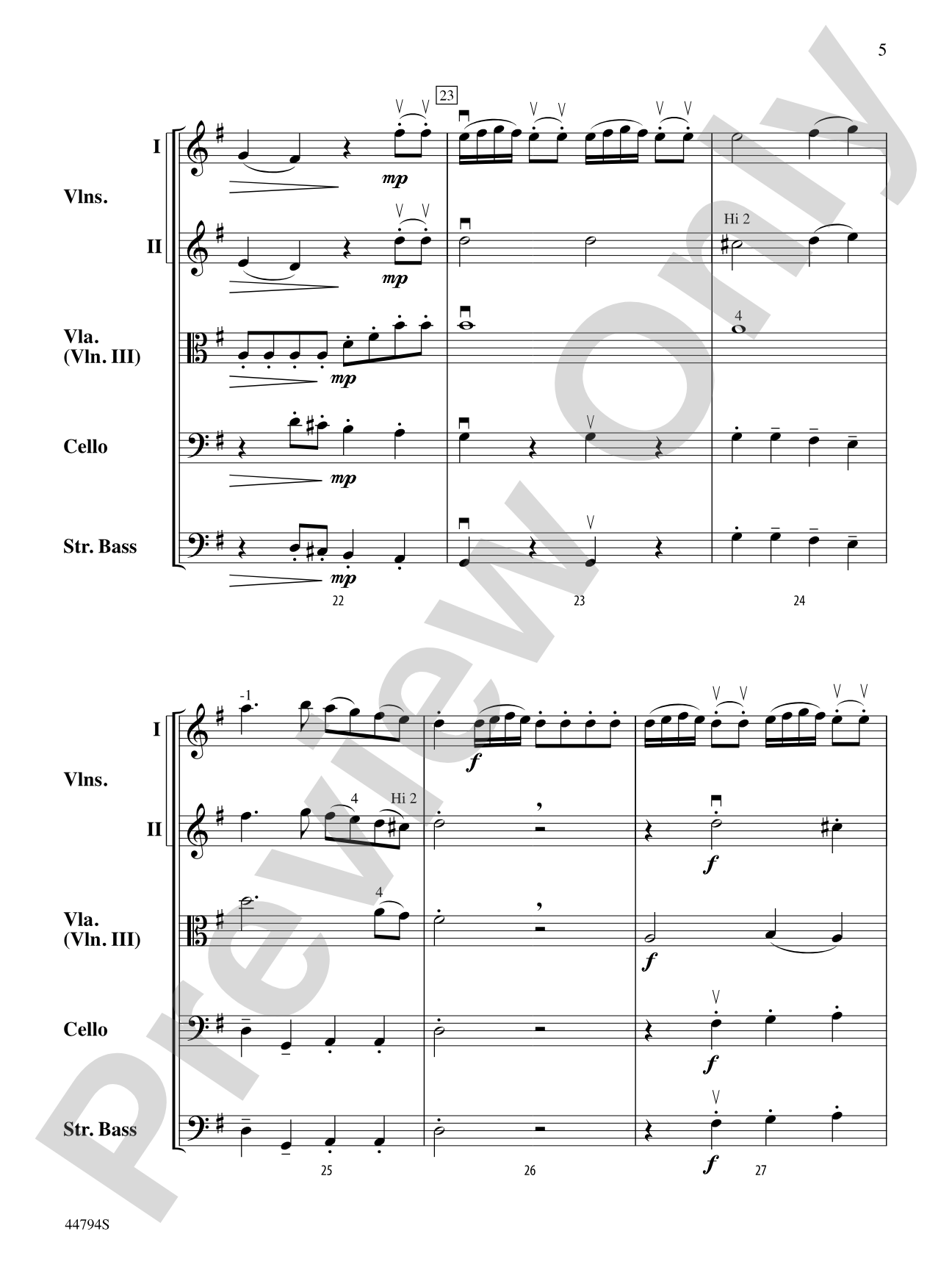
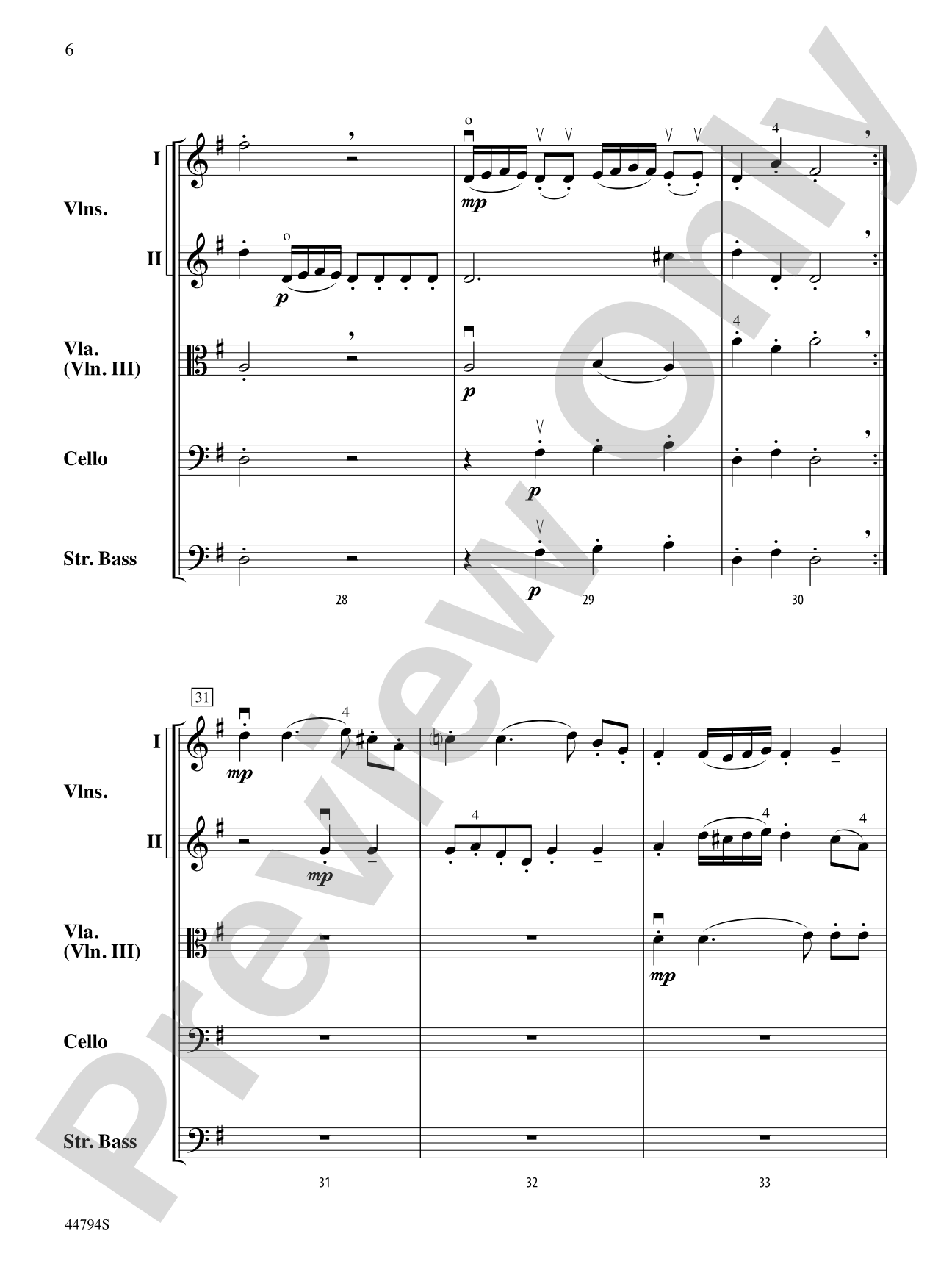
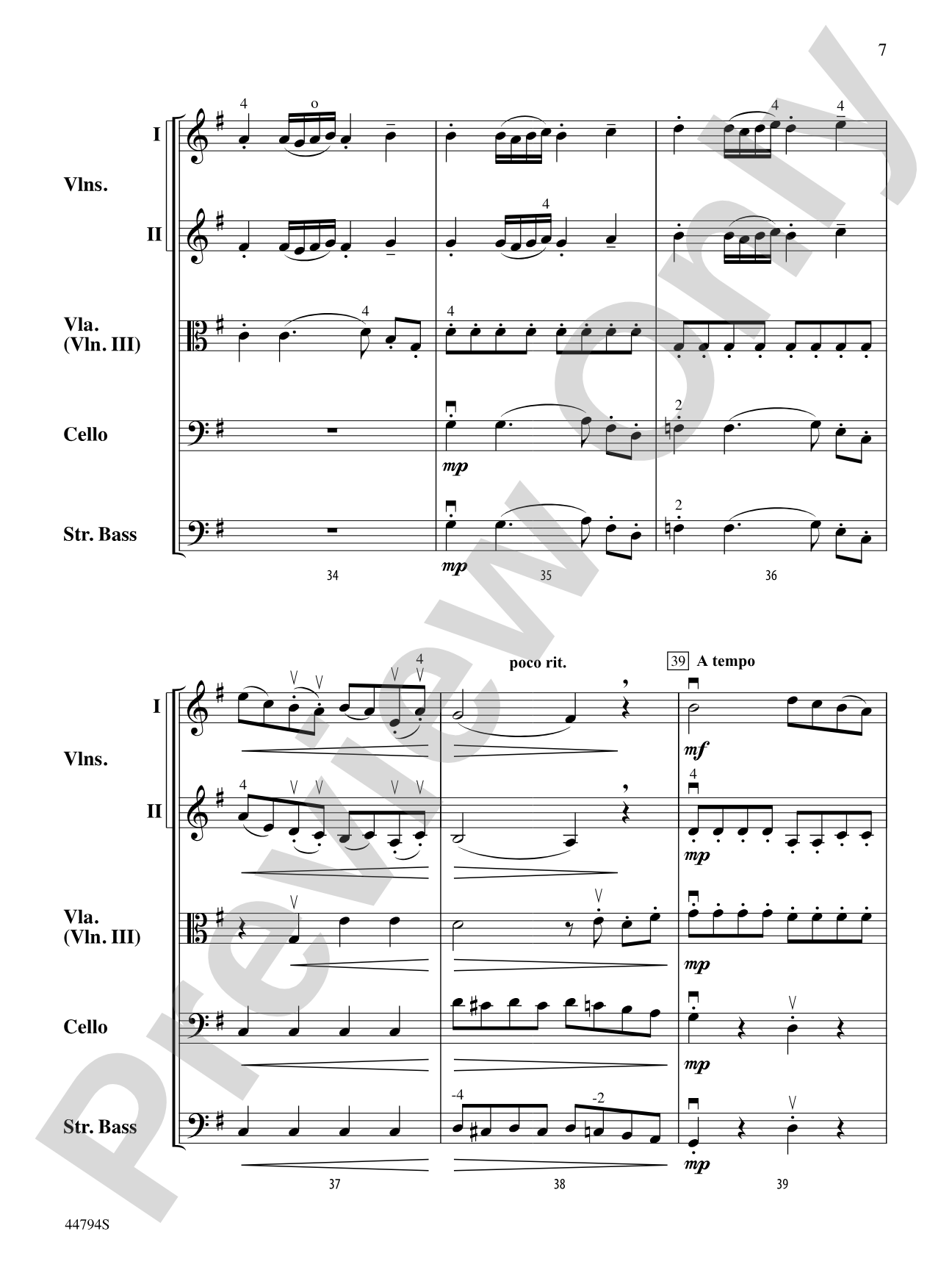
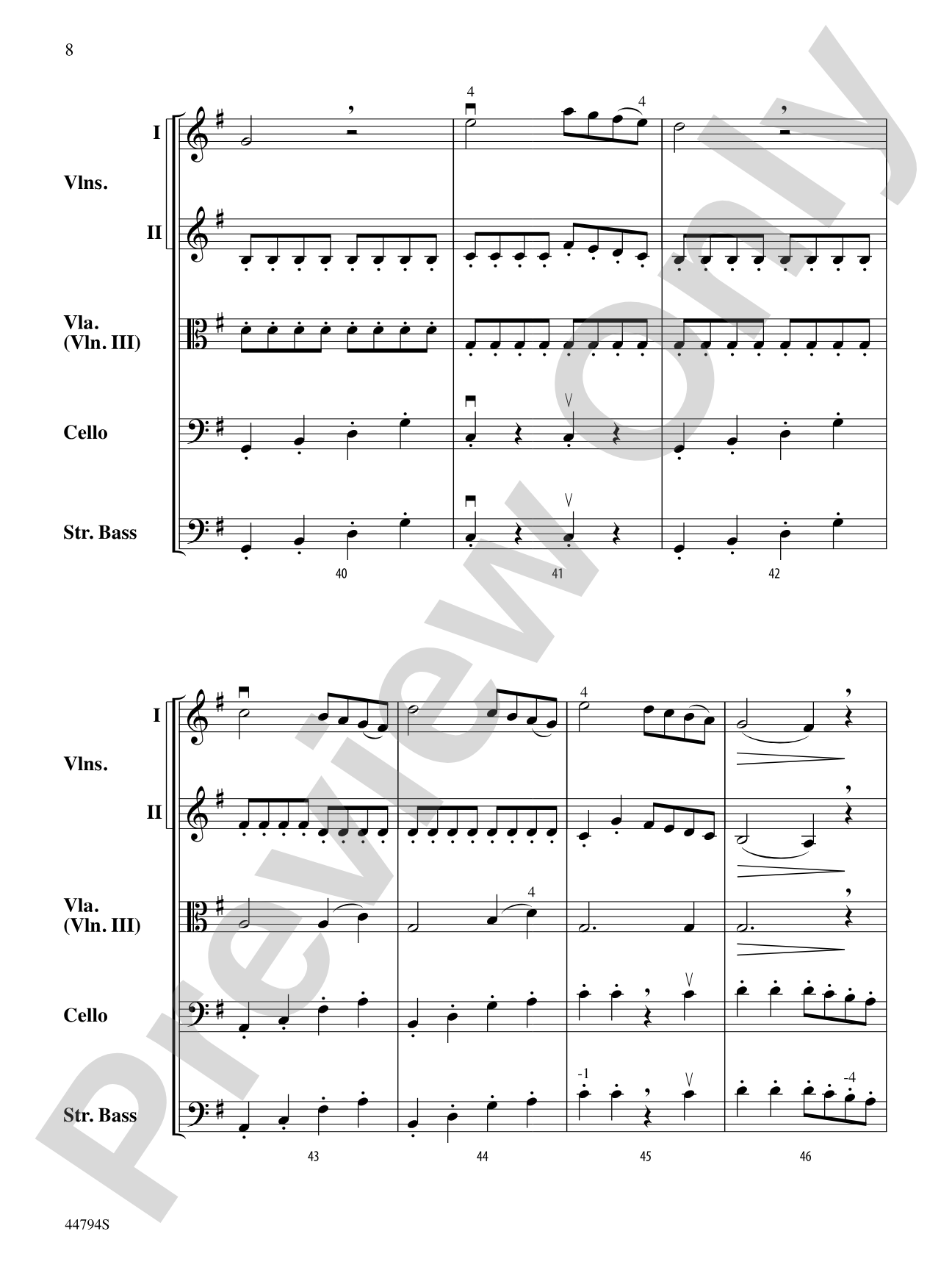
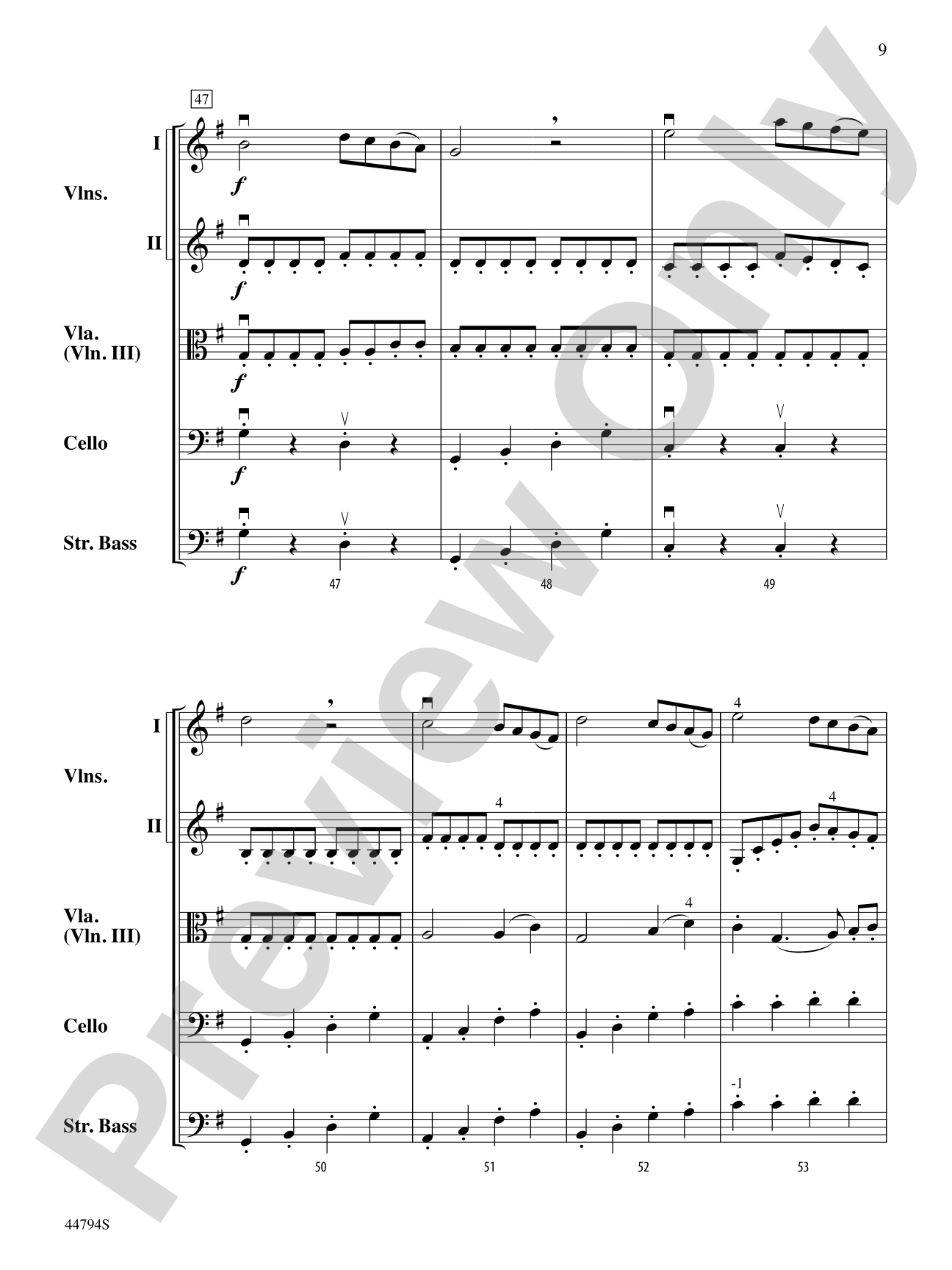
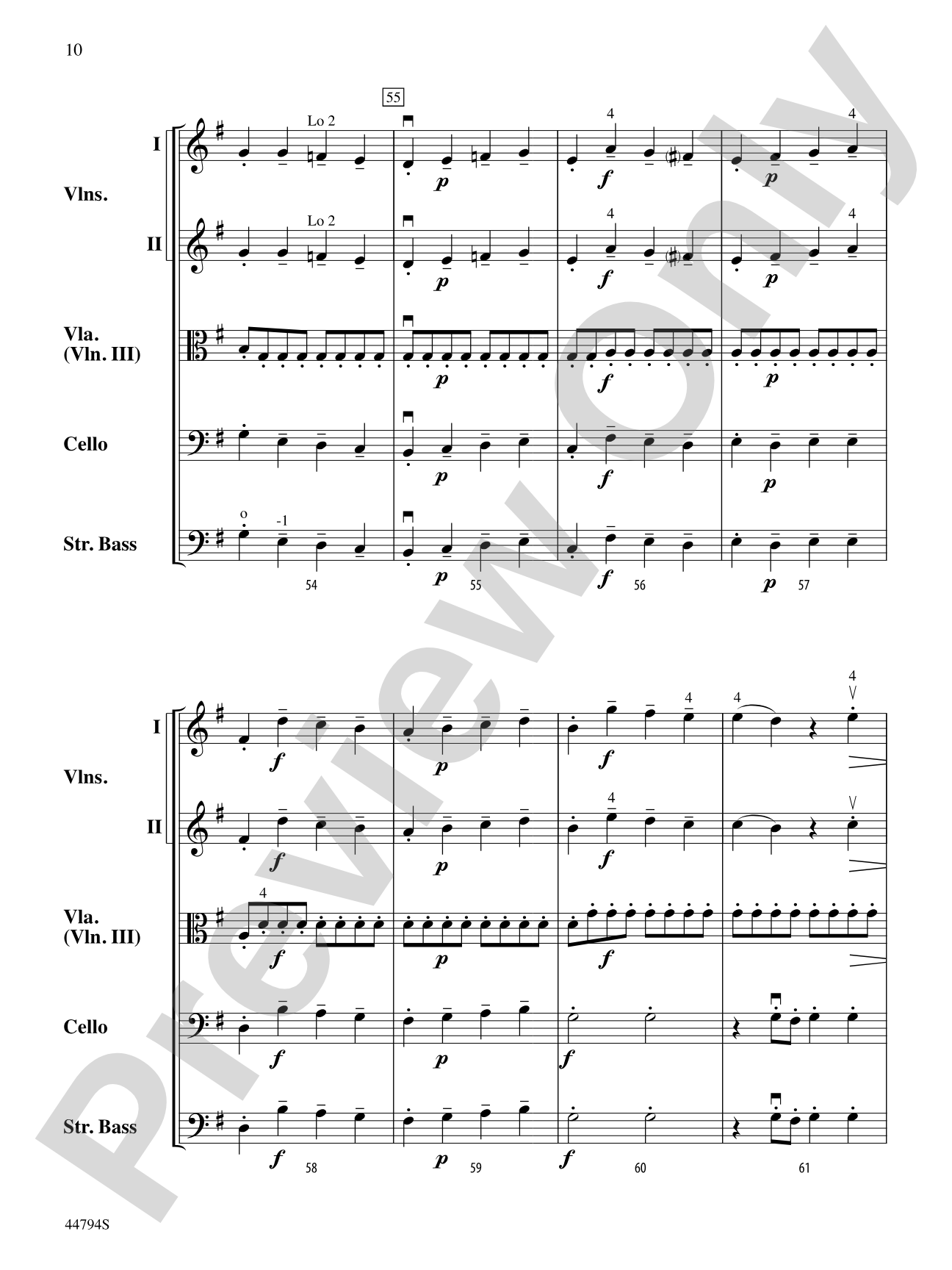
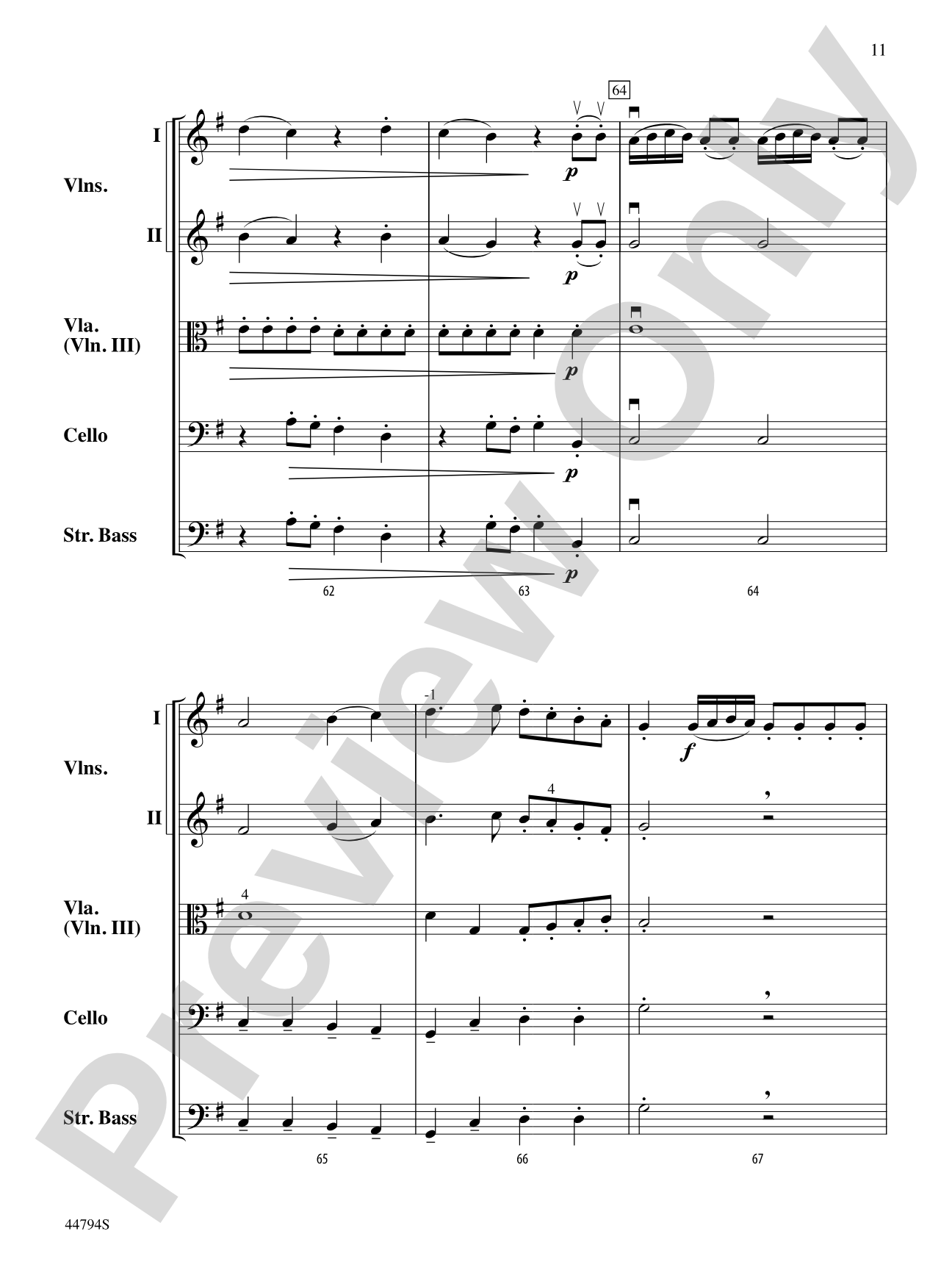
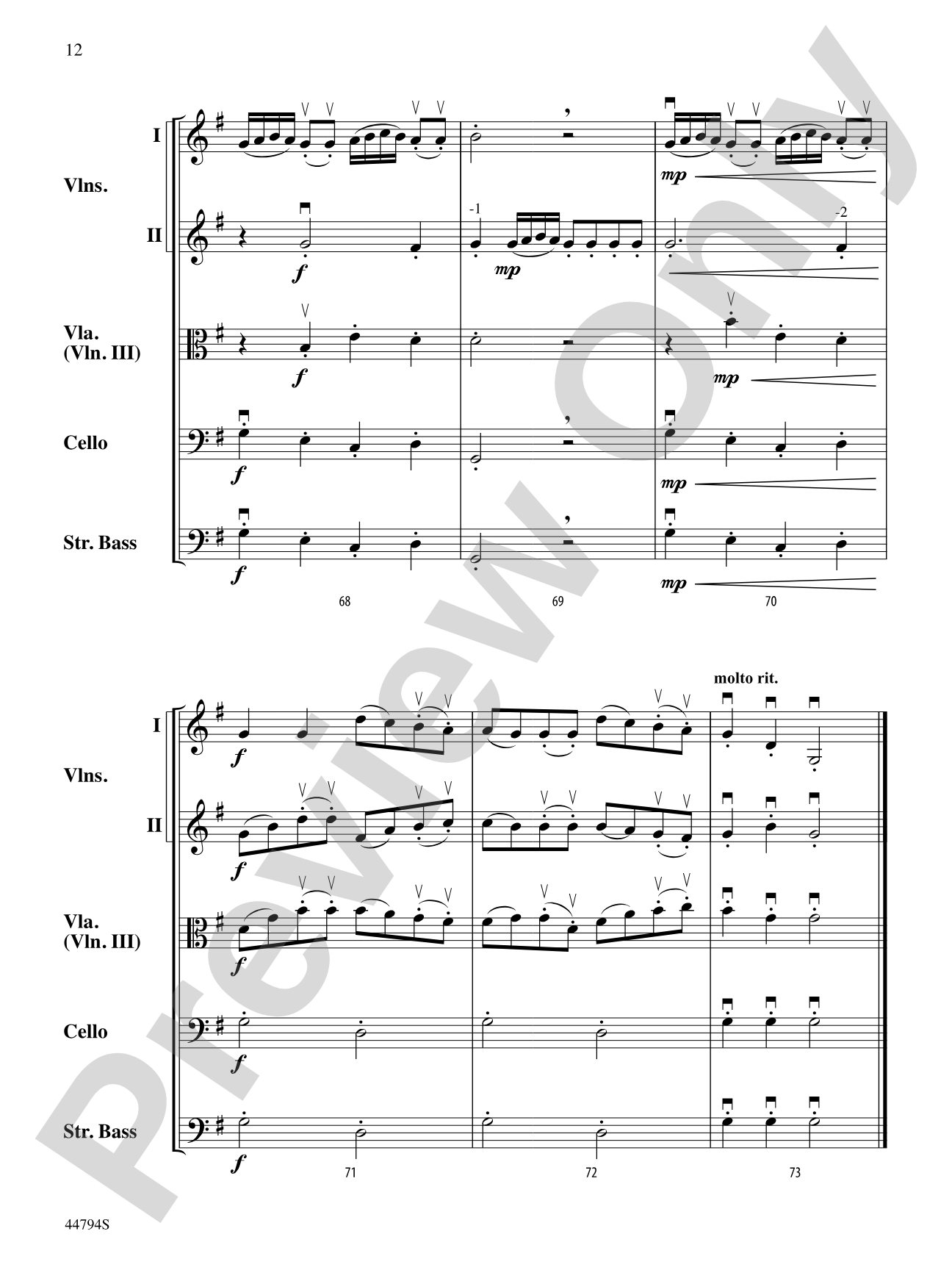

Symphony No. 17 in G Major, K. 129: String Orchestra Conductor Score & Parts
Mvt. 2 Andante
By Wolfgang Amadeus Mozart / arr. Steven J. Campbell
Grade: 2.5
Item: 00-PK-0007066

$49.00
Pickup currently not available
Buy Extra Parts (Digital PDF Download)
Parts Added to Cart!
Related Items
Symphony No. 17 in G Major, K. 129: String Orchestra Conductor Score |
$9.00
|
View |
Description
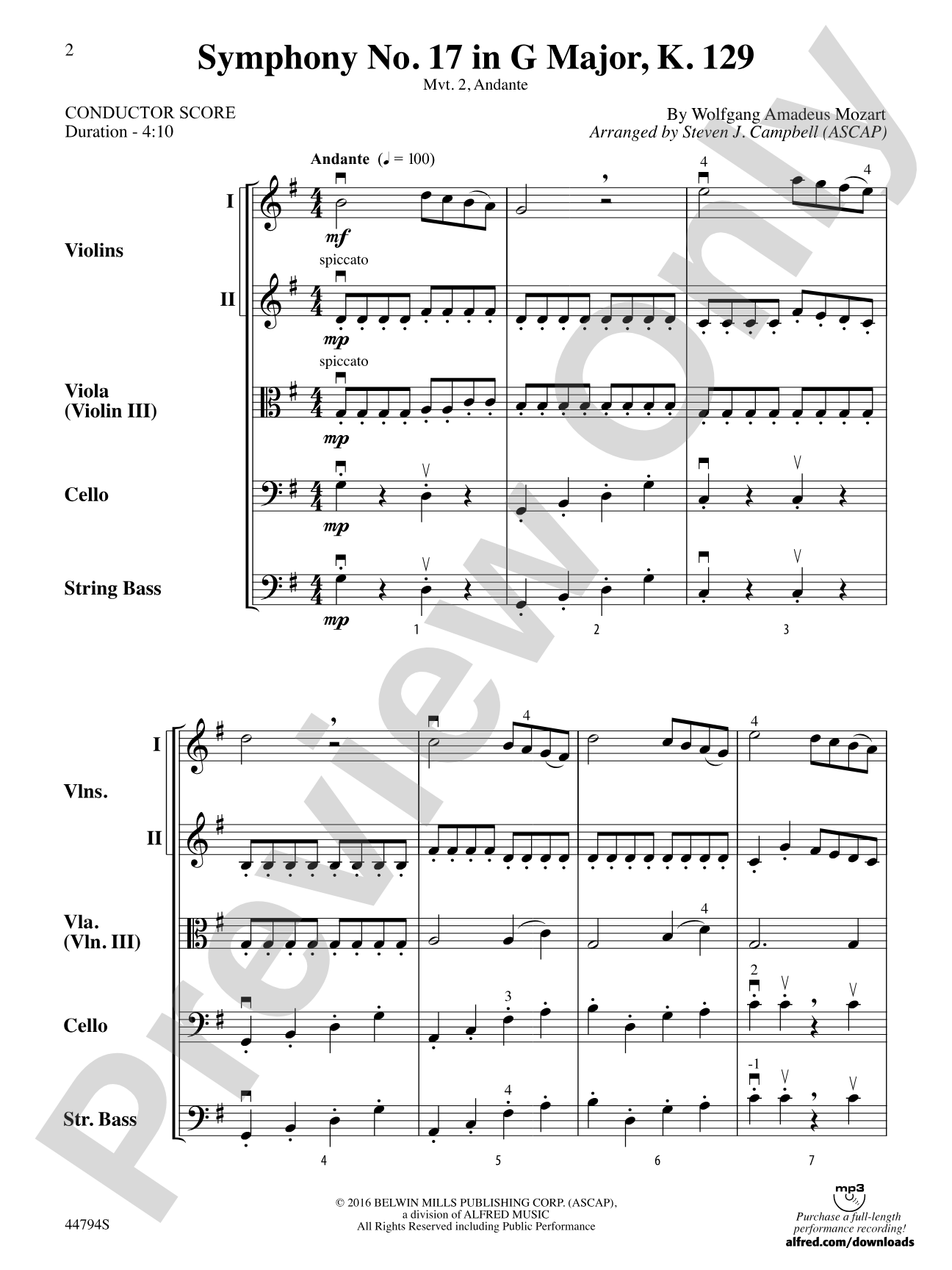
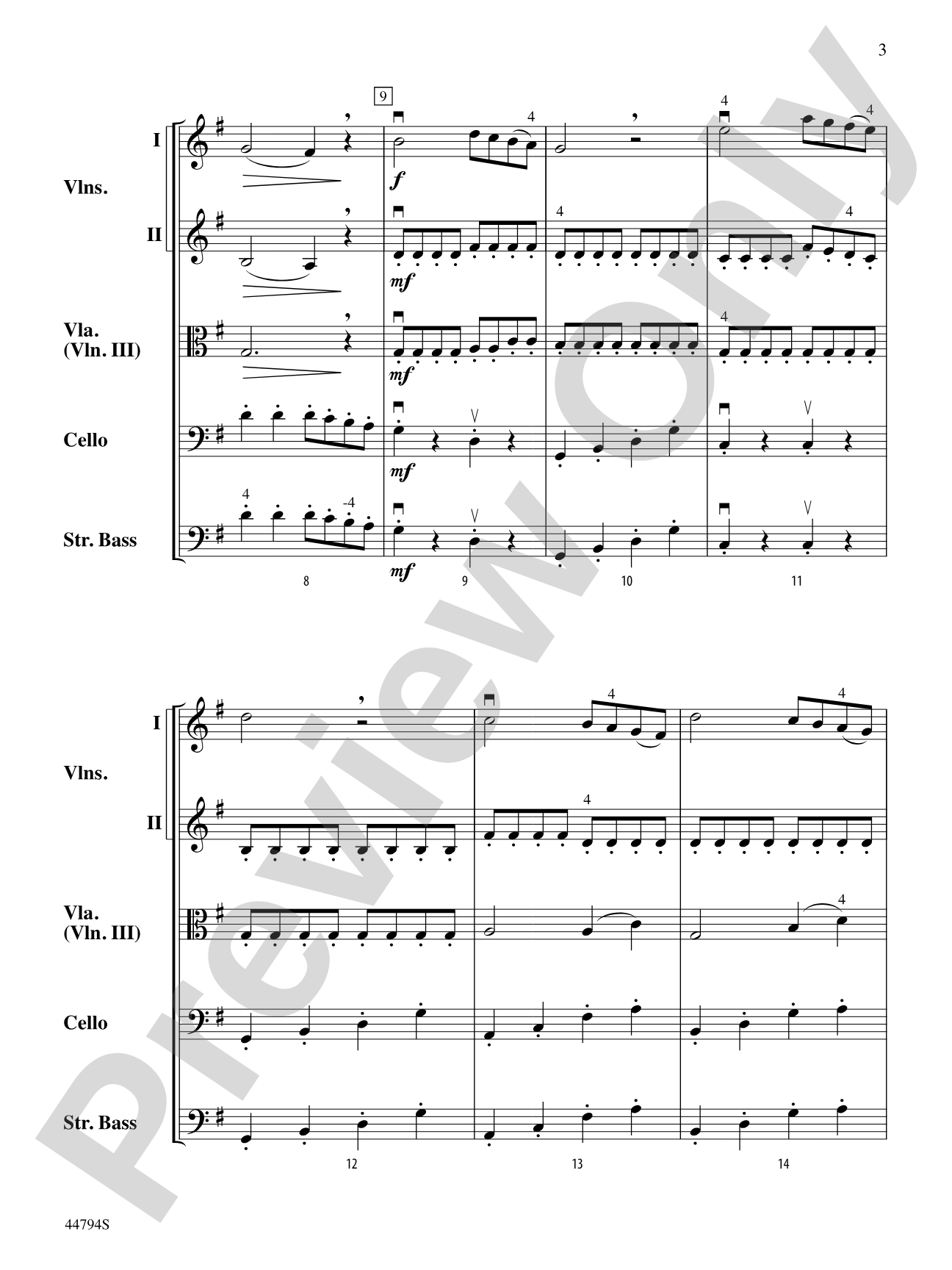
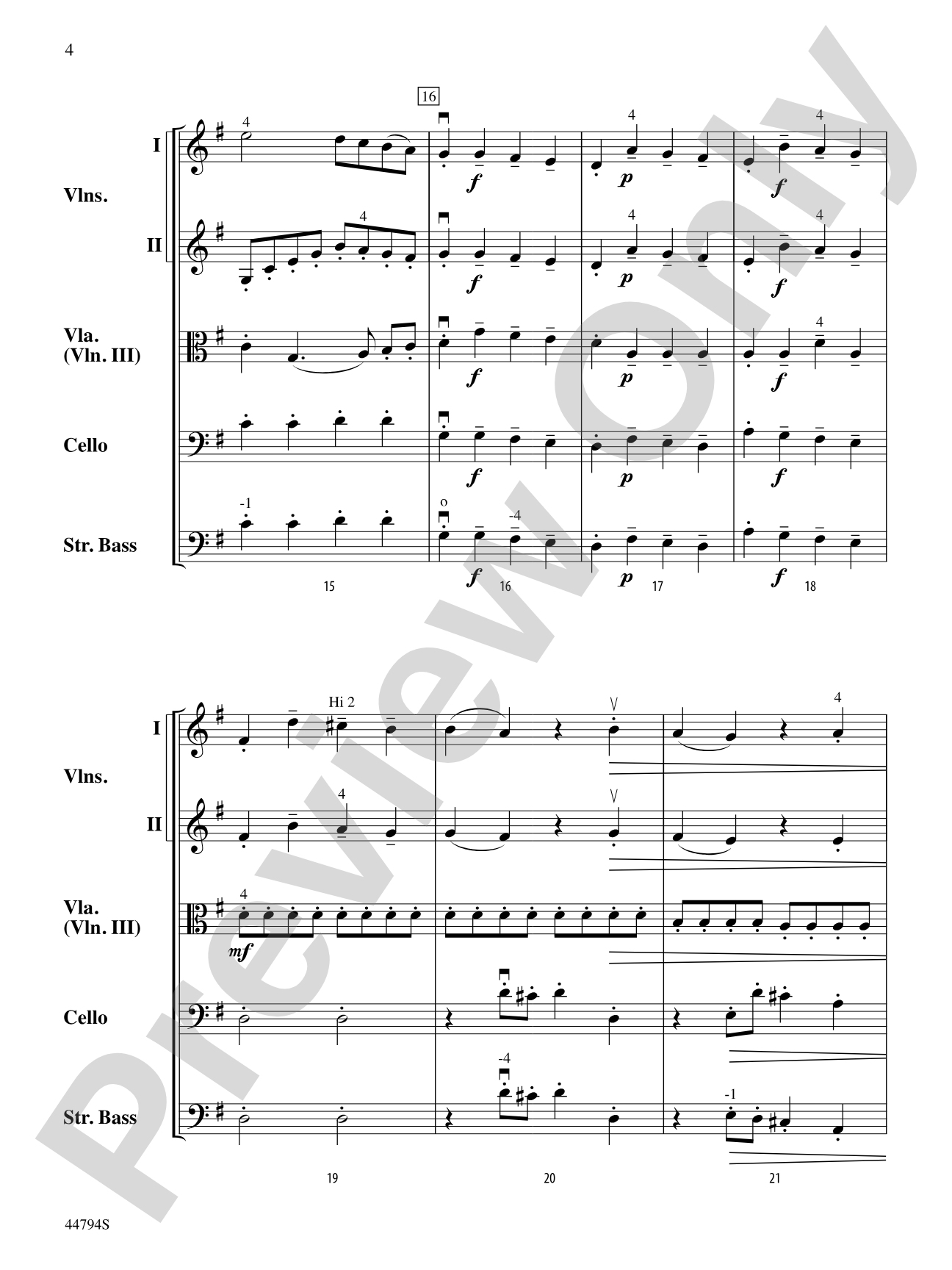
This wonderful arrangement of the second movement from Mozart's Symphony No. 17 is an excellent piece for developing ensembles to learn about the stylistic nuances of Mozart. Arranged by Steven Campbell in G major and set in common time, younger musicians will find the setting very accessible. This is a great way to introduce varied bowing techniques like staccato, legato, spiccato, and brushed strokes that often accompany the lighter Classical style. (4:10)


Don't just read it, hear it, play along with it, and watch your students grow with it. In MakeMusic Cloud, Symphony No. 17 in G Major, K. 129: String Orchestra Conductor Score & Parts comes alive with professional accompaniment, adjustable tempo, and built-in practice tools that turn solo practice into real progress.
Open in the Player
Jump straight in and assign it today.
Start Your Free Trial
Open this title and explore the full library in minutes.
Sample Audio
1
Audio File
--:--
0:00
0:00
Sample Video
Additional Details
Series:
Belwin Intermediate String Orchestra
Publisher:
Alfred Music
Page Count:
144
SKU:
00-PK-0007066
More about this title
About the Composer: Wolfgang Amadeus Mozart
Wolfgang Amadeus Mozart (1756-1791) composed across every major genre of his era with astonishing facility and invention. His symphonies, written from childhood through his final years, document the evolution of Classical form and orchestration, moving from the elegant brevity of his early works toward increasingly complex harmonic language and structural ambition.
Why we love this
This arrangement captures the hallmark grace of Mozart's Classical voice while remaining genuinely playable for Grade 2.5 ensembles. Steven Campbell's setting in G major preserves the movement's lyrical character and introduces young musicians to authentic bowing techniques that define the Classical style, making it both musically substantial and pedagogically smart.
What to expect
Elegant and unhurried, with the gentle conversational quality of a Classical chamber work. The interplay of staccato accompaniment and legato melody creates a sense of lightness and sophistication, inviting listeners into a world of refined restraint and balanced proportion.
Who it's for
String orchestra directors working with intermediate ensembles who want to deepen their students' understanding of Classical repertoire and bowing vocabulary. This arrangement suits schools and community orchestras ready to move beyond unison exercises into multi-part texture and stylistic refinement.
How to get the most out of it
- Balance the first violin line with a light, singing tone; this movement depends on the melody floating above rather than dominating the texture.
- Establish the staccato articulation cleanly in the accompaniment figures; it should feel sprightly without becoming choppy or separated.
- Shape the legato phrases with gentle dynamic contours that follow the harmonic movement rather than playing at a single dynamic level.
- Use the spiccato and brushed strokes as textural contrasts, not as novelties; they serve the Classical aesthetic and support the overall musical architecture.
How to use it
Program this as a concert opener or a tasteful contrast to more dramatic Romantic-era works. It also serves well in a thematic program exploring Classical form and orchestration, or as a teaching piece in a festival or competition setting where judges value historical awareness and stylistic understanding.
Skills your students will build
- Staccato, legato, spiccato, and brushed bowing in a single movement
- Balancing melody and accompaniment texture
- Reading and executing Classical-style articulation and phrasing
- Understanding ensemble sonority and blend in a multi-part texture