
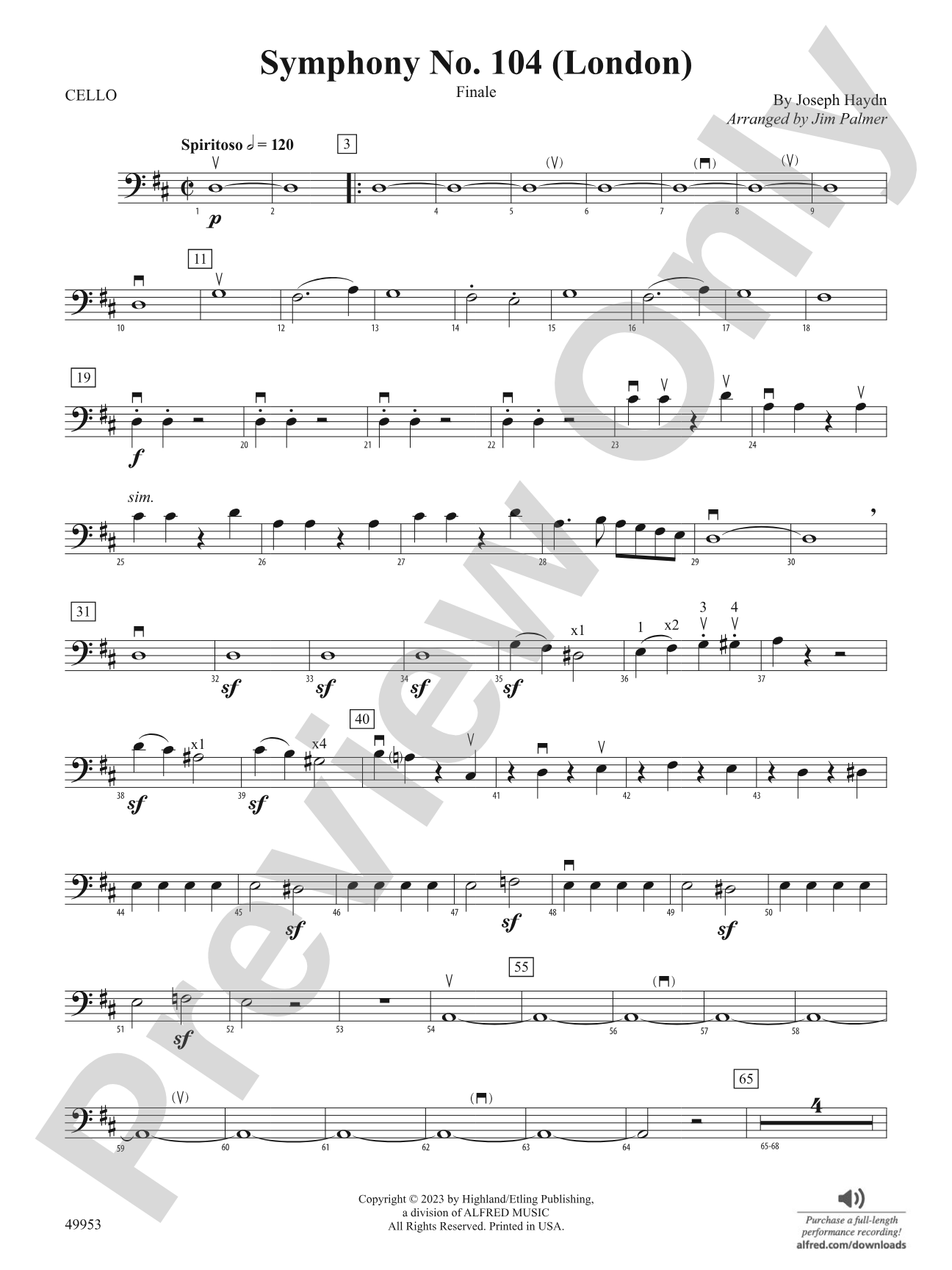

Symphony No. 104 (London): Cello
Finale
By Joseph Haydn / arr. Jim Palmer
Grade: 3.5
Item: 00-PC-0019137_VC1
$3.00
Pickup currently not available
Description
Symphony No. 104 by Franz Joseph Haydn, arranged by Jim Palmer, is a charming symphony movement from the Classical Era that will capture students' attention immediately. The catchy melody, crisp rhythms, and varied dynamics will bring excitement to every performance. Precise articulations, bowings, fingerings, and an optional timpani part make this arrangement true to the original! This piece is a perfect opener or closer to any concert or festival performance. (4:00)
The PerformancePlus+ series is an innovative addition to the ever-expanding MakeMusic Cloud interactive library. These engaging selections are presented with educational resources designed to enrich the rehearsal process and create outstanding performances. Including:


The PerformancePlus+ series is an innovative addition to the ever-expanding MakeMusic Cloud interactive library. These engaging selections are presented with educational resources designed to enrich the rehearsal process and create outstanding performances. Including:
- Assignment, recording, and assessment tools within MakeMusic Cloud
- Piece-specific exercises focused on skills and techniques
- Educational tips and suggestions to support learning
Available in print and digital formats.
Don't just read it, hear it, play along with it, and watch your students grow with it. In MakeMusic Cloud, Symphony No. 104 (London): Cello comes alive with professional accompaniment, adjustable tempo, and built-in practice tools that turn solo practice into real progress.
Open in the Player
Jump straight in and assign it today.
Start Your Free Trial
Open this title and explore the full library in minutes.
Sample Audio
1
Audio File
--:--
0:00
0:00
Sample Video
No sample videos found.
Additional Details
Series:
Highland/Etling String Orchestra - PerformancePlus+
Publisher:
Alfred Music
SKU:
00-PC-0019137_VC1
More about this title
About the Composer: Joseph Haydn
Joseph Haydn (1732-1809) spent most of his career as Kapellmeister to the Esterházy family in rural Hungary, where he developed the symphonic form that would define the Classical era. His prolific output across all genres established conventions for structure, orchestration, and harmonic language that composers from Mozart to Beethoven built upon. By the time he composed his final symphonies in London during the 1790s, Haydn had become a towering figure in European music, revered for his craftsmanship, melodic invention, and ability to engage audiences without sacrificing musical substance.
Haydn's late symphonies, including No. 104, showcase a master working at the height of his powers: bold themes, sophisticated counterpoint, vivid orchestration, and a wit that ranges from playful to profound. For student musicians, his work offers an ideal entry point into the Classical symphony—the formal structures are clear, the melodies are memorable, and the orchestration rewards careful listening across all parts.
Why we love this
Jim Palmer's arrangement captures the brilliance of Haydn's original without overwhelming a developing string section. The part-writing is transparent enough for Grade 3.5 players to hear their individual contributions, yet the piece never sounds simplified or thin. That optional timpani part adds weight to climactic moments and gives percussion students a genuine stake in the performance.
What to expect
The opening announces itself with genial confidence—a theme that feels both familiar and fresh, supported by crisp accompaniment figures. The piece carries forward with good humor and elegant phrasing, never asking listeners to work too hard while maintaining Haydn's characteristic surprises: unexpected harmonic turns, rhythmic wit, and moments of genuine poignancy tucked into the development.
Who it's for
String orchestra directors seeking accessible yet substantive Classical repertoire for concert programming. This arrangement serves Grade 3.5 ensembles that have developed secure intonation and basic articulatory control but may not yet tackle full original symphonies.
How to get the most out of it
- Attend to Haydn's dynamic markings with precision. Sudden shifts from forte to piano are a hallmark of his style and create the dramatic shape this movement needs; underplaying them flattens the character.
- Shape the primary theme with clear articulation and breathing room between phrases. String players sometimes rush energetic Classical melodies; resist that impulse and let the line breathe.
- Balance first and second violin parts during the middle section. Both carry thematic material, and clarity here prevents the arrangement from sounding muddy.
- Coordinate bowing and fingerings across all parts from the start of rehearsal. Palmer's suggestions are pedagogically sound and ensure consistency of tone and rhythmic clarity.
How to use it
Program this as a concert opener to establish ensemble polish and energy immediately, or as a closing piece to end on a note of Classical refinement. It pairs well in a thematic program exploring Haydn's symphonic legacy or as a bridge between contemporary works and Romantic-era string repertoire.
Skills your students will build
- Articulation control and consistency across string sections
- Phrasing and shaping in Classical style
- Reading multiple parts with independent thematic material
- Dynamic contrast and control
- Ensemble balance and listening within the section
- Bow coordination for crisp rhythmic articulation